Carmen Boullosa - Leaving Tabasco
Здесь есть возможность читать онлайн «Carmen Boullosa - Leaving Tabasco» весь текст электронной книги совершенно бесплатно (целиком полную версию без сокращений). В некоторых случаях можно слушать аудио, скачать через торрент в формате fb2 и присутствует краткое содержание. Год выпуска: 2002, Издательство: Grove Press, Жанр: Современная проза, на английском языке. Описание произведения, (предисловие) а так же отзывы посетителей доступны на портале библиотеки ЛибКат.
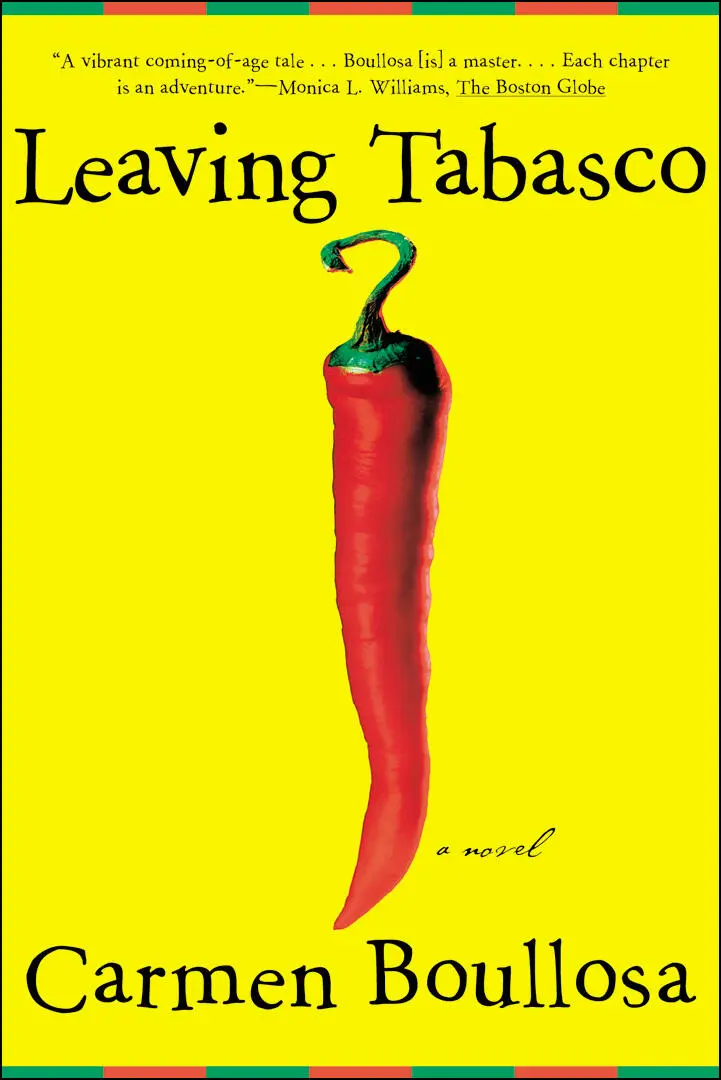
- Название:Leaving Tabasco
- Автор:
- Издательство:Grove Press
- Жанр:
- Год:2002
- ISBN:нет данных
- Рейтинг книги:4 / 5. Голосов: 1
-
Избранное:Добавить в избранное
- Отзывы:
-
Ваша оценка:
Leaving Tabasco: краткое содержание, описание и аннотация
Предлагаем к чтению аннотацию, описание, краткое содержание или предисловие (зависит от того, что написал сам автор книги «Leaving Tabasco»). Если вы не нашли необходимую информацию о книге — напишите в комментариях, мы постараемся отыскать её.
Leaving Tabasco — читать онлайн бесплатно полную книгу (весь текст) целиком
Ниже представлен текст книги, разбитый по страницам. Система сохранения места последней прочитанной страницы, позволяет с удобством читать онлайн бесплатно книгу «Leaving Tabasco», без необходимости каждый раз заново искать на чём Вы остановились. Поставьте закладку, и сможете в любой момент перейти на страницу, на которой закончили чтение.
Интервал:
Закладка:
All my peers had now left Agustini for Puebla, Mérida, Villahermosa, Mexico City, or Switzerland. The granddaughters of the wealthy, paralyzed furniture dealer had gone to spend a year in French-speaking Switzerland. I had been left behind. By now I was a pretty young thing, so I got invitations to all the parties. I didn’t want to go, but my grandmother almost literally dragged me to them.
Kids and magical events were forcibly expelled from these parties, but that didn’t give me an out. I was forced to attend them because of my family’s obstinacy. According to my grandmother, I was being “buried alive in this shitty town,” stuck here because she’d been soft enough to listen to the priest and the teacher, but even so, she wasn’t going to see me disappear from decent society. Decent society? It took all my resources to escape the chubby paw of Marilyn’s father, always on the lookout for a chance to pinch my bum when nobody was watching. He was spurred on by my innovative style of dressing (of which more later) and by the rumors that had been spread about me after the incident at the bakery. The gossip had taken on new life after my mother and grandmother had yielded to the pressure from the priest to let me complete my secondary education at a public school, an education hardly fitting for a girl destined for marriage. Even so, it wasn’t necessary to let my imagination run wild to add excitement to these parties. There were enough natural excesses around without that. A wedding was all that was needed to get the ladies decked out, fur stoles on their shoulders and necklaces of diamonds and rubies over evening dresses that cost hundreds and hundreds of dollars. The Indians peered at these garments from the shadows, unable to understand what metals were woven into the gauze or lamé fabrics and into the chokers decorated with appliqués. They never could have imagined even for a moment that it was thanks to their underpaid labor that the whites were able to lavish such luxuries on themselves.
Brides traveled from the church to the site of the reception in flashy Cadillacs brought to Agustini especially for the purpose. There was competition to see who could spend the most on food and bands and dances and dresses. The centers of the tables were adorned with paper or plastic flowers, with out-of-season fruits and plants raised in greenhouses; orchids ravished from the depths of the forest and giving off dark, disconcerting odors were paraded on the chests of our princesses, along with sentimental verses, a pearl, a feather, and vile-smelling exotic leaves, shanghaied in some dusky dell in order to wilt far from home as part of a gaudy corsage reeking of jungle decay.
For all this, I did get to know a woman who did me some genuine favors. She was a sly wheeler-dealer from the north of Mexico who brought in clothes from the United States. She traveled the whole country at a dizzying pace, toting with her the many brands of merchandise her varied clientele demanded. Other girls went for her pink dresses and her stuffy, provincial, ladylike jackets with their ever-so-daring gilded buttons, but backed up by the wallet of my uncle Gustavo, ever accessible to his niece, I ordered items in the latest fashion and was the first to introduce into Agustini the miniskirt, the belt with a massive buckle fastening over the hip, striped stockings that went well with a tight-fitting blouse, dresses made of paper with a psychedelic design, packed in a box of the same design, and pants in startlingly bright colors that ended as tight as tubes on the calves.
For one wedding my former classmates had returned from their boarding schools in Puebla and at parties wore long, misty dresses, the bodices tarted up with fake jewels, with brooches adorning the bases of long, sumptuous trains, giving them the appearance of outlandish fowls. In contrast, I had ordered in a dress of pleated material, attached to a silvery, slender choker. It had no shoulders — which in itself was enough to cause a sensation — and it ended two inches above the knee — a second sensation, heralding moral turbulence — together with silvered shoes with an unusually big buckle and wide heels that produced as much impact as all the rest of my outfit put together. I put my hair up in a ponytail, as high up on my head as it would go, and refused to back-comb it or put it in curlers. But I did use lots of spray, which drenched my hair, as well as Dulce and me, because she’d be combing my hair while I gave her instructions, in enough icky goo to set it totally rigid, like a doll’s.
My grandmother was outraged by my appearance. “Have you any idea what you look like!” she kept on saying. “Where did this girl come from? Wherever did she get such ideas?”
My anguished mother would add, “Get rid of those vile colors. They’re an eyesore. You shouldn’t let her go out like that, Mama, with her legs showing. What will the men in town say? I mean, what kind of man will want to marry a girl who parades around flashing her thighs, like somebody who’s no better than she should be. I’ve never seen anything like it around here. Even sluts dress with more discretion.”
But my usually officious grandmother had stopped listening. Her horror at my style of dressing had by now rendered her indifferent to the outrageous shortness of my skirt. Her eyes refused to see anything below my waist; her ears declined to grasp what my mother was saying.
But it didn’t take long for my mother to find a way to check my spending on clothes. When the wedding season was over, one evening when Grandma was about to start her nightly story, Mama presented her with the final bill of my supplier, determined to convince her not to let Gustavo go on throwing money away on my bizarre outfits. Grandma listened to her arguments, which tactfully omitted all mention of my bare thighs, and agreed with her. That conversation blocked my access to Gustavo’s wallet. I replied it was Gustavo’s money they were talking about, that he’d okayed my spending it on whatever clothes I chose, but Grandma came at me with “In this house I give the orders!” She was right. The final yes or no was always hers.
School classes were scheduled to get under way the coming week. The dealer had my latest order ready, a bundle of oddities in the latest U.S. style, which I planned to wear at the secondary school. “No way!” said Grandmother. I’d received permission to buy a “discreet” outfit. “And no fancy colors,” added my grandmother, supplemented by “and nothing indecent” from my mother. Just one outfit and nothing more. “Buy something that will go with what you’ve already got, something that won’t call too much attention to itself. Look, something like this.” She delayed doing her accounts to make her point. “Put on a beige skirt and you can wear it with the brown blouse or the silk sand-colored blouse, the one Gustavo brought you. You could get yourself as well … ” Dulce realized that this hymn in honor of discretion in dress was going to replace the nightly story and she started the ritual combing. Meanwhile I managed to turn my mind to other things as Grandmother blah-blah’ed on, and eventually I fell asleep.
The next day I bought from my convention-flouting dealer a pair of jeans and a white, long-sleeved shirt that was to bring a disgusted protest from my grandmother. “Looks like a man’s!” she declared, all vitreous gaze and imperious tone. But to the rest of the dealer’s merchandise I was obliged to say a regretful no. “Don’t fret yourself,” she said, when she saw my worried face. “There are plenty of gals in Mexico City only too glad to buy this stuff. It’s all so fashionable.” I’d planned to borrow one of Uncle Gustavo’s ties from his wardrobe, as soon as I got a chance to talk to him by phone or see him on one of his flying visits. A tie would add a final touch of scandalous modernity to my getup. My darling uncle was my delighted accomplice in whatever scheme I came up with, because he realized that in my heart of hearts I intended no malice. At that time of my life I was an angel. I say it in full seriousness. All I wanted was to find the quickest way to bring peace and prosperity to the whole of mankind.
Читать дальшеИнтервал:
Закладка:
Похожие книги на «Leaving Tabasco»
Представляем Вашему вниманию похожие книги на «Leaving Tabasco» списком для выбора. Мы отобрали схожую по названию и смыслу литературу в надежде предоставить читателям больше вариантов отыскать новые, интересные, ещё непрочитанные произведения.






Обсуждение, отзывы о книге «Leaving Tabasco» и просто собственные мнения читателей. Оставьте ваши комментарии, напишите, что Вы думаете о произведении, его смысле или главных героях. Укажите что конкретно понравилось, а что нет, и почему Вы так считаете.