Carmen Boullosa - Leaving Tabasco
Здесь есть возможность читать онлайн «Carmen Boullosa - Leaving Tabasco» весь текст электронной книги совершенно бесплатно (целиком полную версию без сокращений). В некоторых случаях можно слушать аудио, скачать через торрент в формате fb2 и присутствует краткое содержание. Год выпуска: 2002, Издательство: Grove Press, Жанр: Современная проза, на английском языке. Описание произведения, (предисловие) а так же отзывы посетителей доступны на портале библиотеки ЛибКат.
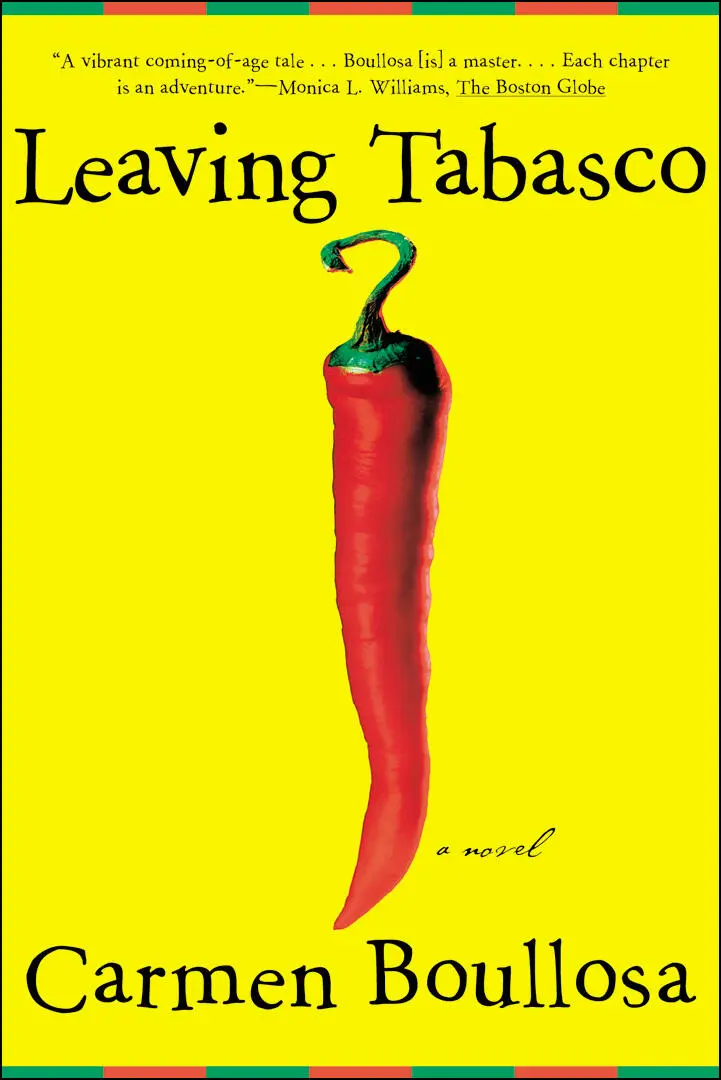
- Название:Leaving Tabasco
- Автор:
- Издательство:Grove Press
- Жанр:
- Год:2002
- ISBN:нет данных
- Рейтинг книги:4 / 5. Голосов: 1
-
Избранное:Добавить в избранное
- Отзывы:
-
Ваша оценка:
Leaving Tabasco: краткое содержание, описание и аннотация
Предлагаем к чтению аннотацию, описание, краткое содержание или предисловие (зависит от того, что написал сам автор книги «Leaving Tabasco»). Если вы не нашли необходимую информацию о книге — напишите в комментариях, мы постараемся отыскать её.
Leaving Tabasco — читать онлайн бесплатно полную книгу (весь текст) целиком
Ниже представлен текст книги, разбитый по страницам. Система сохранения места последней прочитанной страницы, позволяет с удобством читать онлайн бесплатно книгу «Leaving Tabasco», без необходимости каждый раз заново искать на чём Вы остановились. Поставьте закладку, и сможете в любой момент перейти на страницу, на которой закончили чтение.
Интервал:
Закладка:
“But let me stick to the point; that’s enough of such airy-fairy talk. It was the time when my mother, her sisters, and my grandmother María del Mar were buying stuff for the bottom drawer of my aunt Pilar. She was a demon when it came to driving a bargain, always getting the best quality for the lowest price. Not that they told me so themselves, but I heard it from my nanny and my wet nurse. Back in those days no woman from a good family breast-fed her children. I can’t imagine how your grandmother Pastora would have coped if they hadn’t brought in these wet nurses, women who made a living out of breast feeding.
“Once again, I’m losing track, because this isn’t the point of my story. I was trying to explain that when my mother, Pastora, her sisters, and my grandmother María del Mar were in Havana, this business with the stones and the water happened. Since they weren’t around at the time, I never heard them mention it among themselves. So it couldn’t have been them who told me how the stones and the water kept getting all mixed up, changing their appearances, without rhyme or reason, without respect for persons, producing a total muddle nobody could rely on. What was water one minute was a stone the next. During the night the fountains in the patios would start to make grating sounds, when the water suddenly turned into a clattering cascade of fine shiny pebbles, the sort you find snuggled into the bed of a river, or producing a real flood of pebbles when the basin of the fountain itself turned into water and all the pebbles came spilling out.
“Suddenly, if you went out riding, the way everybody did back then, to check on your farms or bring home some coal — you had to leave town in those days to get coal because the Indians weren’t bringing it in, as they’d been forbidden to come into town after what had happened with Miss Antonia and Mr. Gutierrez (but that’s a different story, which I’m not telling you now, because this one’s about when the stones turned into water and the water into stones) — suddenly, as I was telling you, you took a good look at Tostado Hill, that bald peak which looks so out of place around here where everything else is covered in green, since it was made out of solid rock from top to bottom, tough, enormous chunks of stone tossed up from the center of the earth, and a moment later, this hill, this pile of stones, was a waterfall hurtling down with no stopping it, then driven back up into place by the force of its own descent, and then starting to come back down again. It was such a remarkable sight that it became the fashion to make a daily trip out of town to see it, whether it was present as a solid mass of stone or as a tall, weird waterfall.
“The fishermen of the area were at their wit’s end. They’d paddle out in their boats and drop their nets into the water, when suddenly, before they could decide whether it was water going or rocks coming, they’d find themselves stranded in a frightful rocky landscape, unable to move forward or backward, and not interested in jumping out of their boats to chase their prey because of the heat wave. The kids had fun catching the fishes jumping around the stones that the river and the three lakes had turned into. And the hunters of crocodiles and alligators had a rare old time of it and really cashed in. All this I’m describing to you came to an end as soon as my mother, Pastora, and my grandmother María del Mar returned from Cuba. It turned into no more than a memory, just one among many, but what I really wanted to talk about was what happened next, because, as you’re all aware …”
22 First Night
The next morning Dulce cleaned up the drop of blood and washed my nightdress and my hammock, so that no sign of my period remained. She didn’t say a word about it but left in my chest of drawers a bag of cotton for me to find, and by the side of the chest put a woven wastebasket, freshly purchased, and by the side of that, on the edge of the mirror frame, small brown paper bags.
The second night, when I still felt like dying from my strange fall in the river, because of the shooting pains I was experiencing in my gut, Grandma told us a weird story that I listened to without a moment’s inattention, giving it all my energy so as not to fall victim to the stomach pains, until, that is, I promptly sank into a profound sleep, without understanding where Grandma’s story was headed, or what its true subject matter might be or why she had chosen that particular night to describe a place whose existence she had never before breathed a word of, a place totally alien to those we were used to taking our nightly strolls through, places like Agustini, but more nightmarish, wilder, far less tamable.
23 Grandmother’s Story
“You’re all aware that far from the Costa de Progreso, on the way to Carmen Beach, there once existed the Archipelago del Berro, that is, until the Great Wave, the one that preceded the cholera epidemic of 1846, swept it away in a matter of seconds.
“My father had heard talk of it from his nanny, who was part black, part Chole, part Zapotec, and part white. She was dark-skinned all over her body, but her fingertips were light-colored, and her nipples were those of a blonde. She had the swaying gait typical of the coast, but her slender thighs came from Oaxaca, her great big boobs from the north, and her frizzy hair from the blacks. Behind my grandparents’ back, she had described to my father the activities of the Evil One, how the dead in New Orleans came back to life, and how dogs gobbled up naughty children. Her descriptions were packed with convincing details but, all the same, so fantastically preposterous that no adult with a grain of common sense would credit them for a moment. The story about the Archipelago del Berro was included in her tales, but there was a significant difference. The Evil One, the child-swallowing dog, the resurrected dead, all belonged to a world that doesn’t exist, but the archipelago was the pure truth, a place you could touch.
“The Archipelago del Berro, his nanny told him, was situated not far from the coast. Any afternoon he wanted they could hire him a kid to take him there. It was just a matter of his parents dropping him off at the harbor and once they let him out of sight and mind, they could make the trip in three hours.
“Not content with merely mentioning the place and describing it, his nanny more than once got involved in arranging to go see the place.
“‘The First Communion of your aunt Dorita’s daughter is coming up. They’ll be bound to take us to Paraíso. After breakfast the grown-ups will be busy preparing lunch, and you and me can slip away so that you can set eyes on it, and see for yourself that I’m telling the truth …’”
24 Second Night
However hard I try, I still can’t recall the tone in which Grandma described the Archipelago del Berro to us. It’s not just that I can’t remember what it was like or even the point of the story she started to tell us before I nodded off, but I can’t remember at all how she threaded the words together, how she used words to describe something that lay outside the realm of words. I’ll do it in my own way. To the observing eye the Archipelago del Berro was exactly like every one of the graceless islands that dot the coastline of the southern section of the Gulf of Mexico, an area of sea spotted with bits of flat land, of hardly any width, surrounded by shallow waters. The islands are marshy. So marshy it’s hard to say where dry land ends and the water begins. It would be an impossible task to map these islands because they aren’t stationary. In the rainy season they’re flooded, and only in the dry season do they emerge from the surrounding waters, and even then not fully.
Читать дальшеИнтервал:
Закладка:
Похожие книги на «Leaving Tabasco»
Представляем Вашему вниманию похожие книги на «Leaving Tabasco» списком для выбора. Мы отобрали схожую по названию и смыслу литературу в надежде предоставить читателям больше вариантов отыскать новые, интересные, ещё непрочитанные произведения.


Обсуждение, отзывы о книге «Leaving Tabasco» и просто собственные мнения читателей. Оставьте ваши комментарии, напишите, что Вы думаете о произведении, его смысле или главных героях. Укажите что конкретно понравилось, а что нет, и почему Вы так считаете.