Carmen Boullosa - Leaving Tabasco
Здесь есть возможность читать онлайн «Carmen Boullosa - Leaving Tabasco» весь текст электронной книги совершенно бесплатно (целиком полную версию без сокращений). В некоторых случаях можно слушать аудио, скачать через торрент в формате fb2 и присутствует краткое содержание. Год выпуска: 2002, Издательство: Grove Press, Жанр: Современная проза, на английском языке. Описание произведения, (предисловие) а так же отзывы посетителей доступны на портале библиотеки ЛибКат.
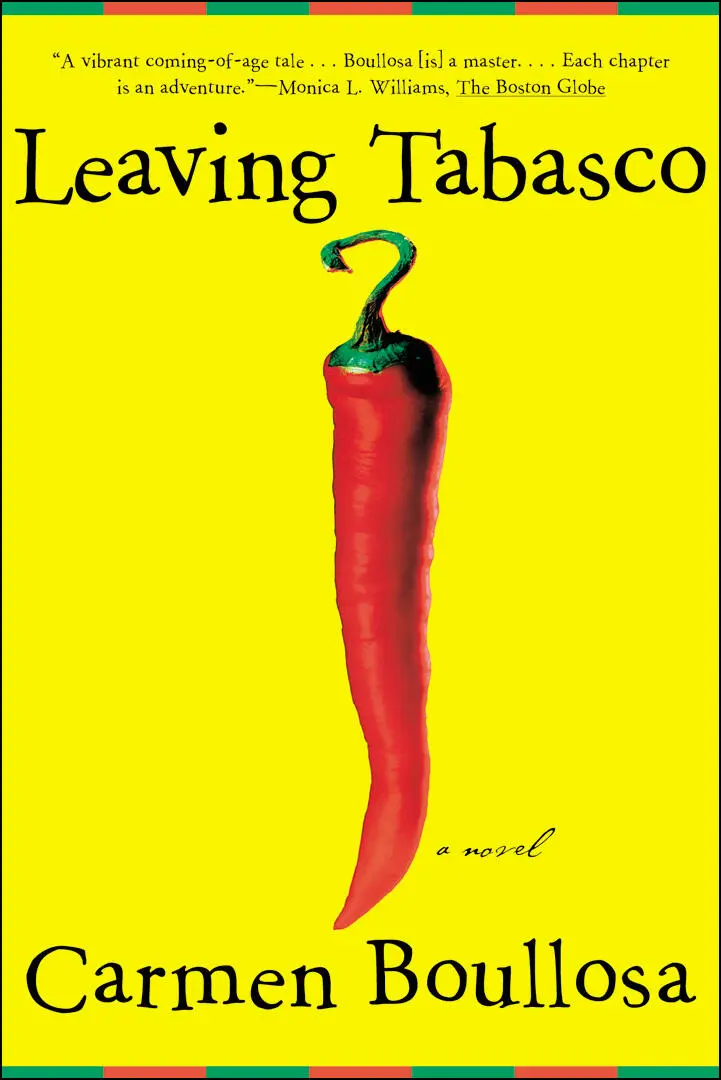
- Название:Leaving Tabasco
- Автор:
- Издательство:Grove Press
- Жанр:
- Год:2002
- ISBN:нет данных
- Рейтинг книги:4 / 5. Голосов: 1
-
Избранное:Добавить в избранное
- Отзывы:
-
Ваша оценка:
Leaving Tabasco: краткое содержание, описание и аннотация
Предлагаем к чтению аннотацию, описание, краткое содержание или предисловие (зависит от того, что написал сам автор книги «Leaving Tabasco»). Если вы не нашли необходимую информацию о книге — напишите в комментариях, мы постараемся отыскать её.
Leaving Tabasco — читать онлайн бесплатно полную книгу (весь текст) целиком
Ниже представлен текст книги, разбитый по страницам. Система сохранения места последней прочитанной страницы, позволяет с удобством читать онлайн бесплатно книгу «Leaving Tabasco», без необходимости каждый раз заново искать на чём Вы остановились. Поставьте закладку, и сможете в любой момент перейти на страницу, на которой закончили чтение.
Интервал:
Закладка:
“Well, where do you suppose he is? He went to Mexico City.”
“Is he going to get married soon?”
“Who is that old rascal ever going to marry?”
“That girl he brought with him.”
“You don’t understand a thing, do you?” she said. Her contempt was so profound she didn’t even grace me with a glance. At that moment I would have preferred her iciest glare to a straight nothing.
On the terrace overlooking the river, my nanny, Dulce, and my grandmother were shifting the cocoa plants left out to dry. The previous night it had rained, and as the ground wasn’t completely flat, they had to prevent the cocoa plants from getting soggy in the pools that formed in the dips. Mama had shut herself up in her room, while Ofelia was cleaning mine without mercy, pouring out into it bucket after bucket of water and scrubbing it with a brush, intent on washing away the last bacteria from my illness, as if I’d been contaminated by the plague or some other highly contagious disease. She’d taken my sheets off to wash, and my mattress was lying outside in the sun.
I took refuge in the kitchen. As everything was topsyturvy, I curled up at the feet of my missing Luz. There was no safer, cozier place. The living room was locked, as usual, and out on the patio the sun was beating down fiercely on the rocking chairs. Also, I felt that here, beside her chair, the spirit of old Luz would bring me comfort. I still wasn’t strong, but not exactly tired, either. I hadn’t brought my book with me, but I couldn’t muster the energy to go to my room and get it and then return to this corner where there still lingered the shade of the woman who clapped her palms playfully together and who, until very recently, had celebrated my triumphs. Bored, I stretched out my hand toward her chair and stroked it. I touched it lightly a couple of times before realizing that, as I touched it, the chair detached itself from the floor and floated. Raising my head, I stood at one side of the chair. I put the palm of my hand on the seat and the chair rose a few inches off the ground. I took away my hand and the chair settled back gently onto the stone surface. I played a sort of yo-yo game with it, placing and removing my hand. I considered sitting in it and experiencing the levitation, but at the last moment I got scared. Old Luz had levitated in this chair just before she got the urge to pee that had meant her death.
I went out of the kitchen. I wanted to leave the house and check out the bandstand in the park and the roof of the market, to see if anything had really happened to them. I sauntered idly around the house, feeling sicker and sicker by the moment. That night the fever returned. Once again the doctor dislodged me from my hammock. I took a couple of weeks to recover fully from the typhoid. When at last I could leave the house again, feeling like the palest, skinniest girl in the world, the bandstand looked perfectly normal. I had a suspicion that its color, like that of the benches below it, wasn’t quite the traditional white, but I couldn’t swear to it. The ice-cream parlor still stood in its place, as did the furniture store and the roof of the market. It was as if nothing untoward had ever happened.
But the stalls of the Saturday market did display a novelty; they were now selling an abundance of desiccated birds and brilliantly colored feathers. That was enough to convince me that the events of the Sundays before my fever had been real.
By the time I got home, Luz’s chair had disappeared. One of her granddaughters had laid claim to it, along with the crib and a pile of knickknacks that Grandma handed over without a qualm. I supposed they were going to sell off the lot as holy relics. Although their only connection had been to ask her for money and temporarily dump some unwanted child on her, they now were eager to make a fast penny out of her bits and pieces. I wondered who bought the underwear of Donã Luz. She had sewn them by hand herself. If her relatives had known the whole story of her demise, they doubtless would have marketed bottles of holy pee.
Some weeks later, we got a new cook, almost as old as Luz, though she was, in fact, her goddaughter. Her name was Lucita. Mama and Dulce quickly baptized her Lucifer, and in a matter of weeks we were all calling her that. She combined the foulest of tempers with a superior talent in the kitchen. She produced moles and pumpkin-seed sauces and stews entirely new to our household. We became acquainted with a sloppy tomato stew, cactus leaves swimming in prawn juice with chile pasilla , and seafood in a hot pickle sauce, heavy with spices. She also cooked up more traditional dishes but gave everything a new twist. She drove Grandma crazy by smoking huge cigars that one of the market vendors used to bring her, along with her regular order for blue candles for the saint whose altar she had erected in her room, and a flagon of brandy.
She sneered at the loaves from the bakery. Instead, she baked heavy, compact bread once a week in the oven of our stove that previously we’d thought hardly capable of making even flan. According to Grandma, the gas she used in the process cost more than buying bread. According to Lucita, that wasn’t her problem, and she carried on producing her tough, dense bread, as if deaf to Grandma’s complaints. Sometimes she came up with a different bread, but it was even harder, made of dark flour and unground seeds, that her previous employer had taught her to make. She had been a German born in Tabasco, according to Lucita, but had sailed for Europe because she couldn’t take any more of the heat in Cunduacan which was rotting her poor old creaking bones. It was my belief the woman had cooked up this excuse just to escape from the clutches of our marvelous but terrible Lucita.
She was a martinet with her assistants. And I say “assistants” because she demanded that Grandma hire someone beside poor Dulce, alleging that there were times she couldn’t cope because the “little girl,” meaning me, kept getting in the way. The great thing in her favor was that she filled our lives with the sweetness of honey, literally and metaphorically. She made unforgettable cakes, genuine marvels that belonged to traditions of latitudes far different from ours, as well as preparing jellies of very different flavors and textures. Her wine jelly was a work of genius, though her mamey jelly was second to none because she made it with nuts and fine brandy over a bed of eggs beaten into a batter that gradually absorbed it. It was perfect, just as her nut jelly was, as well as its cousin, the lemon mousse. She made the best Sacher torte that I’ve tasted in my whole life, and I’ve now been to Sacherhof itself to taste the original, so I know what I’m talking about. Her apple strudel was also beyond belief, but it all had to be eaten almost straight out of the oven, before the humidity with which we were constantly surrounded converted it into an unchewable, sticky goo.
Her cakes brought her such renown throughout the town that every afternoon we had visitors. On the slightest pretext, without a word of warning, my friends or those of Mama would drop by, the priest, the doctor, neighbors, the nuns, brought in by the delicious odors, to get their share of Lucita’s baking. Not that she minded at all. She took it as part of her daily routine that folk would come by every afternoon to sample her cakes and other desserts. After a while she demanded yet another assistant from Grandma, and then another, and then another. The kitchen turned almost into a confectionery store. Dulce consoled herself for the loss of Doña Luz and her own displacement after Lucita’s arrival by cramming herself with cookies and a thousand types of bread which she made with her own hands. Eating so much turned her into a creature of curves, not in the style of Mama but like the rotund women in the market. Soon she looked just like any other shapeless matron of the town. At sixteen she had the appearance of a mature woman. If Lucita were to die, we would have an immediate replacement in Dulce. Not that Lucita showed the slightest intention of dying. She wasn’t related by blood to Doña Luz, but she gave the same impression of being likely to live for century after century. And appearances haven’t proved deceptive. Today, thirty-odd years later, she is still there, the master cook, in the house in Agustini that I haven’t gone back to in all these years.
Читать дальшеИнтервал:
Закладка:
Похожие книги на «Leaving Tabasco»
Представляем Вашему вниманию похожие книги на «Leaving Tabasco» списком для выбора. Мы отобрали схожую по названию и смыслу литературу в надежде предоставить читателям больше вариантов отыскать новые, интересные, ещё непрочитанные произведения.





Обсуждение, отзывы о книге «Leaving Tabasco» и просто собственные мнения читателей. Оставьте ваши комментарии, напишите, что Вы думаете о произведении, его смысле или главных героях. Укажите что конкретно понравилось, а что нет, и почему Вы так считаете.