Carmen Boullosa - Leaving Tabasco
Здесь есть возможность читать онлайн «Carmen Boullosa - Leaving Tabasco» весь текст электронной книги совершенно бесплатно (целиком полную версию без сокращений). В некоторых случаях можно слушать аудио, скачать через торрент в формате fb2 и присутствует краткое содержание. Год выпуска: 2002, Издательство: Grove Press, Жанр: Современная проза, на английском языке. Описание произведения, (предисловие) а так же отзывы посетителей доступны на портале библиотеки ЛибКат.
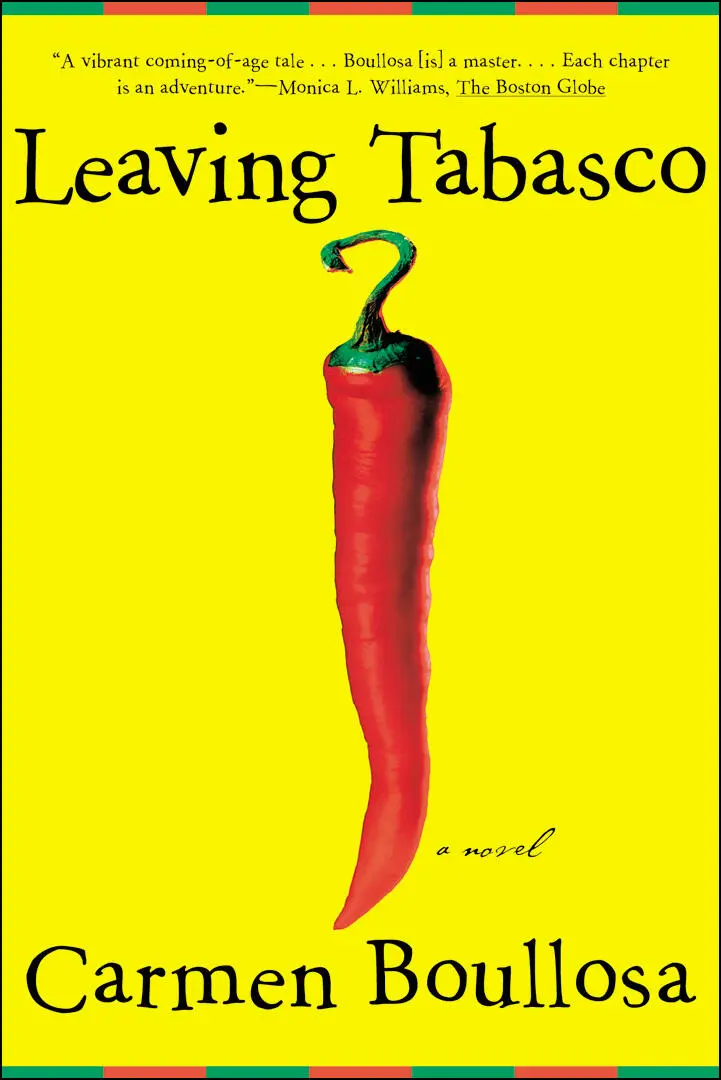
- Название:Leaving Tabasco
- Автор:
- Издательство:Grove Press
- Жанр:
- Год:2002
- ISBN:нет данных
- Рейтинг книги:4 / 5. Голосов: 1
-
Избранное:Добавить в избранное
- Отзывы:
-
Ваша оценка:
Leaving Tabasco: краткое содержание, описание и аннотация
Предлагаем к чтению аннотацию, описание, краткое содержание или предисловие (зависит от того, что написал сам автор книги «Leaving Tabasco»). Если вы не нашли необходимую информацию о книге — напишите в комментариях, мы постараемся отыскать её.
Leaving Tabasco — читать онлайн бесплатно полную книгу (весь текст) целиком
Ниже представлен текст книги, разбитый по страницам. Система сохранения места последней прочитанной страницы, позволяет с удобством читать онлайн бесплатно книгу «Leaving Tabasco», без необходимости каждый раз заново искать на чём Вы остановились. Поставьте закладку, и сможете в любой момент перейти на страницу, на которой закончили чтение.
Интервал:
Закладка:
“She turned completely into pee,” I interrupted again.
Gus looked at me with a smile all over his face.
Grandma glowered furiously. “That kid! I can’t put up with any more from her!”
“Let’s change the subject, shall we?” said Gus. “First things first, and then you can explain the whole thing to me.”
With great formality he made all the introductions.
“This is Helen of Troy,” he said, indicating the girl. She was wearing a navy blue sleeveless dress with white dots, made of a delicate fabric, with a dropped waistline, pleated behind. Falling below the knee, it was an elegant chemise, expensive, fine, and quite the latest thing in fashion. Her high-heeled shoes were white like her purse, which dangled from a long gilded chain. Her long nails were painted a bright, shiny pink. Her hair had been styled in a beauty salon with curlers, teasing, and spray.
“This is her brother, the famous Beelzebub Rincon Gallardo, alias Robert the Devil.” A young man with unruly, tufty hair that no amount of pomade could control offered his hand to my grandmother. He was wearing an iridescent red-and-black bow tie. His short-sleeved shirt was white, his trousers checkered. One look at him told me what Grandma must be thinking: “This poor fellow has never made the acquaintance of a comb, and nobody’s introduced him to the favorite aunt of every decent family, Madame Savoir Faire.”
These two siblings with the ponderous surname looked like rich orphans left to fend for themselves. They had invested a small fortune in their clothing but still had the air of a couple of homeless dogs, of two flayed foxes from the middle of nowhere. He with his silly, skewed bow tie, and she with her starveling look and her need to impress the whole world, but with her dress half off one shoulder and her bra strap showing.
“Jack needs no introduction. He’s already part of the family.”
Uncle Gus then gave me my present, a beautiful Barbie with a stunning dress and a huge male doll, almost as big as me, dressed like a bridegroom.
“I brought my fiancée, and to make things even I brought you a fiancé so that you can’t say I left you before you left me. What do you think of that?”
I thought the Barbie was wonderful, but I hated the male doll. And I hated Gus’s sweetheart even more, though I said nothing. I stood there like a grinning idiot, while he took the girl’s hand and held on to it, with her fingers encircling his. Now she looked less like a creature abandoned than an abandoned creature, the slut who had stolen my darling uncle.
A few minutes later I had accepted the idea that my doll boyfriend was quite charming, though he didn’t hold a candle to Barbie. But Uncle Gus’s girlfriend only got worse in my eyes, a tart to the core. I ran off to put my presents in my room, and immediately after they announced they were serving the appetizers.
The girl asked where the bathroom was, and my grandmother threw her a murderous glance. She considered it the height of bad breeding to use somebody else’s bathroom, but she wasn’t taking into account that they’d spent six hours on the highway. How could that slut, I kept asking myself, look so cool, so freshly showered, after battling dusty, bumpy roads in a speeding car? While she was in the bathroom, the doctor arrived, and a few minutes later the priest, without his soutane, dressed in a light-colored casual shirt, like any ordinary mortal.
They ate their appetizers on the terrace, watching the river glide by. The girl outdid herself in praising everything. Her mouth was now bright red, as she’d put on lipstick in the bathroom. I was convinced she was lying, that she was only saying this stuff to flatter Mama and Grandma. She wasn’t particularly smart, and didn’t seem to realize that it was to her advantage to win me over too. But she ignored me, as if I didn’t matter. A short while later she took out a small mirror to check her face, as though some minor flaw might ruin the whole effect. I thought she was horrible.
I stuck close to Gustavo, first standing by his side, then sitting on one arm of his chair. I finished up climbing onto his knees, but, for the first time in our long acquaintance, he didn’t pay me much attention. At a quiet moment I said to him, “Let’s go down to the riverbank and I’ll tell you all about old Luz.”
He excused himself from the company and we went down together. I told him what I’d seen, that Luz had awoken with the stigmata of Christ, levitated, chair and all, and then disappeared by turning into pee in the darkness of her bathroom.
“The things you come out with! What you need is to get out of this town as soon as you can. It’s not possible that you believe all this gobbledygook—”
“But I saw it with my own two eyes, Gus. I swear it. I’m not lying or making things up. Honestly.”
He took me by the hand. Now it was my hand he was holding. Then he led me back to the others. China Jack had everybody in stitches with a joke about the president, Lopez Mateos. Uncle Gus said nothing for a moment or two and held me on his knees, but after a moment he asked me to get up. Then he got up himself and went for another martini and totally forgot about me. There were six people he had to attend to, and one of them seemed to be worth double, maybe because of her disgustingly red mouth. I went by myself back down to the side of the river to jump on the stepping stones before they called us to eat, trying not to think about the slut and her expensive dress.
I’d hardly gotten settled at the table when a funny feeling came over my throat. I couldn’t eat. The food just wouldn’t go down. I made a terrific effort with the first bite and I coped with the prawn cocktail, overcoming the nausea I was feeling. But that was it. I couldn’t manage another thing. I really did try, but it was no use. Gustavo congratulated me heartily on the G ’s on the bread, after Mama told him I was the one responsible, and then I asked to be excused from the table.
“What’s wrong with the child?” asked Gustavo.
“Nothing. What could be wrong with her?” asked Grandma.
“She’s feeling sick, Mama. Look at her. She’s quite pale,” said my mother.
“Yes, definitely not herself,” Grandma agreed.
She shouldn’t have said that because it was as if she’d given me permission to be sick in earnest. I ran to the bathroom and threw up. Then I tumbled into my hammock, sweating profusely. In a second or two I had become sick, truly sick. By the time they’d finished eating, I was burning with fever. It made me furious when Gustavo went out with China Jack and the tart to show them his failed projects. His favorite was a gigantic Ferris wheel. It had come to nothing because nobody in Agustini found it fun. “You go up so high in it you almost scrape your belly on the sky. You’d have to be crazy to want to go up that high.” But then my thoughts wandered away from my indignation and how sick I was feeling, and for I don’t know how long, I paid in my imagination a return visit to the basement, where men naked to the waist worked with flour.
“Got anything to lend me, dearie?” a voice was saying. I saw his hips pumping away inside the enormous mass of dough which responded to his movements as if it had a life of its own.
With rapt attention I checked out their faces and inspected all the oddities of the place. Those men didn’t belong to this world. The huge masses with which they were playing didn’t seem to belong here, either. Awkward, almost aquatic, kindred of the swamps, they slid and bounced like living creatures. The dough scared me more than the bakers did, though both filled me with indescribable horror.
19 Fever
Getting out of my sickbed four or five days later — and it really had been a bed, because the doctor had had them take down my hammock and for the first time in my life put me in an actual bed — everything had become blurry in my memory. The distortions produced by the fever had led me in turn to doubt the wild things that had happened before the fever, things that, far from questioning, I had hugged as mental treasures. I could no longer say for certain if the odd goings-on that had plagued our Sundays were factual. I had nobody to ask. All that remained in the kitchen of old Luz was her wooden chair. I felt desolate. I didn’t know which of my memories I could trust. I asked my mother for Uncle Gustavo’s whereabouts.
Читать дальшеИнтервал:
Закладка:
Похожие книги на «Leaving Tabasco»
Представляем Вашему вниманию похожие книги на «Leaving Tabasco» списком для выбора. Мы отобрали схожую по названию и смыслу литературу в надежде предоставить читателям больше вариантов отыскать новые, интересные, ещё непрочитанные произведения.


Обсуждение, отзывы о книге «Leaving Tabasco» и просто собственные мнения читателей. Оставьте ваши комментарии, напишите, что Вы думаете о произведении, его смысле или главных героях. Укажите что конкретно понравилось, а что нет, и почему Вы так считаете.