Joanna Kavenna - Inglorious
Здесь есть возможность читать онлайн «Joanna Kavenna - Inglorious» весь текст электронной книги совершенно бесплатно (целиком полную версию без сокращений). В некоторых случаях можно слушать аудио, скачать через торрент в формате fb2 и присутствует краткое содержание. Год выпуска: 2008, Издательство: Faber and Faber, Жанр: Современная проза, на английском языке. Описание произведения, (предисловие) а так же отзывы посетителей доступны на портале библиотеки ЛибКат.
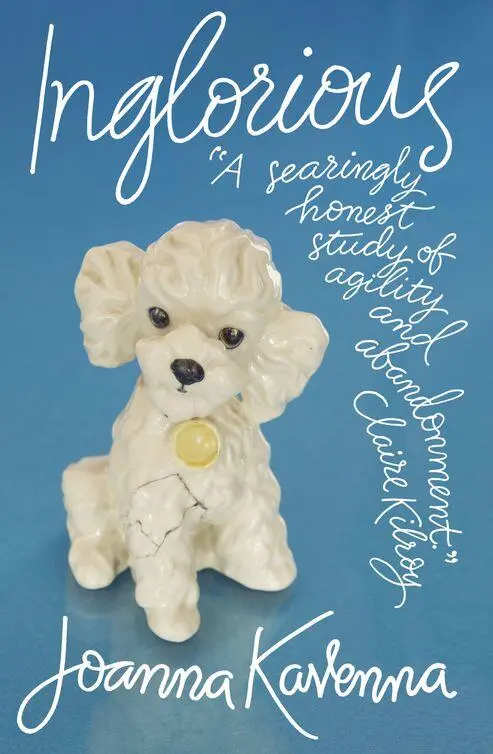
- Название:Inglorious
- Автор:
- Издательство:Faber and Faber
- Жанр:
- Год:2008
- ISBN:нет данных
- Рейтинг книги:3 / 5. Голосов: 1
-
Избранное:Добавить в избранное
- Отзывы:
-
Ваша оценка:
Inglorious: краткое содержание, описание и аннотация
Предлагаем к чтению аннотацию, описание, краткое содержание или предисловие (зависит от того, что написал сам автор книги «Inglorious»). Если вы не нашли необходимую информацию о книге — напишите в комментариях, мы постараемся отыскать её.
Having stripped herself of her former context, and become inexplicable to her friends and family, she embarks on a mock-epic quest for a sense of purpose, for an answer to the hoary old question 'Why Live?' Her comical grail quest is fraught with minor trials — encounters with former friends, unsympathetic landladies, prospective employers, theory-mongers, and denizens of the 'real world'. Rosa also falls into a state of constant motion, nervously treading around London. Yet her constant circumnavigations of the city fail to enlighten her, and she escapes from the city to join friends in Cumbria. This escape finally precipitates the climax of the book, the greatest trial, and the beginnings of her return to normality, whatever that was.
Inglorious — читать онлайн бесплатно полную книгу (весь текст) целиком
Ниже представлен текст книги, разбитый по страницам. Система сохранения места последней прочитанной страницы, позволяет с удобством читать онлайн бесплатно книгу «Inglorious», без необходимости каждый раз заново искать на чём Вы остановились. Поставьте закладку, и сможете в любой момент перейти на страницу, на которой закончили чтение.
Интервал:
Закладка:
‘I’m going to stay with friends today,’ said Rosa. ‘There’s no point discussing Liam. I’m pretty much indifferent.’
‘Indifference seems unlikely in this situation,’ said her father.
‘That’s why I qualified it with “pretty much”,’ said Rosa, pertly.
‘Yes, I understand.’
‘How is Sarah?’
‘Oh, she’s very well. She’s redecorated the kitchen. And she likes teaching the neighbours Spanish.’
‘What are you doing now, father? Are you writing things?’
‘No no, not at the moment. But I have an idea. I wanted to write a history of the Avon Gorge, from the first settlers to the Suspension Bridge and then perhaps even to the present day.’
‘That would be interesting,’ said Rosa.
Perhaps it was something about authority. Her father never really had any. Still, here they were, in this smoke-strewn room which Rosa had inexplicably chosen. He had come to see her, finding his way here. Probably he had printed a street map off the Internet, an X marking the spot. He had brought her an article of his to read, a piece on local shipping which had been printed in an obscure journal. He had neatly stapled the pages and put them in a plastic folder. He had stapled the pages and packed them to show her. Oh God, thought Rosa. There was no need to pity him. Her father was fine. On the brink of death, so old his hands trembled when he grasped the handle of a knife, but he was fine. It didn’t work; life simply couldn’t wander along if you assumed everyone was in despair. So she took the folder and said it looked enthralling.
‘Thanks,’ she said.
The rest was undistilled palaver. She palavered on through the menu, musing on the specials, listening to her father talk about the quality of the wine. The table next door laughed uproariously. There were two bald men in suits trading jokes and two women screaming with laughter. The women were dressed in plumage and bright colours, little heels. Virtuously, they had won the coveted plume, and now they were being fed and watered. The men had their ties in their food. Now they all laughed again, and someone to Rosa’s left scraped a chair across the floor. Then a knife clattered on a plate.
‘Loud in here,’ she said. ‘My fault. Bad choice.’
‘Shall we order?’ said her father.
The waiter had arrived. They ordered. They had to raise their voices and as the waiter wrote things down the women laughed again. How polite they were! Or perhaps they are simply happy, thought Rosa. The waiter said, ‘What would you like?’
‘Yes, the pea soup,’ she said. Pea soup, everything is fine, just a nice bowl of pea soup, a bit of conversation with your father, then you’ll go and visit some friends, forget the TEMP, that word that you are investing with unjustifiable significance, as if to compensate you for your failed schemes, and you will return and go into service for Brazier, if she wants you. That’s that , she thought. That is damn well that. Now, on with lunch!
Another couple sat down at an empty table to Rosa’s right. The man bellowed as he sat down. Now they were cornered. Trapped in a crowd of people talking loudly, all of them certain, somehow, of the justice and solidity of their speech.
‘You have to grip life, or it all collapses into chaos,’ said her father.
‘But that’s the question, isn’t it?’ said Rosa. ‘It’s a question of courage.’
‘… Like your sweater,’ said the woman to the man on the next table.
‘Thanks, thanks. I did my seasonal shop.’
‘Very nice.’
‘Courage about what?’ said her father.
‘And Barry said, look, love, why not just leave your knickers here …’ said one of the bald men at the other table. The women screamed.
‘How about jobwise?’ said the man with the nice sweater.
‘Kind of OK. I do need to do more. I’ve applied for two jobs. One at CEA. The other was agency work. But I didn’t get interviews in either.’
‘Bad luck.’
‘I need a sideways move somewhere,’ said the woman.
‘HA HA HA HA HA HA HA,’ said the women on the next table.
‘And then I said what’s the fucking problem? And you know what Barry’s like with ten pints down him!’
HA HA HA HA HA HA
‘I wonder,’ her father said, ‘what is behind your … your …’ Then poignant ellipsis. She was meant to fill it.
Trying to be helpful, she said, ‘Father, I waste whole days in self-analysis. Don’t start wasting your time too.’
‘But you haven’t worked for such a long time. It worries me. It must worry you. I wonder …’ That was her father. As elliptical as anything. Always when he spoke about things that really mattered, he faltered. It was Grace’s old fatal caesura, except with her father it was less a caesura than total silence. Once he slipped into a pause there was nothing on the other side. That made her talk, of nothing much, and after she had presented him with a series of small things, cast and re-cast, pearled and knitted together, she paused for a sip of wine. Then the food arrived and they raised their forks. Her father said: ‘I don’t know what you live on. Why don’t you come home for a while?’
‘Thanks, but I’m not insolvent,’ lied Rosa. That was her congested lie, and now she would have to stick to it. That meant, and now she was furious with herself, that she couldn’t ask him for a loan. Failure of mission! Abort! Abort! Once more her cravenness made her fidget. She had her hands in her lap, and she scraped her nails together. Nothing to be said, she thought. Now you must sustain the illusion you have fostered. Even though he didn’t seem to believe it. ‘You must be living off your friends,’ he said, with a touch of scorn. He put a hand to his fringe. He had abundant curls — they softened his hard, thin face. His hands were covered in liver spots. They weren’t a long-lived family. Her grandparents had faded out long before seventy. They put in respectable performances. They dragged themselves towards the mean. Then the women became demented and the men dropped dead. Her mother had seemed to be robust and vital, with her bright eyes, her clear skin. She moved gracefully and well, and at fifty she had run in a local marathon. She played tennis with friends, even when she was sixty-three. She had good legs, fine broad shoulders. Now Rosa was saying, ‘I understand you’re worried. But I’m quite certain it’ll be all right. I’ll find a way to solve it, a way to live.’
‘None of us knows how to live. The quest for psychological perfection, for the right “state”, for “happiness” — my dear, we never troubled ourselves with this sort of thing,’ said her father. ‘We just got on with it.’
‘What was “it”, precisely?’
‘What do you mean?’
‘This “it” with which you were getting on?’
Her father paused. ‘It was a job, a wife, a family, money, work. A life.’
‘Whose life?’
‘One’s own. The lives of one’s family. Your generation drifts towards forty without putting down roots.’
‘Who’s that, Dad?’
‘You, your friends.’
‘Don’t worry, they’re all putting down roots.’
Oh how they are putting down roots. All implanting themselves nicely. They do it well. Very well , thought Rosa. You don’t see the strain. It’s apparently effortless. Liam, for instance, look at the man. An indeterminate span of months with Grace — if we believe their story three months, if we believe intuition, rumour, more like nine — and already they’re going up for the legal bind, the holy blessing at the altar, till death do ’em part, and may they live long and prosper and the rest.
Tell your father. Ask him for help.
Читать дальшеИнтервал:
Закладка:
Похожие книги на «Inglorious»
Представляем Вашему вниманию похожие книги на «Inglorious» списком для выбора. Мы отобрали схожую по названию и смыслу литературу в надежде предоставить читателям больше вариантов отыскать новые, интересные, ещё непрочитанные произведения.





Обсуждение, отзывы о книге «Inglorious» и просто собственные мнения читателей. Оставьте ваши комментарии, напишите, что Вы думаете о произведении, его смысле или главных героях. Укажите что конкретно понравилось, а что нет, и почему Вы так считаете.