Joanna Kavenna - Inglorious
Здесь есть возможность читать онлайн «Joanna Kavenna - Inglorious» весь текст электронной книги совершенно бесплатно (целиком полную версию без сокращений). В некоторых случаях можно слушать аудио, скачать через торрент в формате fb2 и присутствует краткое содержание. Год выпуска: 2008, Издательство: Faber and Faber, Жанр: Современная проза, на английском языке. Описание произведения, (предисловие) а так же отзывы посетителей доступны на портале библиотеки ЛибКат.
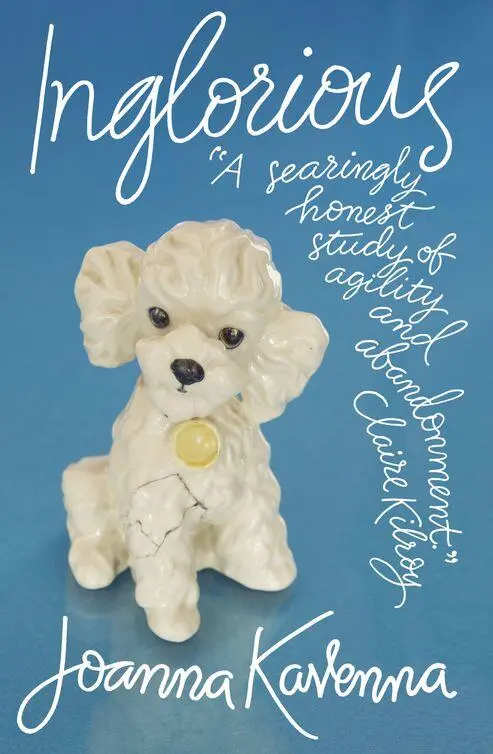
- Название:Inglorious
- Автор:
- Издательство:Faber and Faber
- Жанр:
- Год:2008
- ISBN:нет данных
- Рейтинг книги:3 / 5. Голосов: 1
-
Избранное:Добавить в избранное
- Отзывы:
-
Ваша оценка:
Inglorious: краткое содержание, описание и аннотация
Предлагаем к чтению аннотацию, описание, краткое содержание или предисловие (зависит от того, что написал сам автор книги «Inglorious»). Если вы не нашли необходимую информацию о книге — напишите в комментариях, мы постараемся отыскать её.
Having stripped herself of her former context, and become inexplicable to her friends and family, she embarks on a mock-epic quest for a sense of purpose, for an answer to the hoary old question 'Why Live?' Her comical grail quest is fraught with minor trials — encounters with former friends, unsympathetic landladies, prospective employers, theory-mongers, and denizens of the 'real world'. Rosa also falls into a state of constant motion, nervously treading around London. Yet her constant circumnavigations of the city fail to enlighten her, and she escapes from the city to join friends in Cumbria. This escape finally precipitates the climax of the book, the greatest trial, and the beginnings of her return to normality, whatever that was.
Inglorious — читать онлайн бесплатно полную книгу (весь текст) целиком
Ниже представлен текст книги, разбитый по страницам. Система сохранения места последней прочитанной страницы, позволяет с удобством читать онлайн бесплатно книгу «Inglorious», без необходимости каждый раз заново искать на чём Вы остановились. Поставьте закладку, и сможете в любой момент перейти на страницу, на которой закончили чтение.
Интервал:
Закладка:
He had once taken Liam down to the pub and they had, according to Liam, talked about the history of the railway and its effects on tourism in Bristol. They had also discussed the origins of dog racing. Liam had said it was all most informative. But they were never good friends. They shook hands readily; on special occasions they extended themselves to a mutual slap on the back. They gave each other suitable books at Christmas. It never quite sparked. Liam was a practised adept, good at putting people at their ease. He spilled words into pauses as if he was following instructions. Rosa’s father was silent for much of the time, shy and undemonstrative, except when he disagreed really violently with someone. Still it was clear to Rosa that they didn’t enjoy talking to each other. With Rosa’s mother, Liam was gracious and respectfully flirtatious. That was wily, though at the time it was most likely well intentioned. Perhaps sincere. He had always kissed her mother when they met, warmly, with conviction. It seemed so at the time.
Rosa’s father was tall and thin, with gaunt cheeks and large pale eyes. He had looked old for decades, perhaps because of his predisposition to overwork and smoking. One side of his family had been Flemish, some of them merchant seamen who arrived in Britain in the seventeenth century. They settled in Bristol, but little was known about them. There were odd relics: some fine pipes, a seaman’s trunk which Rosa’s father said his great-great-grandfather found floating in the harbour at Bristol. Rosa never believed him. The men of that famly went to sea; the women stayed on land. Neither sex had written memoirs or poems, and they had receded like the tide across the mudflats. Rosa’s father tried to be active, to play up to his nautical heritage, but he was hardly robust. He swam a little, and he played occasional games of tennis. In the autumn he sometimes liked to roam through the forests along the Avon Gorge, whistling out of tune. But really he was natively sedentary: he was a historian, he taught for a while at the university, and he had his own private archive of dusty books, their pages spotted with age. The shelves of his study were layered with ancient manuscripts in rolls, file cards, folders, neat boxes, drafts of his writings. For years he had written about local history and the Arthurian legends. Once her parents had a fight and Rosa’s mother told him to sell his books, his manuscripts in coils. ‘A waste of a life,’ she said. Then she was pale and penitent for a week. Perhaps as a result, his great work on the Round Table remained unfinished. For a while Rosa entertained a fear that it would be left for her to edit after his death. Now she thought Sarah could do it — Sarah with her scholarly air and round glasses, who taught him Spanish when he was trying to rebuild his life, as his friends had told him to — her father who took advice better than Rosa and was determined to salvage something. He met Sarah and Rosa hardly wanted to imagine the rest. Sarah was scented; she smelt of floral perfumes and she wore Omega workshop prints and sandals. That made it hard to love her. She told stories about everyday things, pleasing, convivial stories that Rosa might have liked, had her mood been better. But why, she thought, panting at the door, why the hell am I thinking about Sarah?
She was eager to see him, though she knew why he had come. The thought of him caused her a mixed sense of love and pain. Or a sense that she was causing him pain. As she said hello he stood and kissed her. He had been hopeful for a while and now he was searching and intent. It was clear that he had come to berate her. He had come there in an old pair of cords and a worn jacket, with a blue shirt that made him look paler than usual. She saw his hair was passing from grey into a more brittle whiteness. It was like fluff, or as if spring blossom had drifted onto his head. His eyes were tired, darting glances around the room. He kept fiddling with his knife. In short, her father seemed on edge. They sat under the wings of a fan, which beat a circular progress above their heads. For a while Rosa couldn’t talk, and then she got her breath back and her father said:
‘How are you? What are you doing at the moment?’
She had the menu in her hand. She understood his point. Because it was only in doing that you could prove your commitment to being. Being, alone, was insufficient. Being was a state of idle passivity — anyone could ‘be’. To ‘do’ was the thing. We do, therefore we are. And onwards, she thought, turning to her father.
‘You look tired,’ he added, when she didn’t reply.
‘So do you.’
‘Well, that’s the prerogative of the nearly dead. But you’re young.’
‘You’re not nearly dead.’
‘I feel half so.’
‘Half nearly dead, that doesn’t sound too bad. Sounds quite far from the final snuffing out to me.’
‘Who can say, my dear child, who can say,’ said her father.
They smiled at each other. There was a brief pause. Would they like wine, asked the waiter. Oh they thought they would. A nice bottle of house wine, said her father, looking at the price list with an eyebrow raised. An order was dispatched, and the waiter departed. Then her father got straight back to the bone, gnawing on. For a few seconds she pitied him, this old man, consigned to a house which must be — no matter how much Sarah talked and splashed her skin with floral potions — steeped in the past. At least Rosa was away from all of that, those synecdochical horrors, everything in her mother’s taste. She hardly visited him at all, for reasons of cowardice. He had come to London, a journey of several hours, and she pictured him sitting on the train with the paper, ruination on his weathered cheeks.
She said, ‘How have you been, Dad? How’s your health?’
‘Oh not too bad at all. The doctor says there’s not much to worry about. That’s a vagueness I positively encourage. I don’t want them giving me a sentence. So I see the doctor as seldom as possible, and he stays away from me. He’s told me I can drink a bit, in moderation, and that’s much better. Horrible when you have to eat yoga bars and dry biscuits. Quite takes the pleasure out of things,’ he said. His brow creased and he was smiling very slightly. These things embarrassed him.
‘That’s good,’ she said.
They ruffled their napkins and sipped their drinks. The restaurant was over-lit, and the roof was high above them. It made the place like an airport lounge. It was far too fashionable for her father. Simply a bad choice, thought Rosa. He would have been happy in a pub, with a pint of lager, a steak and kidney pie. He was pawing gently at the tablecloth, brushing crumbs onto the floor. He had been well, he explained. ‘And how is Liam?’
‘He’s getting married, I told you.’
‘Oh yes, when is that?’
‘Friday.’
‘And who’s the bride to be?’
‘Grace, you never met her. I told you all this, Father.’
‘Yes, yes, I remember.’ Of course he remembered. ‘Well, and you’re going to the wedding? Or staying well away?’ He was trying to be jocund. She understood why he adopted this insouciant tone. That particular quagmire was nothing. He had dealt with much worse. He had been ill when her mother died, distraught and abandoned. Of course it had been bad for her, but for her father — her rage and despair were nothing compared to her father’s grief. For some time he been alone, just the neighbours and a few old friends for company. He had his tennis friends and a crowd of local historians. But they could hardly fill the gaping void left by his wife. So Rosa always felt guilty when she saw him because she couldn’t help him, and, still worse, she had started to worry him. For months she had been causing him pain. It was clearly unfair. She should be taking care of him. Honouring him, even.
Читать дальшеИнтервал:
Закладка:
Похожие книги на «Inglorious»
Представляем Вашему вниманию похожие книги на «Inglorious» списком для выбора. Мы отобрали схожую по названию и смыслу литературу в надежде предоставить читателям больше вариантов отыскать новые, интересные, ещё непрочитанные произведения.



Обсуждение, отзывы о книге «Inglorious» и просто собственные мнения читателей. Оставьте ваши комментарии, напишите, что Вы думаете о произведении, его смысле или главных героях. Укажите что конкретно понравилось, а что нет, и почему Вы так считаете.