Joanna Kavenna - Inglorious
Здесь есть возможность читать онлайн «Joanna Kavenna - Inglorious» весь текст электронной книги совершенно бесплатно (целиком полную версию без сокращений). В некоторых случаях можно слушать аудио, скачать через торрент в формате fb2 и присутствует краткое содержание. Год выпуска: 2008, Издательство: Faber and Faber, Жанр: Современная проза, на английском языке. Описание произведения, (предисловие) а так же отзывы посетителей доступны на портале библиотеки ЛибКат.
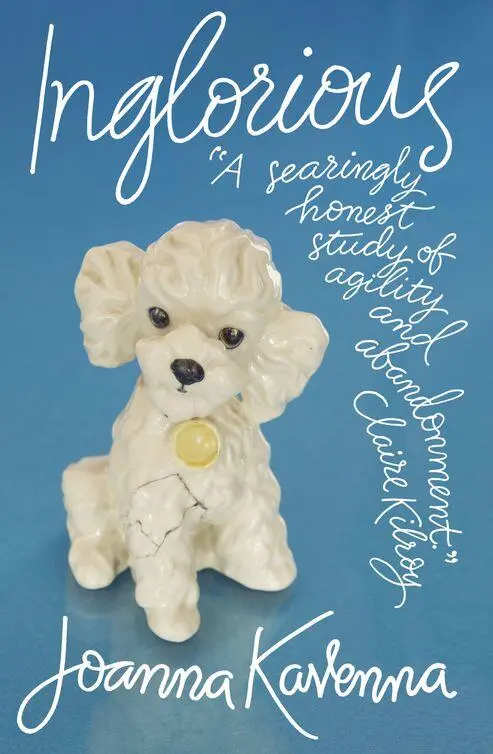
- Название:Inglorious
- Автор:
- Издательство:Faber and Faber
- Жанр:
- Год:2008
- ISBN:нет данных
- Рейтинг книги:3 / 5. Голосов: 1
-
Избранное:Добавить в избранное
- Отзывы:
-
Ваша оценка:
Inglorious: краткое содержание, описание и аннотация
Предлагаем к чтению аннотацию, описание, краткое содержание или предисловие (зависит от того, что написал сам автор книги «Inglorious»). Если вы не нашли необходимую информацию о книге — напишите в комментариях, мы постараемся отыскать её.
Having stripped herself of her former context, and become inexplicable to her friends and family, she embarks on a mock-epic quest for a sense of purpose, for an answer to the hoary old question 'Why Live?' Her comical grail quest is fraught with minor trials — encounters with former friends, unsympathetic landladies, prospective employers, theory-mongers, and denizens of the 'real world'. Rosa also falls into a state of constant motion, nervously treading around London. Yet her constant circumnavigations of the city fail to enlighten her, and she escapes from the city to join friends in Cumbria. This escape finally precipitates the climax of the book, the greatest trial, and the beginnings of her return to normality, whatever that was.
Inglorious — читать онлайн бесплатно полную книгу (весь текст) целиком
Ниже представлен текст книги, разбитый по страницам. Система сохранения места последней прочитанной страницы, позволяет с удобством читать онлайн бесплатно книгу «Inglorious», без необходимости каждый раз заново искать на чём Вы остановились. Поставьте закладку, и сможете в любой момент перейти на страницу, на которой закончили чтение.
Интервал:
Закладка:
‘You have to have a scheme,’ he said.
‘I do,’ she said. ‘Rather, I am in the process of developing one.’
‘Well, there’s the telephone,’ he said. ‘Give me a call soon. Don’t leave it another month.’
‘Of course,’ she said. ‘Of course I won’t.’
They stood in silence for a while. Then he said, ‘Nothing is more important than happiness. Nothing is worth being unhappy about.’
A bus went past. The wind blew in their faces. Her father’s faded jacket flapped at the corners. Rosa was still thinking about the money and her unanswered question. She had it phrased. I wondered, could you lend me a small amount of money? I’ll pay you back almost immediately. Just to tide me over for a few weeks. Instead she said: ‘I understand that. But there’s the theory and the practice. It’s hard for the two to coalesce.’
Coalesce? she thought.
He turned to go, and she said, ‘Father?’
‘Yes, Rosa?’ He turned back towards her, holding his satchel with both hands. That was the moment! Just a hundred or so, though she knew that made little difference. Still she stood there, trying to say something. A thousand, and I will have a job by the end of the month! Just a thousand! He was expectant, troubled, waiting for a confession. He had come for lunch, hoping to rally her spirits. His story about having a friend to see — she wasn’t sure she believed it. Her father didn’t really have any friends. He had paid for a ticket, a lunch, the trip had cost him a couple of hundred. She had his stapled article in the pocket of her coat. She thought of him sitting on the train, holding a book to his face, his legs under a plastic table. If she divulged all, he would go home sad. She had caused him pain already. Now to ask him for money!
‘Have a good journey home. Thanks so much again for lunch,’ she said.
‘My pleasure,’ he said, and walked away quickly, not turning back.
She said goodbye to his retreating form and headed towards Notting Hill. She was thinking of him going to the station, his jacket flapping in the wind. She imagined him holding out his ticket to the guard, his face blank. It was clear she had no sense of proportion. But she was crying hot tears as she walked along. She was moving as fast as she could, rubbing her face. It was nearly too late, she was suddenly aware just how late it was. With her head down, she walked on. Her train was leaving soon, so she turned the corner and found a bus. It was a fine bus, which took her past the park, where she saw the trees in their autumn severity, thin and sinewy, and underneath she saw the lower lines of bushes and the meandering silver string of the river. With her nose against the glass, she noticed joggers on the path below, and the straight-backed forms of cyclists, turning circles with their feet. There was a queue of cars at Hyde Park Corner, jammed up at the lights, waiting. The traffic shifted slowly. The bus turned left at Marble Arch, and moved up towards Marylebone.
Hunched into her coat, she tried to stay calm. It was absurd to be so mournful about her father, who was a grown man with a lover and a sense of a benevolent deity to console him. Her father was religious, she thought. He had found his church and locked the door behind him. It was how he coped, in the end, with the death of his wife. His belief rendered things palatable, perhaps. When he went home, he thought of God and a celestial palace. He went to church on Sundays with Sarah on his arm. This should make her pity him less. It was of little importance if he was right or wrong. What matter if he boiled off into oblivion, so long as he was happy while he lived? He was right in that. Of course it didn’t matter, and the only thing to do was keep your head up, keep on going. Jung said that for psychotherapeutic purposes it was best if a person believed that death was not the end. For the sake of mental well-being, it was the most relaxing state to be in. You wouldn’t know until it was too late either way, so why not chance it? Still she couldn’t. And she thought of Tolstoy with his life crisis, at fifty or so he suddenly wondered what the point of it all was, and she had always thought he had left it late, but there he was trembling under the sentence, horribly frightened, in such torment he thought he would hang himself, and he resolved it by thinking himself into faith. He looked out at the peasants tilling the fields and worshipping a just God, and he rendered himself religious. Rendered himself, through a willed process of reasoning — it seemed impossible!
Even so, she was fortunate. It was a slick trade-off, from the former certainties of religion, to a better state of finitude. Instead of a cloudless eternity, the prospect of an afterlife, in this age you got the consolation prize — death as the unspoken secret of life, immanent but ignored, suffering as something that happened to other people, life to be lived free of the awareness of death, like being a dog or a cat. Free and ignorant. Then suffering came as a shock, and death as something incongruous, having nothing to do with life. Perhaps it was better like that. She had read about Zeno and she understood the argument though it hardly helped. If you were rational about it, death didn’t happen to the individual because it was at the point of death that the individual ceased to be. At death, one’s subjectivity ceased. You were no longer yourself. This was all well and good, thought Rosa, quite coherent philosophically but no damn consolation for the snuffing out of me! Me of all people! she thought. This made her grip her bag in a spasm of fear, and then she turned to a man near her who was shuffling his feet and wondered how he was bearing up under the knowledge, this irrefutable knowledge that he would be nothing, one day, or at best something else entirely. Then there were days when she thought it was absurd to mind so much. There was nothing of interest about her — why not feel far more scandalised by the death of Shakespeare, or the death of Socrates — murdered by Athens — or the death of Mozart with his works unfinished? With Rosa, the world would only lose another drone, supplied with her set of interests and anxieties. For her grief, her self-mourning, she was a fool. It had sent her off in a great hurry, trying to find something she was too unreasonable to identify. She was chasing over the hills, following the weft, thinking I lost it last time, but just one more try, I’m sure I’ll find it — stamping over ruins and then it would vanish and she would be thinking some miniature thought, something diced about Liam, or her concerns would shift to the rent, or she would notice her neighbour — and here she glanced to one side and found her neighbour was a gun-faced man of forty-five, baked in body odour. She moved away from him, she didn’t want his energies flowing into hers; she didn’t want to catch a trace of his aura or id, or any other categorisable aspect of him that might be coming her way.
On this bus full of people casting sharp glances at each other, she was thinking of Socrates, who said that it was foolish to fear death, because there was no knowing if death was a better state than life. That was sensible enough, in the abstract, but there were absolutes. In the here and now death — the deaths of others — robbed you of love. While you were living it robbed you; who could say what happened later. A couple of decades ago she had been a teenager, loved by both her parents, by her remaining grandparents. She had been young and mostly oblivious, and she had passed the days driving through the Avon countryside with her friends in borrowed cars. They went off drinking cider; they went to caves in the cliffs where the boys smoked pot. They were impetuous and lucky. There was nothing illustrious about her youth. She didn’t really read and she wasn’t talking ancient Greek at the age of six. She was bred on teenage magazines and TV; it was only later she started leafing through Plato with a guilty conscience, trying to please someone or impress herself, she wasn’t sure. Of course we were barbarous, thought Rosa, but it didn’t matter. That was our undeveloped state. Now we have no excuses for our barbarity. Then we could say — hand on heart — that we were truly witless. Pure in our lack of wit. We drove out with boys in the back of the car, thrilled by their closeness, the proximity to sex they represented. Peer pressure was mighty and terrible. Despotic youth, thought Rosa, smiling to herself.
Читать дальшеИнтервал:
Закладка:
Похожие книги на «Inglorious»
Представляем Вашему вниманию похожие книги на «Inglorious» списком для выбора. Мы отобрали схожую по названию и смыслу литературу в надежде предоставить читателям больше вариантов отыскать новые, интересные, ещё непрочитанные произведения.




Обсуждение, отзывы о книге «Inglorious» и просто собственные мнения читателей. Оставьте ваши комментарии, напишите, что Вы думаете о произведении, его смысле или главных героях. Укажите что конкретно понравилось, а что нет, и почему Вы так считаете.