Joanna Kavenna - Inglorious
Здесь есть возможность читать онлайн «Joanna Kavenna - Inglorious» весь текст электронной книги совершенно бесплатно (целиком полную версию без сокращений). В некоторых случаях можно слушать аудио, скачать через торрент в формате fb2 и присутствует краткое содержание. Год выпуска: 2008, Издательство: Faber and Faber, Жанр: Современная проза, на английском языке. Описание произведения, (предисловие) а так же отзывы посетителей доступны на портале библиотеки ЛибКат.
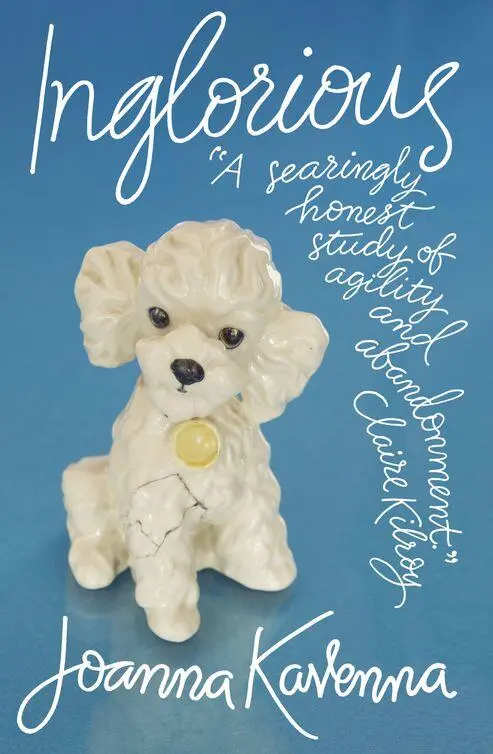
- Название:Inglorious
- Автор:
- Издательство:Faber and Faber
- Жанр:
- Год:2008
- ISBN:нет данных
- Рейтинг книги:3 / 5. Голосов: 1
-
Избранное:Добавить в избранное
- Отзывы:
-
Ваша оценка:
Inglorious: краткое содержание, описание и аннотация
Предлагаем к чтению аннотацию, описание, краткое содержание или предисловие (зависит от того, что написал сам автор книги «Inglorious»). Если вы не нашли необходимую информацию о книге — напишите в комментариях, мы постараемся отыскать её.
Having stripped herself of her former context, and become inexplicable to her friends and family, she embarks on a mock-epic quest for a sense of purpose, for an answer to the hoary old question 'Why Live?' Her comical grail quest is fraught with minor trials — encounters with former friends, unsympathetic landladies, prospective employers, theory-mongers, and denizens of the 'real world'. Rosa also falls into a state of constant motion, nervously treading around London. Yet her constant circumnavigations of the city fail to enlighten her, and she escapes from the city to join friends in Cumbria. This escape finally precipitates the climax of the book, the greatest trial, and the beginnings of her return to normality, whatever that was.
Inglorious — читать онлайн бесплатно полную книгу (весь текст) целиком
Ниже представлен текст книги, разбитый по страницам. Система сохранения места последней прочитанной страницы, позволяет с удобством читать онлайн бесплатно книгу «Inglorious», без необходимости каждый раз заново искать на чём Вы остановились. Поставьте закладку, и сможете в любой момент перейти на страницу, на которой закончили чтение.
Интервал:
Закладка:
She turned again and caught the ragged toad-face looking towards her. Now the tables between them were starting to clear. Any moment he would say something to her; she could see him leaning forward, licking his lips. He would be stern and decisive: Come back now! What do you think you’re doing? You’ve been out of work for months, and what have you got to show for yourself? NOTHING! A few books read, but that will hardly help! A few walks through the city! Who do you think you are, Henry James? Samuel Johnson? Get back where you belong! She could imagine him phrasing the order. Her last line of defence, the mother, put the child in her buggy and walked away. This made Rosa anxious, so she retreated. Banished by her inner fool, she took her tart and walked. As she left she looked over at the man and saw he was staring straight ahead. She went slowly along Golborne Road. The wind was still up, and the street was awash with coasting litter, leaves and cardboard and plastic bags. Everyone was a swirling mass of clothes and coats, smothered in ravaged cloth, holding their umbrellas to the wind. Rosa walked with an eye on her reflection in the windows. She was another tousled ruin as she walked, hair unkempt, coat flapping. Another burst of rain and she started to walk faster. The damp stalls were selling wine and cheese. A wooden table blocked the path so she edged round it. She heard a car behind her and stepped out of the gutter. Outside the shops were boxes of brightly coloured Turkish delight, scattered with sugar. Rows of dates and figs. And in another shop they were selling halal meat, Cash and Carry said the sign. Now the shop owners were pulling plastic sheets over the boxes, holding up their hands against the rain. She had once bought a table in a shop round here, she thought, just one of the bits of furniture Liam was refusing to pay her for. Her reflection was bouncing alongside her, this flapping form. Everyone was sublimely indifferent to her; the man selling copies of the Koran, collar up, the woman selling baguettes and tomatoes, hood over her eyes, the man going slowly past on a bicycle, nearly beaten by the wind.
At Jess’s flat, she put the key in the door and stepped into the hall. Concerned about the carpet, she scraped her feet on the mat. Once inside, she cast the raincoat onto a hook in the hall, wrung out her jumper and put it on a radiator. She undressed as she walked to the bathroom and then stepped into the shower. She poured shampoo on her hair. Things were quite simple, she thought, if you just kept yourself clean and warm. She closed her eyes and lifted her face. She flexed her thigh muscles, drawing her legs tightly together. Her skin was red now from the warmth of the water. As she watched water coursing down her body, she stood her ground. Here she was, a tall woman with wide shoulders. Her arms had always been lean. Her stomach was taut. Her legs were thin; her shins were covered in fine brown hairs. She agreed, she needed to bulk up a bit. Apart from that, she was attractive enough. She would attract men for a while, then they would deem her too old — most of them — and she would attract fewer of them. But she didn’t need a horde. She didn’t want an adoring mob behind her!
Later she turned off the shower and towelled herself down. She dressed quickly, putting on her jeans and sweater. She slung a few changes of clothes into a bag. She borrowed some books that might yet goad her into action. She took a notebook, an apple and some painkillers. She felt like a child, running away. In this spirit she made herself a cheese sandwich and wrapped it in paper. She took out the rubbish and slammed it into a bin outside, noticed the bins were overflowing but walked straight past them. The smell of rotten food was briefly pungent, whipped away by the wind. She was nervous as she walked down the steps. She was briefly devastated that Jess would be so pleased she had gone. She felt a low sense of melancholy about her small, rootless life. It was a shame, when you left a place and people were glad. But she was anomalous, the day was moving swiftly and a mass of people moved along the road. Above the clouds were grey, drifting across a pale sky. She was drawn into it all, the gliding shapes of cars and people.
She went to the shops, fearful of arriving empty-handed. Portobello Road was awash with people buying lunch. Crowds hung around the stalls, people holding multicoloured bags of fruit. She saw a green patch of park, gated off from the street. With her neck craned, Rosa saw the shops were full of winter cuts, big boots and long coats, clothes for dressing up in. The windows glinted in the sun, though the day was cold.
Wrapped in a thin coat, the wind gusting at her, Rosa stepped through the crowds. In the first shop she came to she bought bath salts and in the next some costly chocolates in a scenic box. She added in a couple of children’s books, splashed with cheerful colours. She had a small spasm when she handed it over, her ravaged credit card. The presents looked fine; the shop assistant wrapped them in pink paper, and wrapped a ribbon round them. There was a label which Rosa filled in. With love from Rosa. That was because she couldn’t remember the names — or ages — of Judy’s children. She was quite sure they would have everything they needed. But she stacked up presents anyway, eager to show willing. At noon she saw she was late, so she ran along panting like a hound. The street was flooded with people. With the inevitable bad luck of the furious, Rosa missed the bus. It passed her as Rosa ran up to the stop, and she saw no sign of another bus, so she clenched her fists and carried on. LYLA, said the sign. A STAR REALLY WILL FALL. And soon. THE KILLS were still celebrating the launch of their single. She went along fast enough, enjoying the wind on her cheeks, admiring the dextrous way she danced around other people, but then she turned onto Kensington Park Road and the street started winding uphill, which slowed her down. She passed a brasserie with fake flaming lamps and a yellow-stoned church like a piece of textured mustard and when she was at the top, sweating and muttering under her breath, she stood for a moment and watched three buses pass her. That made her curse but she was on a downhill slope now and she picked up speed towards Notting Hill. Then the crowds destroyed her momentum, it was impossible to get round them quickly, however dextrously she danced, and she was forced to slow down, raise her hands, make offerings to angry people. Apologising for everything, she kept running. She couldn’t look at the time because she knew she was late. She was sweating like a dog, but this had its advantages, she thought, at least her father would understand she had made an effort, really stubbed her toes on the kerbstones getting there.
She stood at the lights wheezing and marking time, and when they changed she passed quickly across the road, stumbling on the corner. She was gasping for breath as she ran. Antique shops in Victorian village style, and some of the buildings were older still. There was a pub garlanded in flowers. A bright blue house, she passed it swiftly, noting how clean it was. Polished windows. It was wrong to say the city was grimy. There were parts that surprised you; they were kept so clean. Here she was, avoiding a man with his hand outstretched, and finally she found the door and pushed it open. She arrived in a breathy state of panic, thinking that she must usher on lunch and be sure to catch the train. Across the restaurant she saw her father sitting — slouched — and stood there for a moment, paralysed by guilt. She was stock still and weighted down with it. It held her, until she saw his head turn, and found him not so sad and old from a different angle.
Her father had never really liked Liam. When she called him up and explained it all, he was sanguine. He was restrained and didn’t say, ‘I always disliked that untrustworthy man.’ That might have been the truth, but her father never said these sorts of things. He almost never said what he thought. He was an inscrutable man. It wasn’t that he was dishonest; he just hated to hurt anyone’s feelings by presenting them with something so unwieldy as the truth. So he dissembled, constantly, and no one had really known him except Rosa’s mother. Well, and Rosa knew him a little, though he rarely told her the truth either. It was an indication of how things had turned that he had been so honest recently. Rosa knew she was like him. She was ruder than her father, but she still had bouts of politeness, moments of insane performance, more stressful than an argument. It was like clamping a brace onto yourself, it left you with a sense of pressure, a dull ache.
Читать дальшеИнтервал:
Закладка:
Похожие книги на «Inglorious»
Представляем Вашему вниманию похожие книги на «Inglorious» списком для выбора. Мы отобрали схожую по названию и смыслу литературу в надежде предоставить читателям больше вариантов отыскать новые, интересные, ещё непрочитанные произведения.





Обсуждение, отзывы о книге «Inglorious» и просто собственные мнения читателей. Оставьте ваши комментарии, напишите, что Вы думаете о произведении, его смысле или главных героях. Укажите что конкретно понравилось, а что нет, и почему Вы так считаете.