Iosi Havilio - Paradises
Здесь есть возможность читать онлайн «Iosi Havilio - Paradises» весь текст электронной книги совершенно бесплатно (целиком полную версию без сокращений). В некоторых случаях можно слушать аудио, скачать через торрент в формате fb2 и присутствует краткое содержание. Год выпуска: 2013, Издательство: And Other Stories, Жанр: Современная проза, на английском языке. Описание произведения, (предисловие) а так же отзывы посетителей доступны на портале библиотеки ЛибКат.
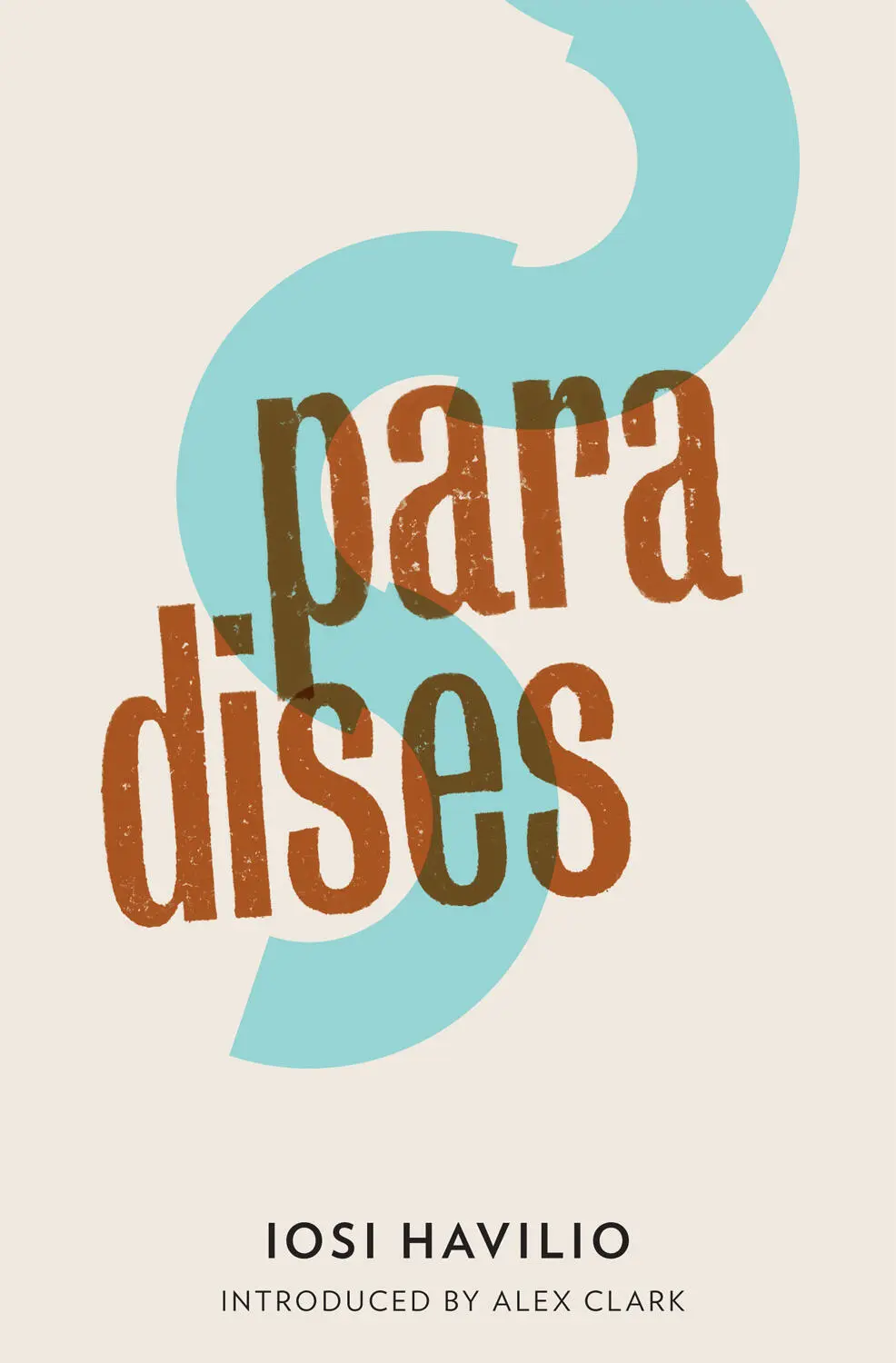
- Название:Paradises
- Автор:
- Издательство:And Other Stories
- Жанр:
- Год:2013
- ISBN:нет данных
- Рейтинг книги:3 / 5. Голосов: 1
-
Избранное:Добавить в избранное
- Отзывы:
-
Ваша оценка:
Paradises: краткое содержание, описание и аннотация
Предлагаем к чтению аннотацию, описание, краткое содержание или предисловие (зависит от того, что написал сам автор книги «Paradises»). Если вы не нашли необходимую информацию о книге — напишите в комментариях, мы постараемся отыскать её.
is an almost perfect novel." — Albert Camus's
reimagined with a female lead in in twenty-first-century Buenos Aires.
Recently widowed, a young woman leaves the countryside for Buenos Aires with her four-year-old son where she seeks to build a new life for herself. She finds work in the zoo and moves into the human zoo of a squatted tower block at the invitation of one of its residents, to whom she acts as nurse, giving morphine injections.
Paradises — читать онлайн бесплатно полную книгу (весь текст) целиком
Ниже представлен текст книги, разбитый по страницам. Система сохранения места последней прочитанной страницы, позволяет с удобством читать онлайн бесплатно книгу «Paradises», без необходимости каждый раз заново искать на чём Вы остановились. Поставьте закладку, и сможете в любой момент перейти на страницу, на которой закончили чтение.
Интервал:
Закладка:
I go into the bathroom and brush my teeth for the second time that day to see if I can get rid of the bitter taste that every so often makes me produce involuntary clicks with my tongue, and it occurs to me that it’s crazy to leave one child in the care of another.
Now they have made a bridge with the piece of plastic. Every time Simón manages to get a car or the cat and sidecar underneath it, Herbert celebrates as if it were a goal. Great, he says loudly with one arm raised, perfect. But Simón doesn’t return his enthusiasm, he limits himself to passionlessly repeating the game. He lets himself be led by the other boy’s suggestions and at times he gets lost, his gaze fixed somewhere else, an expression that someone who didn’t know better might associate with sorrow. An attitude in which I can’t help but see myself. So obviously and to such an extent that I wonder at one point whether he’s doing it on purpose, to show me up, even to blame me. Yet this likeness to me, which I can now see in him as never before, could just as well be inherited from his father’s personality: that passive air, the moroseness, the stomach out. Watching him interact with Herbert, I can’t help thinking about him as an adult, my age, or fifty-something. I can imagine his face, the build of his body, his gaze, but I can’t decide on his circumstances. I don’t know where to locate him, whether in the country, in the city, neither of the two, whether he’s with a woman, or a man, alone, a nomad, sedentary, a warrior or subordinate, I can’t even be sure whether he’ll be near me or far away.
Herbert, I say, and he comes up to me smiling like a model employee. I ask him about his days, what he does. He tells me his routine: he gets up at six and goes to training until half eight. Training? Yes, football. He wants to be a professional footballer, he’s a defender. The last man, as he says. From the club he goes to school and comes home for lunch. Then he’s free until seven, he goes back to training at quarter to eight. Half nine he eats and he goes to bed at ten. He says the trainer tells him to get a good rest. Some nights, he goes out for a drive with his father.
I prepare some noodles which the three of us eat quickly and in silence. I explain to Simón that he’ll be staying with Herbert until I come back, he looks at me as if to say he already knows. He makes me feel entirely dispensable. Before I leave, I ask Herbert how much he wants paying. He exposes his lower lip, I offer him thirty pesos for the six hours. That’s fine, he says biting his lips, I can’t tell whether it’s a smile of approval or discontent.
On my way out, I come across two boys loitering outside the building: ripped jeans, white T-shirts and black sunglasses. They’re looking for the Chemist. I don’t know him, I shake my head. I’m new.
Six hours at work and I walk home with Canetti. There are days when his company doesn’t annoy me at all, it’s almost pleasant. His philosophies are childlike, generally predictable and occasionally wise. He’s full of surprises, which you would guess he was making up, but he isn’t. After walking a couple of blocks in silence, he gestures with his arm extended upwards and starts praising the rosewood trees, noble and indigenous like few others, he says. From one side of the avenue to the other, a multitude of rosewoods. I raise my eyes: extremely tall, sturdy trees adorning the city with their drooping limbs, enormous but tame. We cross. On the street with the Adventist church, Canetti swaps praise for protest in front of a row of banana trees: A pestilential blight.
He explains. Before starting work at the zoo, he spent six months tramping round the city. A tree census. It was his first job after the debacle, as he calls it. Kind of a resurrection. He took some photocopies with him so he could recognise the different species and he made notes of his findings. Just think, I couldn’t even tell the difference between a silk floss tree and a palm. He did the even sides first, following the route on a map he was given, and then he returned to do the opposite sides. Even odd, even odd, coming and going all day. He says the job changed his way of thinking. You always walk along looking right in front of you and all of a sudden I had to cast my eyes upwards.
Let’s go down here, he says, a detour, I know, but I let myself be led. Just for today. This is one of the most varied streets I’ve come across. No two trees are the same. He lists them as we advance: An acacia, an orange tree, a jacaranda, the true national flower. He falls silent and, pleased at my interest, feeling obliged to proffer a conclusion, he says: They piss themselves laughing at us. I assume he means the trees. Canetti points out a trunk chopped almost to ground level because it was destroying the surrounding paving stones. A walnut tree. At the end of the block, the dense tangle of a mulberry: the glory of rats.
All the way back to el Buti, Canetti fills my head with names, characteristics, fruits, flowerings, he pulls off some leaves so I can distinguish one tree from another. He makes me smell and suck them. When he’s not talking, he’s whistling. A funny melody that repeats endlessly, circus-like. As we arrive, he describes the trees from the corner. All ash, except for this one, he says, steadying himself against the fat trunk in front of the building, whose branches, I notice as I raise my head, collide against the windows of our flat. The only paradise tree on the block.
Benito gives me some old camouflaged walkie-talkies he found on the street so that I can monitor Simón whenever I come downstairs. He doesn’t use those words, he makes himself understood in his own way. Guttural. They work, he says gravely, with a touch of indignation, anticipating my mistrust. And he shows me how, with a matchstick, I can keep the button pressed down and hear what’s happening at the other end all the time. I thank him with a pat on the back. Sincerely.
Tosca tells me about Mercedes, Herbert’s father, Sonia’s husband. The dealer of the building. I learn that as well as providing Tosca with her morphine and Canetti with his sedatives, he sells drugs to Perico and his gang. Everyone hates him but no one dares say a word. Only Sonia calls him by his name, those inside call him Paraguay, those outside, his clients, call him the Chemist. Ah, I say, remembering the tanned faces of the two little chancers who approached me at the entrance to the building. You have to take care, Tosca adds, he’s a sly one.
Fourteen
Eloísa reappears one night, without warning, when I’ve already started to erase her from my mind again. Determined to get Simón, who’s annoyed at everything, to go to sleep, I ignore the first knocks at the door. Their persistence eventually distracts me and forces me to my feet. Who is it, I ask, exaggerating my reluctance, certain that it’s Canetti with his melancholy vibe. It’s me, I hear that unmistakeable voice, echoing as if in a cave. I open the door and Benito’s huge head fills my entire field of vision. A long silence and finally: Someone’s looking for you. He stands watching me and says: People.
I go downstairs with Simón. The hooded boy who used to guard the entrance hasn’t been there for a few days. Change of habit. Nose to the door, I peek through the crack between the sheet metal and the wall. It’s Eloísa and seeing her again is no surprise. To some extent I was expecting her. Her cheeks are puffy, red, as if she’s been running. Also, I realise when I greet her, she smells of a fresh joint, recently smoked, her eyes narrowed and sickly. Behind her is the same car she got out of the other day when we met by chance on the corner by the zoo. The full-on glare of the streetlights makes the chassis shine. You didn’t call me, bitch, that’s the first thing she says, with the deepest frown she can muster, like a mask. I’m about to tell her the sweat rubbed her number off my hand, but there’s no point, what for? She gets there first anyway: Let’s go for a drink? I’m with Simón, I say. Eloísa raises and drops her shoulders, as if she couldn’t see anything inconvenient about that until I clarify: My son. I open the door slightly further so she can see him sitting at the bottom of the stairs, a little ball of annoyance. Ah, says Eloísa, suddenly remembering what she had buried completely. That’s a bugger. Can’t you leave him with someone? I smile to say no. Come on, she says, let’s go out for a bit, my friend will take us in the car. The proof of Eloísa’s return is that she makes me hesitate. I don’t think so, I’m going to stay here, I say and close the door.
Читать дальшеИнтервал:
Закладка:
Похожие книги на «Paradises»
Представляем Вашему вниманию похожие книги на «Paradises» списком для выбора. Мы отобрали схожую по названию и смыслу литературу в надежде предоставить читателям больше вариантов отыскать новые, интересные, ещё непрочитанные произведения.








Обсуждение, отзывы о книге «Paradises» и просто собственные мнения читателей. Оставьте ваши комментарии, напишите, что Вы думаете о произведении, его смысле или главных героях. Укажите что конкретно понравилось, а что нет, и почему Вы так считаете.