Iosi Havilio - Paradises
Здесь есть возможность читать онлайн «Iosi Havilio - Paradises» весь текст электронной книги совершенно бесплатно (целиком полную версию без сокращений). В некоторых случаях можно слушать аудио, скачать через торрент в формате fb2 и присутствует краткое содержание. Год выпуска: 2013, Издательство: And Other Stories, Жанр: Современная проза, на английском языке. Описание произведения, (предисловие) а так же отзывы посетителей доступны на портале библиотеки ЛибКат.
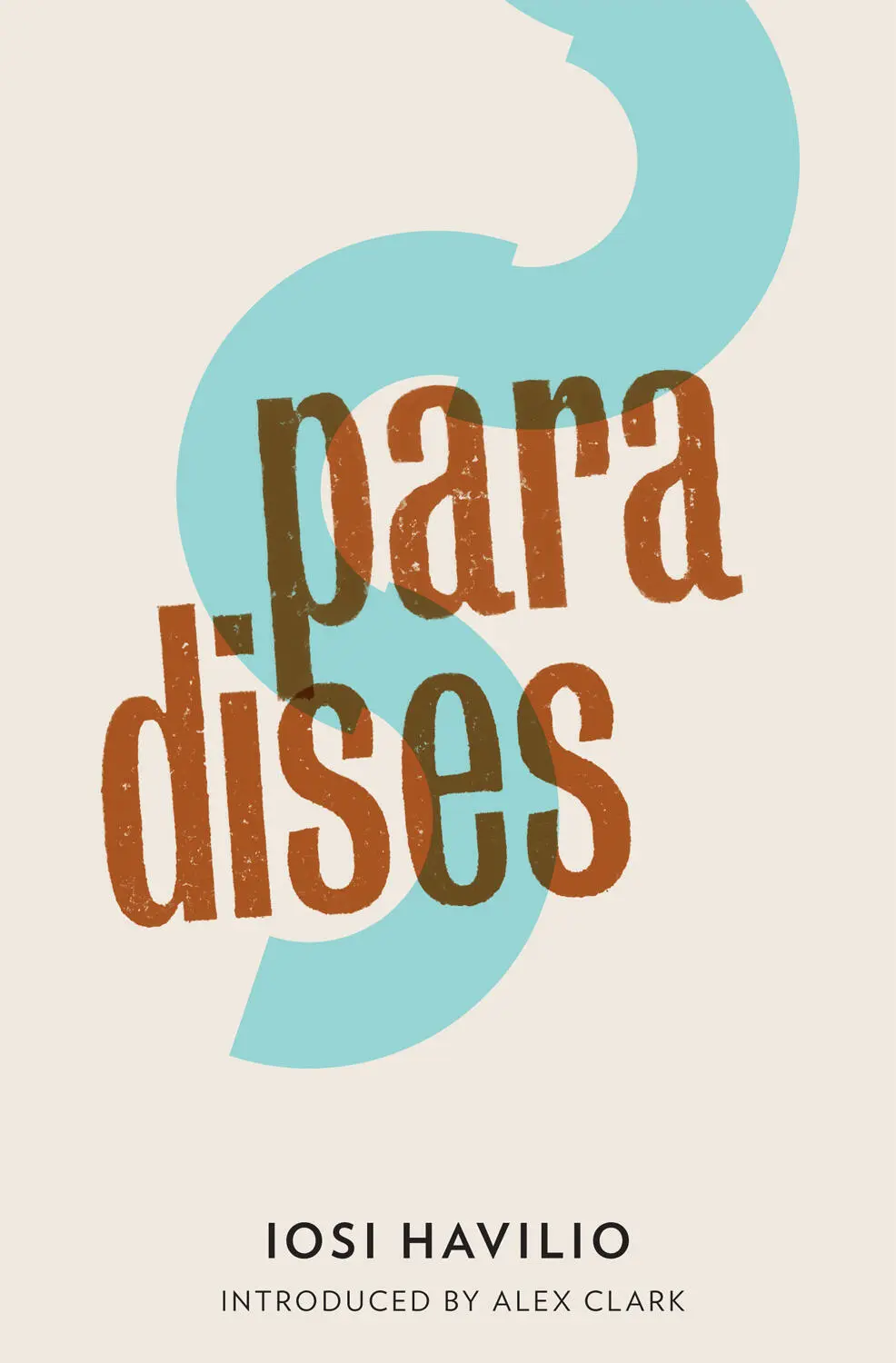
- Название:Paradises
- Автор:
- Издательство:And Other Stories
- Жанр:
- Год:2013
- ISBN:нет данных
- Рейтинг книги:3 / 5. Голосов: 1
-
Избранное:Добавить в избранное
- Отзывы:
-
Ваша оценка:
Paradises: краткое содержание, описание и аннотация
Предлагаем к чтению аннотацию, описание, краткое содержание или предисловие (зависит от того, что написал сам автор книги «Paradises»). Если вы не нашли необходимую информацию о книге — напишите в комментариях, мы постараемся отыскать её.
is an almost perfect novel." — Albert Camus's
reimagined with a female lead in in twenty-first-century Buenos Aires.
Recently widowed, a young woman leaves the countryside for Buenos Aires with her four-year-old son where she seeks to build a new life for herself. She finds work in the zoo and moves into the human zoo of a squatted tower block at the invitation of one of its residents, to whom she acts as nurse, giving morphine injections.
Paradises — читать онлайн бесплатно полную книгу (весь текст) целиком
Ниже представлен текст книги, разбитый по страницам. Система сохранения места последней прочитанной страницы, позволяет с удобством читать онлайн бесплатно книгу «Paradises», без необходимости каждый раз заново искать на чём Вы остановились. Поставьте закладку, и сможете в любой момент перейти на страницу, на которой закончили чтение.
Интервал:
Закладка:
Now that Tosca is beginning to feel the effect of the morphine, I avert my gaze and concentrate on Benito, who has taken refuge in a corner of the room. A dark, stooped mass, will he cry? Benito is one of those people who have such an impact at first sight, inspiring such intrigue as well as repulsion, that the natural instinct is to leave him alone. The idiot boy, cow-head. People aren’t keen to confront him, not so much because of what he might do to them, more because they don’t know how to treat him.
Apart from Tosca, who calls him by his name, everyone else in the building calls him Bear. Some, behind his back, call him She-Bear. His only formal occupation consists of managing the buckets of water that are hauled up the rope to the various floors of el Buti. Kind of like a water-boy. He is also in charge of putting the rubbish into giant sacks and taking them out to the pavement. Other than that, he devotes himself to watching television, eating and taking devices apart. A heap of junk, says Tosca, nodding towards Benito’s corner. Mobile phones, radios, speakers, printers, whatever he finds. He only breaks them apart, he doesn’t fix them or resell them. The pieces accumulate on a magnetic board, forming a mountain of screws, circuits, microprocessors, it’s impossible to distinguish the origin of any of it. The result, he’ll show me some time later, is some strange baroque sculptures suggesting torture, darkness and pain. Among his creations is a tower, at least a metre high, permanently oscillating.
On Saturday I go back to work. On the way to the zoo, something I can’t put my finger on is nagging at me, something outstanding, unresolved. I see Iris in the distance and everything becomes clear. I remember that she’s going to start working double shifts so she can buy her father a plane ticket, that she won’t be able to look after Simón any more. I have a week to find a solution.
I’m withdrawn all afternoon, half listening to Yessica’s Christmas stories. At two in the morning she went to a disco in the arse end of nowhere, so she says, out in the country, a party with some friends of her boyfriend, who never showed up. A complete downer. The worst thing was that the boyfriend didn’t answer his phone the whole night and only sent her a text message at three the following afternoon. If I see him I’ll kill him. She also tells me about a fight during the meal at her house, between aunts, uncles and in-laws, but I pay no attention.
I bump into Canetti and he reproaches me for not having gone up to drink a toast with him. I was worn out, I say, and he frowns to show that he’s upset. Annoyance makes him laconic, which saves me from his interminable chatter for once. The rest of the day passes without note. The threat of a storm that never breaks means fewer people come.
At times my mind returns to the matter of Iris and Simón but I get nowhere. The time of year complicates things. I rule out a nursery, deciding that, if I have to pay someone, I’d be better off not working at all. In fact, I seriously consider the possibility of resigning and looking for something on the injection side of things. I’d often heard talk of the lack of nurses. I could even take Simón with me, I don’t think anyone would mind. But I get swamped by the idea, I end up in a muddle, I’m not used to thinking so much. To forget, I rest my eyes on a fixed point, a goose, a Coca-Cola sunshade, the sun broken up by starchy clouds.
I leave the zoo, avoiding the photographer with the pony; I cross the avenue, join the labyrinth of long queues at the bus stop and get off at the paved plaza full of bookstalls. I look around me and wonder how long it would take for everyone in my range of sight right now, pedestrians, drivers, people in cafes, those queuing to enter the chemist, cyclists, those hidden away in apartments, everyone, me included, to disappear.
I walk all the way round and pause at the last stall. The books are on shelves, in boxes, organised by genre, author and various labels: Bestsellers, Crime, Vampire, Self-Help, Borges and Sabato, Historical Novels, One4Five, Three4Twelve . The vendor, younger than thirty with thick, rather forced sideburns, like a caudillo or an Elvis impersonator, is talking on a mobile phone connected to earphones, slanting his chin slightly so as to speak into the mic. He looks straight ahead as if at me, but no, he’s looking beyond me, at the short horizon of traffic on the avenue. It really pissed me off, he says, falls silent and in a second adds: Yeah, he’s a fucking bastard, he just doesn’t give a shit. I stay there for a while flicking through the books with no real interest, more intrigued by this guy who is now laughing and spitting. In the Science Fiction section I come across The Marvellous Journey of Mr Nic-Nac to the Planet Mars by Eduardo L Holmberg.
On the flap, the author’s biography: A writer and naturalist, he was the first director of the Buenos Aires Zoological Garden between 1888 and 1904. In addition to his extensive scientific work, he wrote, among other books, Hoffman’s Pipe, The Bag of Bones, Insomnia and The Diabolical House. Eduardo Ladislao Holmberg, the very same man mentioned on the stamp of the bestiary I found in the skip in front of the Adventist church. Another coincidence, too much. Making timid signs so as not to disturb him too much, I ask the boy the price, he doesn’t stop talking and answers by showing two open hands. Ten pesos, I understand, but I don’t have enough. Another day, I say circling my index finger in the air. Before returning the book to its place, I read the first few lines, murmuring out loud: There is nothing more admirable than the perfect mechanism of the skies. Nothing is more pitiful than human ignorance.
In the evening, Tosca asks me to inject her with an extra phial of morphine. I’m not sleeping at all, she says. Two or three hours at most, it’s less every day. I’d like to think I sleep but I don’t at all. I close my eyes, that’s it. At the start, she doesn’t exactly feel pain so much as the shadow of pain approaching. It grows gradually, like a snowball, but when it grabs you it won’t let you go. Sometimes it makes her want to shout for me to come down and inject her again in the middle of the night. She feels like two big hands are squeezing the back of her neck, the scruff as she likes to call it, strangling her almost to the point of asphyxiation. A perverse game, sometimes unbearable. She pauses, coughs and continues. The worst thing is the lack of sleep, those long-nailed hands squeezing her neck become so real that she can’t help thinking that they belong to someone, that somewhere beyond there must be a body, a pair of arms and a head, someone contriving to fold away behind the headboard. And that mystery is precisely the thing that’s hardest to tolerate, even more than the pain. She’d like to be able to turn round and discover who he, she, it is, the one who shelters in the darkness to wring her neck.
Torture, she concludes and gives a long sigh that’s only interrupted by the agitation the tale has caused her. I agree to inject her with another dose. The same ceremony every day: I take the top off a phial, load the syringe, look for the vein, right arm in the morning, left arm now. Then Tosca, as if she didn’t think I was entirely convinced, or just to impress me, says what she’s never said before: Give me your hand, come here, touch it, it won’t do anything to you. I’ve already seen it, the first day, I studied it from a distance under the fabric of her nightdress, but I don’t know whether I want to touch it. What for?
It’s the size of a lemon, a tennis ball, a bull’s testicle, rough, ever so slightly more hairy than the skin surrounding it, definitely much purpler. The spud, she calls it. First I press it carefully, as if it were a delicate creature, the back of my hand on the ball of flesh, fat, tissue, that knot of cells that are quicker than the others. I barely graze it, just in case, to see her reaction. Tosca’s words resound in my head: It’s another being that lives with me, inside me. I continue, growing more confident, I become bold and press it without hesitating, covering it, my hand wide open, then cupping it. A curved, prominent nerve splits it down the middle, like a swollen vein, strange to touch. The most powerful, most terrible, most evident thing is its strong, regular heartbeats, not Tosca’s, which beat elsewhere, but those of this small, raw being. Gentle, she says to me, be gentle. We don’t want to disturb it so much that it wakes up. As she speaks I think how stupid I am, that I know nothing of pain.
Читать дальшеИнтервал:
Закладка:
Похожие книги на «Paradises»
Представляем Вашему вниманию похожие книги на «Paradises» списком для выбора. Мы отобрали схожую по названию и смыслу литературу в надежде предоставить читателям больше вариантов отыскать новые, интересные, ещё непрочитанные произведения.





Обсуждение, отзывы о книге «Paradises» и просто собственные мнения читателей. Оставьте ваши комментарии, напишите, что Вы думаете о произведении, его смысле или главных героях. Укажите что конкретно понравилось, а что нет, и почему Вы так считаете.