Iosi Havilio - Paradises
Здесь есть возможность читать онлайн «Iosi Havilio - Paradises» весь текст электронной книги совершенно бесплатно (целиком полную версию без сокращений). В некоторых случаях можно слушать аудио, скачать через торрент в формате fb2 и присутствует краткое содержание. Год выпуска: 2013, Издательство: And Other Stories, Жанр: Современная проза, на английском языке. Описание произведения, (предисловие) а так же отзывы посетителей доступны на портале библиотеки ЛибКат.
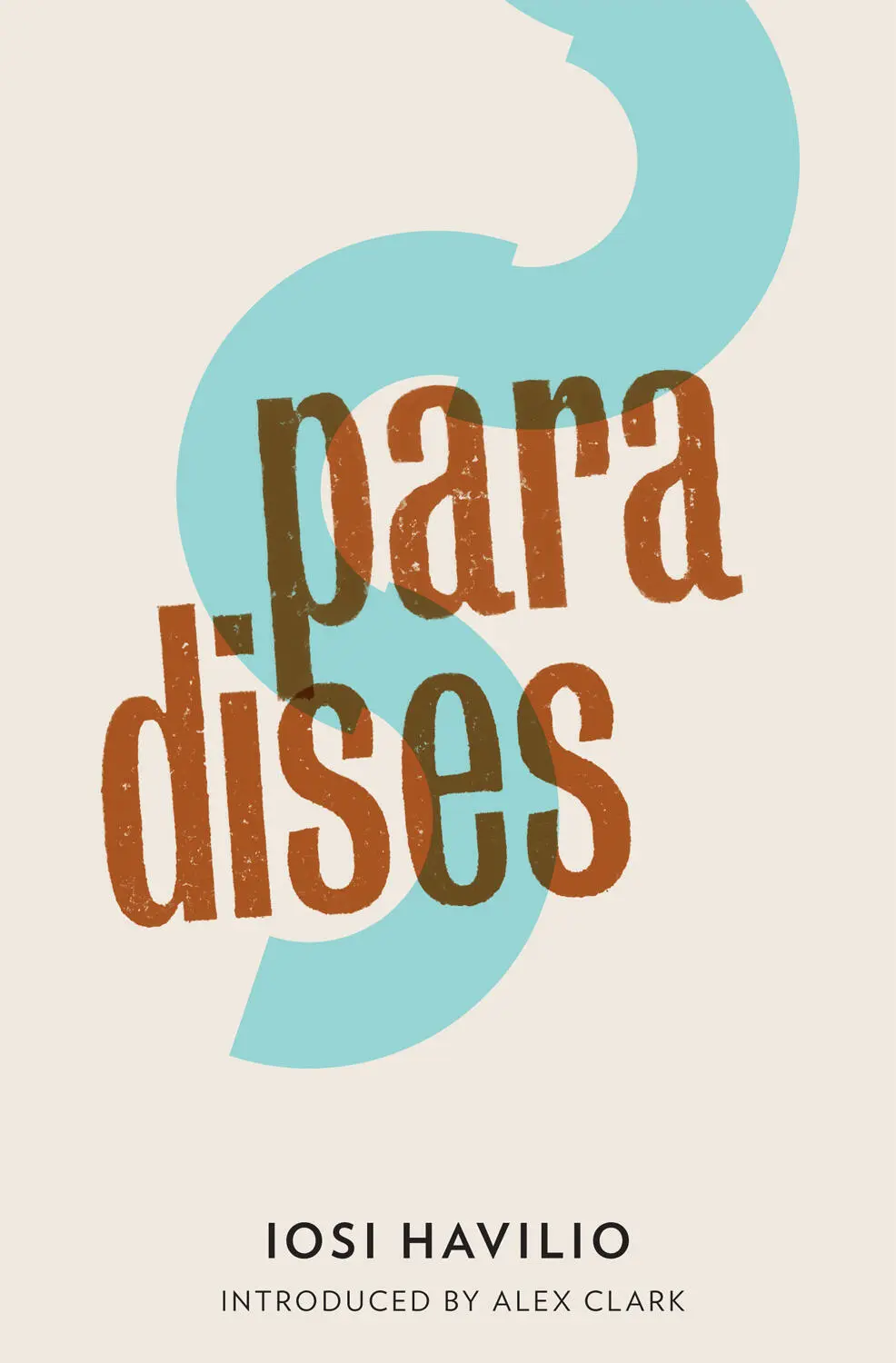
- Название:Paradises
- Автор:
- Издательство:And Other Stories
- Жанр:
- Год:2013
- ISBN:нет данных
- Рейтинг книги:3 / 5. Голосов: 1
-
Избранное:Добавить в избранное
- Отзывы:
-
Ваша оценка:
Paradises: краткое содержание, описание и аннотация
Предлагаем к чтению аннотацию, описание, краткое содержание или предисловие (зависит от того, что написал сам автор книги «Paradises»). Если вы не нашли необходимую информацию о книге — напишите в комментариях, мы постараемся отыскать её.
is an almost perfect novel." — Albert Camus's
reimagined with a female lead in in twenty-first-century Buenos Aires.
Recently widowed, a young woman leaves the countryside for Buenos Aires with her four-year-old son where she seeks to build a new life for herself. She finds work in the zoo and moves into the human zoo of a squatted tower block at the invitation of one of its residents, to whom she acts as nurse, giving morphine injections.
Paradises — читать онлайн бесплатно полную книгу (весь текст) целиком
Ниже представлен текст книги, разбитый по страницам. Система сохранения места последней прочитанной страницы, позволяет с удобством читать онлайн бесплатно книгу «Paradises», без необходимости каждый раз заново искать на чём Вы остановились. Поставьте закладку, и сможете в любой момент перейти на страницу, на которой закончили чтение.
Интервал:
Закладка:
At least you can see this one, touch it, says Tosca. My sister’s was much worse, a horror, it was right inside her like a poisonous gas, like a ghost. First in the uterus, then the lungs, blood, bones, everywhere. Metastasis, she says loudly as if she’d said Magnificent. She really had a bad time of it, and the treatment was even worse. It left her bald, shrunken, wrinkled, like a raisin. One day I’ll tell you all about it, she says and concludes: Violet was killed by the medicine.
I become engrossed staring at the ochre phial of morphine, thinking about illness, about matters of the body and about decomposition, the time it takes for flesh to disintegrate. A matter of days or months, depending on the climatic conditions, I studied it a while ago. I wonder what Jaime looks like by this stage. It also occurs to me that one day I’ll tell Simón, assuming that he’ll be the one taking care of it, that when the time comes I want to be burnt to ashes.
Tosca brings me back to earth with her hoarse voice: Get me some water, girl, I’m dying of thirst, she says, and after three gulps she spits on the floor. The sight reminds me of Iris, the vomit that never came on Christmas Eve, her features drawn, as if halted by reins pulling at her jaw to stop her from bolting. The difference with Tosca is that her reins are inside, rolled up under her skin, in the form of cancer.
Before injecting her, I ask whether she knows anyone who could take care of Simón in the afternoons. I don’t call him Simón but the boy, like she would say. I explain that my friend isn’t able to do it any longer. A long silence and she calls Benito over. Go and find Sonia, she says. Benito leaves and I inject the morphine. Tosca tilts her head, inflates her chest and slackens. I stay, watching her false teeth submerged in a glass. She now removes them before every injection because her mouth goes to sleep and she hurts herself on them.
Instinctively, like a child left home alone who takes advantage of the occasion to search his parents’ room, I stand up and head for Benito’s hideaway. I snoop around his things, the junkyard. An extraordinary world, jam-packed with everything, which in some way explains the size of his head. The bed is too short, he must sleep with his legs hanging out. I take another three paces and decide to step through to the other side of a glass-bead curtain. A dark tunnel, access to the basement, the entrance to a garage that never was, an inexplicable space. In some strange effect of angles and refractions, the scant light illuminates from the waist up, as if the scene were submerged in muddy water. In front of me, a door invites me to spy. I lean into a windowless bathroom, brought in from somewhere else: a bathtub with feet, a tank with a chain and a chequerboard floor. Remote in space and time.
A snap of fingers summons me and I jump back into the room. Tosca has returned from her trance. Where did you get to, girl? I thought you’d split. I gesture to the curtain and Tosca nods, understanding what I’m saying, my curiosity. A pause and I clear my throat: Between you and me, when you want, you can take a bath. I thank her with a smile. Sitting on the edge of the bed again, something comes out of my mouth which I regret as soon as I utter it, convinced I’ve said something really stupid: Better? She shrugs, deflecting the question back to me with her chin raised. And suddenly she lets her arms fall, as well as her head, she relaxes her facial muscles, unlocking her jaw in slow motion, like a rehearsal for death. And what seemed like sarcasm or a challenge before becomes serenity and candour. She says: Much better, yes.
I think about the delayed effect of the drug. As I’m beginning to see, after the injection, after the narcotic peak produced by the fluid entering her body, the balsam, the nothing, the dreams, when she opens her eyes there is a vertiginous comedown, as violent as the ascent, during which she doubtless recovers awareness of her surroundings, what is real, what the senses detect, colours, light, the aftertaste of bile, the roughness of the hands, and the presence of the tumour and all that it is. But fortunately that ends too. Accustomed to the comings and goings, it would seem that, in desperation, the mind comes back to offer a helping hand to what remains of the morphine in the blood and constructs a plateau of well-being, the true effect, the good, long-lasting one, but one that also finishes, gradually abating towards morning.
That’s where Tosca is, entering the field of relief, when Sonia appears. For a moment, no one speaks. Not the woman who’s just entered, nor the giant escorting her, nor the woman lying back in bed, even less me, observing them all as I bite my lips. But the reasons for the silence are different, particular to each of us, timidity, mental retardation, expectation, torpor. It’s Tosca who’s directing the scene, taking all the time her body requires to intervene. But when she does, it’s without words, a repeated, sluggish gesture, like a drowsy traffic cop, tracing an imaginary line with her index finger joining me to Sonia. I take a while to interpret it, which exasperates her slightly, even though she lacks the strength. She wants me to talk. Sonia listens to me with a concerned expression. She’s a slim woman, more than that, skinny, with fine features, hair to her waist, men’s clothing. In order to think, Sonia opens her deep black eyes wide and looks at me, but not exactly at me, more at the portrait of the Virgin of Syracuse hanging a few centimetres above my head. She stays like that for a good couple of minutes, more gone than concentrating, as if she’s forgotten the question and doesn’t know how to get out of the situation, what to invent. Until she wakes up, gives a slight jump and addresses Tosca as if she were the only valid interlocutor. She says: Herbert, it could be Herbert. Tosca, still silent in her cushioned morphine cloud, gives two eternal nods.
Thirteen
I dream about snakes. There are hundreds of them, thousands, very fast, fleeing from the reptile house en masse, as if surging from a spring.
Herbert, I should have guessed, is an eleven-year-old boy. He comes at quarter past twelve, fifteen minutes earlier than we agreed with Sonia. I hide my surprise and ask him whether he fancies keeping an eye on Simón. Yes, miss, he says. You know it’s for the whole afternoon. He raises his eyebrows and asks: Can I take him to my house?
I introduce the two of them and move away. Herbert and Simón immediately click, they soon start operating under their own codes. In a corner of the room, I pretend I’m tidying so I can watch them. Herbert is taking his job seriously, he tries to work out how to entertain Simón. He chats to him, asks about his toys, and the other boy responds silently, pointing out the shoebox where his little cars are kept. I get distracted for a moment leaning out of the window, a grey, heavy day, and when I look back, they’re already mid-game. Sitting cross-legged on the floor, Simón is holding a hook-shaped piece of black plastic, somewhere between a C and an L. It looks like the elbow of a pipe, the piece that drains a washing machine, a reject from something broken. On his feet, Herbert issues instructions for him to hold it in a certain position, the base parallel to the floor, the short arm perpendicular. Herbert corrects him several times, Simón does as he’s told but he keeps turning his hand a little more or a little less until finally the other boy tells him, in a voice approaching a shout: There, leave it there, don’t move. Then Herbert, two or three metres away, launches the little cars which, if they pass the test, ascend the ramp and go flying through the air. Not at all easy. They switch positions, but Simón gets bored and rebels. He throws the cars everywhere. Then Herbert, who knows I’m watching, twists his head, stretching the corner of his mouth as if to say: Poor thing, he doesn’t get it.
Читать дальшеИнтервал:
Закладка:
Похожие книги на «Paradises»
Представляем Вашему вниманию похожие книги на «Paradises» списком для выбора. Мы отобрали схожую по названию и смыслу литературу в надежде предоставить читателям больше вариантов отыскать новые, интересные, ещё непрочитанные произведения.





Обсуждение, отзывы о книге «Paradises» и просто собственные мнения читателей. Оставьте ваши комментарии, напишите, что Вы думаете о произведении, его смысле или главных героях. Укажите что конкретно понравилось, а что нет, и почему Вы так считаете.