Witi Ihimaera - White Lies
Здесь есть возможность читать онлайн «Witi Ihimaera - White Lies» весь текст электронной книги совершенно бесплатно (целиком полную версию без сокращений). В некоторых случаях можно слушать аудио, скачать через торрент в формате fb2 и присутствует краткое содержание. Год выпуска: 2013, ISBN: 2013, Издательство: RHNZ Adult ebooks, Жанр: Современная проза, на английском языке. Описание произведения, (предисловие) а так же отзывы посетителей доступны на портале библиотеки ЛибКат.
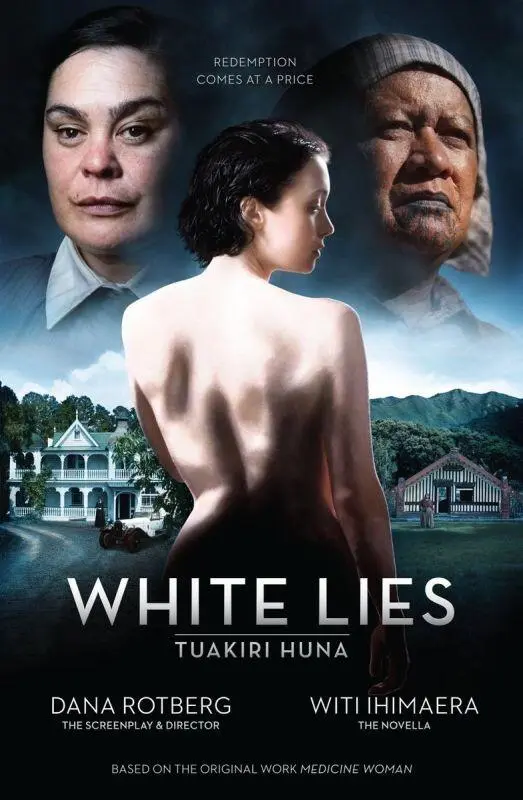
- Название:White Lies
- Автор:
- Издательство:RHNZ Adult ebooks
- Жанр:
- Год:2013
- ISBN:9781775533078
- Рейтинг книги:3 / 5. Голосов: 1
-
Избранное:Добавить в избранное
- Отзывы:
-
Ваша оценка:
White Lies: краткое содержание, описание и аннотация
Предлагаем к чтению аннотацию, описание, краткое содержание или предисловие (зависит от того, что написал сам автор книги «White Lies»). Если вы не нашли необходимую информацию о книге — напишите в комментариях, мы постараемся отыскать её.
, plus a moving screenplay, film stills and commentary on writing and movie making. A medicine woman — a giver of life — is asked to hide a secret that may protect a position in society, but could have fatal consequences. When she is approached by the servant of a wealthy woman, three very different women become players in a head-on clash of beliefs, deception and ultimate salvation. This compelling story tackles moral dilemmas, exploring the nature of identity, societal attitudes to the roles of women and the tension between Western and traditional Maori medicine. This book, though, is also about the richness of creativity, illustrating the way a single story can take on different lives.
The original novella,
, has been rewritten and expanded by Witi Ihimaera to become
. It has also evolved into a screenplay by internationally acclaimed director and screenwriter Dana Rotberg, which has been made into a superb film by South Pacific Pictures. Thus this book offers an intriguing insight into the process of adapting work, as well as offering new versions of this potent story.
Nga Kupu Ora — Aotearoa Maori Book Awards 2013, winner of the Te Pakimaero / Fiction category
White Lies — читать онлайн бесплатно полную книгу (весь текст) целиком
Ниже представлен текст книги, разбитый по страницам. Система сохранения места последней прочитанной страницы, позволяет с удобством читать онлайн бесплатно книгу «White Lies», без необходимости каждый раз заново искать на чём Вы остановились. Поставьте закладку, и сможете в любой момент перейти на страницу, на которой закончили чтение.
Интервал:
Закладка:
‘If Mrs Vickers struggles with me as she has tonight,’ she says to Maraea brutally, ‘find ropes so that she can be tied down.’
‘That won’t be necessary.’ Mrs Vickers has revived. ‘Never will I give you, takuta, that satisfaction.’
‘I can find my own way out,’ Paraiti answers. She walks to the stairs, but Rebecca Vickers says, ‘Wait.’
Paraiti turns to look at her.
‘You and I, Scarface, we are not so dissimilar. You wear your scar where people can see it, I wear mine where they can’t, but our lives have been affected by them. Me pera taua, we are both the same, you walking unlawfully through your world and I secretly through mine.’
Paraiti pauses a moment longer, then continues down the stairs and along the corridor to the side door. As she leaves, a man steps from the shadows; it is the gardener.
‘It was wrong of her, e kui,’ he says, ‘to put you in jail like that.’
She gives him a grateful glance, then goes down the pathway and closes the gate behind her. She continues along Waterside Drive and, when she is out of sight of the house, her legs fail her and she collapses. ‘Oh, child, forgive me for the pain I have done to you tonight.’
My purpose is to save lives, not take them away.
She hears panting and sees that Tiaki has joined her; he licks her face. Sighing to herself, Paraiti joins Ataahua and Kaihe; they could be home by dawn. ‘I have gambled tonight,’ she says to Tiaki as she mounts Ataahua. ‘I have played a game of life and death. Let us pray that I will win.’
Together they fade in and out of the street lights and, finally, into the comforting darkness beyond the town.
CHAPTER SEVEN
Normally, Paraiti would have spent the rest of her haerenga on a circuit of the villages closest to Waituhi. The old woman with a dog, horse and mule are familiar sights among the Ringatu faithful in Turanga, which the Pakeha have renamed Poverty Bay.
She would have journeyed with her travelling garden throughout the lands of Te Whanau a Kai, Te Aitanga a Mahaki, Tai Manuhiri and Rongowhakaata. Wherever the Ringatu festivals took place, wherever the faithful gathered to sing, pray and praise God, there she would be: Waihirere, Puha, Mangatu, Rangatira, Waioeka, Awapuni, Muriwai … Still avoiding te rori Pakeha, the Pakeha road, she would instead have ridden the old trails along the foothills or rivers, the unseen pathways that criss-cross the plains like a spider’s web.
Instead, for twelve days, Paraiti remains in Waituhi, venturing every second day to Gisborne. When she returns to the village, she goes into Rongopai to pray until dawn. The interior of the meeting house is like a beautiful garden: sometimes, Paraiti has fancifully imagined it as the garden of the Queen of Sheba, where hoopoes sing; at other times it becomes a garden in fabled Babylon, one of many hanging in the palace of Nebuchadnezzar. In this time of agitation and fear, however, Rongopai is like unto the garden of the New Testament at the place called Gethsemane, where a bright, broken Christ was laid to his death and resurrection.
The change in Paraiti’s routine worries her neighbours. They look through the doorway of Rongopai at her. She is kneeling before a painting of the tree of life with its healing blossoms. ‘Aue, te mamae,’ she cries.
‘Are you all right, takuta?’
Then others from villages beyond Waituhi come seeking her. ‘What is the matter, Blightface?’ they ask. ‘Are you ill? We need you. What will happen to us?’
Paraiti is patient with them. ‘I am only delayed. I will come again soon.’
The concern and enquiries force Paraiti to make an appearance at a Ringatu hui at Takipu, the large meeting house at Te Karaka, so that the people will see she’s still alive and kicking. Takipu is so beautiful that Paraiti cannot help but be grateful that her whakapapa connects her to such a glorious Ringatu world.
The hui incorporates a kohatu ceremony, an unveiling of the headstone of a brother Ringatu healer, Paora, who died a year ago. The obelisk, the final token of aroha, is polished granite, gleaming in the sun. It is a sign of the love for a rangatira. As Paraiti joins the local iwi, weeping, around the obelisk, she reflects on the fragility of life. ‘Not many of us morehu left,’ she thinks to herself. Afterwards, she spends some time talking to Paora’s widow, Maioha: ‘It was a beautiful unveiling for a man who always served God and the people.’
‘Ae,’ Maioha says. ‘However, we must go on, eh? The men may be the leaders, but when they die, it is the women who become the guardians of the land and the future.’
On the way back to Waituhi, Paraiti cannot shake off Maioha’s words. Her mood deepens as she thinks of all the changes she has observed in her travels. Since she and her father saw the ngangara those many years ago — the train steaming across the countryside — the marks of the new civilisation have proliferated across the land. New railway tracks, highways and roads. More bush felled to make way for sheep and cattle farms. Where once there was a swing bridge there is now a two-lane bridge across the river. And although the old Maori tracks are still there, many of them have barbed-wire fences across them, necessitating a detour until a gate is found. On the gate is always a padlock and a sign that says: ‘Private Land. Trespassers will be prosecuted. Keep out.’
The changes are always noted by the travellers of the tracks and passed on to other travellers — ‘Kia tupato, beware’ — because, sometimes, horses or children can be ensnared in the coils of barbed wire discarded in the bush after the fences have been built. Paraiti has sewn up many wounds inflicted by the wire as pig hunters and foresters have rushed after prey in the half-light of dusk.
But of all the changes wreaked by civilisation, it is the spiritual changes that really matter. The ngangara is not only physical; it also infiltrates and invades the moral world that Paraiti has always tried to protect.
You wear your scar where people can see it, I wear mine where they can’t.
Perhaps the marks that really matter are, indeed, the ones that can’t be seen.

The twilight is falling as Paraiti returns to Waituhi from Te Karaka.
Tiaki pricks up his ears and sniffs ahead. He begins to growl.
‘He aha?’ Paraiti enquires. ‘What is it?’
She sees that smoke is coming out of the chimney of her two-roomed kauta. When she gets to the gate, a horse is grazing in the front paddock. She reaches into her saddlebag for her rifle and commands Tiaki to be alert. Then she hears someone chopping wood at the back of the house.
‘That’s not the sound of danger,’ she says to herself.
A man, stripped to the waist, his trousers held up by braces, is balancing on crutches, chopping wood. The falling light limns him with gold. Who can it be?
Paraiti realises it is the logger from Te Kuiti whose leg had been broken. At the sight of him Tiaki begins to growl: he is jealous and doesn’t like any other male company around his mistress.
‘Turituri,’ Paraiti scolds him. She watches Ihaka, amused. ‘So what’s a man on crutches doing chopping wood in my back yard?’ she asks.
He puts the axe down and grins at her. ‘Paying my debt to you,’ he answers. ‘I have heated water for a bath and the fire is on in the kauta to make it warm.’
A bath? Paraiti’s eyes light up. ‘You didn’t have to do that.’
‘I won’t take long filling the tub,’ Ihaka responds and then — oh, he’s a cheeky one — ‘Don’t worry, I’m not going to look as you get into it.’
Читать дальшеИнтервал:
Закладка:
Похожие книги на «White Lies»
Представляем Вашему вниманию похожие книги на «White Lies» списком для выбора. Мы отобрали схожую по названию и смыслу литературу в надежде предоставить читателям больше вариантов отыскать новые, интересные, ещё непрочитанные произведения.

Обсуждение, отзывы о книге «White Lies» и просто собственные мнения читателей. Оставьте ваши комментарии, напишите, что Вы думаете о произведении, его смысле или главных героях. Укажите что конкретно понравилось, а что нет, и почему Вы так считаете.