Witi Ihimaera - Bulibasha
Здесь есть возможность читать онлайн «Witi Ihimaera - Bulibasha» весь текст электронной книги совершенно бесплатно (целиком полную версию без сокращений). В некоторых случаях можно слушать аудио, скачать через торрент в формате fb2 и присутствует краткое содержание. Год выпуска: 2016, ISBN: 2016, Издательство: Penguin Books Limited, Жанр: Современная проза, на английском языке. Описание произведения, (предисловие) а так же отзывы посетителей доступны на портале библиотеки ЛибКат.
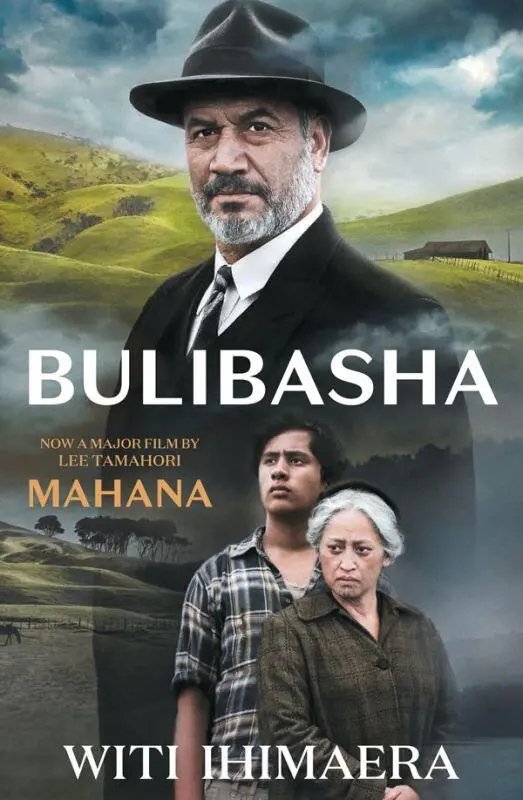
- Название:Bulibasha
- Автор:
- Издательство:Penguin Books Limited
- Жанр:
- Год:2016
- ISBN:9781742288109
- Рейтинг книги:3 / 5. Голосов: 1
-
Избранное:Добавить в избранное
- Отзывы:
-
Ваша оценка:
Bulibasha: краткое содержание, описание и аннотация
Предлагаем к чтению аннотацию, описание, краткое содержание или предисловие (зависит от того, что написал сам автор книги «Bulibasha»). Если вы не нашли необходимую информацию о книге — напишите в комментариях, мы постараемся отыскать её.
Bulibasha — читать онлайн бесплатно полную книгу (весь текст) целиком
Ниже представлен текст книги, разбитый по страницам. Система сохранения места последней прочитанной страницы, позволяет с удобством читать онлайн бесплатно книгу «Bulibasha», без необходимости каждый раз заново искать на чём Вы остановились. Поставьте закладку, и сможете в любой момент перейти на страницу, на которой закончили чтение.
Интервал:
Закладка:
‘You are indeed above us all,’ Rupeni Poata said.
Grandfather could go no higher. Acknowledged by Rupeni Poata as his superior, and therefore above even Hukareka, he had assuredly become in prestige as well as in name Bulibasha, King of the Gypsies.
Chapter 52
Although the joy and tumult was still ringing in our ears, my mother and father wanted to escape the civic reception in Gisborne and get back to our land down at the bend of the Waipaoa.
‘Come on children,’ Mum said. ‘Let’s get out of here.’
Just before leaving, however, I managed to have another few words with Poppy.
‘I don’t care if we’re on opposite sides,’ I said. I was remembering my friendship with Geordie and how that was supposed to be wrong too. I was angry at Grandfather for having constructed a world in which some matters had already been decided for me.
Poppy looked at me. Her eyes welled with tears. Then she gave me the most wonderful grin. ‘There’ll be other girls for you,’ she said.
‘Yes, I know,’ I answered, ‘but you’ll always be the first.’
I hugged her, and didn’t give a damn who saw. Then I ran out to where Mum and Dad were waiting. We had parked our old Pontiac by the station and cheered when Dad started the engine. Then we drove on home to sweet Beulah land. Oh it was good to see the meadow, the windmill turning, our house on the rise and our eternal Waipaoa.
That night, after dinner, our father Joshua looked across at Mum and coughed. My sisters and I were beside ourselves with excitement. Dad laid down his knife and fork and put his hands in his pockets. Mum wouldn’t look at him. Dad made a great play of searching in one pocket and then another as if he couldn’t find what he was looking for.
‘E hara!’ he said. ‘I think I lost it. It must have fell out when I was —’ Then his hand pressed against his heart and, ‘Anei,’ he whispered. He drew out a small packet and put it on the table. He pushed it toward our mother.
‘Enei nga moni.’
It was £500, our share of the winnings.
My sisters and I whooped and yelled and screamed with delight. Mum breathed a deep sigh.
‘I accept this token of aroha for me and our children,’ she said, ‘and return it to you as head of the household. I pray, however, that you allow me to take £200 for myself.’
Dad nodded in agreement.
The next day my mother, sisters and I drove into Patutahi. Mum wore her best dress and hat. She put on her white gloves and, at the last moment, applied lipstick. We stopped at the general store.
‘Why look who’s here!’ Miss Zelda cried, putting her hand to her mouth. ‘We listened to all the news on the radio! We just couldn’t believe that our Maoris had won the Golden Fleece award! Congratulations!’
Miss Daisy and Scott came from the back to extend their congratulations. Other Pakeha customers in the store surrounded us to shake my mother’s hand and pat Glory on the head.
‘I–I — I —’ My mother opened her purse.
‘My mother wants to pay —’ I began.
Mum put a gloved hand over mine. With a great effort she said, ‘I — Yes — I — want to pay in — in — full.’
‘Oh why not leave it for a while?’ Miss Zelda smiled. ‘There must be a million other things you want to do with the money. Go around the world perhaps!’ She laughed out loud at the thought.
Mum was firm. ‘No,’ she said. ‘Now.’ Her tone communicated authority. The other customers looked somewhat put out.
‘Well,’ Miss Zelda said, ‘if that’s the way you want it.’ She took out the ledger book and totalled the amount. ‘Two hundred pounds,’ she said.
Mum peeled the notes in front of Miss Zelda’s astonished face.
‘I think you’ll find it all there.’
Miss Zelda nodded. Then, just as my mother was about to leave, Miss Zelda’s voice came out of some dark place to strike .
‘Oh dear, I forgot to add on £6 interest.’
It was such a small thing really. All we had to do was to say to Miss Zelda that we would come back. But my mother recognised it for what it was — a sneer at her back, a piece of spite, a play of power. My mother turned to Miss Zelda. She walked back through the other customers and looked Miss Zelda straight in the eye.
‘You have made a mistake,’ she said.
Pakehas never make mistakes.
‘Yes,’ Mum said, determined. ‘You have made a mistake’ — she pointed at a ledger entry — ‘here.’
I thought, How can Mum know? She can’t read, she can’t do sums, she hasn’t had any schooling. Miss Zelda would have her for mincemeat.
‘Let me see that,’ Miss Zelda said. She picked up the book and took it to the window. ‘I can’t see where —’
‘There,’ Mum said, ‘where the ink is smudged. I remember clearly the day I came in. You charged me too much, got your rubber and rubbed it out, and put the right amount in. There. You overcharged me.’
‘But I would never do such a thing,’ Miss Zelda said.
‘Well you did,’ Mum said. She was trembling. ‘You did that day.’
There was silence. Everyone was staring at my mother. I felt like I wanted the floor to open up so that I could disappear.
Then Scott came from the back. ‘I remember,’ he said, nodding at Mum, confirming what she had said. ‘Mrs Mahana came in here and she looked at new clothes for her boy and we overcharged her by’ — he paused — ‘£6.’
The exact amount owing on interest.
Zelda and Daisy looked at each other.
‘Well, Scott, if you say so —’
With that, Miss Zelda wet her pencil with her lips and slashed a diagonal line across the tab.
‘Paid in full and discharged,’ she said slowly. She handed the tab to my mother. Her eyes were angry but her lips smiled. ‘Thank you, Mrs Mahana. I must also apologise —’
My mother nodded her head. She turned and left the general store, walking as fast as she could towards the shade of the oak tree near the school.
When we caught up with her she was at the pump, pushing the handle frantically up and down and washing her face. We knew she had been crying and was trying not to let us see her tears. She turned to us.
‘Isn’t this a marvellous day?’ she said. Her lips were still quivering. Then she gave a whoop and a holler. ‘Kia tere! Let’s get to town! We mightn’t be able to buy anything, darlings, but nobody is going to charge us for looking.’
She was free. She was no longer a slave.
Chapter 53
At the end of 1959 the faithful and stalwart Pani finally ended his two years’ servitude to Grandfather Tamihana. He again sought Miriam’s hand in marriage. Grandfather, still glowing in the success of the Golden Fleece, and Pani’s part in it, agreed. He was proud to have Pani as his son-in-law. Miriam was thirty-four and her hair was beginning to grey. She and Pani were married at the registry office in Gisborne. They were overjoyed to be together. Nor was Miriam’s womb barren. Within eleven months of their marriage, Miriam bore a lusty, squealing son.
Not long after Miriam’s wedding, my cousin Mohi was drinking late at the Patutahi Hotel with his latest girlfriend Carol and four friends. He had put a down-payment on a red Ford Zephyr convertible with a white canvas hood and white painted tyres; it was the only one in Poverty Bay and looked like it had been driven straight out of Rebel Without a Cause . It was the appropriate car for the sex machine that was Mohi, and it was his pride and joy. That night Fraser Poata from Hukareka happened to be in Patutahi and challenged Mohi to a re-match race across the red suspension bridge. Perhaps Mohi was worried about scratches on his new car. He lost.
Читать дальшеИнтервал:
Закладка:
Похожие книги на «Bulibasha»
Представляем Вашему вниманию похожие книги на «Bulibasha» списком для выбора. Мы отобрали схожую по названию и смыслу литературу в надежде предоставить читателям больше вариантов отыскать новые, интересные, ещё непрочитанные произведения.






Обсуждение, отзывы о книге «Bulibasha» и просто собственные мнения читателей. Оставьте ваши комментарии, напишите, что Вы думаете о произведении, его смысле или главных героях. Укажите что конкретно понравилось, а что нет, и почему Вы так считаете.