C Hribal - The Company Car
Здесь есть возможность читать онлайн «C Hribal - The Company Car» весь текст электронной книги совершенно бесплатно (целиком полную версию без сокращений). В некоторых случаях можно слушать аудио, скачать через торрент в формате fb2 и присутствует краткое содержание. Город: New York, Год выпуска: 2005, ISBN: 2005, Издательство: Random House, Жанр: Современная проза, на английском языке. Описание произведения, (предисловие) а так же отзывы посетителей доступны на портале библиотеки ЛибКат.
- Название:The Company Car
- Автор:
- Издательство:Random House
- Жанр:
- Год:2005
- Город:New York
- ISBN:1-58836-468-2
- Рейтинг книги:3 / 5. Голосов: 1
-
Избранное:Добавить в избранное
- Отзывы:
-
Ваша оценка:
The Company Car: краткое содержание, описание и аннотация
Предлагаем к чтению аннотацию, описание, краткое содержание или предисловие (зависит от того, что написал сам автор книги «The Company Car»). Если вы не нашли необходимую информацию о книге — напишите в комментариях, мы постараемся отыскать её.
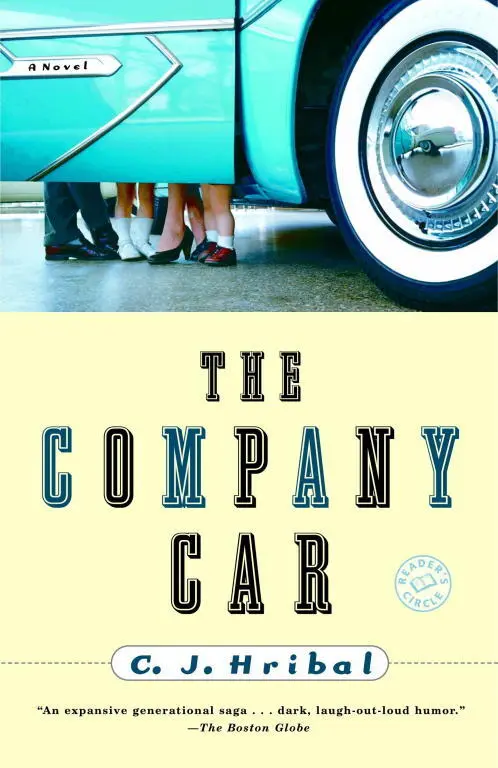
“Are we there yet?” It’s the time-honored question of kids on a long family car trip—and Emil Czabek’s children are no exception. Yet Em asks himself the same thing as the family travels to celebrate his parents’ fiftieth wedding anniversary, and he wonders if he has escaped their wonderfully bad example.
The midwestern drive is Em’s occasion to recall the Czabek clan’s amazing odyssey, one that sprawls through the second half of the twentieth century. It begins with his parents’ wedding on the TV show It’s Your Marriage, and careens from a suburban house built sideways by a drunken contractor to a farm meant to shelter the Czabeks from a country coming apart. It is the story of Em’s father, Wally—diligent, distant, hard-drinking—and his attempts to please, protect, or simply placate his nervous, restless, and sensual wife, Susan, all in plain sight of the children they can’t seem to stop having.
As the tumultuous decades merge in his mind like the cars on the highway, Em must decide whether he should take away his parents’ autonomy and place them in the Heartland Home for the Elders. Beside him, his wife, Dorie, a woman who has run both a triathlon and for public office, makes him question what he’s inherited and whether he himself has become the responsible spouse of a drifting partner—especially since she’s packing a diaphragm and he’s had a vasectomy.
Wildly comic and wrenchingly poignant, The Company Car is a special achievement, a book that drives through territory John Irving and Jonathan Franzen have made popular to arrive at a stunning destination all its own.
The Company Car — читать онлайн бесплатно полную книгу (весь текст) целиком
Ниже представлен текст книги, разбитый по страницам. Система сохранения места последней прочитанной страницы, позволяет с удобством читать онлайн бесплатно книгу «The Company Car», без необходимости каждый раз заново искать на чём Вы остановились. Поставьте закладку, и сможете в любой момент перейти на страницу, на которой закончили чтение.
Интервал:
Закладка:
I didn’t waste any time. I tore off straight for home. I was not in luck. The party was not in full swing; our mother had not forgotten about us. She grabbed my wrist as soon as I came in the door. “Where is everybody?”
“Still out. I lost them.” My voice trembled. I had told a general lie, afraid of the more specific one.
“Where’s Ike? Is he with the others?”
“I think so.”
For a moment luck was with me. Too anxious about the party just starting, she pushed me out the door again. “Go find them. Patty Duckwa will go with you.”
I hadn’t seen Patty. I waited in the gravel of our driveway. When she emerged she was backlit from the lights in the kitchen. This was more than a young boy should be expected to endure. She was dressed like a harem princess—like Jeannie from I Dream of Jeannie. Her tummy, still mildly tan from the summer, was bare, and she’d pulled her hair up into a ponytail. She had on a poofy, slit-sleeved blouse you could see right through, and a red satin bra, from which her breasts rose like two scoops of ice cream.
Unfortunately, Patty Duckwa was pissed. She was pissed about being made to babysit us, pissed about being at a party with a bunch of “old fogies,” pissed about life in general. And here she was out, half-dressed, looking for a lost kid on a now coolish October night.
“Christ,” said Patty Duckwa. Unlike Robert Aaron, who was still learning, Patty Duckwa could swear elegantly. “So, where we going? And which of you is lost?”
I explained. We were at the corner of Swain and Madison. A car full of high schoolers screeched by us, its occupants catcalling at Patty: “Hey, sugar, how about a ride?” “Yeah, toots, I’ll give you a ride. The ride of your life!” “Trick or treat: your trick, my treat.”
“Christ,” said Patty Duckwa.
She would say that a lot as we walked up Madison. I had thought for a moment that maybe we would share this intimacy of the dark, maybe hold hands as we crossed streets even though I was too old to need my hand held. But we walked a gauntlet. Hidden behind masks and costumes, high school guys took liberties they wouldn’t have dared take if they’d seen her in her backyard. Like me, they would have been struck dumb. But not so at night, out here, under the stars. The trick-or-treating was winding down except for the older kids up to no good. They were traveling in cars now, or roamed the streets in gangs—gorillas, commandos, vampires, werewolves, ghouls. Predators, every one of them. They said things. Suggested she ditch the Indian chief, come with them. At the corner of Madison and Kent a guy in a gorilla suit reached into the gap between the halves of the jean jacket she was wearing and palmed a breast. She slugged him. He laughed a gorilla laugh and ran.
It was no fun, I realized, being Patty Duckwa.
It was even less fun once we found Ike and made it back home. Cinderella and Robert Aaron had been waiting for us at York. We fanned out, Cinderella and Robert Aaron taking one side of the street, Patty Duckwa and I the other. We found Ike lying at the corner of Euclid and Oneida, a block north and west of where he was supposed to be, curled up into a ball behind some bushes that formed a capital L. He’d been weeping, but he was only mewling now. Patty squatted down and said, “So how are you, soldier?” I was immediately jealous. Her tone softened with Ike. He was her little soldier. I wanted to be Patty Duckwa’s little soldier. Why couldn’t it be me who’d gotten lost? I could have been Patty Duckwa’s brave little brave. Oh, the curse of having a decent sense of direction! Ike sat up, and his head collided with Patty’s chest. His fez was askew. The bobby pins had come undone on one side, and the fez flipped over. It looked like Patty Duckwa’s breasts had knocked his hat off and the hat, refusing to leave, was now asking for donations. Oh, to be Ike’s head right then! He didn’t seem to notice.
“Tell me what happened,” said Patty.
Ike’s story was a simple one. Abandoned by me, he had gone to Madison and York almost immediately. He was already on Madison, so he just had to walk up to the busiest street. He knew that. The problem was the busiest street was also where the high school kids congregated. They took his candy, cuffed him around a little, sent him on his way. They didn’t want him hanging around their street corner. By the time we got there they’d moved on, maybe afraid that the little sheikh would come back with his parents. Ike, crying, had wandered off, sat behind these bushes—he was afraid of other bullies finding him—and cried himself to sleep.
“Sons of bitches,” said Patty Duckwa. She patted his head, hugged him some more, got him to his feet. Again I thought maybe Patty Duckwa would walk with me back to our house. Given her newfound sentiment for Ike, I wouldn’t begrudge him his place. He could walk on one side of her, I the other. Holding hands, we’d form a human chain on the sidewalk and sweep away any who dared give us—give Patty—grief.
Again, it wasn’t like that. Patty held Ike’s hand all right, but she hogged the sidewalk. I couldn’t walk beside her without making it obvious I was trying to do just that. I fell in behind instead and consoled myself with the vision of her behind swaying inside her harem pants. Cinderella and Robert Aaron had already put their speed-walking into overdrive and were heading for home. They couldn’t wait to tell Mom what had happened.
I didn’t care anymore. I was the third wheel, the jilted brave, his squaw claimed by a neighboring tribe. But then my luck turned again. Ike asked if he could run after them, and Patty Duckwa said if he promised not to get lost again, sure. He tore off as fast as his fez and his flowing robe would let him.
“So,” said Patty Duckwa, crossing her arms over her chest again. I could imagine her saying “So” in just that tone of voice to somebody her own age immediately before kissing him.
“So?” I didn’t think I had a role here except as parrot or monkey.
“So we’re right back where we started,” she said. “I’m pissed and you’re in trouble.” She was walking briskly. I had to trot to keep up. “Not that you’re the only one in trouble.” I couldn’t figure out how she could walk so fast with her arms crossed over her chest. But she was right. We were all going to get it. Probably Ike was the only one who’d emerge from this unscathed, and he’d spent the last hour curled beneath some shrubbery balling his eyes out.
Right then another car went by and the driver—a cowboy with a ten-gallon hat—and a guy in the backseat dressed like a doctor both hung their heads out the window and yelled, “Hey, Jeannie! Three wishes! Guess what the first two are!”
“Sons of bitches,” said Patty Duckwa under her breath.
But they weren’t done. The car pulled a U-ie and came up alongside us. Now it was a pencil and a can of Budweiser. “Come on, sugar,” said the pencil. “Give me something to write home about.” The can of Budweiser said, “Sit on my face. I’ll guess your weight.” Then they peeled off, all exhaust and laughter and chants of “Piece, piece, give me a piece!” in their wake.
“Bastards!” Patty screamed after them. “Fucking sons of bitches!”
Patty had stopped walking. I had never heard her—or anyone—use that kind of language. I knew those guys were saying mean and dirty things, but it was all code to me, and what wasn’t code was Greek. But shocked as I was, I didn’t blame her. I blamed myself. If I were a bigger, more imposing brave, they wouldn’t have been so mean. The car drove down Madison and turned right. I watched to see if they’d come back. They didn’t. If they had, I’d have suggested we go down a side street. It would have been easy to cut across backyards and lose them.
Читать дальшеИнтервал:
Закладка:
Похожие книги на «The Company Car»
Представляем Вашему вниманию похожие книги на «The Company Car» списком для выбора. Мы отобрали схожую по названию и смыслу литературу в надежде предоставить читателям больше вариантов отыскать новые, интересные, ещё непрочитанные произведения.




Обсуждение, отзывы о книге «The Company Car» и просто собственные мнения читателей. Оставьте ваши комментарии, напишите, что Вы думаете о произведении, его смысле или главных героях. Укажите что конкретно понравилось, а что нет, и почему Вы так считаете.