C Hribal - The Company Car
Здесь есть возможность читать онлайн «C Hribal - The Company Car» весь текст электронной книги совершенно бесплатно (целиком полную версию без сокращений). В некоторых случаях можно слушать аудио, скачать через торрент в формате fb2 и присутствует краткое содержание. Город: New York, Год выпуска: 2005, ISBN: 2005, Издательство: Random House, Жанр: Современная проза, на английском языке. Описание произведения, (предисловие) а так же отзывы посетителей доступны на портале библиотеки ЛибКат.
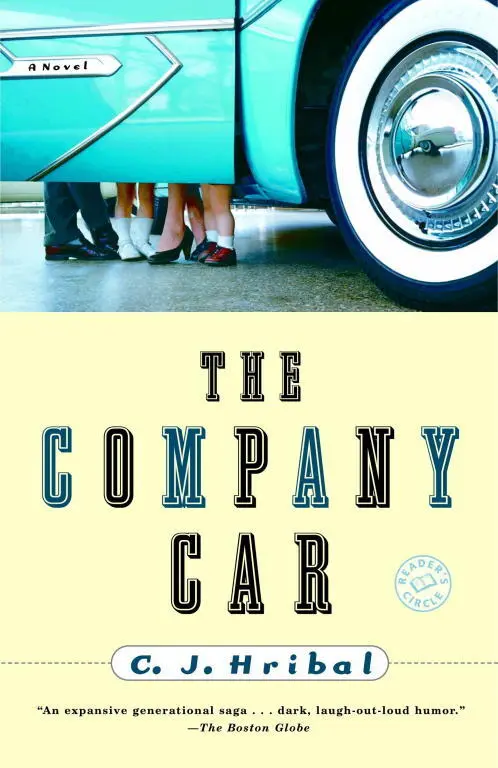
- Название:The Company Car
- Автор:
- Издательство:Random House
- Жанр:
- Год:2005
- Город:New York
- ISBN:1-58836-468-2
- Рейтинг книги:3 / 5. Голосов: 1
-
Избранное:Добавить в избранное
- Отзывы:
-
Ваша оценка:
The Company Car: краткое содержание, описание и аннотация
Предлагаем к чтению аннотацию, описание, краткое содержание или предисловие (зависит от того, что написал сам автор книги «The Company Car»). Если вы не нашли необходимую информацию о книге — напишите в комментариях, мы постараемся отыскать её.
“Are we there yet?” It’s the time-honored question of kids on a long family car trip—and Emil Czabek’s children are no exception. Yet Em asks himself the same thing as the family travels to celebrate his parents’ fiftieth wedding anniversary, and he wonders if he has escaped their wonderfully bad example.
The midwestern drive is Em’s occasion to recall the Czabek clan’s amazing odyssey, one that sprawls through the second half of the twentieth century. It begins with his parents’ wedding on the TV show It’s Your Marriage, and careens from a suburban house built sideways by a drunken contractor to a farm meant to shelter the Czabeks from a country coming apart. It is the story of Em’s father, Wally—diligent, distant, hard-drinking—and his attempts to please, protect, or simply placate his nervous, restless, and sensual wife, Susan, all in plain sight of the children they can’t seem to stop having.
As the tumultuous decades merge in his mind like the cars on the highway, Em must decide whether he should take away his parents’ autonomy and place them in the Heartland Home for the Elders. Beside him, his wife, Dorie, a woman who has run both a triathlon and for public office, makes him question what he’s inherited and whether he himself has become the responsible spouse of a drifting partner—especially since she’s packing a diaphragm and he’s had a vasectomy.
Wildly comic and wrenchingly poignant, The Company Car is a special achievement, a book that drives through territory John Irving and Jonathan Franzen have made popular to arrive at a stunning destination all its own.
The Company Car — читать онлайн бесплатно полную книгу (весь текст) целиком
Ниже представлен текст книги, разбитый по страницам. Система сохранения места последней прочитанной страницы, позволяет с удобством читать онлайн бесплатно книгу «The Company Car», без необходимости каждый раз заново искать на чём Вы остановились. Поставьте закладку, и сможете в любой момент перейти на страницу, на которой закончили чтение.
Интервал:
Закладка:
They would have argued this point longer, but Robert Aaron pointed out they were wasting time. “So fine,” said Cinderella. “How do we meet up again?”
“Who says we need to meet up?”
“What’ll Mom say if we come back one at a time, and somebody stays out late?”
“What can she say about it?”
“Remember that time Emcee got ‘lost’ in the snowstorm and he was just sledding?”
“All right, all right. How about in an hour?”
“But what about Ike and me?” Up until this moment Ike and I had said nothing. But he and I didn’t have wristwatches. Robert Aaron and Cinderella did.
“You guys stay together,” Cinderella said. “And when you think an hour is up, ask somebody what time it is.” Now that Robert Aaron had suggested something out of bounds, Cinderella was only too happy to explain the new rules, to draw up the loose new parameters.
They were already walking away. “And where will we meet?” I called after them.
“How about the corner of Madison and York?”
“But that’s way past where Mom will allow us.”
“And who’s going to know?”
“Mom!” This was Ike’s contribution to the conversation. It almost sounded like he was calling after her, as though she were the one walking away.
“Only if you tell, you big baby.”
“We only have an hour.” I felt obligated to bring this up. Once Cinderella and Robert Aaron got started on breaking rules, there was no stopping them.
“So run.”
Which was what they did when they reached Madison. They took a left and burst into a windmill of legs. Ike and I followed them, calling out “Wait! Wait!” but they were too fast for us, and they’d already split up themselves.
They were heading into a new country, Robert Aaron and Cinderella, and it made me angry at having been left behind.
“What do we do now?” asked Ike. We were about three blocks from our house. Kids our age were still out in full force. Little packs of them, like costumed lab rats, scurried from feeding station to feeding station. All we had to do was join them.
“Split up ourselves,” I said.
“But how will we find them again?”
“You heard what they said. We meet at the corner of Madison and York in an hour. That’s not so hard. It’s right by our church.”
Ike’s voice had started to tremble with his very first question. I should have heard it when Robert Aaron and Cinderella were abandoning us, the plaintiveness in his voiced “Mom!” Now he was close to tears.
“But I can’t read,” Ike said.
“What do you mean, you can’t read? Of course you can read. You’re eight and a half years old. You’re in third grade, for God’s sake.”
I was repeating a conversation Ike had had with our father. Our mother crying. Like our father, I didn’t want to believe Ike, but I knew he was telling the truth. He could not read. He had dyslexia. It hadn’t been diagnosed at school, and it was Ike’s report cards that had set our father off. The teachers said he was slow, stupid, that he wasn’t putting forth enough effort. If only he’d try harder. Our mother didn’t believe them. She had spent the summer on a crusade to find out why Ike couldn’t read. She found out. One of the theories at the time was that dyslexic children hadn’t spent enough time crawling, developing the right focal distance to read. So part of Ike’s therapy, besides phonics and word flash cards, was crawling around the living room on his hands and knees. It was humiliating, and I knew that, and I knew, too, how hard it was for him to confess to me now that he couldn’t read.
He stood there trembling, waiting for me to say something else. He’d already said all he was going to. We were standing in a pool of streetlight, and it was like we were—I was—on trial. I thought of my loyalty to my brother, and I thought of Robert Aaron and Cinderella taking off on us. I wanted to be like them, alone and free. Breaking rules and happy to be doing it. It was liberating, I knew, my anger at him right at that moment. Renounce him and earn your own freedom. There he was, in a coat of many colors, sewn by our mother as his sheikh’s robe, a fez bobby-pinned to his auburn hair, a tiny devil’s goatee inked on his chin with eyebrow pencil, the curlicues of his pencil-thin mustache already starting to run as the tears trickled down his cheeks. His cheeks, still plump with baby fat. I hated him. Hated him for depending on me, for being foisted on me, hated my mother for expecting me to watch him, hated Cinderella and Robert Aaron for leaving him with me, for leaving us, for leaving me. But Ike was the only one I could leave right then, and I took full advantage of the opportunity. How I hated that baby fat. How I hated those plump cheeks. “You can’t read, you whiny little baby. Who wants to hang around a whiny little baby who can’t read?” And I took off running myself.
It did not take me long to feel remorse for what I had done, but by then I was blocks away. I had not looked back once. I trick-or-treated at a few houses, but my heart wasn’t in it. The elation of betrayal had lasted only as long as the words were coming out of my mouth and I was first running away from him. Then guilt sat in my mouth, heavy as mashed potatoes. A few more houses and I went back for him, but he wasn’t where I’d left him. Good, I thought, momentarily relieved and feeling vindictive. He’s fine and good riddance. About time he learned to fend for himself.
Then I started calling his name. “Ike, Ike, it’s me, Emcee! Come out, Ike! I’m sorry!” I don’t know why, but I thought he was hiding. I thought it’d be easy to find him. How many trick-or-treating sheikhs could there be? There weren’t any. Not one. I went up and down blocks for what seemed like hours. How long had it been? Which was when I realized that when we’d left nobody’d said what time it actually was, so what was an hour past a time you didn’t know?
I started calling his name, louder, then louder. I was shrieking. Other kids gave me strange looks. What kind of idiot misplaces our ex-president? “You looking for Eisenhower? Check the golf courses, dummy!” I realized then that a lot of kids my age had gone home. It was mostly older kids now—teenagers, even high schoolers. Their costumes were scarier—gruesome rubber masks and lifelike blood. The ghosts and the vampires seemed particularly disembodied, the Frankenstein’s monsters all too corporeal. I was scared, and then I really started to worry.
This was worse than losing myself. I had lost Ike, my brother. I went back to the rendezvous point. Robert Aaron and Cinderella were waiting. The buzz-cut pirate and the blond witch. “I lost Ike.” I ran up panting.
“No shit, Sherlock,” said Robert Aaron, who had recently discovered the delights of profanity. He cuffed the side of my head.
“What do we do?” I wailed.
“What do we do?” Robert Aaron wailed back, mocking me. “We split up is what we do. We each check a set number of blocks, then we come back.”
“Mom’s waiting.”
“ Mom’s waiting. So what do you want to do, go back empty-handed and tell her?”
“I think we should,” Cinderella said. “At least she’d know only one of us was lost.”
“Yeah, and who was supposed to be watching him?”
“I was,” I said glumly.
“That’s what you think. What Mom’ll think is it was all of us who should’ve been watching him. We’re up shit’s creek if we don’t find him.” Robert Aaron checked his watch. “Fifteen minutes. We meet up here again in fifteen minutes. If we haven’t found him then—”
“What? What?”
Robert Aaron got a strange look on his face. He looked like Dad right then, befuddled and bemused, but seemingly in control of the situation. “Then we shall see what we shall see.”
Читать дальшеИнтервал:
Закладка:
Похожие книги на «The Company Car»
Представляем Вашему вниманию похожие книги на «The Company Car» списком для выбора. Мы отобрали схожую по названию и смыслу литературу в надежде предоставить читателям больше вариантов отыскать новые, интересные, ещё непрочитанные произведения.




Обсуждение, отзывы о книге «The Company Car» и просто собственные мнения читателей. Оставьте ваши комментарии, напишите, что Вы думаете о произведении, его смысле или главных героях. Укажите что конкретно понравилось, а что нет, и почему Вы так считаете.