Irwin Shaw - Short Stories - Five Decades
Здесь есть возможность читать онлайн «Irwin Shaw - Short Stories - Five Decades» весь текст электронной книги совершенно бесплатно (целиком полную версию без сокращений). В некоторых случаях можно слушать аудио, скачать через торрент в формате fb2 и присутствует краткое содержание. Год выпуска: 2013, Издательство: Open Road Media, Жанр: Современная проза, на английском языке. Описание произведения, (предисловие) а так же отзывы посетителей доступны на портале библиотеки ЛибКат.
- Название:Short Stories: Five Decades
- Автор:
- Издательство:Open Road Media
- Жанр:
- Год:2013
- ISBN:нет данных
- Рейтинг книги:5 / 5. Голосов: 1
-
Избранное:Добавить в избранное
- Отзывы:
-
Ваша оценка:
Short Stories: Five Decades: краткое содержание, описание и аннотация
Предлагаем к чтению аннотацию, описание, краткое содержание или предисловие (зависит от того, что написал сам автор книги «Short Stories: Five Decades»). Если вы не нашли необходимую информацию о книге — напишите в комментариях, мы постараемся отыскать её.
Short Stories: Five Decades — читать онлайн бесплатно полную книгу (весь текст) целиком
Ниже представлен текст книги, разбитый по страницам. Система сохранения места последней прочитанной страницы, позволяет с удобством читать онлайн бесплатно книгу «Short Stories: Five Decades», без необходимости каждый раз заново искать на чём Вы остановились. Поставьте закладку, и сможете в любой момент перейти на страницу, на которой закончили чтение.
Интервал:
Закладка:
“Six million Jews have died in Europe,” Ruth said, her voice harsh and passionate, and surprising to Mitchell. “Where do you want the survivors to go?” She and the journalist had forgotten the rest of them and were locked with each other across the table.
The journalist shrugged and looked for a moment up above the palm fronds at the dark sky. “That,” he said, “is a question for the world to decide. Why must the poor Arab have the whole decision? We’ve taken in much more than our share. If the rest of the world really wants to see the Jewish race survive let them take them in. America, Britain, Russia … I do not notice those large countries taking in great masses of Jews.”
“There are no great masses,” Ruth said. “There is only a handful.”
Taif shrugged. “Even so. The truth may be, perhaps,” he paused, a little doubtfully, reminding Mitchell of an old Latin teacher in a class in Cicero, shrewdly hesitating for effect, before telling the class whether the word in question was in the ablative or dative absolute, “the truth may be that the rest of the world really wants to see the Jewish race die out.” He turned and smiled warmly at Mitchell. “It is an interesting supposition, Lieutenant. It might be most interesting to examine it before talking any more about Palestine.” He walked over to Ruth and leaned over and kissed her fleetingly on the forehead. “Good night, little Ruth,” he said, and went to a table across the patio, with the silent, adoring Arab behind him.
“If I see you with that man once more,” Ruth spoke to the man who had introduced himself to Mitchell, and who had remained standing at their table, “I’ll never talk to you again.”
The Arab looked swiftly at Mitchell, a veiled, probing flick of the eyes, and said something to Ruth in Arabic.
“No,” said Ruth, her voice clipped and sharp. “Definitely no.”
The Arab bowed slightly, put out his hand to Mitchell and, as they shook hands, said, “Very pleasant meeting you, Lieutenant,” and went off to join his friends at their table.
“The dansants in old Tel Aviv,” said Carver. “Bring the kiddies. Good night.” He waddled over to the other table.
“Ruth,” Mitchell started to talk.
“Lieutenant Gunnison …” It was the soft, apologetic voice of Schneider at his elbow. “I am so anxious for your opinion. What did you think of ‘Stardust’?”
Mitchell turned slowly from staring at Ruth, who was sitting tense and upright in her chair. “Great, Schneider,” Mitchell said. “I thought it was sensational.”
Schneider beamed with pleasure. “You are too kind,” he said. “I will play you ‘Summertime’ once more.”
“Thanks a lot,” said Mitchell. He put out his hand and covered Ruth’s, lying on the table. “You all right?” he asked.
She smiled up at him. “Sure,” she said. “I am an admirer of abstract political discussions.” Her face grew serious. “Do you want to know what Khazen asked when he spoke to me in Arabic?”
“Not if you don’t want to tell me.”
“I want to tell you.” Ruth absently caressed his fingers. “He asked me if I would meet him later.”
“Yes,” said Mitchell.
“I told him no.”
“I heard you.” Mitchell grinned at her. “They probably heard you in Cairo.”
“I didn’t want you to feel disturbed or doubtful,” Ruth said, “your last night.”
“I feel fine,” Mitchell said.
“I’ve been going with him for four years.” She played for a moment with the food on the plate that the waiter had put before her. “When I came here in the beginning I was frightened and lonely and he was very decent. He’s a contractor for the Americans and British and he’s made a fortune during the war. But when Rommel was outside Alexandria he and his friends used to celebrate in secret. I can’t stand him any more. I tell him when I take up with other men. But he hangs on. Ah, finally, I suppose he’ll get me to marry him. I’m not strong enough any more.” She looked up at Mitchell and tried to smile. “Don’t be shocked, darling,” she said. “Americans can’t understand how tired the human race can get.” She stood up suddenly. “Let’s dance.”
They went onto the floor and Schneider broke into “Summertime” when he saw them and smiled fondly at them as they danced. She danced very well, lightly and passionately, and Mitchell knew as he danced that he was going to remember this for a long time, at odd moments, swinging away from targets with the flak falling off behind him, and later, if he made it, in the snowy hills of his home state, the light, soft pressure of the bright cotton dress, the dark, curved, delicate face below his, the hushed sound of their feet on the old floor under the palms, the clever, rich music of the piano under the small blue lights strung out from the stone building. There were a million things that crowded his throat that he wanted to tell her, and there was no way of saying them. He kissed her cheek as the music ended, and she glanced up at him, and smiled and said, “There, that’s better,” and they were laughing by the time they got back to their table.
He paid the bill and they went out, saying good night to Schneider, not looking back at the table where Carver and the three Arabs sat, but hearing Carver’s deep voice rolling through the music and the darkness, calling, “Does anyone want an airfield? I’ll build it for him. Does anyone want a crown of thorns? I’ll build it for him.”
There was an old carriage waiting outside the restaurant, its driver dozing and its lights dimmed, and they climbed in and sat close together as the driver clucked to the horse and they rattled slowly back toward town. The breeze had gone down as it did at nine o’clock every night, and there was a small, warm breath of salt off the Mediterranean and every once in a while a jeep rushed past in a whistle of American wind, with its slits of cat’s-eye lights cutting a darting, frail, skidding pattern in the darkness, making the creakings and rustlings of the old carriage older and dearer and more private as they sat there holding on to each other in silence.
They got off a block from where Ruth lived because the people from whom she rented her room were intensely moral and did not approve of their boarder going out with soldiers. They walked past the corner where the Italian bombers had killed a hundred and thirty people on a Friday morning the year before, and turned into Ruth’s street. From a darkened window came the sound of someone practicing the third movement of the Brahms violin concerto, and Mitchell couldn’t help smiling and realizing that one of his strongest memories of Tel Aviv would be the strains of Tchaikovsky and Brahms and Beethoven coming through the opened windows on every street of the town, as the furiously cultured inhabitants practiced runs and cadenzas with never-ending zeal.
All the houses were blacked out, but there was a tiny sliver of light along one of the windows in the third-floor apartment in which Ruth lived, and they stopped in dismay when they saw it.
“She’s up,” Ruth said.
“Doesn’t she ever sleep?” Mitchell asked angrily.
Ruth giggled and kissed him. “She can’t stay up forever,” Ruth said. “We’ll take a little walk and by the time we get back she’ll be asleep.”
Mitchell took her arm and they walked slowly down toward the sea. Soldiers and whores and fat, placid couples strolled on the concrete walk along the beach, and the Mediterranean heaved gently under the moon and broke in small white rolls of foam against the beach, with a steady, foreign grumble, not like the roar of the Atlantic on the cold northern beaches of home. From a café a hundred yards away came the sound of a string quartet playing a Strauss waltz as though Vienna had never been taken, the waltz never lost to the enemy.
Читать дальшеИнтервал:
Закладка:
Похожие книги на «Short Stories: Five Decades»
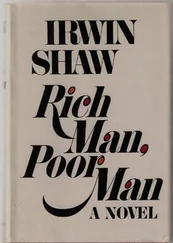
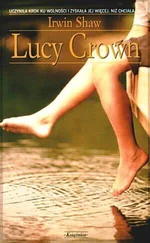
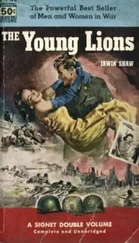
Представляем Вашему вниманию похожие книги на «Short Stories: Five Decades» списком для выбора. Мы отобрали схожую по названию и смыслу литературу в надежде предоставить читателям больше вариантов отыскать новые, интересные, ещё непрочитанные произведения.








Обсуждение, отзывы о книге «Short Stories: Five Decades» и просто собственные мнения читателей. Оставьте ваши комментарии, напишите, что Вы думаете о произведении, его смысле или главных героях. Укажите что конкретно понравилось, а что нет, и почему Вы так считаете.