Харуки Мураками - First Person Singular - Stories
Здесь есть возможность читать онлайн «Харуки Мураками - First Person Singular - Stories» весь текст электронной книги совершенно бесплатно (целиком полную версию без сокращений). В некоторых случаях можно слушать аудио, скачать через торрент в формате fb2 и присутствует краткое содержание. Город: New York, Год выпуска: 2021, ISBN: 2021, Издательство: Alfred A. Knopf, Жанр: Современная проза, на английском языке. Описание произведения, (предисловие) а так же отзывы посетителей доступны на портале библиотеки ЛибКат.
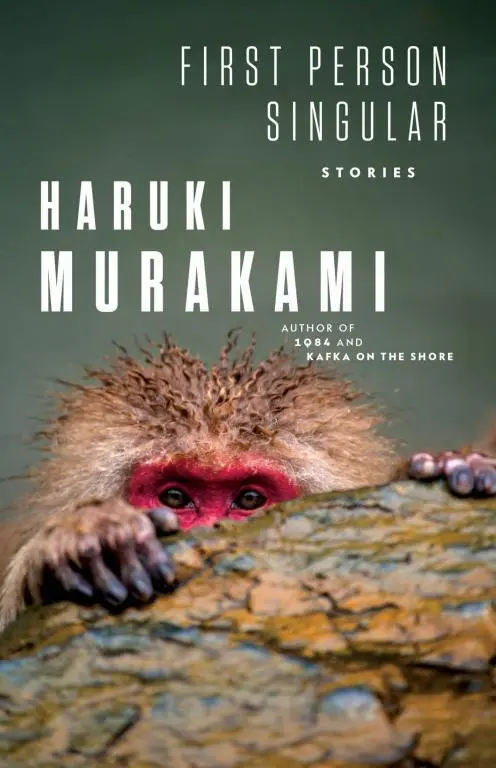
- Название:First Person Singular: Stories
- Автор:
- Издательство:Alfred A. Knopf
- Жанр:
- Год:2021
- Город:New York
- ISBN:978-0-59331-807-2
- Рейтинг книги:3 / 5. Голосов: 1
-
Избранное:Добавить в избранное
- Отзывы:
-
Ваша оценка:
First Person Singular: Stories: краткое содержание, описание и аннотация
Предлагаем к чтению аннотацию, описание, краткое содержание или предисловие (зависит от того, что написал сам автор книги «First Person Singular: Stories»). Если вы не нашли необходимую информацию о книге — напишите в комментариях, мы постараемся отыскать её.
First Person Singular: Stories — читать онлайн бесплатно полную книгу (весь текст) целиком
Ниже представлен текст книги, разбитый по страницам. Система сохранения места последней прочитанной страницы, позволяет с удобством читать онлайн бесплатно книгу «First Person Singular: Stories», без необходимости каждый раз заново искать на чём Вы остановились. Поставьте закладку, и сможете в любой момент перейти на страницу, на которой закончили чтение.
Интервал:
Закладка:
AFTER MY FATHER’S FUNERAL, three of my cousins and I drank a ton of beer. Two of my cousins were on my father’s side (around the same age as me), and the third was a cousin on my mother’s side (about fifteen years younger). We sat around till late at night, throwing back the beers. Beer was all we drank. And no snacks, either. Just an endless parade of beer. I’d never drunk that much beer in my life. By the end, about twenty of those large, twenty-one-ounce Kirin bottles stood empty on the table. How my bladder held out, I have no idea. On top of that, while we were downing all this beer, I stepped out to a jazz bar near the funeral home and had several Four Roses whiskeys on the rocks.
I don’t know why I drank so much that night. It wasn’t like I felt any deep emotions or anything—I wasn’t feeling particularly sad or empty. No matter how much I drank, though, I didn’t get drunk, and the next day, I didn’t even have a speck of a hangover. In fact, when I woke up the next morning, my mind was sharper than usual.
My father was a dyed-in-the-wool Hanshin Tigers fan. When I was a kid, my father was in a foul mood whenever the Tigers lost. Even his facial expression would change. And if he had anything to drink, this tendency would get even worse. So on nights after the Hanshin Tigers lost, I’d be extra careful not to do anything to upset him. Possibly that’s why I never got to be—or never could be—a Hanshin Tigers fan.
My relationship with my father wasn’t what you’d call friendly. There were lots of reasons for this, but in the twenty years before severe diabetes and the cancer that had spread throughout his body put an end to his life at age ninety, my father and I hardly exchanged a word with each other. You could never label that a “friendly relationship.” At the very end of his life, we had a reconciliation of sorts, though perhaps it came too late to really matter.
But of course I do have some wonderful memories.
When I was nine, in the fall, the St. Louis Cardinals played a goodwill game against an All-Star Japanese team. The great Stan Musial was at his peak then, and he faced two top Japanese pitchers, Kazuhisa Inao and Tadashi Sugiura, in an amazing showdown. My father and I went to Koshien Stadium to see the game. We were in the infield seats along first base, near the front. Before the game began, the Cardinals’ players made a circuit of the whole stadium, tossing signed soft rubber tennis balls to the crowd. People leapt to their feet, shouting, vying to grab the balls. But I just sat in my seat, vacantly watching all of this happen. I figured that a little kid like me had no chance of getting one of those signed balls. The next instant, however, I suddenly found one of them in my lap. By total chance, it just happened to land there. Plop —like some divine revelation.
“Good for you,” my father told me. He sounded half shocked, half admiring. Come to think of it, when I became a novelist at age thirty, he said almost the same thing to me. Half shock, half admiration.
That was probably the greatest, most memorable thing that happened to me when I was a boy. Maybe the most blessed event I ever experienced. Could it be that my love for baseball stadiums sprang from this incident? I took that treasured white ball back home, of course, but that’s all I remember about it. What ever happened to that ball? Where could it have possibly gone?
I ALSO INCLUDED the following poem in The Yakult Swallows Poetry Collection . I believe I wrote it back when Osamu Mihara had taken charge of the team as their manager. This was the period I have the most vivid and fond memories of, for whatever reason. I was always fired up to go to the stadium back then, sure that something fun and unexpected was going to happen.
Top of the eighth
The Swallows losing 9–1 (or something like that).
Their sixth pitcher (or something like that), someone I’d never heard of,
Was warming up.
Right at the instant
The clear-cut shadow of a bird
Raced quickly from first base
Over the green grass to where the center fielder stood.
I looked up at the sky
But couldn’t spot the bird.
The sun was too bright.
All I saw was a shadow, like a black cutout, falling on the grass.
A bird-shaped shadow.
Was this some lucky omen?
Or an unlucky one?
I gave it some serious thought,
But soon shook my head.
Come on, knock it off.
How could there ever be a lucky omen at a place like this ?
WHEN MY MOTHER’S MEMORY started to get shaky, and she couldn’t live on her own anymore, I went back to her house in Kansai to get her ready to move out. I couldn’t believe all of the junk—at least, that’s how it seemed to me—that she had stored away in boxes. She’d bought an unimaginable amount of stuff for reasons I couldn’t fathom.
For instance, one empty candy box was stuffed full of cards. Mostly telephone cards, the kind people once used for pay phones, with a few prepaid railway cards for the Hanshin or Hankyu Railways mixed in. All the cards had Tigers players’ photos on them—Kanemoto, Imaoka, Yano, Akahoshi, Fujikawa… Telephone cards? Good grief. Where the heck are you supposed to use telephone cards these days?
I didn’t count them all, but there must have been over a hundred. I just couldn’t get it. As far as I knew, my mother had no interest in baseball whatsoever. Yet it was clear that she was the one who’d bought all those cards. There was solid proof. Had she become a rabid Hanshin Tigers fan before I realized it? For all that, she flatly denied ever buying so many Hanshin Tigers telephone cards. “What are you talking about?” she said. “I’d never buy those kinds of things. Ask your father—he’ll know.”
So what was I supposed to do? My father had died three years before this.
The upshot is that, although I have a cell phone, I’ve been walking all over, looking hard for the rare public phone, trying to use up these Hanshin Tigers telephone cards. Thanks to this, I’ve gotten to know their players’ names pretty well, though most of the ones on the cards have either retired by now or have moved on to other teams.
The Hanshin Tigers.
The Tigers used to have a player named Mike Reinbach, an outfielder, a high-spirited, all-around nice guy. I wrote one poem in which he was featured in a supporting role. Reinbach was the same age as me. He was killed in a car accident in the U.S. in 1989. In 1989 I was living in Rome, writing a long novel. So I didn’t learn of his death, at age thirty-nine, for quite some time. Italian newspapers, as you can imagine, weren’t going to report on the death of a former Hanshin Tigers outfielder.
This is the poem I wrote.
What I mean is, when I’m watching a slow-going, losing game
From the outfield seats by myself,
How else can I enjoy myself besides staring at the outfielders’ butts?
If there’s some other way, I’d sure like to know.
I could talk the night away
About outfielders’ glutes.
The Swallows’ center fielder John Scott’s
[1] John Scott played outfield for the Swallows from 1979 to 1981. He once hit four home runs in a double header. Twice he won the Diamond Glove Award, Japan’s equivalent of the Gold Glove.butt
Is beautiful beyond measure.
His legs are ridiculously long
And look as if they’re suspended in the air.
Like a bold metaphor that makes your heart sing.
Compared to this, the legs of the left fielder, Wakamatsu,
Are incredibly short.
When the two players stand together
Scott’s butt is about at the level of Wakamatsu’s chin.
The Tigers’ Reinbach
[2] Mike Reinbach played outfield for the Hanshin Tigers from 1976 to 1980. Along with Hal Breeden he was one of their cleanup hitters. He was a gutsy player who was very popular with fans.has a butt
So symmetrical you can’t help but love it.
Just one look and it all makes sense.
The butt of the Hiroshima Carp’s player Shane
[3] Richard Alan Scheinblum played outfield for the Hiroshima Carp from 1975 to 1976. He also played in an All Star game in the Major Leagues. His name was shortened to “Shane” in Japan. “I don’t mind,” he commented. “Though I can’t ride a horse.”
Is deeply thoughtful, cerebral.
Reflective, you might say.
People really should have called him by his full name,
Scheinblum.
If for nothing else, then to show respect for that one-of-a-kind butt.
I was about to list
The names of outfielders whose butts
Are not what you’d call attractive—
But decided I’d better not.
After all, you have to consider their mothers and siblings, and wives
And kids, if they have any.
AS A YAKULT FAN I did once watch a Hanshin Tigers vs. Swallows game at Koshien Stadium, the Tigers’ home stadium. I happened to have an errand that brought me to Kobe and I had the afternoon free. I saw a poster at the Hanshin Sannomiya station advertising a day game at Koshien Stadium and decided it’d been far too long since my last visit to Koshien. It had been over thirty years, in fact.
Читать дальшеИнтервал:
Закладка:
Похожие книги на «First Person Singular: Stories»
Представляем Вашему вниманию похожие книги на «First Person Singular: Stories» списком для выбора. Мы отобрали схожую по названию и смыслу литературу в надежде предоставить читателям больше вариантов отыскать новые, интересные, ещё непрочитанные произведения.







Обсуждение, отзывы о книге «First Person Singular: Stories» и просто собственные мнения читателей. Оставьте ваши комментарии, напишите, что Вы думаете о произведении, его смысле или главных героях. Укажите что конкретно понравилось, а что нет, и почему Вы так считаете.