Харуки Мураками - First Person Singular - Stories
Здесь есть возможность читать онлайн «Харуки Мураками - First Person Singular - Stories» весь текст электронной книги совершенно бесплатно (целиком полную версию без сокращений). В некоторых случаях можно слушать аудио, скачать через торрент в формате fb2 и присутствует краткое содержание. Город: New York, Год выпуска: 2021, ISBN: 2021, Издательство: Alfred A. Knopf, Жанр: Современная проза, на английском языке. Описание произведения, (предисловие) а так же отзывы посетителей доступны на портале библиотеки ЛибКат.
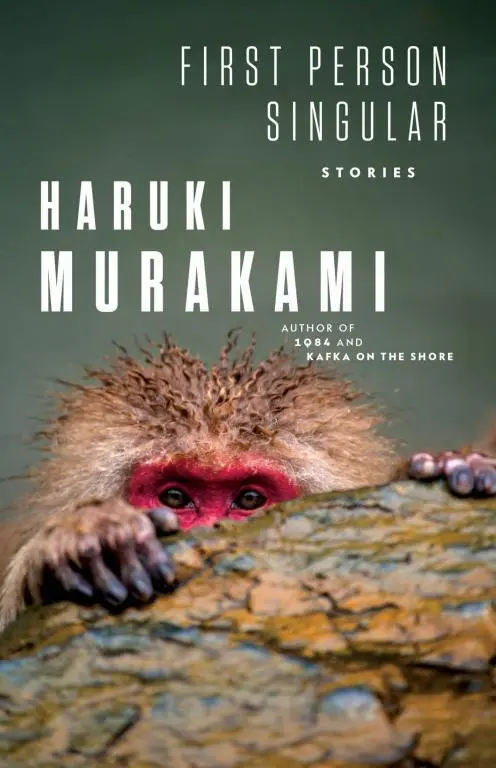
- Название:First Person Singular: Stories
- Автор:
- Издательство:Alfred A. Knopf
- Жанр:
- Год:2021
- Город:New York
- ISBN:978-0-59331-807-2
- Рейтинг книги:3 / 5. Голосов: 1
-
Избранное:Добавить в избранное
- Отзывы:
-
Ваша оценка:
First Person Singular: Stories: краткое содержание, описание и аннотация
Предлагаем к чтению аннотацию, описание, краткое содержание или предисловие (зависит от того, что написал сам автор книги «First Person Singular: Stories»). Если вы не нашли необходимую информацию о книге — напишите в комментариях, мы постараемся отыскать её.
First Person Singular: Stories — читать онлайн бесплатно полную книгу (весь текст) целиком
Ниже представлен текст книги, разбитый по страницам. Система сохранения места последней прочитанной страницы, позволяет с удобством читать онлайн бесплатно книгу «First Person Singular: Stories», без необходимости каждый раз заново искать на чём Вы остановились. Поставьте закладку, и сможете в любой момент перейти на страницу, на которой закончили чтение.
Интервал:
Закладка:
This was in 1968. The Folk Crusaders had a big hit then with “I Only Live Twice,” it was the year Martin Luther King and Robert Kennedy were assassinated, and there were student demonstrations on Anti-War Day that occupied Shinjuku station. Lining up all these events makes it sound like ancient history, but, at any rate, that was the year I decided, “Okay, I’m going to be a Sankei Atoms fan from now on.” Prompted by something—fate, my astrological sign, blood type, prophecy, or a spell. If you have a chart of historical chronology I’d like you to write the following, in small letters in one corner: 1968. This was the year that Haruki Murakami became a Sankei Atoms fan.
I’m ready to swear this before every god in the world, but at the time, the Sankei Atoms had totally hit rock bottom. They didn’t have a single star player, the entire team was obviously barely scraping along, and there were hardly any fans at the stadium, except for when they played the Giants. To use an antiquated Japanese term, “the black cuckoo was calling”—meaning the place was deserted. The thought often struck me back then that the team mascot shouldn’t be the anime character Astro Boy (Iron-arm Atom, in the original) but instead should be a black cuckoo. Though what exactly that kind of cuckoo looked like, I couldn’t tell you.
This was the age when the Tokyo Giants—under their manager, Tetsuharu Kawakami—ruled. Their home ground, Korakuen Stadium, was always sold out. Their corporate owner, the Yomiuri Shimbun newspaper group, used game tickets as a major sales strategy, and worked hard to increase newspaper sales. The Giants sluggers Sadaharu Oh and Shigeo Nagashima were national heroes. I passed by kids on the street who proudly wore their Giants baseball caps. But a kid wearing a Sankei Atoms cap was nowhere to be seen. Perhaps those brave few who did were seen stealthily slinking down back alleyways, furtively weaving their way under the eaves. My gosh—where is there any justice left in the world?
But whenever I had free time (and back then I was free most of the time), I’d walk over to Jingu Stadium and silently root for the Sankei Atoms by myself. They lost much more often than they won (probably losing about two-thirds of their games), but I was still young. As long as I could stretch out on the grass past the outfield, have some beers, and watch the game, occasionally gazing aimlessly up at the sky, I was pretty happy. I’d enjoy it when the team won the odd game, and when they lost, I’d console myself with the thought that it’s important in life to get used to losing . They didn’t have bleachers in the outfield then, just a slope with trampled-down grass. I’d spread out a newspaper (the Sankei Sports paper, of course) and sit there, sometimes lying back. As you can imagine, when it rained the ground got pretty muddy.
IN 1978, when the team won its first championship, I was living in Sendagaya, a ten-minute walk from the stadium, so I went to see games whenever I was free. That year the Yakult Swallows (they’d changed their name to the Yakult Swallows by then) won their first league championship in the twenty-nine-year history of the franchise, and rode that wave all the way to victory in the Japan Series. A miraculous year, for sure. That was the same year (when I was twenty-nine, too) that I wrote my first novel, entitled Hear the Wind Sing , which won the Gunzo Newcomer’s Prize. I suppose that’s when you could call me a novelist, starting then. I know it’s just a coincidence, but I can’t help feeling there’s some connection, some karma, at work in all this.
But this was all much later. In the ten years that led up to that moment, from 1968 to 1977, I witnessed a huge number, an almost astronomical number (at least that’s the way it feels), of losing games. To put it another way, I steadily became accustomed to regular loss: “Here we go again—another defeat.” Like a diver carefully takes his time to acclimate to the different water pressure. It’s true that life brings us far more defeats than victories. And real-life wisdom arises not so much from knowing how we might beat someone as from learning how to accept defeat with grace.
“You’ll never understand this advantage we’ve been given!” I often used to shout at the Giants’ cheering section. (Of course I never actually shouted it aloud.)
During those long dark years, like passing through an endless tunnel, I sat in the outfield seats. To kill time while I watched the game, I scribbled down some poem-like jottings in a notebook. Poems on the topic of baseball. Unlike soccer, with baseball there can be a lot of down time between plays, so I could look away from the field, jot down my ideas on paper without missing any runs. Let’s face it—baseball is a sport done at a leisurely pace. Most of these poems were written during tiresome, losing games when one pitcher after another was brought in to try to salvage the game. (Oh, man, how many times did I watch that kind of game?)
THE FIRST POEM in my collection was the following one. There are two versions of the poem—a short version and a long one—and this is the long version. I added a few things later on.
You’re holding down right field at Jingu Stadium.
The right fielder for the Sankei Atoms.
That’s your profession.
I’m seated in the back of the right field’s seats,
Drinking slightly lukewarm beer.
Like always.
The opposing team’s batter lofts a fly to right field.
A simple pop fly.
It arcs high up, a lazy fly ball.
The wind has stopped.
And the sun isn’t an issue.
It’s a piece of cake.
You raise both hands a bit,
And step forward about three yards.
You got this.
I take a sip of beer,
Waiting for the ball to drop.
As straight as a ruler the ball falls
Precisely three yards behind you.
Like a mallet lightly tapping the edge of the universe,
There’s a slight plunk.
It makes me wonder—
Why in the world do I cheer on a team like this?
This itself is a kind of—
Riddle as huge as the universe.
I have no idea if this could be called a poem. If you did, it might make actual poets upset, make them want to string me up from the nearest light pole. I’ll pass on that, thank you very much. Okay, but then what should I call these? If there’s a better name for them, then I’d like to know it. So, for the time being, at least, I labeled them “poems.” And I gathered my poems into a book called The Yakult Swallows Poetry Collection and published it. If poets want to get all bent out of shape over it, then be my guest. This was in 1982. A little before I finished writing my novel A Wild Sheep Chase , three years after I’d debuted as a novelist (if you could call it that).
Major publishers were wise enough, of course, not to show even a smidge of interest in putting out my book of poems, so I ended up basically self-publishing it. Fortunately a friend of mine ran a printing company, so I could print it up on the cheap. Simple binding, five hundred numbered copies, each and every one signed by yours truly. Haruki Murakami, Haruki Murakami, Haruki Murakami… Predictably, though, hardly anyone paid it any attention. You’d have to have pretty odd taste to lay down good money for something like that. I think I sold about three hundred copies, all told. The rest I gave away as souvenirs to various friends and acquaintances. Nowadays they’ve become valuable collector’s items, and fetch unbelievable prices. You never know what’s going to happen. I only have two copies myself. If only I’d kept more, I’d be rolling in dough by now.
Читать дальшеИнтервал:
Закладка:
Похожие книги на «First Person Singular: Stories»
Представляем Вашему вниманию похожие книги на «First Person Singular: Stories» списком для выбора. Мы отобрали схожую по названию и смыслу литературу в надежде предоставить читателям больше вариантов отыскать новые, интересные, ещё непрочитанные произведения.





Обсуждение, отзывы о книге «First Person Singular: Stories» и просто собственные мнения читателей. Оставьте ваши комментарии, напишите, что Вы думаете о произведении, его смысле или главных героях. Укажите что конкретно понравилось, а что нет, и почему Вы так считаете.