Sarah Waters - The Night Watch
Здесь есть возможность читать онлайн «Sarah Waters - The Night Watch» весь текст электронной книги совершенно бесплатно (целиком полную версию без сокращений). В некоторых случаях можно слушать аудио, скачать через торрент в формате fb2 и присутствует краткое содержание. Жанр: Современная проза, на английском языке. Описание произведения, (предисловие) а так же отзывы посетителей доступны на портале библиотеки ЛибКат.
- Название:The Night Watch
- Автор:
- Жанр:
- Год:неизвестен
- ISBN:нет данных
- Рейтинг книги:4 / 5. Голосов: 1
-
Избранное:Добавить в избранное
- Отзывы:
-
Ваша оценка:
The Night Watch: краткое содержание, описание и аннотация
Предлагаем к чтению аннотацию, описание, краткое содержание или предисловие (зависит от того, что написал сам автор книги «The Night Watch»). Если вы не нашли необходимую информацию о книге — напишите в комментариях, мы постараемся отыскать её.
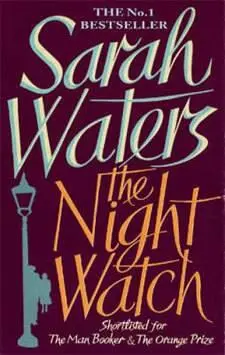
The structure of The Night Watch is worth remarking upon as it begins at the end in 1947. The second section takes us back to 1944, and the third and final section is set in 1941. The decision to use this type of structure is brave, even foolhardy, because of the problems in pulling it off convincingly, but Waters’ subtlety and restraint in pulling back the layers reveals the extent of her authorial control.
This novel is essentially concerned with five main characters (Kay, Viv, Helen, Julia and Viv’s brother, Duncan) and their separate private lives. The connections between these people are also elemental to the narrative. Coincidence plays a significant role in the unfolding of past events as their lives are shown to overlap. This use of coincidence has been a feature of Waters’ previous novels, but this time she uses it casually, and as an extra element, rather than for the purposes of manipulating the plot out of hand as was deemed necessary in a melodrama such as Fingersmith.
The love stories of Kay, Viv and Helen are central and, as the narrative traces back to 1941, we learn how their present views of relationships have been shaped by these past events. As with her previous novels, Waters continues to use lesbian relationships as a main focus of the narrative, but shifts away to examine the affair between Viv and Reggie, and the horrific illegal abortion she undergoes to spare her father from further shame.
Repression becomes a touchstone as many of the characters keep a secret or carry a weight of shame. The converse of this theme of fear of discovery is the examination of bravery. This is most notable in the second and third sections which are, necessarily, concerned with the bombing of London. A re-evaluation of the definition of courage is undertaken and is perhaps most poignant in the prison scene, where Duncan ’s cell mate, conscientious objector Fraser, asks himself if he is ‘simply a – a bloody coward’ when he is overwhelmed by the fear of death. The deconstruction of received morality, of what is to be brave or selfish in this time of heightened emotions, is also examined when Helen considers the effect the war has had on her ethics: ‘In the first blitz, she’d tried to help everyone; she’d given money to people, sometimes, from her own purse. But the war made you careless. You started off, she thought sadly, imagining you’d be a kind of heroine. You end up thinking only of yourself.’
The reason for Duncan ’s imprisonment is one of the well-kept secrets of the novel and is only (partially) explained in the third section. This use of the hidden truth and the hints at the unspoken strengthen the evocation of the period, where loose lips could potentially sink ships, and walls had ears. When revelations are made, they are, more often than not, as subdued as the repressed tone permits and this allows the novel to maintain the same pace throughout.
Despite this steady pace, Waters still enables the readers to see how the war also had a liberating effect on women such as Kay. Her gallantry and masculine demeanour was of use during the bombings whilst she worked as an ambulance driver, but in the beginning of the novel, in 1947, it is clear that with the return to peace time her short hair and male clothing are once more worthy of ridicule.
As with all of Waters’ novels, The Night Watch has been praised by critics for the attention to detail and meticulous research. This work stretches beyond the limits of the previous three, though, and is certainly her most impressive to date. Her control in depicting the central characters gradually is in itself an indicator of skilful writing. As this is also combined with a believable and interested evocation of period and place, this novel must be recommended highly.
The Night Watch — читать онлайн бесплатно полную книгу (весь текст) целиком
Ниже представлен текст книги, разбитый по страницам. Система сохранения места последней прочитанной страницы, позволяет с удобством читать онлайн бесплатно книгу «The Night Watch», без необходимости каждый раз заново искать на чём Вы остановились. Поставьте закладку, и сможете в любой момент перейти на страницу, на которой закончили чтение.
Интервал:
Закладка:
'Yes, I'd like that.'
They finished their sandwiches and their tea, and Julia tidied away the bottle and the paper and rinsed out the cups. They went back upstairs, going past the doors to the sitting-room and the room behind it, and up the dimly-lit staircase to the floors above.
They went softly, sometimes murmuring together over some particular detail or piece of damage, but more often moving about in silence. The rooms on these higher floors were bleaker, even, than the ones downstairs. The bedrooms still had their beds and wardrobes in them, and the wardrobes were damp, because of the broken windows, the ancient clothes inside them eaten through by moths or growing mouldy. Sections of the ceilings had come down. Books and ornaments lay about, ruined. And in the bathroom, a mirror hung on the wall with a weird, blank face: its glass had shattered and fallen, and filled the basin beneath it in a hundred silvery shards.
As they climbed up to the attic floor there was a scuttling, fluttering sound. Julia turned. 'Pigeons, or mice,' she said softly. 'You won't mind?'
'Not rats?' asked Helen apprehensively.
'Oh, no. At least, I don't think so.'
She went on, and opened a door. The scuttling changed, became the sound of clapping hands. Peering over Julia's shoulder, Helen saw a bird fly up and then, as if by magic, disappear. The sloping ceiling had a hole in it, where an incendiary had burned through. The rocket had landed on a feather mattress underneath and made a crater: it looked like an ulcerated leg. You could still smell the bitter smell of burnt, damp feathers.
The room was a housekeeper's or maid's. There was a photograph in a frame, on the bedside table, of a little girl. And on the floor was a single slim leather glove, much nibbled by mice.
Helen picked the glove up and did her best to smooth it out. She put it neatly down beside the photograph. She stood for a second looking up through the hole in the ceiling at the close, gun-coloured sky. Then she went with Julia to the window, and gazed out at the yard at the back of the house.
The yard was ruined, like everything else: its paving-stones broken, its plants run wild, the column of a sundial blown from its base and lying in pieces.
'Isn't it sad?' said Julia quietly. 'Look at the fig tree.'
'Yes. All that fruit!' For the tree was lolling with broken branches, and the ground beneath it was thick with rotting figs that must have fallen from it and gone uncollected the summer before.
Helen got out cigarettes, and Julia moved closer to her, to take one. They smoked together, their shoulders just touching, the sleeve of Julia's jacket just catching at Helen's coat as she raised and lowered her cigarette. Her knuckles were still marked, Helen noticed, from where she'd grazed them the week before; and Helen thought of how, that time, she'd lightly touched them with her fingertips. She and Julia had only been standing together-just standing together, like this. Nothing had happened to make a change. But she couldn't imagine, now, touching any part of Julia so carelessly as that.
The thought was thrilling, but also frightening. They chatted a little, about the houses which backed on to Bryanston Square; Julia pointed out the ones she had visited, and described the things she'd seen in them. But her sleeve still caught against Helen's, and it was that brushing and clinging of fabric, rather than Julia's words, which held Helen's attention; at last she began to feel the flesh of her arm rising up-as if Julia, or the nearness of Julia, was somehow tugging, drawing at it…
She shivered and moved away. She'd almost finished her cigarette, and made that the excuse. She looked around for somewhere to stub it.
Julia saw. 'Just drop it, and stamp on it,' she said.
'I don't like to,' said Helen.
'It'll hardly make things worse.'
'I know, but-'
She took the cigarette to the fireplace, to crush it out there; and she did the same with Julia's, when Julia had finished. But then she didn't want to leave the two stubs behind in the empty grate: she waved them about to cool them down, and put them back, with the fresh ones, in her packet.
'Suppose the people come back?' she said, when Julia stared at her in disbelief. 'They won't like to think that strangers have been in here, looking at their things.'
'You don't think they'd be a shade more troubled by the rainwater, the broken windows, the rocket in the bed?'
'Rain and rockets and windows are just things,' said Helen. 'They're impersonal, not like people… You think I'm silly.'
Julia was gazing at her, shaking her head. 'On the contrary,' she said quietly. She was smiling, but sounded almost sad. 'I was thinking-well, how awfully nice you are.'
They looked at each other for a moment, until Helen lowered her gaze. She put away the packet of cigarettes, then went back across the room to the charred mattress. The room seemed small to her, suddenly: she was very aware of herself and Julia in it, at the top of this chill, silent house-the warmth and the life and the solidness of them, in comparison with so much damage. She could feel the rising, again, of goose-pimples, on her arms. She could feel the beating of her own heart, in her throat, her breast, her fingertips…
'I ought,' she said, without turning round, 'to get back to work.'
And Julia laughed. 'Now you're nicer than ever,' she said. But she still sounded sad, somehow. 'Come on. Let's go down.'
They went out to the landing and down one flight of stairs. They moved so quietly, still, that when a door was closed, somewhere at the bottom of the house, they heard it, and stopped. Helen's heart, instead of rushing, seemed to falter. 'What's that?' she whispered, nervously gripping the banister rail.
Julia was frowning. 'I don't know.'
But then a man called lightly up the stairs. 'Julia? Are you there?'-and her expression cleared.
'It's my father,' she said. She leaned, and yelled cheerfully into the stairwell: 'I'm up here, Daddy! Right at the top!-Come and meet him,' she said, turning back, taking hold of Helen's hand and squeezing her fingers.
She went quickly down the stairs. Helen followed more slowly. By the time she got down to the hall, Julia was brushing dust from her father's shoulders and hair, and laughing. 'Darling, you're filthy!'
'Am I?'
'Yes! Look, Helen, what a state my father's in. He's been burrowing through coal cellars… Daddy, this is my friend Miss Helen Giniver. Don't shake her hand! She thinks we're a family of gipsies as it is.'
Mr Standing smiled. He was wearing a dirty blue boiler suit with grubby medal ribbons on the breast. He'd taken off a crumpled-looking cap, and now smoothed down his hair where Julia had disarranged it. He said, 'How do you do, Miss Giniver? I'm afraid Julia's right about my hand. Been taking a look around, have you?'
'Yes.'
'Queer sort of job, isn't it? All dust. Not like the other war: that was all mud. Makes one wonder what the next one will be. Ashes, I expect… What I should really like to be doing, of course, is putting up new places, rather than grubbing around in these old ones. Still, it keeps me busy. Keeps Julia out of trouble, too.' He winked. His eyes were dark, as Julia's were, the lids rather heavy. His hair was grey, but darkened by dirt; his brow and temples were dirty, too-or else freckled, it was hard to see. As he spoke he ran his gaze, in a practised, casual way, over Helen's figure. 'Glad to see you taking an interest, anyway. Care to stay, and help?'
Julia said, 'Don't be silly, Daddy. Helen has a terribly important job already. She works for the Assistance Board.'
'The Assistance Board? Really?' He looked at Helen properly. 'With Lord Stanley?'
Helen said, 'Only in the local office, I'm afraid.'
'Ah. Pity. Stanley and I are old friends…'
Читать дальшеИнтервал:
Закладка:
Похожие книги на «The Night Watch»
Представляем Вашему вниманию похожие книги на «The Night Watch» списком для выбора. Мы отобрали схожую по названию и смыслу литературу в надежде предоставить читателям больше вариантов отыскать новые, интересные, ещё непрочитанные произведения.







Обсуждение, отзывы о книге «The Night Watch» и просто собственные мнения читателей. Оставьте ваши комментарии, напишите, что Вы думаете о произведении, его смысле или главных героях. Укажите что конкретно понравилось, а что нет, и почему Вы так считаете.