Sarah Waters - The Night Watch
Здесь есть возможность читать онлайн «Sarah Waters - The Night Watch» весь текст электронной книги совершенно бесплатно (целиком полную версию без сокращений). В некоторых случаях можно слушать аудио, скачать через торрент в формате fb2 и присутствует краткое содержание. Жанр: Современная проза, на английском языке. Описание произведения, (предисловие) а так же отзывы посетителей доступны на портале библиотеки ЛибКат.
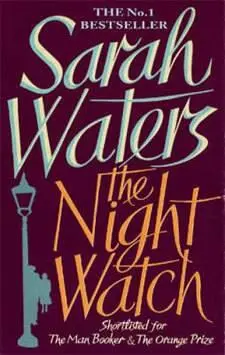
- Название:The Night Watch
- Автор:
- Жанр:
- Год:неизвестен
- ISBN:нет данных
- Рейтинг книги:4 / 5. Голосов: 1
-
Избранное:Добавить в избранное
- Отзывы:
-
Ваша оценка:
The Night Watch: краткое содержание, описание и аннотация
Предлагаем к чтению аннотацию, описание, краткое содержание или предисловие (зависит от того, что написал сам автор книги «The Night Watch»). Если вы не нашли необходимую информацию о книге — напишите в комментариях, мы постараемся отыскать её.
The structure of The Night Watch is worth remarking upon as it begins at the end in 1947. The second section takes us back to 1944, and the third and final section is set in 1941. The decision to use this type of structure is brave, even foolhardy, because of the problems in pulling it off convincingly, but Waters’ subtlety and restraint in pulling back the layers reveals the extent of her authorial control.
This novel is essentially concerned with five main characters (Kay, Viv, Helen, Julia and Viv’s brother, Duncan) and their separate private lives. The connections between these people are also elemental to the narrative. Coincidence plays a significant role in the unfolding of past events as their lives are shown to overlap. This use of coincidence has been a feature of Waters’ previous novels, but this time she uses it casually, and as an extra element, rather than for the purposes of manipulating the plot out of hand as was deemed necessary in a melodrama such as Fingersmith.
The love stories of Kay, Viv and Helen are central and, as the narrative traces back to 1941, we learn how their present views of relationships have been shaped by these past events. As with her previous novels, Waters continues to use lesbian relationships as a main focus of the narrative, but shifts away to examine the affair between Viv and Reggie, and the horrific illegal abortion she undergoes to spare her father from further shame.
Repression becomes a touchstone as many of the characters keep a secret or carry a weight of shame. The converse of this theme of fear of discovery is the examination of bravery. This is most notable in the second and third sections which are, necessarily, concerned with the bombing of London. A re-evaluation of the definition of courage is undertaken and is perhaps most poignant in the prison scene, where Duncan ’s cell mate, conscientious objector Fraser, asks himself if he is ‘simply a – a bloody coward’ when he is overwhelmed by the fear of death. The deconstruction of received morality, of what is to be brave or selfish in this time of heightened emotions, is also examined when Helen considers the effect the war has had on her ethics: ‘In the first blitz, she’d tried to help everyone; she’d given money to people, sometimes, from her own purse. But the war made you careless. You started off, she thought sadly, imagining you’d be a kind of heroine. You end up thinking only of yourself.’
The reason for Duncan ’s imprisonment is one of the well-kept secrets of the novel and is only (partially) explained in the third section. This use of the hidden truth and the hints at the unspoken strengthen the evocation of the period, where loose lips could potentially sink ships, and walls had ears. When revelations are made, they are, more often than not, as subdued as the repressed tone permits and this allows the novel to maintain the same pace throughout.
Despite this steady pace, Waters still enables the readers to see how the war also had a liberating effect on women such as Kay. Her gallantry and masculine demeanour was of use during the bombings whilst she worked as an ambulance driver, but in the beginning of the novel, in 1947, it is clear that with the return to peace time her short hair and male clothing are once more worthy of ridicule.
As with all of Waters’ novels, The Night Watch has been praised by critics for the attention to detail and meticulous research. This work stretches beyond the limits of the previous three, though, and is certainly her most impressive to date. Her control in depicting the central characters gradually is in itself an indicator of skilful writing. As this is also combined with a believable and interested evocation of period and place, this novel must be recommended highly.
The Night Watch — читать онлайн бесплатно полную книгу (весь текст) целиком
Ниже представлен текст книги, разбитый по страницам. Система сохранения места последней прочитанной страницы, позволяет с удобством читать онлайн бесплатно книгу «The Night Watch», без необходимости каждый раз заново искать на чём Вы остановились. Поставьте закладку, и сможете в любой момент перейти на страницу, на которой закончили чтение.
Интервал:
Закладка:
'Nothing,' said Helen. 'I- I wanted to hear you again, that's all. What were you doing?'
'I was in the bathroom,' said Kay. 'I'd just started to cut my hair. I've dropped hair everywhere, now. You'll hate it.'
'No I won't. Kay, I just wanted to tell you- You know, that thing.'
She meant, I love you . Kay was silent for a second, and then said, ' That thing.' Her voice had thickened. 'I wanted to tell you that, too…'
What an absolute idiot I've been! thought Helen, when she'd put the phone down again. Her heart felt, now, as though it was swollen inside her-was rising up, like dough, into her throat. She was almost trembling. She got out her hand-bag and looked for her cigarettes. She found the packet and opened it up.
Inside the packet were those two stubs. She'd put them in there and forgotten. There was lipstick on them, from her own mouth, and from Julia's.
She put them in the ashtray on her desk. Then she found that the ashtray kept drawing her eye. In the end she took it from the room, and tipped it out into one of the wire bins in Miss Chisholm's office.
At half-past six, Viv was in the cloakroom at Portman Court. She was standing in a lavatory cubicle, being sick into the bowl. She was sick three times, then straightened up and closed her eyes and, for a minute, felt wonderfully tranquil and well. But when she opened her eyes and saw the lumpy brown mess she'd brought up-a mixture of tea and half-digested Garibaldi biscuits-she retched again. The cloakroom door was opened just as she was coming out to rinse her mouth. It was one of the girls from her own department, a girl called Caroline Graham.
'I say,' said the girl, 'are you all right? Gibson sent me to find you. What's up? You look rotten.'
Viv wiped her face, gingerly, on an edge of roller-towel. 'I'm OK.'
'You don't look it, honestly. Do you want me to go with you to the Nurse?'
'It's nothing,' said Viv. 'Just- Just a hangover.'
Caroline heard that, and her manner changed. She leaned her hip comfortably against one of the basins, and got out a stick of chewing-gum. 'Oh,' she said, folding the stick into her mouth, 'I know all about those . And crikey, it must have been bad if you're still throwing up at this hour! I hope the chap was worth it. It's not so rotten, I always think, if you've had a really good time. The worst is, when the boy's a dud, and you sort of drink just in the hope that it'll start to make him look better… You want to eat a raw egg or something.'
Viv felt her stomach quiver again. She moved away from the sight of the tumbling grey gum in Caroline's mouth. 'I don't think I could.' She glanced into the mirror. 'God, look at the state of me! Have you got any powder on you?'
'Here,' said Caroline. She got out a compact and handed it over; and when Viv had used it she took it back and used it herself. Then she stood at the mirror, re-curling her hair-the chewing-gum still for a moment; the tip of her tongue showing pinkly between her painted lips, her face smooth and plump with health and youth and the absence of worry: so that Viv looked at her and thought miserably, How bloody mean and unfair life is! I wish I was you .
Caroline caught her gaze. 'You do look rotten,' she said, beginning to chew again. 'Why don't you stay longer? It's no skin off my nose. We've only got another half-hour, anyway. I could tell Gibson I looked and couldn't find you. You could say you were collared by Mr Brightman, something like that. He's always sending girls out for soda-mints.'
'Thanks,' said Viv, 'but I'll be OK.'
'Are you sure?'
'Yes.'
But she'd lowered her head to straighten the waistband of her skirt; and now, in looking up too quickly, she grew queasy again. She put her hand out to one of the basins and closed her eyes-swallowing, swallowing, feeling the gathering of sickness in her stomach and fighting to keep it from rushing up… All at once, it surged. She darted back into the lavatory cubicle and retched drily into the bowl. In that narrow space, the sounds she made seemed dreadful. She tugged on the chain to try and disguise them. When she went back out to the basins, Caroline looked embarassed.
'I think you ought to let me take you to the Nurse, Viv.'
'I can't go to the Nurse with a hangover.'
'You ought to do something. You look terrible.'
'I'll be all right,' said Viv, 'in a minute.'
But she thought of the little journey she'd have to make back up to the typing room: the hard flights of stairs, the corridors. She imagined being sick on one of the polished marble floors. She pictured the typing room itself: the chairs and tables all crowded together, the black-outs up, making everything stuffy, the smells of ink and hair and make-up worse than ever…
'I wish I could just go home,' she said miserably.
'Well, why don't you? There's only twenty minutes now.'
'Shall I? What about Gibson?'
'I'll tell her you're poorly. It's the truth, isn't it? But, look here, what about getting home? Suppose you faint on the way or something?'
'I don't think I'll faint,' said Viv. But didn't women faint, when they were-? God! She turned away. She was suddenly afraid that Caroline, in looking at her, would see what the real matter was… She looked at her watch and said, with an effort at calmness, at brightness, 'Will you do me a favour? I think I'll wait for Betty Lawrence and walk home with her. Will you tell her, after you've told Gibson? Will you say I'll meet her here?'
'Of course,' said Caroline, straightening up, getting ready to go. 'And don't forget, about that raw egg. I know it sounds like an awful waste of the ration, but I had a colossal hangover once, on some filthy cocktails a boy mixed up for me at a party; the egg did the trick like you wouldn't believe. I think Minty Brewster's got her hands on a couple of eggs; ask her.'
'I will,' said Viv, trying to smile. 'Thanks, Caroline.-Oh, and if Gibson asks what the matter is, don't tell her I've been sick, will you? She's bound to guess- About the hangover, I mean.'
Caroline laughed. She blew out a little grey cherwing-gum bubble, and burst it with a pop. 'Don't worry. I'll be frightfully female and mysterious, and she'll think it's the curse. Will that do?'
Viv nodded, laughing too.
The moment Caroline went out, her laughter died. She felt the flesh on her face sink, grow heavy. The cloakroom had hot pipes running through it, and the air was dry; it felt under pressure, like a room in a submarine. Viv wanted more than anything to be able to open the window and put her face in a breeze. But the lights were on, and the curtain was already drawn: all she could do was go to the side of it and pull the dusty, scratchy cloth around her head like a sort of hood, and get what she could of the chill evening air that was seeping in through gaps in the window-frame.
The window opened on to a courtyard. She could hear typing, the ring of telephones, from rooms on the floors above. But if she listened carefully, too, she could just make out, beyond those sounds, the ordinary sounds of Wigmore Street and Portman Square: cars and taxis, and men and women going shopping, going out, going home from work. They were the sort of sounds, Viv thought, that you heard a thousand, thousand times, and never noticed-just as, when you were well, you never thought about being well, you could only really feel what it was like to be healthy for about a minute, when you stopped being sick. But when you were sick, it made you into a stranger, a foreigner, in your own land. Everything that was simple and ordinary to everyone else became like an enemy to you. Your own body became like an enemy to you, plotting and scheming against you and setting traps…
She stood at the window, thinking all this, until, at just before seven, the sound of typing faded and was replaced, across the building, by the scrape of wooden chairs on bare floors. A minute after that, the first of the women appeared: they came bowling into the cloakroom to visit the lavatory and get their coats. Viv went out to her locker and, very slowly, put on her own coat, her hat and gloves. She moved between the women like some sort of phantom, gazing at the dullest of them, the plainest of them, the plump and bespectacled, with a mad sort of ravening envy; feeling herself impossibly separated from them and alone. She listened to their clear, confident voices and thought, This is what happens to people like me . I'm just like Duncan, after all . We try to make something of ourselves and life won't let us, we get tripped up -
Читать дальшеИнтервал:
Закладка:
Похожие книги на «The Night Watch»
Представляем Вашему вниманию похожие книги на «The Night Watch» списком для выбора. Мы отобрали схожую по названию и смыслу литературу в надежде предоставить читателям больше вариантов отыскать новые, интересные, ещё непрочитанные произведения.









Обсуждение, отзывы о книге «The Night Watch» и просто собственные мнения читателей. Оставьте ваши комментарии, напишите, что Вы думаете о произведении, его смысле или главных героях. Укажите что конкретно понравилось, а что нет, и почему Вы так считаете.