Ha Jin - A Free Life
Здесь есть возможность читать онлайн «Ha Jin - A Free Life» весь текст электронной книги совершенно бесплатно (целиком полную версию без сокращений). В некоторых случаях можно слушать аудио, скачать через торрент в формате fb2 и присутствует краткое содержание. Жанр: Современная проза, на английском языке. Описание произведения, (предисловие) а так же отзывы посетителей доступны на портале библиотеки ЛибКат.
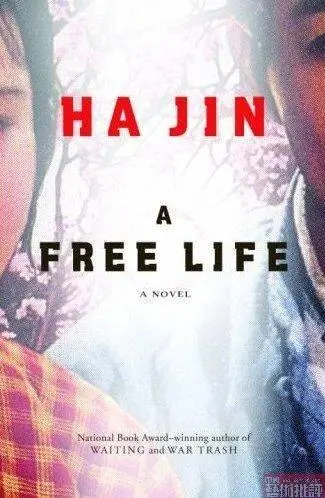
- Название:A Free Life
- Автор:
- Жанр:
- Год:неизвестен
- ISBN:нет данных
- Рейтинг книги:3 / 5. Голосов: 1
-
Избранное:Добавить в избранное
- Отзывы:
-
Ваша оценка:
A Free Life: краткое содержание, описание и аннотация
Предлагаем к чтению аннотацию, описание, краткое содержание или предисловие (зависит от того, что написал сам автор книги «A Free Life»). Если вы не нашли необходимую информацию о книге — напишите в комментариях, мы постараемся отыскать её.
Ha Jin, who emigrated from China in the aftermath of Tiananmen Square, had only been writing in English for 12 years when he won the National Book Award for Waiting in 1999. His latest novel sheds light on an émigré writer's woodshedding period. It follows the fortunes of Nan Wu, who drops out of a U.S. grad school after the repression of the democracy movement in China, hoping to find his voice as a poet while supporting his wife, Pingping, and son, Taotao. After several years of spartan living, Nan and Pingping save enough to buy a Chinese restaurant in suburban Atlanta, setting up double tensions: between Nan's literary hopes and his career, and between Nan and Pingping, who, at the novel's opening, are staying together for the sake of their young boy. While Pingping grows more independent, Nan -amid the dulling minutiae of running a restaurant and worries about mortgage payments, insurance and schooling-slowly snuffs the torch he carries for his first love. That Nan at one point reads Dr. Zhivago isn't coincidental: while Ha Jin's novel lacks Zhivago's epic grandeur, his biggest feat may be making the reader wonder whether the trivialities of American life are not, in some ways, as strange and barbaric as the upheavals of revolution.
***
From the award-winning author of Waiting, a new novel about a family's struggle for the American Dream.
Meet the Wu family-father Nan, mother Pingping, and son Taotao. They are arranging to fully sever ties with China in the aftermath of the 1989 massacre at Tiananmen Square, and to begin a new, free life in the United States. At first, their future seems well-assured. But after the fallout from Tiananmen, Nan 's disillusionment turns him toward his first love, poetry. Leaving his studies, he takes on a variety of menial jobs as Pingping works for a wealthy widow as a cook and housekeeper. As Pingping and Taotao slowly adjust to American life, Nan still feels a strange attachment to his homeland, though he violently disagrees with Communist policy. But severing all ties-including his love for a woman who rejected him in his youth-proves to be more difficult than he could have ever imagined.
A Free Life — читать онлайн бесплатно полную книгу (весь текст) целиком
Ниже представлен текст книги, разбитый по страницам. Система сохранения места последней прочитанной страницы, позволяет с удобством читать онлайн бесплатно книгу «A Free Life», без необходимости каждый раз заново искать на чём Вы остановились. Поставьте закладку, и сможете в любой момент перейти на страницу, на которой закончили чтение.
Интервал:
Закладка:
"Of coss I know him! We were a kind of friends and once worked togezzer at a journal."
"He's an interesting guy. He's been translating some of my poems."
"Reelly?"
"He also interviewed me." "Does he speak English now?"
"He had a young lady interpreting for us. He can read English but cannot speak it well."
Nan couldn't believe that Bao, despite his deplorable English, would attempt to translate Neary's poetry. He must have relied on someone to produce the notes first, from which he might be able to do the translation. "Where is he going to send zer poems? I mean, to which Chinese magazine?" Nan asked.
"He had six of them published in a journal called Foreign Letters."
"That's a prestigious monsly, very literary."
"So I've heard."
"I'm glad Bao is still writing poetry. He's also a painter."
"Yes, he showed me some of his work, very impressive. He has fine sensibility and a lot of talent. But the exile must have stunted his development considerably. He said he never had time to write the work he planned to do."
As they passed the side entrance of the university, Mr. Neary asked Nan about the average price of the houses in the Emory neighborhood, which he had seen on his way to the campus that afternoon. Many of them looked grand, built entirely of bricks. Though uncertain of the price, Nan ventured a figure, guessing upward of $400,000, but that didn't impress the poet. Mr. Neary said he owned a larger house than these in Newport, Rhode Island. Nan was surprised, because to his mind most poets were struggling artists without that kind of money.
In the bar Mr. Neary ordered beer, wine, chicken nuggets, and nachos sprinkled with cheddar cheese and bits of jalapeno. The young women were effervescent; apparently they all admired Neary's poetry. Laura, the tallest of them, with cloisonne bracelets on both wrists, smiled at the poet all the while, her eyes flashing. Emily, the only Asian woman among them, seemed shy, though she giggled happily and nudged her friends now and again. Her sweet face resembled a teenager's. Mr. Neary liked her and asked about her life in Atlanta and her family. Her parents had immigrated from Korea, but she was born and raised in Missouri. She had moved to Georgia three years earlier and liked it here. Mr. Neary thought she was Chinese, but she said her last name was Choi and considered herself Korean American.
The shortest of them, Anita, was a budding poet and middle school teacher. She could even quote Mr. Neary's lines with ease, which pleased the author greatly. The other two women, also fans of the poet, worked at Barnes amp; Noble. The five of them belonged to a poetry group and met regularly to read and discuss one another's poems. Nan said little and just listened to them.
As they were chatting and drinking, Mr. Neary grew louder and more talkative. He said he had been editing an anthology of poetry by young poets for a New York publisher, whose name he wouldn't disclose. He squinted at Dick, who smiled knowingly. Then he told the women, "My babysitter has been helping me sort out the poems. Without her I don't know how I could do it. I don't have time to read all the books and journals people send in. You should all show me your work. Nan, you should send me your poems too."
"I will do zat when I have somesing finished," Nan replied in earnest. But none of the women responded to the invitation enthusiastically. He wondered why they wouldn't jump at such an opportunity, since they were all writing poetry and must have been struggling to get published.
Laura asked the poet casually, "Does your babysitter write poems too?"
"No, not now. She might have in her teens."
The women glanced at one another. The short Anita smirked, then covered her mouth with a napkin. Mr. Neary said to them again, "Feel free to send me your work. I'm a maker and breaker of poets. I'm a powerful man, you know."
Nan could see that the poet was tipsy. He caught a dubious expression flitting across Dick's face. Mr. Neary smiled to himself as if to recall something, his hand holding a barbecued chicken nugget. Then he lifted his head and asked the women, "So you don't believe me? You think I'm just an old loony?"
Emily Choi said, "You're not old. Your poems are wonderful and powerful."
"I'm also a rich man, you know," Mr. Neary went on. "Imagine, a poet paid sixty thousand dollars for federal tax last year. This is indeed a great country where even a poet can become a millionaire."
"Amazing," Emily mumbled, lowering her eyes.
Anita put in, "So Canada is no longer your homeland?"
"No. I'm an American."
Dick winked at Nan, who was bemused, knowing Neary had been born in Ontario and had come to the United States in his early thirties. He wondered why the poet would talk so much about power and money. How did those bear on his poetry? Why was he acting more like a business magnate?
A waitress came and placed the bill on the table, which Mr. Neary picked up. Nan noticed that it was more than eighty dollars. The young women looked at one another. Anita said, "Mr. Neary, let us take care of it. We're taking you out."
"No, no." The poet waved, licking his upper teeth. "This is on me. But I'm open to another drink with you at another place, individually or collectively." He laughed and screwed up his eye as he folded the receipt and placed five twenties in the bill sleeve.
The women said no more. They all got up, ready to leave. The bar was closing, and together they made for the door.
Outside, the night was clear, the street shimmering in the whitish moonlight. A breeze came, shaking the sprouting aspens a little. The traffic was still droning in the distance. The women said good-bye to Mr. Neary and presently faded into the darkness beyond North Decatur Road. Dick was going to walk his guest all the way back to the Emory Inn, which was about half a mile to the north. Nan kept them company for about two hundred yards, then parted from them and veered toward the garage behind the university's main library, where he had parked. He turned his head to look at them while walking away.
He overheard Mr. Neary say, "Let me give you the receipt for tonight."
"Sure." Dick took the slip from the poet.
18
DURING the next few days Nan thought a lot about his meeting with Edward Neary, about what the poet had said at the bar. When Dick came to the restaurant on Friday afternoon, Nan asked him what Mr. Neary had meant by being "a maker and breaker of poets." Dick explained that generally speaking, the inclusion of a young poet's work in a significant anthology could help establish the poet. As the editor, Edward Neary decided whom to include, so he was a maker of poets. Conversely, he'd have to exclude some people from the book-those poets, once left out, would suffer a setback in their careers. Therefore he was also a breaker of poets.
"Do you sink he'll leave someone out on purpose?"
"Sure, everyone does that to his enemies and people he doesn't like."
Nan was surprised that poets could be so vindictive and malevolent. "Is he reelly so well endowed as he bragged?" he asked again.
"Ha ha ha!" Dick laughed. "You're so funny. I don't know if Ed has a big penis, but he's a MacArthur fellow."
"What's that? He's related to General MacArthur's family?"
"No, no, it's a foundation that gives huge fellowships to talented individuals, at least three hundred thousand dollars. For Ed's age, it must be worth more than that, because the older a fellow is, the more money he gets."
"I never imagined a poet could be zat rich."
"Some poets live like a prince or princess."
"How about Sam?"
"He makes a lot too."
Nan thought it rather absurd that Mr. Neary was so powerful that he could decide the fates of some young poets. "Will he include your poems in his anthology?" he asked Dick.
Читать дальшеИнтервал:
Закладка:
Похожие книги на «A Free Life»
Представляем Вашему вниманию похожие книги на «A Free Life» списком для выбора. Мы отобрали схожую по названию и смыслу литературу в надежде предоставить читателям больше вариантов отыскать новые, интересные, ещё непрочитанные произведения.







Обсуждение, отзывы о книге «A Free Life» и просто собственные мнения читателей. Оставьте ваши комментарии, напишите, что Вы думаете о произведении, его смысле или главных героях. Укажите что конкретно понравилось, а что нет, и почему Вы так считаете.