Ha Jin - A Free Life
Здесь есть возможность читать онлайн «Ha Jin - A Free Life» весь текст электронной книги совершенно бесплатно (целиком полную версию без сокращений). В некоторых случаях можно слушать аудио, скачать через торрент в формате fb2 и присутствует краткое содержание. Жанр: Современная проза, на английском языке. Описание произведения, (предисловие) а так же отзывы посетителей доступны на портале библиотеки ЛибКат.
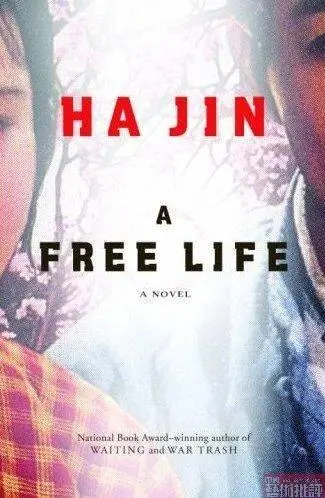
- Название:A Free Life
- Автор:
- Жанр:
- Год:неизвестен
- ISBN:нет данных
- Рейтинг книги:3 / 5. Голосов: 1
-
Избранное:Добавить в избранное
- Отзывы:
-
Ваша оценка:
A Free Life: краткое содержание, описание и аннотация
Предлагаем к чтению аннотацию, описание, краткое содержание или предисловие (зависит от того, что написал сам автор книги «A Free Life»). Если вы не нашли необходимую информацию о книге — напишите в комментариях, мы постараемся отыскать её.
Ha Jin, who emigrated from China in the aftermath of Tiananmen Square, had only been writing in English for 12 years when he won the National Book Award for Waiting in 1999. His latest novel sheds light on an émigré writer's woodshedding period. It follows the fortunes of Nan Wu, who drops out of a U.S. grad school after the repression of the democracy movement in China, hoping to find his voice as a poet while supporting his wife, Pingping, and son, Taotao. After several years of spartan living, Nan and Pingping save enough to buy a Chinese restaurant in suburban Atlanta, setting up double tensions: between Nan's literary hopes and his career, and between Nan and Pingping, who, at the novel's opening, are staying together for the sake of their young boy. While Pingping grows more independent, Nan -amid the dulling minutiae of running a restaurant and worries about mortgage payments, insurance and schooling-slowly snuffs the torch he carries for his first love. That Nan at one point reads Dr. Zhivago isn't coincidental: while Ha Jin's novel lacks Zhivago's epic grandeur, his biggest feat may be making the reader wonder whether the trivialities of American life are not, in some ways, as strange and barbaric as the upheavals of revolution.
***
From the award-winning author of Waiting, a new novel about a family's struggle for the American Dream.
Meet the Wu family-father Nan, mother Pingping, and son Taotao. They are arranging to fully sever ties with China in the aftermath of the 1989 massacre at Tiananmen Square, and to begin a new, free life in the United States. At first, their future seems well-assured. But after the fallout from Tiananmen, Nan 's disillusionment turns him toward his first love, poetry. Leaving his studies, he takes on a variety of menial jobs as Pingping works for a wealthy widow as a cook and housekeeper. As Pingping and Taotao slowly adjust to American life, Nan still feels a strange attachment to his homeland, though he violently disagrees with Communist policy. But severing all ties-including his love for a woman who rejected him in his youth-proves to be more difficult than he could have ever imagined.
A Free Life — читать онлайн бесплатно полную книгу (весь текст) целиком
Ниже представлен текст книги, разбитый по страницам. Система сохранения места последней прочитанной страницы, позволяет с удобством читать онлайн бесплатно книгу «A Free Life», без необходимости каждый раз заново искать на чём Вы остановились. Поставьте закладку, и сможете в любой момент перейти на страницу, на которой закончили чтение.
Интервал:
Закладка:
"No way." The old woman shook her full head of gray hair. "We've already underpriced it for a quick sale. Ask Nan and Pingping whether we offered them the home for a hundred and fifty. That was two years ago."
Niyan and Shubo did ask Pingping, who proved that was true, so they gave up coveting the bungalow. A week later a retired couple from Illinois bought the house, and within a few days the Wangs left for good.
Their departure was a quiet affair that few people in the neighborhood noticed, but it saddened Nan and Pingping. The Wangs didn't like Taiwan that much; still, they could return to it. By contrast, the Wus, having no recourse to a place they could call home, had to put down roots here. They liked Georgia, yet they could see that life might be lonely and miserable here when they were old. They often talked to Niyan about the isolation the Wangs had experienced, but Niyan thought the old couple had asked for that kind of life, saying they could always have joined a community. Niyan said in a crisp voice, "They should have gone to a church. That could've made them feel more or less at home here. If they didn't think Taiwan was a safe place, they should never have gone back to it. Your homeland is where you live and die."
Niyan's words made Nan and Pingping think a good deal. Husband and wife talked between themselves about joining a church, but decided not to rush. By any means they mustn't make light of the matter of religion, and neither should they go to God's house just for human companionship. Nevertheless, isolation and loneliness often made Nan ill at ease. Unlike him, Pingping was unusually calm, saying they wouldn't need others as long as their family stayed together. "Who has many friends?" she said to him. "Most people only have associates. We have no need for lots of friends."
Nan was abashed as he realized she was much more enduring and solitary than he was. She didn't even miss her parents and siblings that much, although she'd write them regularly. He wasn't attached to his parents either, but he was unaccustomed to an isolated life and couldn't yet differentiate loneliness from solitude. By nature he was gregarious and had liked noisy, bustling crowds, but life had placed him at a spot where he had to exist as an individual completely on his own. How lucky he felt to have Pingping with him.
17
NAN also felt fortunate to have Dick Harrison as his friend, whose presence in his life had intensified his interest in poetry. One day Dick invited Nan to a reading given by a famous poet. At first Nan was reluctant to go, because whenever he was away, he'd have to ask Shubo to help at the restaurant. Shubo had been writing his dissertation in sociology at home, so he was available most times when the Gold Wok needed him. Still, Pingping would be unhappy about Nan 's absence, which would cost them six dollars an hour to Shubo, who would work at the counter. This also meant Pingping would have to cook in the kitchen. Yet fascinated by Dick's praise of the poet, Edward Neary, Nan begged his wife to let him attend the reading at Emory University. Pingping didn't want him to go at first, but she later yielded.
The reading was held in White Hall on campus, where many buildings had marble exteriors and roofs of red ceramic tiles. At the entrance to the auditorium stood two folding tables, on one of which were stacked Edward Neary's books for sale, the table manned by a strapping man from the university's bookstore. Nan, in a double-breasted blazer, went into the auditorium, which had already filled up with students, faculty, and people from the city. The crowd overflowed onto the steps alongside the walls. There were more women than men among the audience. Unable to find a seat, Nan stayed in the back and leaned against the steel banister of the stairs that led up to the projection booth.
Around eight o'clock the poet arrived, accompanied by Dick and several other faculty members. Mr. Neary was a lanky man with a short neck and a web of wrinkles on his face, but he must have been quite handsome when he was young, as his Roman nose and pale green eyes suggested. They all sat down in the front row, which had been reserved for them. A moment later Dick went over to the podium. He introduced Mr. Neary briefly, enumerating the awards and grants the poet had garnered and calling him "a major poetic voice of our time."
Then Edward Neary took the microphone and began reading a long poem, "An Interpretation of Happiness," which he said he was still working on. His tone was languid and casual, as if he were talking to a few friends in a small room, but the audience was attentive. Now and then somebody would "huh" or "hah" in response to a playful line or a clever turn of phrase. Neary kept reading without lifting his head and seemed to have some difficulty concentrating, shifting his weight from leg to leg. His right hand rubbed his chin time and again. Whenever he did this, he'd muffle his voice a little.
Nan couldn't understand everything Neary was uttering. Soon he grew absentminded, looking around at the audience and noticing that some others were bored too. It took the poet at least twenty-five minutes to finish the poem. As he was flipping through a book, searching for another piece to read, a female student cried out, "Let us hear 'Tonight It's the Same Moon.' "
"Yes, read that, please," chimed in another young woman.
"All right," the poet said. "It's a love poem I wrote many years ago, for a girlfriend of mine whose name I've forgotten." The audience laughed while Mr. Neary grinned, running his fingers through his grizzled flaxen hair. "I guess I'm too old to write this kind of poetry anymore, but I'm going to read it anyway. Here it is." He lifted the book with one hand and began reading the poem with some emotion. Nan liked it very much. It was an elegy spoken by a young widow in memory of her late husband, lost in a recent plane crash. The cadence was supple and tender, in keeping with the pathos.
After that, Neary read seven or eight poems from different volumes. Then unhurriedly, he stacked his books together, indicating he was done. Dick stood up, clapping his hands. After a burst of applause, he announced, "Let's adjourn to the reception in the lobby, and Mr. Neary will be happy to autograph his books. Please join us for a glass of wine. Also, don't forget the colloquium Mr. Neary will give tomorrow afternoon, at three, in this room."
In the lobby Nan drank a cup of punch and ate a piece of cauliflower and a few squares of honeydew. Though Dick had announced there was wine, only some soft drinks were on the tables. Nan felt out of place here because he didn't know anybody except Dick, who was busy taking care of the poet's needs while talking with some people standing in line to get their books signed. Nan went up to him and said, "I'd better go."
"Don't you want to join us after this?" asked Dick.
"For what?"
"We'll have a drink somewhere. Come with me-we'll spend some time with Ed."
Nan agreed. He was curious about the poet, who seemed passionless, carefree, and a bit cynical, remarkably different from the ardent Sam Fisher. He went over to a table and picked up a small bunch of red grapes and stepped aside, waiting in a corner.
When the reception was over, Dick and a group of young women took Edward Neary to a bar just outside the campus. Nan tagged along and accompanied the poet all the way while Dick was talking and laughing with the five women walking ahead of them. Mr. Neary walked with a shuffling gait. He had been to China a few years before and talked to Nan about how hot it was in Beijing in August. He remembered fondly a young woman assigned by China 's Ministry of Culture to serve as his interpreter.
Then he asked Nan, "Do you happen to know Bao Yuan, an exiled Chinese poet living in New York?"
Читать дальшеИнтервал:
Закладка:
Похожие книги на «A Free Life»
Представляем Вашему вниманию похожие книги на «A Free Life» списком для выбора. Мы отобрали схожую по названию и смыслу литературу в надежде предоставить читателям больше вариантов отыскать новые, интересные, ещё непрочитанные произведения.












Обсуждение, отзывы о книге «A Free Life» и просто собственные мнения читателей. Оставьте ваши комментарии, напишите, что Вы думаете о произведении, его смысле или главных героях. Укажите что конкретно понравилось, а что нет, и почему Вы так считаете.