Michelle Kretser - The Lost Dog
Здесь есть возможность читать онлайн «Michelle Kretser - The Lost Dog» весь текст электронной книги совершенно бесплатно (целиком полную версию без сокращений). В некоторых случаях можно слушать аудио, скачать через торрент в формате fb2 и присутствует краткое содержание. Жанр: Современная проза, на английском языке. Описание произведения, (предисловие) а так же отзывы посетителей доступны на портале библиотеки ЛибКат.
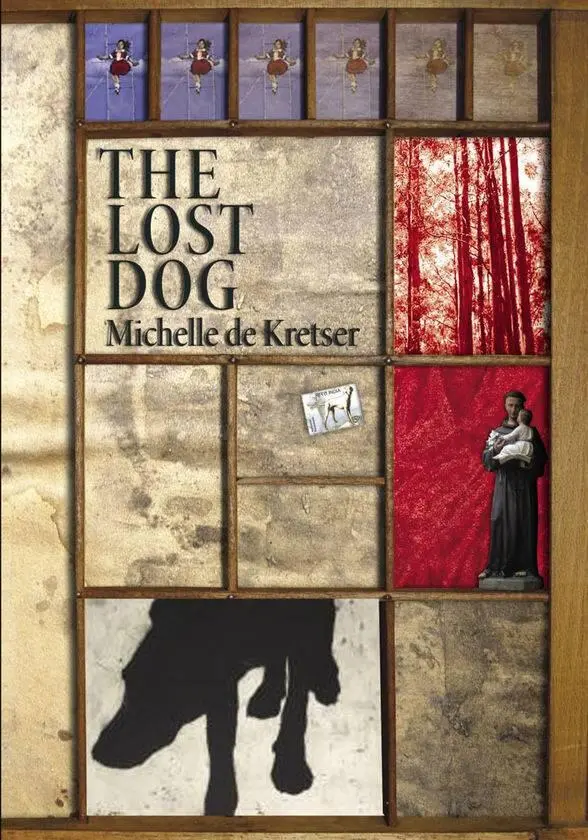
- Название:The Lost Dog
- Автор:
- Жанр:
- Год:неизвестен
- ISBN:нет данных
- Рейтинг книги:5 / 5. Голосов: 1
-
Избранное:Добавить в избранное
- Отзывы:
-
Ваша оценка:
The Lost Dog: краткое содержание, описание и аннотация
Предлагаем к чтению аннотацию, описание, краткое содержание или предисловие (зависит от того, что написал сам автор книги «The Lost Dog»). Если вы не нашли необходимую информацию о книге — напишите в комментариях, мы постараемся отыскать её.
***
‘A captivating read… I could read this book 10 times and get a phew perspective each time. It’s simply riveting.’ Caroline Davison, Glasgow Evening Times
‘… remarkably rich and complex… De Kretser has a wicked, exacting, mocking eye…While very funny in places, The Lost Dog is also a subtle and understated work, gently eloquent and thought-provoking… a tender and thoughtful book, a meditation on loss and fi nding, on words and wordlessness, and on memory, identity, history and modernity.’ The Dominion Post
‘Michelle de Kretser is the fastest rising star in Australia ’s literary firmament… stunningly beautiful.’ Metro
‘… a wonderful tale of obsession, art, death, loss, human failure and past and present loves. One of Australia ’s best contemporary writers.’
Harper’s Bazaar
‘In many ways this book is wonderfully mysterious. The whole concept of modernity juxtaposed with animality is a puzzle that kept this reader on edge for the entire reading. The Lost Dog is an intelligent and insightful book that will guarantee de Kretser a loyal following.’ Mary Philip, Courier-Mail
‘Engrossing… De Kretser confidently marshals her reader back and forth through the book’s complex flashback structure, keeping us in suspense even as we read simply for the pleasure of her prose… De Kretser knows when to explain and when to leave us deliciously wondering.’ Seattle Times
‘De Kretser continues to build a reputation as a stellar storyteller whose prose is inventive, assured, gloriously colourful and deeply thoughtful. The Lost Dog is a love story and a mystery and, at its best, possesses an accessible and seemingly effortless sophistication… a compelling book, simultaneously playful and utterly serious.’ Patrick Allington, Adelaide Advertiser ‘A nuanced portrait of a man in his time. The novel, like Tom, is multicultural, intelligent, challenging and, ultimately, rewarding.’
Library Journal
‘This book is so engaging and thought-provoking and its subject matter so substantial that the reader notices only in passing how funny it is.’ Kerryn Goldsworthy, Sydney Morning Herald
‘… rich, beautiful, shocking, affecting’ Clare Press, Vogue
‘… a cerebral, enigmatic reflection on cultures and identity… Ruminative and roving in form… intense, immaculate.’ Kirkus Reviews
‘De Kretser is as piercing in her observations of a city as Don DeLillo is at his best… this novel is a love song to a city… a delight to read, revealing itself in small, gem-like scenes.’ NZ Listener
‘… de Kretser’s trademark densely textured language, rich visual imagery and depth of description make The Lost Dog a delight to savour as well as a tale to ponder.’ Australian Bookseller and Publisher
‘A remarkably good novel, a story about human lives and the infi nite mystery of them.’ Next
‘Confident, meticulous plotting, her strong imagination and her precise, evocative prose. Like The Hamilton Case, The Lost Dog opens up rich vistas with its central idea and introduces the reader to a world beyond its fictional frontiers.’ Lindsay Duguid, Sunday Times
“[a] clever, engrossing novel… De Kretser’s beautifully shaded book moves between modern day Australia and post-colonial India. Mysteries and love affairs are unfolded but never fully resolved, and as Tom searches for his dog, it becomes apparent that its whereabouts is only one of the puzzles in his life.” Tina Jackson, Metro
‘A richly layered literary text.’ Emmanuelle Smith, Big Issue
The Lost Dog — читать онлайн бесплатно полную книгу (весь текст) целиком
Ниже представлен текст книги, разбитый по страницам. Система сохранения места последней прочитанной страницы, позволяет с удобством читать онлайн бесплатно книгу «The Lost Dog», без необходимости каждый раз заново искать на чём Вы остановились. Поставьте закладку, и сможете в любой момент перейти на страницу, на которой закончили чтение.
Интервал:
Закладка:
On the day before he moved out, Tom waited until he was alone in the annexe. Then he carried the hated yellow bottle into the kitchen. There he broke its neck. When Iris returned, he told her he had accidentally smashed the bottle when packing. The pieces of thick glass, wrapped in newspaper, were already in the pedal bin. But he had removed the leaf-shaped stopper before hitting the bottle against the sink, and had somehow failed to dispose of it. Thereafter, whenever he opened a certain drawer in his mother’s kitchen he would see a malicious amber eye lolling among place mats and paper napkins.
In the last weeks of their shared life, Iris suddenly said, ‘When you were small you used to follow me everywhere. In and out of rooms all day.’ She must have been to the hairdresser that morning because Tom could still remember the brownish smears of dye on the tops of her ears. He had refrained from remarking on them, pleased with this proof of his restraint.
Informed at last that the dog was lost, Iris said,‘I’m very sorry to hear that.’ She spoke formally; the calamity might have befallen an Australian.
Tom, having dreaded a storm, was goaded by calm.
The contrary arithmetic of his relations with Iris converted it at once into lack of feeling, and added up to the need for brutishness. So that he paused, in the act of serving out his mother’s lunch, and said, ‘He’s probably dead, you realise. Choked to death on his lead. Or run over.’
‘Ah,’ said Iris. And with quickened interest, ‘Don’t serve so much.’
‘Christ! Can’t you think of anything but yourself for a minute? And what does it matter if there’s too much? Just leave what you don’t want.’
Her filmy eyes rose to his face. She had the familiar sensation of striving to decipher a riddle in a foreign language; failure meant Tommy would be angry. The small hillock of saffron rice surmounted by curries and surrounded by pickles had brought to mind a white-haired skull protruding from mud-coloured rags on a pavement, an image glimpsed and only half understood in childhood. It had floated to the surface of her thoughts buoyed by the word waste .
Tom found his tongue stuck to his palate. Lowering it unclenched his jaw. He set his mother’s laden plate before her, having thwarted the impulse to do so with force. ‘I’m just worried about what might have happened,’ he said. He was accustomed to knowing better than his mother, so apology was not a coin readily available to their commerce.
Iris picked up her spoon and fork and began to eat. Some minutes later, halfway through a mouthful, ‘I have my unfailing prayer to Saint Anthony,’ she said.
The Meg Ryan video in front of which his mother was dozing after lunch penetrated Tom’s study in irritating little swells. He opened and shut drawers, at last finding the earplugs in a hollow glass cube that held paperclips and stamps.
The familiar contention that modernity is concerned with the differentiation and autonomisation of the aesthetic sphere … Tom switched on a lamp, as the afternoon darkened. Light lay obliquely on a page, highlighting dull prose with gold.
He was reading the lectureship application sent in by a recent DPhil from Bristol, who had appended a strenuous article on Edith Wharton to her CV. She had only one refereed publication and minimal teaching experience. But she was the student of a famous James scholar, a woman who wielded academic power. Tom thought of his book; of the weight the Englishwoman’s endorsement would carry with publishers.
After a while he realised he had stopped reading and was constructing a tale. ‘Nelly and I go looking for him whenever we go up there. Oh, I know it’s hopeless now. Not knowing what happened is the worst thing. But I tell myself he was doing what he loved best, following a scent.’
This fiction, queasy with the play of desire and disloyalty, was interrupted by a specific memory: the dog, plumed tail held high, absorbed in tracking a moth around the room, breathing on it.
Internal windows in Tom’s study gave onto a narrow sunroom, where a long, gridded window overlooked the yard. The effect, when he looked up from his desk, was of a bright, pictorial glow ruled with black; a Mondrian fashioned from iron and light. The impression of clean modernity carried through to his study, a geometric, dustless space. Here books were ranked like soldiers on dark metal shelving that rose against pale walls. Lamps leaned at acute angles. Surfaces gleamed. There was a rug from Isfahan on the boarded floor, its pink and slaty blues smudged with white, for naturally the dog was in the habit of singling out its sumptuousness, and Tom could not at present bring himself to rid the room of that animal residue.
He was, in any case, habitually tolerant of traces of the dog’s passing, of grit, earth, fur, a warm, sweetish reek. His forbearance had called forth the light mockery of his wife; for the streak of dried sauce Karen left on a kitchen counter or the pink-stained toothpaste she neglected to swill from the washbasin were tiny barbs on which Tom’s temper quickly unravelled.
His disgust was disproportionate, its blossoming rooted in childhood. In scrubbed Australia children know the causal chain that links dirt and disease as a cautionary tale. In India, the word was made flesh. Skin peeled, or flared with ominous pigmentations; burst to reveal its satiny red lining shot through with gold. Distended or racked bodies were everywhere on public view. Even a child’s eye could perceive the fatal, webbed relation between the flies sipping at a sore and the black crust that crawled over sweetmeats on a stall.
Therefore years later Tom recoiled from dishes accumulating in the sink; from the clotted handkerchief his fi ngers encountered under a pillow.
Around the time of his thirtieth birthday, he grew conscious that the narrowing of his life had begun. Karen and he still took pleasure in each other’s company, sought it in each other’s flesh. They were working hard, starting to make money. But from time to time there would swim into Tom’s mind a page from a book he had owned when very young. Within the book, paper tabs could be pulled or rotated to bring illustrations to life. One of them had stirred the child’s imagination with special pungency. It showed a cottage with two front doors set in a garden filled with flowers and birds. A tab on the left flipped open the corresponding door and pushed out an apple-cheeked boy in blue breeches; the right-hand tab produced a girl in a gingham pinafore.
Again and again, the child Tom trundled out the boy, the girl; singly, together. They were Boo and Baby. He conducted complicated conversations with them. Sometimes he punished one or the other, Boo’s door or Baby’s remaining shut all day. He would stroke the relevant tab, shift it a fraction; then withdraw his hand. The satisfaction he knew at such moments was intense.
But in years to come the page struck Tom as a terrible foreshadowing of his ordered existence. Each day was a sum with a red tick beside it. Intellectual curiosity, love’s huge anarchy: he had succeeded in taming even these. There he came, the bright-eyed boy, one arm raised in merry greeting; the plaything of a shuttling machinery.
Into these broodings arrived the dog.
The dog hid blood-threaded bones down the side of a couch. He tore open a pillow and clawed the paint from a door. He sprang into a neighbour’s ornamental pond and swallowed a goldfish. There was his ecstatic fondness for rolling in fi lth.
He would dig in his ear with a hind foot; extract the paw and lick it. Now and then while snuffling along a footpath he would hastily eat a turd. His desires were beastly. At his most docile, he remained an emissary from a kingdom with enigmatic laws.
Читать дальшеИнтервал:
Закладка:
Похожие книги на «The Lost Dog»
Представляем Вашему вниманию похожие книги на «The Lost Dog» списком для выбора. Мы отобрали схожую по названию и смыслу литературу в надежде предоставить читателям больше вариантов отыскать новые, интересные, ещё непрочитанные произведения.





Обсуждение, отзывы о книге «The Lost Dog» и просто собственные мнения читателей. Оставьте ваши комментарии, напишите, что Вы думаете о произведении, его смысле или главных героях. Укажите что конкретно понравилось, а что нет, и почему Вы так считаете.