Michelle Kretser - The Lost Dog
Здесь есть возможность читать онлайн «Michelle Kretser - The Lost Dog» весь текст электронной книги совершенно бесплатно (целиком полную версию без сокращений). В некоторых случаях можно слушать аудио, скачать через торрент в формате fb2 и присутствует краткое содержание. Жанр: Современная проза, на английском языке. Описание произведения, (предисловие) а так же отзывы посетителей доступны на портале библиотеки ЛибКат.
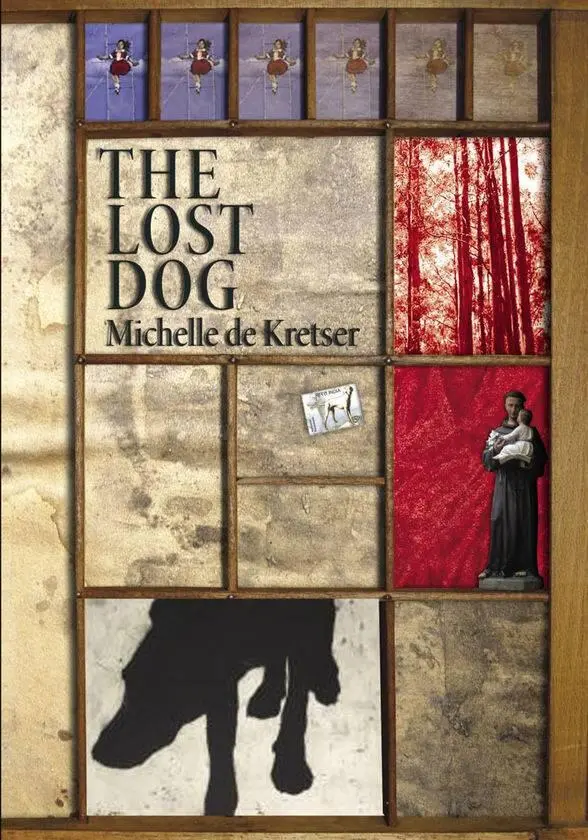
- Название:The Lost Dog
- Автор:
- Жанр:
- Год:неизвестен
- ISBN:нет данных
- Рейтинг книги:5 / 5. Голосов: 1
-
Избранное:Добавить в избранное
- Отзывы:
-
Ваша оценка:
The Lost Dog: краткое содержание, описание и аннотация
Предлагаем к чтению аннотацию, описание, краткое содержание или предисловие (зависит от того, что написал сам автор книги «The Lost Dog»). Если вы не нашли необходимую информацию о книге — напишите в комментариях, мы постараемся отыскать её.
***
‘A captivating read… I could read this book 10 times and get a phew perspective each time. It’s simply riveting.’ Caroline Davison, Glasgow Evening Times
‘… remarkably rich and complex… De Kretser has a wicked, exacting, mocking eye…While very funny in places, The Lost Dog is also a subtle and understated work, gently eloquent and thought-provoking… a tender and thoughtful book, a meditation on loss and fi nding, on words and wordlessness, and on memory, identity, history and modernity.’ The Dominion Post
‘Michelle de Kretser is the fastest rising star in Australia ’s literary firmament… stunningly beautiful.’ Metro
‘… a wonderful tale of obsession, art, death, loss, human failure and past and present loves. One of Australia ’s best contemporary writers.’
Harper’s Bazaar
‘In many ways this book is wonderfully mysterious. The whole concept of modernity juxtaposed with animality is a puzzle that kept this reader on edge for the entire reading. The Lost Dog is an intelligent and insightful book that will guarantee de Kretser a loyal following.’ Mary Philip, Courier-Mail
‘Engrossing… De Kretser confidently marshals her reader back and forth through the book’s complex flashback structure, keeping us in suspense even as we read simply for the pleasure of her prose… De Kretser knows when to explain and when to leave us deliciously wondering.’ Seattle Times
‘De Kretser continues to build a reputation as a stellar storyteller whose prose is inventive, assured, gloriously colourful and deeply thoughtful. The Lost Dog is a love story and a mystery and, at its best, possesses an accessible and seemingly effortless sophistication… a compelling book, simultaneously playful and utterly serious.’ Patrick Allington, Adelaide Advertiser ‘A nuanced portrait of a man in his time. The novel, like Tom, is multicultural, intelligent, challenging and, ultimately, rewarding.’
Library Journal
‘This book is so engaging and thought-provoking and its subject matter so substantial that the reader notices only in passing how funny it is.’ Kerryn Goldsworthy, Sydney Morning Herald
‘… rich, beautiful, shocking, affecting’ Clare Press, Vogue
‘… a cerebral, enigmatic reflection on cultures and identity… Ruminative and roving in form… intense, immaculate.’ Kirkus Reviews
‘De Kretser is as piercing in her observations of a city as Don DeLillo is at his best… this novel is a love song to a city… a delight to read, revealing itself in small, gem-like scenes.’ NZ Listener
‘… de Kretser’s trademark densely textured language, rich visual imagery and depth of description make The Lost Dog a delight to savour as well as a tale to ponder.’ Australian Bookseller and Publisher
‘A remarkably good novel, a story about human lives and the infi nite mystery of them.’ Next
‘Confident, meticulous plotting, her strong imagination and her precise, evocative prose. Like The Hamilton Case, The Lost Dog opens up rich vistas with its central idea and introduces the reader to a world beyond its fictional frontiers.’ Lindsay Duguid, Sunday Times
“[a] clever, engrossing novel… De Kretser’s beautifully shaded book moves between modern day Australia and post-colonial India. Mysteries and love affairs are unfolded but never fully resolved, and as Tom searches for his dog, it becomes apparent that its whereabouts is only one of the puzzles in his life.” Tina Jackson, Metro
‘A richly layered literary text.’ Emmanuelle Smith, Big Issue
The Lost Dog — читать онлайн бесплатно полную книгу (весь текст) целиком
Ниже представлен текст книги, разбитый по страницам. Система сохранения места последней прочитанной страницы, позволяет с удобством читать онлайн бесплатно книгу «The Lost Dog», без необходимости каждый раз заново искать на чём Вы остановились. Поставьте закладку, и сможете в любой момент перейти на страницу, на которой закончили чтение.
Интервал:
Закладка:
It was precisely the disjunction between Arthur’s anecdotes and the scenes unfolding before his eyes that had fascinated Tom as a boy. He was stirred by a tale of alpine snows as a northern child might quicken to palm-fringed lagoons: each thrilling to wonders that existed beyond the rim of perception.
The most blatantly trumped-up tale captured Arthur’s sympathy, so that swindlers of every stripe sought him out with stories of widowed mothers or failsafe investments. A lean, ageless individual who went by the name of Perry once laid siege to him for a month with whisky and sagas of the Brazilian interior; at the end of which time Arthur agreed to relieve him of three uncut diamonds he claimed to have wrested at knifepoint from a dishonest garimpeiro . The contract had been sealed with a fresh bottle when Perry’s angry blue eyes filled with tears. ‘You have driven me to honesty,’ he announced, and blew his nose violently. He reached for the soft leather pouch containing the pebbles and flung it over his shoulder into a bed of shocking-pink anthuriums.
The incident made its way back to Iris, who placed herself in her husband’s path with her hands on her hips. ‘I told you about that Perry,’ she began, her voice ominously even. ‘As soon as I set eyes on him, large as life and twice as ugly, didn’t I tell you, Here is a humbug?’
It was true. Even Tom, then aged eight, had been struck by the unreliability of Perry: flagrant in every facet of the man, from his winking tiepin to his golden-cornered smile. Perry’s Pebbles: it became family shorthand for the preposterous; for a tale too good to be true.
Arthur had been dead a decade when an exchange occurred that cast the episode forever in a different light. Seeking to amuse a girl he was involved with, Tom had set about skewering a bombastic acquaintance.
Lizzie said abruptly, ‘For Christ’s sake.’ She broke off whatever task engaged her, and turned to face him. ‘There are alternatives to seeing through people.’
‘Why don’t you run them past me.’ (Startled, but not out of irony.)
The girl opened and closed one hand. It was a gesture already familiar to Tom, signifying exasperation. She said, ‘Try seeing into them. That’d be a start.’
Lizzie proved transient. But the rebuke lodged in Tom. He thought of Perry, with his glinting, ready smile. Arthur had seen honesty in the man; and his son realised, with a little stab of surprise, that it was Arthur, after all, who had been right.
If, on numerous other occasions, his father had been duped, he was surely not the party cheapened in the process. There are illusions that are glorious. If the shabby surface extended to the depths, it was still infinitely grander to project the other case.
Sunday
In the weeks that followed his lunch with Esther Kade, Tom read everything he could find about Nelly’s work. What began as curiosity ended as need. His book on James lacked only its conclusion, yet he neglected it, led on from catalogue to periodical to website. Obsessive as a gun dog, he tracked the glimmer of her, not caring if it led him astray.
It was easy enough to find reproductions of Nelly’s more recent work; easy to reconstitute the stages of her career. But Tom soon realised that no visual record of the Nightingale suite existed. He had a copy of the exhibition catalogue, but it reproduced none of the controversial works; as if wily Posner had anticipated the furore.
More than one critic lamented the loss of the paintings, reporting that Nelly had destroyed them as soon as the show closed. But surely, Tom thought, surely they couldn’t be gone altogether? He thought enviously of Esther, whose memory held their trace.
Five years after the Nightingale debacle, an exhibition of new work by Nelly Zhang opened at Posner’s gallery. It marked a turning point in her career.
The new show consisted of photographs of original paintings. The catalogue essay was signed by a critic called Frederick Vickery, whose crumpled jowls and rectangular, black-rimmed glasses had since enjoyed mild notoriety on a late-night television arts programme. Zhang confronts us with work that follows Barthes in presenting realism as secondary mimesis, wrote Vickery. That is, not as a copy from nature but as the copy of a copy .
The essay went on to explain that once photographed by a professional photographer, the paintings were destroyed. It struck Tom as a re-enactment of the fate of the Nightingale suite, part protest, part catharsis; the deliberate repetition that controls trauma but refuses appeasement. Or so he reasoned, while flinching at Nelly’s destruction of her paintings, at the calculated violence of the act.
He had heard Nelly and the other artists talk about Vickery. While there was a coolness between him and Posner now, the critic had once been integral to the dealer’s set. His essay had Posner’s spin all over it, decided Tom, noting its concluding sentence: Here is an artistic practice that denies the market’s lust for the original, offering an endless multiplicity of likenesses instead.
Tom examined images of freeways, multi-storey car parks, supermarkets, fast-food outlets. Nelly painted the strange, assertive beauty of constructions essential to the functioning of large cities. She painted hospitals, those non-places where modern lives begin and end. She had a fondness for changing light and liminal hours, for the theatricality of sunset and the frightening blue of certain dusks.
What was curious was the change she worked on her subjects. Inanimate things glistened and appeared to move in her pictures. The ugly musculature of an overpass or a high-rise estate turned dreamily vaporous under her hand. Hung about with the huge blackness of night, concrete and steel grew ectoplasmic. Tom clicked on a link in an online art journal and was confronted with a shining tendon that might once have been a road.
These were images that had the quality of apparitions. Others struck Tom as forensic. A deserted railway platform suggested CCTV footage; a desolate mall might have been filched from the photo-board in an incident room. He found himself looking at a city envisioned as the scene of a crime.
He made notes on technique, composition, the use of colour and space. It was a methodology that had served him well as a student, the close scrutiny and faithful recording of what was before him producing gleams of insight, bright fissures opening in his mind. Noting the featureless architecture and nondescript vistas Nelly favoured, he believed he saw why she was drawn to these anonymous elements. She lived in a city deficient in visual icons, a place without a bridge or harbour or distinctive skyline. It lacked an image. From that lack, Nelly had fashioned a style.
Tom analysed and speculated. He had been trained to perform these operations. He sat in his study before shining windows, and filled them with words. It required connective tissue, conclusions; since one thing leads to another in narrative. He was aware of a degree of wrenching entailed. But a story need not be true to be useful. He was happier in those weeks than he had been in years.
A photograph called Secured by Modern showed tramlines, a half-demolished office block, the Victoria Street neon sign that advertised Skipping Girl Vinegar.
The metal sky-sign modelled to resemble a skipping child was one of several forms in Nelly’s work that recalled the human. There were effigies in a shop window, a plastic-sheathed jacket on a dry-cleaner’s rack, shadows thrown by invisible bodies, two silhouettes entwined on a dance studio’s sign. But there were no people in Nelly’s scenes. They suggested dramas from which the actors had fl ed.
Читать дальшеИнтервал:
Закладка:
Похожие книги на «The Lost Dog»
Представляем Вашему вниманию похожие книги на «The Lost Dog» списком для выбора. Мы отобрали схожую по названию и смыслу литературу в надежде предоставить читателям больше вариантов отыскать новые, интересные, ещё непрочитанные произведения.





Обсуждение, отзывы о книге «The Lost Dog» и просто собственные мнения читателей. Оставьте ваши комментарии, напишите, что Вы думаете о произведении, его смысле или главных героях. Укажите что конкретно понравилось, а что нет, и почему Вы так считаете.