Michelle Kretser - The Lost Dog
Здесь есть возможность читать онлайн «Michelle Kretser - The Lost Dog» весь текст электронной книги совершенно бесплатно (целиком полную версию без сокращений). В некоторых случаях можно слушать аудио, скачать через торрент в формате fb2 и присутствует краткое содержание. Жанр: Современная проза, на английском языке. Описание произведения, (предисловие) а так же отзывы посетителей доступны на портале библиотеки ЛибКат.
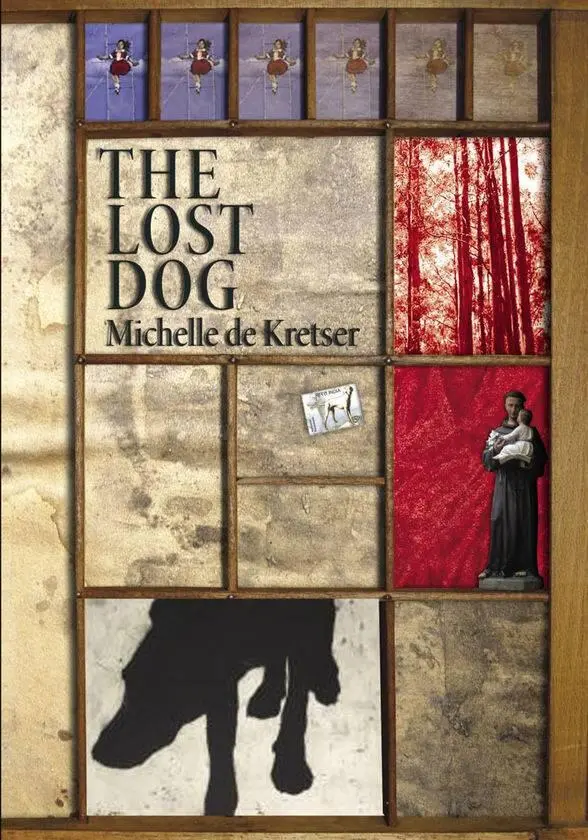
- Название:The Lost Dog
- Автор:
- Жанр:
- Год:неизвестен
- ISBN:нет данных
- Рейтинг книги:5 / 5. Голосов: 1
-
Избранное:Добавить в избранное
- Отзывы:
-
Ваша оценка:
The Lost Dog: краткое содержание, описание и аннотация
Предлагаем к чтению аннотацию, описание, краткое содержание или предисловие (зависит от того, что написал сам автор книги «The Lost Dog»). Если вы не нашли необходимую информацию о книге — напишите в комментариях, мы постараемся отыскать её.
***
‘A captivating read… I could read this book 10 times and get a phew perspective each time. It’s simply riveting.’ Caroline Davison, Glasgow Evening Times
‘… remarkably rich and complex… De Kretser has a wicked, exacting, mocking eye…While very funny in places, The Lost Dog is also a subtle and understated work, gently eloquent and thought-provoking… a tender and thoughtful book, a meditation on loss and fi nding, on words and wordlessness, and on memory, identity, history and modernity.’ The Dominion Post
‘Michelle de Kretser is the fastest rising star in Australia ’s literary firmament… stunningly beautiful.’ Metro
‘… a wonderful tale of obsession, art, death, loss, human failure and past and present loves. One of Australia ’s best contemporary writers.’
Harper’s Bazaar
‘In many ways this book is wonderfully mysterious. The whole concept of modernity juxtaposed with animality is a puzzle that kept this reader on edge for the entire reading. The Lost Dog is an intelligent and insightful book that will guarantee de Kretser a loyal following.’ Mary Philip, Courier-Mail
‘Engrossing… De Kretser confidently marshals her reader back and forth through the book’s complex flashback structure, keeping us in suspense even as we read simply for the pleasure of her prose… De Kretser knows when to explain and when to leave us deliciously wondering.’ Seattle Times
‘De Kretser continues to build a reputation as a stellar storyteller whose prose is inventive, assured, gloriously colourful and deeply thoughtful. The Lost Dog is a love story and a mystery and, at its best, possesses an accessible and seemingly effortless sophistication… a compelling book, simultaneously playful and utterly serious.’ Patrick Allington, Adelaide Advertiser ‘A nuanced portrait of a man in his time. The novel, like Tom, is multicultural, intelligent, challenging and, ultimately, rewarding.’
Library Journal
‘This book is so engaging and thought-provoking and its subject matter so substantial that the reader notices only in passing how funny it is.’ Kerryn Goldsworthy, Sydney Morning Herald
‘… rich, beautiful, shocking, affecting’ Clare Press, Vogue
‘… a cerebral, enigmatic reflection on cultures and identity… Ruminative and roving in form… intense, immaculate.’ Kirkus Reviews
‘De Kretser is as piercing in her observations of a city as Don DeLillo is at his best… this novel is a love song to a city… a delight to read, revealing itself in small, gem-like scenes.’ NZ Listener
‘… de Kretser’s trademark densely textured language, rich visual imagery and depth of description make The Lost Dog a delight to savour as well as a tale to ponder.’ Australian Bookseller and Publisher
‘A remarkably good novel, a story about human lives and the infi nite mystery of them.’ Next
‘Confident, meticulous plotting, her strong imagination and her precise, evocative prose. Like The Hamilton Case, The Lost Dog opens up rich vistas with its central idea and introduces the reader to a world beyond its fictional frontiers.’ Lindsay Duguid, Sunday Times
“[a] clever, engrossing novel… De Kretser’s beautifully shaded book moves between modern day Australia and post-colonial India. Mysteries and love affairs are unfolded but never fully resolved, and as Tom searches for his dog, it becomes apparent that its whereabouts is only one of the puzzles in his life.” Tina Jackson, Metro
‘A richly layered literary text.’ Emmanuelle Smith, Big Issue
The Lost Dog — читать онлайн бесплатно полную книгу (весь текст) целиком
Ниже представлен текст книги, разбитый по страницам. Система сохранения места последней прочитанной страницы, позволяет с удобством читать онлайн бесплатно книгу «The Lost Dog», без необходимости каждый раз заново искать на чём Вы остановились. Поставьте закладку, и сможете в любой момент перейти на страницу, на которой закончили чтение.
Интервал:
Закладка:
And slowly, slowly it dawned on Tom that the animal acquired to please his wife spoke to a need that was his alone. All giving is shot with ambiguity, directed at multiple and paradoxical ends. A gift might exceed thought and desire. It might be epiphanic.
The dog was handsome, sweet-natured. It was easy to love such a creature. Nevertheless, his core was wild. In accommodating that unruliness, Tom’s life flowed in a broader vein.
Late for work while the dog danced out of reach, followed his own imperatives through mud and weeds, Tom was conscious of anger ticking in him like time. It didn’t preclude elation. For fleet minutes, a rage for control had been outfoxed.
Matted fur drifted against skirting boards. Even as he worked a soft grey clump from the bristles of a dustbrush, Sucks to you, Boo, thought Tom.
It was not the end of disgust, which is an aversion to anything that reminds us we are animals. But the dog unleashed in Tom a kind of grace; a kind of beastliness.
Sundays were ritualistic. Morning tea, lunch, a video, afternoon tea; then Tom would return his mother to Audrey.
He was transferring sugar from packet to bowl that afternoon when he became aware of an unambiguous organic stench.
He lived in what had once been a capacious family house, one that had offered pleasure to the eye in a way that was commonplace before architects discovered their talent for brutality. Later two dentists had run their practice on the ground floor. Later still, the building had served as a rooming house. Finally, it had been converted into flats. This last rearrangement had taken a lavatory situated outside the back door of the original house and placed it between Tom’s laundry and sunroom with doors to both. The old-fashioned seat there, marginally higher than the one in the renovated ensuite, was preferred by Iris.
Tom hovered in the sunroom. Rain had pooled, trembling, in the lower corners of the windowpanes. He raised his voice: ‘Ma, are you OK?’
‘Yes, yes.’
He heard her moving about. Water gushed. A ripeness filled his nostrils.
After some minutes, she called, ‘Tommy?’
‘Yes?’
‘Can you come?’
On the floor near the seat lay part of a large turd; the rest had been tracked over the linoleum. Faeces and wadded paper clung to the sides of the lavatory bowl. The seat, imperfectly wiped, showed pale brown whorls.
Tom’s first thought was of a child: of a monstrous infant soiling its pen.
His mother said, ‘There is a piece of shit.’
She said, ‘Don’t be angry, Tommy. I can’t pick it up.’
She was clinging to the edge of the basin; because the handles of her walker were soiled, realised Tom. He reached around her, ran the tap over a facecloth, used it to wipe the handles clean.
It was difficult to manoeuvre in the constricted space. With infinite care, he led his mother to the door, trying, with his hands over hers, to steer the walker clear of the fi lth; trying also to avoid stepping in it.
He was murmuring, ‘It’s OK, don’t worry, it’s OK.’
In the laundry he kneeled and, one at a time, lifted Iris’s heels and eased off her ballet slippers. For a small woman, she had broad feet; he had to tug to dislodge the shoes.
All the while, ‘Wait, wait,’ shrieked Iris. ‘I’m falling.’
‘You’re fine. It’s OK.’
She was wearing nylon knee-highs. ‘These stockings are slipping.’ Again she screamed, ‘I’m falling.’
‘I’ll walk you to your chair, Ma. Just hang on a sec.’
Tom checked the wheels on her walker; ran the facecloth over them.
‘Have you washed your hands?’ he asked; and caught, again, the echo of childhood.
‘Yes, yes.’
Iris let herself be steered along the passage to the living room. Her chair waited in front of the TV. She lowered herself onto it by degrees, with creaks and sighs. When she looked up she saw a face that had slipped from its bones in the grey depths of the screen. It was a moment before she recognised her refl ection.
She said, ‘Give me my bag.’
While she was foraging in it, Tom went into his bathroom. He washed his hands, thinking that it was the first time he had heard the word shit from his mother. It was out of place in the realm of the ladylike, which admitted only big job, kakka , number two.
When he returned to her, Iris was checking her lipstick in a hand mirror: pressing her lips together, pushing them out. About to snap her bag shut, she said, ‘Better see that I’ve got my key.’
‘You have. You checked before lunch, remember?’
Iris went on pulling pills, spectacle case, tissues, rosary from her bag. ‘My God, what’ll happen if it’s lost?’
‘It’s not lost, Ma. How could it be?’
‘But how will I get in?’ Her voice had risen. She was close to tears.
‘Your key can’t possibly be lost. Think about it. If it is, I’ve got a spare. And so has Audrey.’
‘What if she’s not there?’
Tom felt he might scream with her. He said, ‘Ma, I’ll be driving you home. I’ve got a key. And in any-’
‘Ah. Found it.’ Her agitation subsided on the instant.‘Thank God for that.’ Then she said, ‘These tissues are all wrong now.’ She began refolding them, all her attention concentrated on the flimsy pink squares.
Tom was reminded of his own intense involvement, as a child, with his immediate surroundings. A segment of a forgotten day came back to him: he was sucking up a fi zzy orange drink through a straw, sometimes letting the liquid in the anodised metal tumbler subside before it reached his mouth. While this was going on, the sun moved in and out of clouds, and there was the pleasure of light alternating with shade on the side of his face.
He handed his mother a small, silver-capped bottle.
‘What’s this?’
‘ Cologne.’
‘What for?’
‘You might like to put some on.’
‘What?’
‘Put some on!’
Deafness, conducive to imperatives, discouraged nuance. Tom said, ‘How about a cup of tea?’
Iris, absorbed in perfuming herself, ignored him.
‘Tea!’ he bellowed.
A tray held a milk jug and sugar bowl, a white cup, a pastry cloud on a blue-glazed plate. The mother inspected these objects. The son braced himself for criticism.
Praise was rare on Iris’s tongue. When Tom, as a child, presented her with his school report, she would scan it for deficiencies. ‘What is this 87% in Geography? Why are you second this term?’
She had her father’s sixth sense for inadequacy. No servant had lasted long in the de Souza household: Sebastian reached automatically for the smudged tumbler on the credenza, Iris’s finger trailed over the undusted ledge. The dhobi’s fortnightly bundle of spotless laundry unfailingly lacked a sock or a pillowcase.
But her son overrode Iris’s instinct for shortfalls. In the last month of her confinement, gripped by premonition, she had prayed daily that the child would be spared Arthur’s nose. Then he arrived, furiously protesting the breach of their union. Iris saw a slimy, dark, curiously elongated organism that was whisked from her at once. She began to cry, because she had beheld perfection.
Her son was healthy; he grew up handsome and clever. Of course she feared for him. There was the evil eye. If a neighbour remarked that the child was looking well, Iris assured her at once that he was sickly. When Arthur heaped praise on the boy, she cut him short and crossed her fingers behind her back. Calamities, like moths, are drawn to the light. To speak glowingly of Tommy was to risk the wrong sort of attention. Jesus bids us shine with a pure clear light , piped the massed infants of St Stephen’s; and Iris, radiating pride in the front pew, thought how men, even the best intentioned, so often missed the point.
Читать дальшеИнтервал:
Закладка:
Похожие книги на «The Lost Dog»
Представляем Вашему вниманию похожие книги на «The Lost Dog» списком для выбора. Мы отобрали схожую по названию и смыслу литературу в надежде предоставить читателям больше вариантов отыскать новые, интересные, ещё непрочитанные произведения.





Обсуждение, отзывы о книге «The Lost Dog» и просто собственные мнения читателей. Оставьте ваши комментарии, напишите, что Вы думаете о произведении, его смысле или главных героях. Укажите что конкретно понравилось, а что нет, и почему Вы так считаете.