Michelle Kretser - The Lost Dog
Здесь есть возможность читать онлайн «Michelle Kretser - The Lost Dog» весь текст электронной книги совершенно бесплатно (целиком полную версию без сокращений). В некоторых случаях можно слушать аудио, скачать через торрент в формате fb2 и присутствует краткое содержание. Жанр: Современная проза, на английском языке. Описание произведения, (предисловие) а так же отзывы посетителей доступны на портале библиотеки ЛибКат.
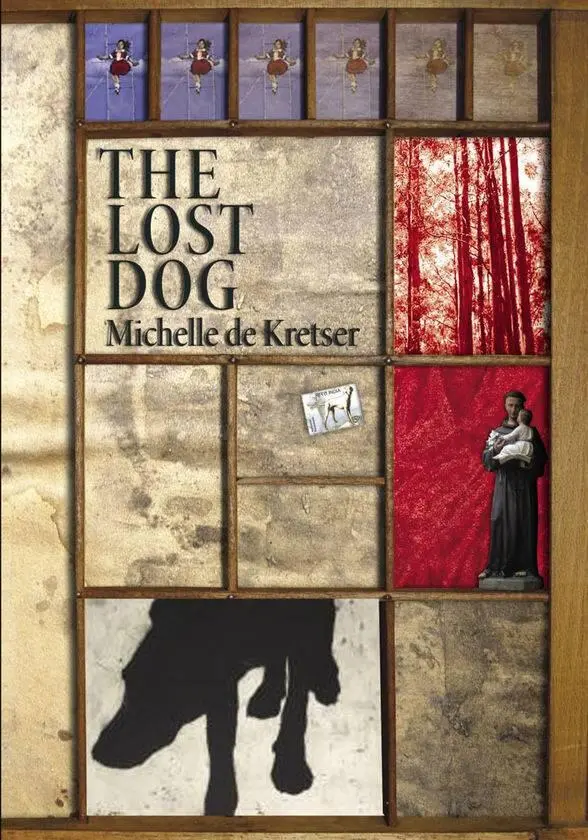
- Название:The Lost Dog
- Автор:
- Жанр:
- Год:неизвестен
- ISBN:нет данных
- Рейтинг книги:5 / 5. Голосов: 1
-
Избранное:Добавить в избранное
- Отзывы:
-
Ваша оценка:
The Lost Dog: краткое содержание, описание и аннотация
Предлагаем к чтению аннотацию, описание, краткое содержание или предисловие (зависит от того, что написал сам автор книги «The Lost Dog»). Если вы не нашли необходимую информацию о книге — напишите в комментариях, мы постараемся отыскать её.
***
‘A captivating read… I could read this book 10 times and get a phew perspective each time. It’s simply riveting.’ Caroline Davison, Glasgow Evening Times
‘… remarkably rich and complex… De Kretser has a wicked, exacting, mocking eye…While very funny in places, The Lost Dog is also a subtle and understated work, gently eloquent and thought-provoking… a tender and thoughtful book, a meditation on loss and fi nding, on words and wordlessness, and on memory, identity, history and modernity.’ The Dominion Post
‘Michelle de Kretser is the fastest rising star in Australia ’s literary firmament… stunningly beautiful.’ Metro
‘… a wonderful tale of obsession, art, death, loss, human failure and past and present loves. One of Australia ’s best contemporary writers.’
Harper’s Bazaar
‘In many ways this book is wonderfully mysterious. The whole concept of modernity juxtaposed with animality is a puzzle that kept this reader on edge for the entire reading. The Lost Dog is an intelligent and insightful book that will guarantee de Kretser a loyal following.’ Mary Philip, Courier-Mail
‘Engrossing… De Kretser confidently marshals her reader back and forth through the book’s complex flashback structure, keeping us in suspense even as we read simply for the pleasure of her prose… De Kretser knows when to explain and when to leave us deliciously wondering.’ Seattle Times
‘De Kretser continues to build a reputation as a stellar storyteller whose prose is inventive, assured, gloriously colourful and deeply thoughtful. The Lost Dog is a love story and a mystery and, at its best, possesses an accessible and seemingly effortless sophistication… a compelling book, simultaneously playful and utterly serious.’ Patrick Allington, Adelaide Advertiser ‘A nuanced portrait of a man in his time. The novel, like Tom, is multicultural, intelligent, challenging and, ultimately, rewarding.’
Library Journal
‘This book is so engaging and thought-provoking and its subject matter so substantial that the reader notices only in passing how funny it is.’ Kerryn Goldsworthy, Sydney Morning Herald
‘… rich, beautiful, shocking, affecting’ Clare Press, Vogue
‘… a cerebral, enigmatic reflection on cultures and identity… Ruminative and roving in form… intense, immaculate.’ Kirkus Reviews
‘De Kretser is as piercing in her observations of a city as Don DeLillo is at his best… this novel is a love song to a city… a delight to read, revealing itself in small, gem-like scenes.’ NZ Listener
‘… de Kretser’s trademark densely textured language, rich visual imagery and depth of description make The Lost Dog a delight to savour as well as a tale to ponder.’ Australian Bookseller and Publisher
‘A remarkably good novel, a story about human lives and the infi nite mystery of them.’ Next
‘Confident, meticulous plotting, her strong imagination and her precise, evocative prose. Like The Hamilton Case, The Lost Dog opens up rich vistas with its central idea and introduces the reader to a world beyond its fictional frontiers.’ Lindsay Duguid, Sunday Times
“[a] clever, engrossing novel… De Kretser’s beautifully shaded book moves between modern day Australia and post-colonial India. Mysteries and love affairs are unfolded but never fully resolved, and as Tom searches for his dog, it becomes apparent that its whereabouts is only one of the puzzles in his life.” Tina Jackson, Metro
‘A richly layered literary text.’ Emmanuelle Smith, Big Issue
The Lost Dog — читать онлайн бесплатно полную книгу (весь текст) целиком
Ниже представлен текст книги, разбитый по страницам. Система сохранения места последней прочитанной страницы, позволяет с удобством читать онлайн бесплатно книгу «The Lost Dog», без необходимости каждый раз заново искать на чём Вы остановились. Поставьте закладку, и сможете в любой момент перейти на страницу, на которой закончили чтение.
Интервал:
Закладка:
It became her habit to call attention to her son’s limitations. Disparagement might mean the opposite of what it says; it might be a form of love. Only, it is difficult for the disparaged to construe it as such. How was Tom to distinguish between the flaws his mother discovered in his best efforts and her fault-finding with the world? ‘She doesn’t mean it,’ Arthur would say; but like so much Arthur said, it was easily discounted.
When Tom was older, he might have been capable of unravelling Iris’s ruse; but if so, he would have scorned it. ‘It’s superstition, Ma! How can you be so irrational?’ Thus he greeted the pinch of salt his mother flung over her shoulder, the pin over which she bent stiffly in the street. It never occurred to Tom that superstition might be an expression of humility: an admission that knowledge is limited and possibility infi nite. Rooted in the desire to free his mother from unreasoning fear, his loving impulse flowered as criticism. ‘Ma, that’s totally dumb!’ Of course Iris, recognising her own strategy at work in her son, paid no attention to his belittling. Besides, the devil lurked in spilled salt. Besides, See a pin and let it lie, / All the day you’ll have to cry.
And so: the tray, the milk and sugar, golden tea in a cup, a miniature éclair on a blue plate.
Tom’s breath caught in anticipation.
‘That looks absolutely nice,’ said Iris.
Tom assembled gloves, lavatory brush, disinfectant, cream cleanser, water, mop, wipes, what was left of the roll of paper.
Afterwards, while the floor was drying, he took his nailbrush and Iris’s shoes into the yard. There he turned on the hose and scrubbed dark, gummy excrement from their soles, using a twig to gouge it free where necessary.
He washed his hands again and soaped his arms all the way to the elbow. There was the tang of lemon verbena. And behind it, the fragrance of faeces.
It went on and went on, like a terrible dream. Floor, bowl, seat, lavatory brush, paper-holder, washbasin were spotless.
The soiled towel had been replaced with a fresh one. His nails gleamed, but to be safe he dug them into the wedge of soap. With his hand on the tap, he saw a few brown grains stuck to the chrome.
At the back of the deepest drawer in Tom’s desk was an object unlike any other he owned. In the Loxleys’ last week in India, he had spied a small, lilac-bound book among the rubbish in a wicker wastebasket. It was his mother’s old autograph album. He retrieved it straight away and secreted it under three starched white shirts in his suitcase.
It was an unfathomable action. For weeks Tom had watched the unwitting objects that had furnished his life-dessert spoons, mattresses, a treadle sewing machine, a carom board- sold or given away. This dismantling of the past, which had seemed so solid and was now shown to be as flimsy as a painted backdrop, had caused him no grief. He had known he was witnessing something at once terminal and cathartic. He met it with the grave exhilaration that was its due.
Yet there was his baffling rescue of the autograph album. As a small child he had turned its pastel pages carefully, drawn by their delicate, water-ice hues. Later, when he had learned to decipher handwriting, he read the verses the album contained; but only as he read everything that came his way. Years had passed since he had troubled to look inside it. Autograph albums were a girlish amusement. Twelve-year-old Tom Loxley held them in scorn.
From the wreckage of the past he might have salvaged a favourite toy, a book. But these he relinquished with never a pang, pressing them on friends or neighbourhood urchins, munificent as a maharajah. He watched old exercise books curl and blacken in the mali ’s bonfire with glee. The little album with its dinted spine remained his only souvenir of India. No one knew it was in his possession; or so Tom believed. In fact Karen, for one, had pondered the anomaly it represented with some curiosity.
From time to time Tom flicked through the album. Signatures made him pause. Childhood mythologies uncoiled from certain names; others sank back into the faceless, unimaginable swarm of those who had known his mother when she was young. Be good, sweet maid, and let who will / Be clever . So Sebastian de Souza’s exquisite copperplate enjoined his daughter.
With time and rereading, Tom had the autograph album’s contents by heart. He didn’t wish to retain vows of undying friendship, mildly salacious witticisms, exhortations to virtue and remembrance; but the album had taken possession of him. He could never be rid of it now.
Details of Nelly’s pictures would blend with Tom’s dreams, spawning brilliant figments lost to ham-fisted day. When he woke his eyes looked wider in the mirror, sated with images.
There was a nebulous quality to him in these months. Women were susceptible to it. In strange bedrooms he profi ted from their interest. He was ghostly; his rapture precise, embodied.
He speculated about the transformation of Nelly’s work after Atwood disappeared. The change to showing photographs of her paintings, too radical for evolution, suggested extremity. Tom was inclined to read it as a fable of loss: Atwood as categorically absent and mourned as the paintings Nelly destroyed. Photography was a form of willed remembrance. Tom was wary of it: this spectral medium, tirelessly calling up the past. Sometimes he shrank from a spread of Nelly’s photos as from a collection of gravestones, each a loving memorial to her marriage.
He brought up the topic with Brendon. Who said, ‘I’ve always figured showing photos is Nelly’s way of paying tribute to painting. To that whole inheritance that’s been nudged aside by new ways of thinking about art. I’d say it’s about photography as a memory of painting.’
Nevertheless, Tom divined the play of the erotic in Nelly’s choice of medium. In its early years, photography had caused trepidation. The little likenesses it fabricated were so uncannily exact, it was feared they would drain vitality from their subjects; a vestige of the older, Romantic dread of the double who was believed to destroy a man’s true self.
The suspicion lingered, in attenuated form, well into the twentieth century. But it was symptomatic of an era in which photographs were few, the power of the copy deriving from its relative rarity. By contrast, the postmodern plethora of images struck Tom as enhancing the particularity of an original. An array of photographs standing in for a subject only accentuated what wasn’t there. Desire swelled for the absent fl esh, the real elsewhere. In substituting a photograph for a painting, Nelly raised the temperature of interest in her work. There was shrewdness in her method, decided Tom. Her photos tantalised with the promise of something more that was always deferred.
The painted landscape he had first seen in Posner’s gallery possessed a quality entirely absent from what followed. Trying to identify it, Tom thought of innocence. Then, as his mind played about the little oblong, he realised that its aura was also a lack. It was an image that knew nothing of time.
As the year lengthened, a development escaped Tom’s attention. His copious stream of notes was dwindling; growing costive. On a night in October, an hour spent with Nelly’s work produced only this spiteful trace: Photography is a result of the desire to freeze time. A photograph is always a record of a failure .
One evening, Nelly and he watched an old video of The Innocents ; which was, they agreed, not nearly as disturbing as The Turn of the Screw . Afterwards, as Tom walked her back to the Preserve, Nelly kept returning to the standard, unsolvable enigma of James’s ghosts. ‘I mean, you’re shown them in the film. When what’s so creepy in the book is you can’t tell if they’re there or just something the governess imagines.’
Читать дальшеИнтервал:
Закладка:
Похожие книги на «The Lost Dog»
Представляем Вашему вниманию похожие книги на «The Lost Dog» списком для выбора. Мы отобрали схожую по названию и смыслу литературу в надежде предоставить читателям больше вариантов отыскать новые, интересные, ещё непрочитанные произведения.






Обсуждение, отзывы о книге «The Lost Dog» и просто собственные мнения читателей. Оставьте ваши комментарии, напишите, что Вы думаете о произведении, его смысле или главных героях. Укажите что конкретно понравилось, а что нет, и почему Вы так считаете.