Ben Okri - The Famished Road
Здесь есть возможность читать онлайн «Ben Okri - The Famished Road» весь текст электронной книги совершенно бесплатно (целиком полную версию без сокращений). В некоторых случаях можно слушать аудио, скачать через торрент в формате fb2 и присутствует краткое содержание. Жанр: Современная проза, на английском языке. Описание произведения, (предисловие) а так же отзывы посетителей доступны на портале библиотеки ЛибКат.
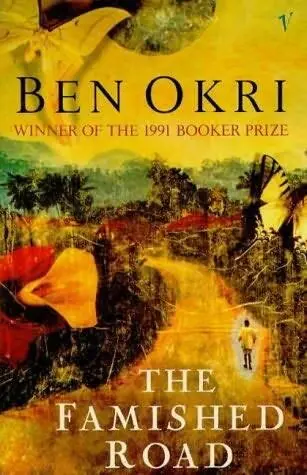
- Название:The Famished Road
- Автор:
- Жанр:
- Год:неизвестен
- ISBN:нет данных
- Рейтинг книги:5 / 5. Голосов: 1
-
Избранное:Добавить в избранное
- Отзывы:
-
Ваша оценка:
The Famished Road: краткое содержание, описание и аннотация
Предлагаем к чтению аннотацию, описание, краткое содержание или предисловие (зависит от того, что написал сам автор книги «The Famished Road»). Если вы не нашли необходимую информацию о книге — напишите в комментариях, мы постараемся отыскать её.
The Famished Road — читать онлайн бесплатно полную книгу (весь текст) целиком
Ниже представлен текст книги, разбитый по страницам. Система сохранения места последней прочитанной страницы, позволяет с удобством читать онлайн бесплатно книгу «The Famished Road», без необходимости каждый раз заново искать на чём Вы остановились. Поставьте закладку, и сможете в любой момент перейти на страницу, на которой закончили чтение.
Интервал:
Закладка:
I couldn’t find one and I came to a place where men were offloading cement bags from the back of a trailer. Again there was a multitude of load-carriers, their faces obscured by cement-dust, with cement on their sweatingeyebrows and on their hair. I wondered how they managed to comb it in the mornings. Some of the load-carriers wereboys alittletaller than me. I watched theboys bucklingunderthecementbags, staggering off, dumping them down, coming back, till their supervisor called for a break, and they all went and sat around the outdoor table of a bukka and washed their hands and sweated into their food, eatingvoraciously.
When they resumed work again I noticed that amongst them was an old man, his son, and his grandchildren, who could not have been much older than me. Among the grandchildren was one who had just started carrying loads that day. He kept crying about his neck and his back and he cried all through the carrying but his father wouldn’t let himstop anddrovehimonwithhistongue,sayinghemustlearntobea man, and that there were boys younger than him who were a pride to their families, and at that moment he pointed at me. Fearing that the supervisor might notice me as well and take it into his head to order me to break my neck carrying cement bags, I hurried on, searching for a water-pump, till I came to another lorry where men were offloading bags of salt. And I was staring at the strange number plate of the lorry when I heard the protestations of a familiar voice.
I heard the voice briefly and I sought the face. And then I saw Dad amongst the load-carriers. He looked completely different. His hair was white and his face was mask-like with engrained cement. He was almost naked except for a very disgusting pair of tattered shorts which I had never seen before. They loaded two bags of salt on his head and he cried ‘GOD, SAVE ME!’ and he wobbled and the bag on top fell back into the lorry. The men loading him insulted his ancestry, wounding me, and Dad kept blinking as the sweat and salt poured into his eyes. The men loading him shouted about how he had been giving them a lot of trouble and behaving like a woman and if he couldn’t carry mere bags of salt he should crawl back into his wife’s bed. Dad was still staggering, like a boxer under the onslaught of too many blows, when the loaders dumped the second bag on his head for the second time. For a moment Dad stood perfectly still. Then he wobbled. His muscles twitched erratically. The bags were very huge and compact, like boulders of rock, and salt poured out of one of them on to Dad’s shoulder.
‘MOVE! MOVE ON!’ said one of the loaders.
‘OR YOU WANT ANOTHER BAG, EH?’ said the other.
Foramoment IthoughtDadwasgoingtosuccumbtothedareandbeforceddeeper into the earth by the sheer weight of bags that could have been pillars of stone. And I couldn’t bear the thought of it and in a voice so thin in the midst of the chaos all around, I cried:
‘Dad! No!’
Severaleyesturnedtowardsme.Dadswungmany ways,tryingtolocatethesource ofthecry,andwhenhefacedmy directionhestopped.Hisfacekepttwitchingandhis neck muscles kept palpitating, as if hewas sufferingacramp. Oneof theloaders said:
‘MOVE ON, MAN!’
And as the salt poured on his shoulder, tears streamed from his eyes, and there was shame on his face as he staggered right past me, almost crushing me with his mighty bucklingfeet.Heappearednot tohaveseenmeandhestruggledon,tryingtobearthe load with dignity, weaving in the compensating direction of the load’s gravity. He weaved uncontrollably, women and children scattering before his advance as if he were an insane animal. Sweat poured down his back and I followed him at a distance, grievingfor thecuts and wounds on his arms. As hewasturningacornerhetripped, regained his balance, wobbled, and then slid on the mud and rubbish on the road, and fell.Thesalt bagsdroppedslowlyfromhishead,andIthought,shuttingmyeyesand screaming, that they would crush him. But when I opened my eyes I saw the bags in the mud. One of them had rolled over the gutter. Dad stayed on the ground, covered in mud, not moving, as if dead, while his blood trickled from his back and mixed with the rubbish of theearth. And then thesupervisor camerunningtowards him, shouting; and a truck-pusher went past him, growling; and Dad suddenly got up, rolling and sliding on the mud, losing grip and standing again, and then he ran in two directions before shooting across the road. A lorry almost knocked him over, but he went on running, and I could see him fleeing into the labyrinth of stalls, ducking under the eaves of kiosks, till he disappeared into the confusion of the garage market, with people tearing after him because they thought he was a thief. I didn’t stay and I didn’t want a water-pump any more. I half-ran, half-walked the distance home. And I was unhappy. My wanderings had at last betrayed me, because for the first time in my life I had seen one of the secret sources of my father’s misery.
NINE
WHEN I GOT home I sat outside and didn’t play with any of the children.I felt very wretched and didn’t notice the daylight pass into evening. Mosquitoes and fireflies appeared. Lamps were lit inside rooms. The men of the compound talked about politics, about the Party of the Poor. They too had come with loudhailers and leaflets and had promised a lot of things and had won considerable support because they said they would never poison the people.
It was dark when Mum returned. She looked haggard and sun-blackened. She shuffled into the room, dropped her tray of provisions, fell on the bed, lay there unmoving, and was instantly asleep. I warmed the food and swept the room. When shewokeup, shelooked better. Shesatdownandate.Aftereatingshelay onthebed and I sat on Dad’s chair, watching the door. She was silent. I told her I had seen Dad; shestartedtoworkup atemperaboutmyhavingbegunwanderingagain,butshewas too tired to sustain it. She lay there, grumbling in an ancient monotone about how hard life was, and I listened intently, for I had begun to understand somethingof what shemeant.Westayedup tillvery late,incompletesilence,waitingforDadtoreturn.
‘What did your father say when you saw him?’ she asked eventually.
‘Nothing.’
‘How can he say nothing?’
‘He said nothing.’
‘You didn’t see him.’
‘I did.’
‘Where?’
‘At the garage.’
We went on waiting. We stayed up, dozing fitfully, till dawn faintly lighted up the sky. Mum became very agitated.
‘What has happened to him?’ she asked me.
‘I don’t know,’ I said. She began to weep.
‘Are you sure you saw him?’
‘Yes.’
‘Washewell?Didhetalktoyou?Whatdidhesay?Ipray nothinghashappenedto him. What will I do if something bad has happened? How will I live? Who will take care of you?’
She went on like that, talking, asking questions, muttering, breaking down into sobs, till I fell asleep on the chair. When the cocks cracked the egg of dawn with their cries, Mum got out of bed, washed her face, and prepared to go and search for Dad in the police stations and hospitals of the world. She had just put food out for me, when Dad appeared at the door. He looked terrible. He looked like an anguished ghost, a forlorn spirit. His eyes were red, his face white and drawn, cement and yam powder all over his brow, his beard wild. He looked unwashed and I knew instantly that he had been roving the streets all night. He avoided my eyes and Mum rushed to him and flungher arms round his neck. Heflinched and Mumsaid:
‘Where have you been, my husband? We were so worried..
‘Don’taskmeany questions,’Dadgrowled,pushingMumaway fromhim.
He went and sat on the bed, staining it with dried mud. He blinked rapidly. Mum fussed over him, trying to anticipate his needs. She hurried out and prepared food. He didn’t touch it. She boiled water for him to bathe with. He didn’t move. She touched him tenderly and Dad exploded:
Читать дальшеИнтервал:
Закладка:
Похожие книги на «The Famished Road»
Представляем Вашему вниманию похожие книги на «The Famished Road» списком для выбора. Мы отобрали схожую по названию и смыслу литературу в надежде предоставить читателям больше вариантов отыскать новые, интересные, ещё непрочитанные произведения.





Обсуждение, отзывы о книге «The Famished Road» и просто собственные мнения читателей. Оставьте ваши комментарии, напишите, что Вы думаете о произведении, его смысле или главных героях. Укажите что конкретно понравилось, а что нет, и почему Вы так считаете.