Ben Okri - The Famished Road
Здесь есть возможность читать онлайн «Ben Okri - The Famished Road» весь текст электронной книги совершенно бесплатно (целиком полную версию без сокращений). В некоторых случаях можно слушать аудио, скачать через торрент в формате fb2 и присутствует краткое содержание. Жанр: Современная проза, на английском языке. Описание произведения, (предисловие) а так же отзывы посетителей доступны на портале библиотеки ЛибКат.
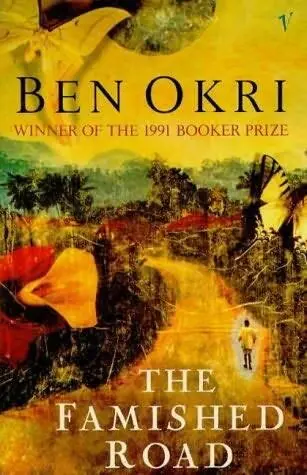
- Название:The Famished Road
- Автор:
- Жанр:
- Год:неизвестен
- ISBN:нет данных
- Рейтинг книги:5 / 5. Голосов: 1
-
Избранное:Добавить в избранное
- Отзывы:
-
Ваша оценка:
The Famished Road: краткое содержание, описание и аннотация
Предлагаем к чтению аннотацию, описание, краткое содержание или предисловие (зависит от того, что написал сам автор книги «The Famished Road»). Если вы не нашли необходимую информацию о книге — напишите в комментариях, мы постараемся отыскать её.
The Famished Road — читать онлайн бесплатно полную книгу (весь текст) целиком
Ниже представлен текст книги, разбитый по страницам. Система сохранения места последней прочитанной страницы, позволяет с удобством читать онлайн бесплатно книгу «The Famished Road», без необходимости каждый раз заново искать на чём Вы остановились. Поставьте закладку, и сможете в любой момент перейти на страницу, на которой закончили чтение.
Интервал:
Закладка:
‘You’re just on time.’
Dad looked at me, laughed, and said: ‘So the rain beat you?’
I nodded, shivering.
‘Dry yourself,’ Mum said.
I went and had a quick wash and dried myself with Dad’s towel. I came back in and sat on the half-spread mat. I ate with Mum and Dad from the same bowls. The candlelight illuminated our faces. After I ate, I curled up on the mat, plantingmy secrets in my silence,andsleptasifnothingunusualhadhappened.
EIGHT
I DID NOT go back to Madame Koto’s place for a while. I feared her anger. I feared her customers. And so after schoolI avoided goingpast her barfront. I would come home and find the door locked. I would sit outside our room and wait for Mum, who often returned late from hawking and the market.
The compound was quiet in the afternoons. The sunlight fell heavily on all things and made it difficult for sounds to travel and made the air somnolent. At the compound-front women who had done all their housework dozed on the cement platform. The heaps of powdered milk, beaten by the rain, spread their poisonous whiteness alongtherunnels of thewideningpaths. Dogs slept with oneeyeopen, their tails pestered by flies. Little children played listlessly on the sand. Older children who had returned from school changed their uniforms and came out, their faces dark with sunlight and dust except where the sweat ran down. Their mothers sent them on errands. Transfixed by the sunlight, I listened to the music of distant radios and the muezzin’s rousingcallto prayer.
Across the street the photographer bustled about with his camera, undeterred by the sleep-making sunlight, looking for interesting subjects. Sometimes he hung up the photographs he had washed in the glass cabinet outside his studio. We often went over to look attheweddingpicturesofpeoplewhowerecompletestrangerstous.He pinned up some of the pictures of the celebration of my homecoming. Beside them were the lurid photographs of the chaos unleashed when the politicians came round with their rotten milk. The rest of the cabinet was taken up with images of defiant women, milk heaps, street inhabitants pouring away the milk against a grainy backdrop of poverty. He was very proud of the photographs and when we gathered too close to the cabinet he would rush over and drive us away, saying:
‘Don’t touch the cabinet or you will spoil the photographs!’
The more he drove us away the more we gathered. The cabinet outside the studio became our first public gallery. Every afternoon, after school had ended, we went there to see what new subjects he had on display, what new funerals, what parades, how the thugs were harassing the women traders at the marketplaces, what newborn baby hehadcapturedcryingattheworld.Hewasourfirstlocalnewspaperaswell.
It was thechildren who first showed interest in his photographs. Then theadults,on their way to work in the morning, began to stop to see what new images the industrious photographer had on display. They also stopped in the evenings whenthey returned. He always surprised us and began to play up to our expectations. He became very popular with the children. Whenever we saw him coming down the street with his camera we never failed to cheer him. He would smile, pretend to take pictures of us, and would disappear into the secret chambers of his studio. After a while we forgot his name and he became known to us simply as ‘the photographer’.
In the afternoons, after being driven away from his glass cabinet, I often played with the other children. We had a whole universe in which to play. We played along the maze of streets and expanding paths, around huts and houses, in building sites, and in the forests. When I got tired and hungry I would ask the photographer for food. Sometimes he would complain that I was disturbing him, but mostly he would give me a piece of bread, saying:
‘Your father hasn’t paid for his pictures yet.’
On another day, with a glint in his eyes, in a tone of conspiracy, he said:
‘Worry yourfatherforme.Iwillgiveyouashillingifhepaysforhispictures.’
He went on pestering me like that, asking if I had in turn been pestering Dad. He then threatened never to feed me again or speak to me till the pictures had been paid for. One day I saw him looking hungry and miserable and when I asked him what was wronghesnarledat me,snatchedup thetripodsofhiscameraand,screamingthatno one ever paid for their photographs, pursued me down the street. He was quite fierce that day. His hunger and bitterness made him ugly, and I avoided him for a while.
His hunger got worse. In the mornings he no longer bothered to change the photographs in the glass cabinet. He no longer bothered to surprise us. The old images turned brown and sad and curled up at the edges under the bleaching force of the sunlight. In the nights we heard him raving, abusing everyone for not paying up, shoutingthat it was peoplelikeus who drovehonest men to crimeand corruption. His clothes became shabby and his beard turned wiry and brown. But even his hunger couldn’t extinguish his spirit and in the afternoons he still went up and down the place,takingpictureswithdementedeyesandinaconstancy ofbadtemper.
The children stopped gathering round his cabinet. We invented new games and played football. One afternoon, while playing, we kicked the ball too hard into an unintended goal, smashing the photographer’s cabinet. He came out, waving a machete, his eyes mad, his movements listless, his tongue coated with white sediments. He trembled in the sunlight, feeble and ill. He came to the cabinet, looked at the destruction we had wrought, and said:
‘Don’t touch the cabinet! I kill anyone who touches it!’
And so the football remained in the cabinet with the smashed glass and the browning photographs. The adults who went past shook their heads in bewilderment at this strange new form of photographic montage. The football was still in the cabinet when it rained. Water flooded the images. Insects bred in the cabinet and curious forms of mould and fungi grew on the innocent subjects of his industry and we all felt sad that the photographer had lost interest in his craft. He wasted away in his tiny room, trembling in the grip of an abnormal fever, and when we saw him he was always covered in a filthy black cloth.
I felt so sad about his pictures that I began to pester Dad, who always got into a temper whenever the subject was raised. So I pestered Mum, but she got bonier the more I pestered her; and so I stopped, and forgot the sadness altogether. And in the afternoons, because I couldn’t go to Madame Koto’s bar, nor look at the pictures in the broken glass cabinet, my feet started to itch again, and I resumed wandering the roads of the world.
Sometimes I played in the forest. My favourite place was the clearing. In the afternoons the forest wasn’t frightening, though I often heard strange drums and singing and trees groaning before they fell. I heard the axes and drills in the distances. And every day the forest thinned a little. The trees I got to know so well were cut down and only their stumps, drippingsap, remained.
I wandered through the forest, collecting rusted padlocks, green bird-eggs, abandoned necklaces, and ritual dolls. Sometimes I watched the men felling trees and sometimes the companies building roads. I made some money running errands for the workers, errands to young girls who rebuffed their advances and to married women who were secretive and full of riddles in their replies, errands to buy cooked food and soft drinks. With the pennies they gave me I bought bread and fried coconut chips and iced water for myself. And then I saved some of the money and offered it to the photographer for our pictures. But when he saw how much I offered he burst into a feverish temper, and chased meout, thinkingthat I was mockinghim.
Читать дальшеИнтервал:
Закладка:
Похожие книги на «The Famished Road»
Представляем Вашему вниманию похожие книги на «The Famished Road» списком для выбора. Мы отобрали схожую по названию и смыслу литературу в надежде предоставить читателям больше вариантов отыскать новые, интересные, ещё непрочитанные произведения.











Обсуждение, отзывы о книге «The Famished Road» и просто собственные мнения читателей. Оставьте ваши комментарии, напишите, что Вы думаете о произведении, его смысле или главных героях. Укажите что конкретно понравилось, а что нет, и почему Вы так считаете.