Ben Okri - The Famished Road
Здесь есть возможность читать онлайн «Ben Okri - The Famished Road» весь текст электронной книги совершенно бесплатно (целиком полную версию без сокращений). В некоторых случаях можно слушать аудио, скачать через торрент в формате fb2 и присутствует краткое содержание. Жанр: Современная проза, на английском языке. Описание произведения, (предисловие) а так же отзывы посетителей доступны на портале библиотеки ЛибКат.
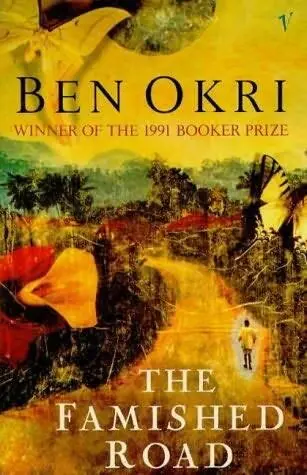
- Название:The Famished Road
- Автор:
- Жанр:
- Год:неизвестен
- ISBN:нет данных
- Рейтинг книги:5 / 5. Голосов: 1
-
Избранное:Добавить в избранное
- Отзывы:
-
Ваша оценка:
The Famished Road: краткое содержание, описание и аннотация
Предлагаем к чтению аннотацию, описание, краткое содержание или предисловие (зависит от того, что написал сам автор книги «The Famished Road»). Если вы не нашли необходимую информацию о книге — напишите в комментариях, мы постараемся отыскать её.
The Famished Road — читать онлайн бесплатно полную книгу (весь текст) целиком
Ниже представлен текст книги, разбитый по страницам. Система сохранения места последней прочитанной страницы, позволяет с удобством читать онлайн бесплатно книгу «The Famished Road», без необходимости каждый раз заново искать на чём Вы остановились. Поставьте закладку, и сможете в любой момент перейти на страницу, на которой закончили чтение.
Интервал:
Закладка:
‘You women take so long,’ Dad said.
‘We may be poor, but we’re not ugly,’ Mum said.
Dad woke into a good mood. He rubbed his eyes, downed a short of ogogoro, forebade my going out, hooked his arm under Mum’s and, in a picture of wedded bliss, stepped out into the world.
I waited till they had gone. Then I got up, poured myself some ogogoro, downed it, andwenttothepassagetowatchthebustlingSunday afternoonlifeofthecompound.
As the afternoon passed on into the evening the children crying in the compound began to cough. Men and women queued up outside the toilet, and everyone complained of stomach trouble. The women doubled-up and sat miserably on stools outside their rooms. A man heaved and threw-up beside the well. Women screamed that they had been poisoned and said they had crabs clawingaround in their intestines. Children seared the evening with the livid heat of their weeping. Then the refrain of vomitingbegan.
The compound people without exception looked sick and when they passed me they glared at me as though I were in some way responsible for the mass illness. All the jollity and good feeling of Sunday gave way to groans, to cries of incomprehension, and demands for a witch-doctor’s investigation. This went on all evening. The compound became a place of vomiting; tenants vomited at the housefront, along the passage, in the toilet, outside the bathroom, and the sound itself seemed to becomecatching. Thechildren, unabletoholdanythingdown,wererushed tothetoilet.They weretreatedwithcastoroil,toneutralisewhateverpoisonstheyhad ingested. But nothing worked. I sat outside and watched it all in amazement. Then one of the creditors’ wives went past me, stiffened, turned to me, her eyes openingwide, and, in a groan that sounded like a curse, released a flood of undigested beans and rice and bile all over my Sunday clothes. She disappeared into the backyard. I washed off her vomit and went to the housefront and filled my pockets with stones. I stopped when I saw Mumand Dad returningfromtheir outingandranbacktotheroom.Dad was high-spirited and drunk. Mum’s face was flushed in sweat and love, her eyes bright, her radiance beautiful.
‘What were you doing outside?’ I told him what had happened. ‘What were you going to do?’ ‘Stone her.’
‘Go and stone her!’ he said.
I went out and threw stones at their door and missed and broke one of their windows.
Thecreditorcameout,lookingdesperately sick.
‘Areyou mad?’ heasked, wieldingamachete.
‘Your wife vomited on me,’ I said.
Thecreditor burst out laughingand then hefrozeand rushed to thebackyard.
‘Everyonemust haveeaten somethingbad,’ Dad said.
And then Mumtold how mystified shehadbeenatseeingpeoplesickeverywhere, at the endemic vomiting along paths and housefronts. The friends they went to visit had been ill the whole time. It seemed a plague had come upon us, insinuated itself into our intestines.
‘The whole world is sick, but my family is well,’ Dad said, proudly. ‘That’s how Godrevealsthejust.By theirfruitsweshallknowthem.Weareastrongfamily.’
He went on in this vein, singing lustily, till the dragonfly awoke in the room and soaredviolently totheceilingandkeptcrashingagainstthewallsindrunkenflight.
‘That insect looks like my relative,’ Dad said, laughing.
‘It came from the milk.’
‘What?’
‘The insect.’
‘When?’
‘Last night. Everyone was asleep. Then the insect flew out of the milk.’‘The milk!’ Dad cried, in a moment’s comprehension. He rushed out into thecompound, shouting:
‘THE MILK! IT’S THE MILK!’ Mum picked up a slipper and stalked the dragonfly and stunned it against the wall and smashed it so hard it became an obscene greenish smear. With a look of supreme indifference, she flicked down the bulbous bits of the dragonfly and swept it out into the passage. After she had washed off the smear with a rag, she went to the creditor’s room. She demanded that they clear their vomit from our roomfront and wash my stained clothes. In the meantime Dad was banging on doors, rousing everyone, overcome by the exhilaration of his drunken discovery, shouting:
‘They have poisoned us with the milk!’
Dad’s statement became a cry of understanding that was carried from one mouth to another, almost a rallying call, till the words gained ascendance over the ugly noises of vomiting. The women got out their containers and basins of the politicians’ milk and emptied them on the street. The heaps of rotten milk grew. Other compounds also had their heaps and as I looked along the street I saw the pilings of powdered milk like mirror-images in front of stalls. The inhabitants of the area gathered and held a longpublicmeetingabout therotten milk of politics.
The photographer hobbled about, from housefront to housefront, holding his stomach, his face wretched and pale. Bravely, he took pictures of the milk-heaps and vomit outside the houses, and got the women and children to pose round them. He took shots of sick children, men in contorted forms of agony, women in attitudes of hungry outrage.
The meeting went on for hours. The street was angry and someone suggested burning down the local offices of the rich people’s party. They were angry but they were also helpless and they couldn’t decide on the best course of action. They talked, could find no solutions, and as night fell they dispersed to their rooms, hobbling, wracked by spasms, exhausted of anythingto vomit.
The compound became a little friendlier towards us that night. Everyone thanked Dad for his rallying cry, for finding the cause of the malaise. The creditor’s wife cleared her undigested ill-feeling from our roomfront, and the creditor himself did not ask us to pay for his broken window. All through the night children went on weeping. But therefrainofvomitinglessened,asifknowingtheproblemhadsomehowreduced the condition. The toilet was unusable.
Dad madelibations to hisancestorslongintothenight.Heprayedformany things, so many that I lost track of the details, and it occurred to me that his ancestors might also be confused by them. We went to sleep in fine spirits, bonded by prayer, and glad that we had survived what became known as The Day of the Politicians’ Milk. That night I slept on the mat. As darkness passed into dreams I heard them again on the bed, moving gently with the music of the springs. The movements stopped. And then a voice, out of the darkness, said:
‘I wonder if the rats are awake.’
SEVEN
THE NEXT TIME I went to Madame Koto’s bar the place was full of big blue flies. The smell of animal skin and sweat and fresh turned earth assailed me. It was hot and stuffy, crowded with total strangers. All of them looked as freakish as the people who were there the last time.
The difference was that there had been a grotesque interchange among the clientele. There was an albino, but he was tall and had a head like a tuber of yam. The man who was bulbous in one eye was white and blank like a polished moonstone in the other. The two men who were sinister in dark glasses now had white hair and curious hip deformations. The youth who had no teeth was now a woman. I recognised them all beneath their transformed appearances. There were others I hadn’t seen before. One of them looked like a lizard with small, fixed green eyes. And amongst these strange people were others who seemed normal, who had stopped off on their way home from their jobs for an evening’s drink. The place was so crowded that I had to struggle through the tight-jammed bodies, all of them raucous, all of them singing, passing abuses and bad jokes across the bar. I heard voices that were unearthly, languages that were nasal and alien, laughter that could only have come from dead tree trunks at night or from hollow graves. I began to feel ill again just pushing my way through their bodies which smelt bloodless and looked pale.
Читать дальшеИнтервал:
Закладка:
Похожие книги на «The Famished Road»
Представляем Вашему вниманию похожие книги на «The Famished Road» списком для выбора. Мы отобрали схожую по названию и смыслу литературу в надежде предоставить читателям больше вариантов отыскать новые, интересные, ещё непрочитанные произведения.







Обсуждение, отзывы о книге «The Famished Road» и просто собственные мнения читателей. Оставьте ваши комментарии, напишите, что Вы думаете о произведении, его смысле или главных героях. Укажите что конкретно понравилось, а что нет, и почему Вы так считаете.