Ben Okri - The Famished Road
Здесь есть возможность читать онлайн «Ben Okri - The Famished Road» весь текст электронной книги совершенно бесплатно (целиком полную версию без сокращений). В некоторых случаях можно слушать аудио, скачать через торрент в формате fb2 и присутствует краткое содержание. Жанр: Современная проза, на английском языке. Описание произведения, (предисловие) а так же отзывы посетителей доступны на портале библиотеки ЛибКат.
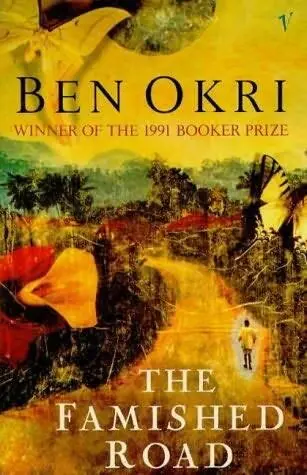
- Название:The Famished Road
- Автор:
- Жанр:
- Год:неизвестен
- ISBN:нет данных
- Рейтинг книги:5 / 5. Голосов: 1
-
Избранное:Добавить в избранное
- Отзывы:
-
Ваша оценка:
The Famished Road: краткое содержание, описание и аннотация
Предлагаем к чтению аннотацию, описание, краткое содержание или предисловие (зависит от того, что написал сам автор книги «The Famished Road»). Если вы не нашли необходимую информацию о книге — напишите в комментариях, мы постараемся отыскать её.
The Famished Road — читать онлайн бесплатно полную книгу (весь текст) целиком
Ниже представлен текст книги, разбитый по страницам. Система сохранения места последней прочитанной страницы, позволяет с удобством читать онлайн бесплатно книгу «The Famished Road», без необходимости каждый раз заново искать на чём Вы остановились. Поставьте закладку, и сможете в любой момент перейти на страницу, на которой закончили чтение.
Интервал:
Закладка:
Overcome with curiosity, I got out of bed. The crack of an iron ruler shot through my headandendedbetweenmy eyes.Theroomswayed.Thecracklingvoiceoutside spoke from an elevated stationary position. Darkness formed round my eyes and then cleared. I made for the door. The passage was empty. All the compound people were gathered at the housefront. All the housefronts of the street were crowded with people. And everyone was staring at the spectacle of an open-backed van with a megaphone. A man in resplendent white agbada was talking with great gestures. It was the first time I had heard such amplification of voice.
The inhabitants of the street crowded round the van, hunger on their faces. Their children were in tattered clothes, had big stomachs, and were barefoot.
‘What is it?’ someone asked.
‘Politicians.’
‘They want votes.’
‘They want our money.’
‘They have come to tax us.’
‘I saw them when I went hawking. They keep giving reasons why we should vote for them.’
‘They only remember us when they want our votes.’ The man in the van spoke for himself.
‘VOTE FOR US. WE ARE THE PARTY OF THE RICH, FRIENDS OF THE POOR…’
‘The poor have no friends,’ someone in the crowd said.
‘Only rats.’
‘IF YOU VOTE FOR US…’‘…we are finished,’ someone added.‘…WE WILL FEED YOUR CHILDREN…’‘… lies.’‘…AND WE WILL BRING YOU GOOD ROADS…’‘… which the rain will turn into gutters!’‘…AND WE WILL BRING ELECTRICITY…’‘… so you can seebetter how to rob us!’‘…AND WE WILL BUILD SCHOOLS…’ to teach illiteracy!’
‘… AND HOSPITALS. WE WILL MAKE YOU RICH LIKE US. THERE IS PLENTY FOR EVERYBODY. PLENTY OF FOOD. PLENTY OF POWER. VOTE FOR UNITY AND POWER!’
By this time the mocking voices were silent.
‘AND TO PROVE TO YOU THAT WE ARE NOT EMPTY WORDS BRING YOUR CHILDREN TO US. WE ARE GIVING AWAY FREE MILK! YES, FREE MILK FROM US, COURTESY OF OUR GREAT PARTY!’ On and on they went,cracklingabundantpromisesontheair,launchingfuturevisions of extravagant prosperity, till they broke down the walls of our scepticism. The compound people abandoned their doubts and poured over to the van. Feeling the road sway, with the magnified voice quivering in my ears, I went with them. I was surprised to see our landlord on the back of the van. His face glistened with the smile of the powerful and he had on a lace agbada. There were stacks of powdered milk on the back of the van and men with bristling muscles, bare-chested, ripped open the sacks and dished out the milk with yellow bowls to the women who had rushed over with containers. The landlord, like a magician in a triumphant moment, handed out bowls of milk to the great surging mass of people. All around me the throng had become rowdy; the crowd converged round the van, arms outstretched, and the rush for free milk broke into a frenetic cacophony. The crowd shook the van, voices clashed in the air, children cried out under the crush, hands clawed at the sacks, and thefrenzy becamesoalarmingthatthemanatthemegaphonebeganshouting:
‘DON’T RUSH. WE HAVE ENOUGH FREE MILK FOR THE WHOLE COUNTRY…’
His pleading only made things worse; people surged round with basins, had them filled, rushed to their homes, and returned with greater vigour. Soon the whole street, in a frightening tide of buckets and basins, of clanging pots, and rancorous voices, rocked the van. The landlord looked sick with fright. Sweat broke out on his face and he struggled to take off his agbada, but it got caught in the outstretched clawing hands of all the struggling hungry people. The more he tried to get it off, the more entangled it became in all the hands. It was as though his clothes too had become an extension of his party’s promises, a free gift to everyone. On the other side of the van I saw Madame Koto engaged in negotiations with the man at the megaphone, pointing vigorously in the direction of her bar. All around her the crowd hustled. The women’s kerchiefs were torn off, shirts were ripped apart, milk spilt everywhere and powdered the faces of the women and children. With their sweating, milk-powdered faces they looked like starving spirits. The crowd surged, voices swelling, and the driver started the van’s engine. The hunger of the crowd wreaked itself on the van; the handers-out of milk began to shout; the driver got worried; the landlord’s agbada had been torn off him by the crowd. He battled to get it back, clinging on to its edges in desperation, pleading. But the crowd, with confused clawing motions, raking the milk sacks from under the feet of thugs, dragged the landlord’s agbada with them. He clung on stubbornly and they dragged him along with his garment, out of the van, till only his feet wereleft showing,kickingvainly attheair.Oneofthethugsstoppeddishingout the milk and held on to the landlord’s feet, to keep him in, but lost the battle against the confused fury of motions, and the landlord disappeared into the great welter of bodies. His agbada was passed from hand to hand, above the crowd; and soon so many hands grasped at the lace garment that it tore into several pieces in the air and patches of its blue cloth flew this way and that like the feathers of a plucked parrot.
When the landlord next emerged his hair was covered in mud and someone spilt milk on him and he looked like a travesty of an Egungun and when he tried to get back on the van his fellow party men wouldn’t let him because they didn’t recognise him. He shouted his indignation and the thugs, abandoning their activity, set on him, bundled him off, and threw him to the ground, a good distance from the van. The intrepid photographer appeared with his camera and took pictures of the miserable landlord and the surging crowd. The landlord got up in a great fury, shook his fists, swore at the party and, covered in mud and dried milk, his clothes in tatters, his pants all twisted, he stormed away down the street, a solitary figure of wretched defiance. The photographer went on taking pictures. The men on the van posed in between doling out milk, smiling in weird fixity at the camera, while the crowd jostled. I saw three tough-looking men suddenly snatch sacks of milk from the van; I saw them run off down the street, pursued by the party thugs. Children were squashed by the jostling. A man fainted. Women cried out. A girl was prodded in the eye. Someone else, elbowed in the mouth, spat blood into the air. The photographer flashed his camera at a woman with a swollen eye, a basin of milk on her head. I saw a man running out from the crowd’s vanguard, with deep scratches bleeding down his face. The windows of the van were smashed in the mêlée. Blood mixed with milk on the earth. I heard Mum screaming. I fought my way in the direction of her cry. I saw Madame Koto leaving the scene of confusion with utmost dignity, her beads gleaming in the sun. I searched for Mum in the crowding, in the heated sweat and hungry violence of the swelling multitude. Elbows crashed on my head and someone’s fist cracked my nose, drawing blood. I fought my way back out, stumbling over feet of solid bone and rough legs. The van suddenly started moving. It knocked over a man and dragged with it a hundred surging bodies. The crowd poured after the van as if in a holy crusade. The thugs on the back of the van, resorting to a diversionary tactic, tore open a hidden sack and began throwing pennies and silver pieces in the air. The coins landed on our heads, we caught them with our faces, were sometimes blinded by their force as we surged, and we scrambled for them, forgetting the milk, while the van droveaway,cracklingitsannouncements,itsparty promises,andthevenueofthe party’s next great public spectacle. The children ran after the van, while the rest of the crowd, caught in the spiral of its own fever, scrambled for coins.
Читать дальшеИнтервал:
Закладка:
Похожие книги на «The Famished Road»
Представляем Вашему вниманию похожие книги на «The Famished Road» списком для выбора. Мы отобрали схожую по названию и смыслу литературу в надежде предоставить читателям больше вариантов отыскать новые, интересные, ещё непрочитанные произведения.




Обсуждение, отзывы о книге «The Famished Road» и просто собственные мнения читателей. Оставьте ваши комментарии, напишите, что Вы думаете о произведении, его смысле или главных героях. Укажите что конкретно понравилось, а что нет, и почему Вы так считаете.