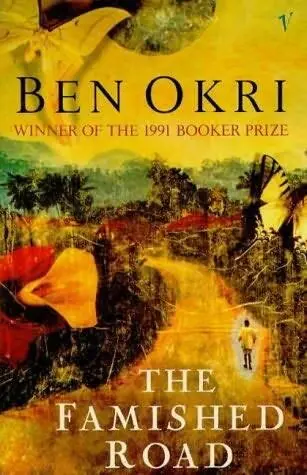
Ben Okri - The Famished Road
Здесь есть возможность читать онлайн «Ben Okri - The Famished Road» весь текст электронной книги совершенно бесплатно (целиком полную версию без сокращений). В некоторых случаях можно слушать аудио, скачать через торрент в формате fb2 и присутствует краткое содержание. Жанр: Современная проза, на английском языке. Описание произведения, (предисловие) а так же отзывы посетителей доступны на портале библиотеки ЛибКат.
- Название:The Famished Road
- Автор:
- Жанр:
- Год:неизвестен
- ISBN:нет данных
- Рейтинг книги:5 / 5. Голосов: 1
-
Избранное:Добавить в избранное
- Отзывы:
-
Ваша оценка:
The Famished Road: краткое содержание, описание и аннотация
Предлагаем к чтению аннотацию, описание, краткое содержание или предисловие (зависит от того, что написал сам автор книги «The Famished Road»). Если вы не нашли необходимую информацию о книге — напишите в комментариях, мы постараемся отыскать её.
The Famished Road — читать онлайн бесплатно полную книгу (весь текст) целиком
Ниже представлен текст книги, разбитый по страницам. Система сохранения места последней прочитанной страницы, позволяет с удобством читать онлайн бесплатно книгу «The Famished Road», без необходимости каждый раз заново искать на чём Вы остановились. Поставьте закладку, и сможете в любой момент перейти на страницу, на которой закончили чтение.
Интервал:
Закладка:
The burnt van stayed in the street for a long time. At night shadows came and scavenged the engine. One morning we woke to find that it had been uprighted and moved as though the night had been attempting to drive it away. The children of the area found in it a temporary new plaything. We learned how to drive it, wrenching around its steeringwheel, takinglongjourneys across great wastes of fantasies.
Rain poured on the burnt van, the sun and the dust bleached its paint, and after a while all the big flaking letters of the party’s insignia were obliterated, and nothing was left to identify the vehicle, or to rescue it from forgetfulness. It wasn’t long before it vanished from the street, not because it was no longer there, diminishing with each day’s sunglare, but becausewehad stopped noticingit altogether.
The photographer was released three days after he was taken away. He said he had been tortured in prison. He was louder and more fearless than before. Prison seemed to have changed him and he went around with a strange new air of myth about him, as if he had conceived heroic roles for himself during the short time he had been away. When he arrived the street gathered outside his room to give him a hero’s welcome. He told us stories of his imprisonment and of how he had survived fiendish methods of torture inflicted on him to get out the names of collaborators, planners of riots, destabilisers of the Imperial Government, and enemies of the party. He made us dizzy with his stories. People brought him food, palm-wine, ogogoro, kola-nuts, kaoline, and he could have selected quite a few wives from the admiring female faces of that evening if he had not already permanently entered new mythic perceptions of himself that excluded such rash decisions. I hung around outside the photographer’s studio, listening as the adults talked in solemn tones and as they drank long into the night of his triumphant return. Even Dad went over to pay his respects.
The next day woke us up to a great excitement. Everywhere people were talking in animated tones. Everywhere people who had been content to listen to the news of the country only intheformofrumourswerenowtobeseenscrutinisingthesamepage of the newspaper, as if overnight newsprint had been given a new importance. It was only when I got back from school that I understood the excitement. For the first time in our lives we as a people had appeared in the newspapers. We were heroes in our own drama, heroes of our own protest. There were pictures of us, men and women and children, standing helplessly round heaps of the politicians’ milk. There were pictures of us raging, attacking the van, rioting against the cheap methods of politicians, humiliating the thugs of politics, burning their lies. The photographer’s pictures had been given great prominence on the pages of the newspaper and it was even possible to recognise our squashed and poverty-ridden faces on the grainy newsprint. There were news stories about the bad milk and an editorial about our rage. We were astonished that something we did with such absence of planning, something that we had done in such a small corner of the great globe, could gain such prominence. Many of us spent the evening identifying ourselves amongst the welter of rough faces.
Mum was clearly recognisable among the faces. Ten million people would see her faceandnevermeet herintheirlives.Shewascarryingabasinofrottenmilk;andthe dreadfulnewsprint distortedherbeautyintosomethingwretchedandweird;butwhen she returned from the market in the evening people crowded into our rooms and talked about her fame, how she could use it to sell off her provisions, about the thugs, who had sworn terrible reprisals, and about the landlord, who was furious that his own tenants had partaken in the attack on his beloved Party.
Most of us were delighted to see ourselves on the front pages of a national newspaper; but nothing amazed us as much as seeing a special picture of the photographer himself, with his name in print. We pointed at his name over and over again and went round to his room to congratulate him. He was very high-spirited that eveningand he went from place to place, followed by a swelling tide of wondering mortals, talking about national events in intimate terms. He came to our compound and was toasted in every room and he laughed loudly and drank merrily. Neither his new fame, nor the alcohol made him fail to remind us that we still owed him money for our photographs.
When Dad returned from work and learned of Mum’s picture in the papers he was both alittleproud and alittlejealous of her.Hesaidshelookedlikeastarvingwitchdoctor.But that didn’t stophimfromcuttingoutthepageofthepaperandstickingit to the wall. Every now and again, while smoking a cigarette, he would look at the picture and say:
‘Your mother is getting famous.’
The photographer eventually made it to our room and Dad sent me to buy some drinks. When I gotbackthephotographerwasstaggeringabouttheplace,quitedrunk, diving behind the chair, shooting an imaginary camera, acting the part of thugs and politicians, while Mum and Dad fell about in laughter. He was very drunk and he kept wobblingon Dad’s chair and saying:
‘I am an International Photographer.’
He went on to tell us how many commissions he had received since he became famous. People who had gone to congratulate him now wanted him to photograph them in their huts, their shacks, their crowded rooms, their filthy backyards, along with their extended families, in the hope that he would publish their images on the pages of the newspapers. The photographer got very drunk indeed and fell off Dad’s chair. We made him sit up straight. He would be talking and then he would doze off, his mouth still open. He would suddenly wake up and with amazing precision continue his speech exactly where he left off.
He sat there, back against the wall, the window over his head. With his lean face, his excitable eyes, his bony forehead, his sharp jaws, and his energetic gestures, he seemed as if he belonged in the room, as if he were a member of our hungry and defiant family.
One moment he was talking and the next moment I didn’t hear him any more. His mouth moved, but his words were silent. The candle flickered on the table. I was confused by the phenomenon.
‘Prepare food for the International Photographer,’ Dad said, with great warmth.
I went with Mum to the backyard. We prepared eba and stew for everyone. When we got back to the room the photographer was fast asleep on the floor. We woke him up and he carried on with a conversation whose beginning eluded us. He ate with us, declined any more drinks, thanked and prayed for us and, wobbling at the door, he made a statement which touched us.
‘You are my favourite family in the compound,’ he said.
Then he staggered out into the night. Me and Dad walked him to his door. Dad shook hands with him and we came back. Dad was silent, but he looked proud and tall and he didn’t stoop under the memory of all those weights. When we passed the burnt van Dad paused and studied its form in the darkness. Then he touched me on the head, urging me on, and said:
‘Troublealways happens after celebration. Troubleis comingto our area.’
TEN
AFTER SCHOOL THE next day, I came home and found strange people around the van. Our landlord was among them. He kept waving his arms furiously, pointing at all the houses along the street. The other men looked very suspicious and wore dark glasses. We watched them for a while. They went round the van, talking intensely about it; they touched the van, poked it, looked round at the street, then, nodding, they went towards Madame Koto’s bar, looking back in severe scrutiny at the van as they went. When they had gone a few of the street’s people went and gathered round the van and studied it and prodded it as if by doing this they would find out what the men’s interest was all about.
Читать дальшеИнтервал:
Закладка:
Похожие книги на «The Famished Road»
Представляем Вашему вниманию похожие книги на «The Famished Road» списком для выбора. Мы отобрали схожую по названию и смыслу литературу в надежде предоставить читателям больше вариантов отыскать новые, интересные, ещё непрочитанные произведения.





Обсуждение, отзывы о книге «The Famished Road» и просто собственные мнения читателей. Оставьте ваши комментарии, напишите, что Вы думаете о произведении, его смысле или главных героях. Укажите что конкретно понравилось, а что нет, и почему Вы так считаете.