Tracy Chevalier - Remarkable Creatures
Здесь есть возможность читать онлайн «Tracy Chevalier - Remarkable Creatures» — ознакомительный отрывок электронной книги совершенно бесплатно, а после прочтения отрывка купить полную версию. В некоторых случаях можно слушать аудио, скачать через торрент в формате fb2 и присутствует краткое содержание. Жанр: Современная проза, на английском языке. Описание произведения, (предисловие) а так же отзывы посетителей доступны на портале библиотеки ЛибКат.
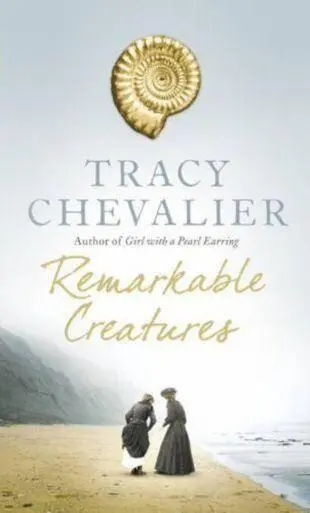
- Название:Remarkable Creatures
- Автор:
- Жанр:
- Год:неизвестен
- ISBN:нет данных
- Рейтинг книги:4 / 5. Голосов: 1
-
Избранное:Добавить в избранное
- Отзывы:
-
Ваша оценка:
Remarkable Creatures: краткое содержание, описание и аннотация
Предлагаем к чтению аннотацию, описание, краткое содержание или предисловие (зависит от того, что написал сам автор книги «Remarkable Creatures»). Если вы не нашли необходимую информацию о книге — напишите в комментариях, мы постараемся отыскать её.
Remarkable Creatures — читать онлайн ознакомительный отрывок
Ниже представлен текст книги, разбитый по страницам. Система сохранения места последней прочитанной страницы, позволяет с удобством читать онлайн бесплатно книгу «Remarkable Creatures», без необходимости каждый раз заново искать на чём Вы остановились. Поставьте закладку, и сможете в любой момент перейти на страницу, на которой закончили чтение.
Интервал:
Закладка:
“Indeed no, Lord Henley,” I replied. “Remember, we said it may take up to two years to clear, and if the body isn’t uncovered by then you will get the skull regardless.”
He was still angry, and would not listen, but mounted the grey horse he rode everywhere and galloped back up the beach, spraying water.
It was Molly Anning who reined in Lord Henley. She did little but let him rant. When he had run out of words and breath, she said, “You want your three pounds back, I’ll give it you now. There be plenty of others lined up to buy that skull, and for a better price too. Here, take your money.” She reached into her apron pocket as if she had anything other than air in it, the money being long spent. Of course Lord Henley backed down. I envied Molly her confidence with such a man, though I didn’t tell her, for she would have responded with a scornful, “And I envy you your one hundred and fifty pounds per year.”
Eventually Lord Henley’s pursuit of the crocodile died down. It requires patience to look for fossils. Only Mary and William Lock and I remained attentive, checking the landslip after every storm and spring tide. Mary tried to get there first, but sometimes William Lock slipped in before her.
Mercifully, a fever kept the hostler abed and got Mary and me out early the day she found it. A huge storm had lasted two days, and was too fierce for anyone to venture out during it. On the third morning I woke at dawn to a strange quiet, and knew. I left my warm bed, dressed quickly, threw on my cloak and bonnet and hurried out.
The sun was just a sliver off Portland, and the beach was empty but for a familiar figure in the distance. As I got to the end of Church Cliffs I could see the landslip was gone, the storm having scrubbed clean the beach as if expecting a special guest. Mary had climbed up onto the ledge the hole made and was hammering at the cliff. When I called to her she turned. “It’s here, Miss Philpot! I found it!” she cried, jumping from the ledge. We smiled at each other. For this brief moment, before all the fuss began, we savoured the solitude of the dawn, and the purity of finding treasure together.
It took the Day brothers three days to extract the body, working around the tides. As they got out each slab and laid it on the beach, it was like watching a mosaic being put together before us. As when the skull had been dug out, a crowd gathered to watch the Days and inspect the crocodile. A few were fascinated and keen to speculate on its origins. Others enjoyed the spectacle but threw dark looks at it. “It be a monster, is what it be,” a man muttered. “Watch the croc’ll come and eat you in your bed if you’re bad!” a mother called after her children. “Lord, it be ugly,” another said. “Let Lord Henley come and lock it away in the Manor!”
Lord Henley also came to see it, though he did not even dismount from his horse. “Excellent,” he declared, the horse jogging sideways as if to keep its distance from the stone slabs. “I will send my coach as soon as it’s ready.” He seemed to have forgotten that cleaning and mounting the specimen would take several weeks. And he still had to agree a price before the Annings would give it up.
I had expected to be involved in this negotiation, but discovered soon after the specimen had been brought back to the workshop that Molly Anning had already done the business, and Lord Henley paid them twenty-three pounds for it. Moreover, she shrewdly got him to waive any rights to other fossils they found on his property. She had even written it out in a note he signed, when I had assumed she couldn’t write. I could not have done better myself.
It was only when the body had been cleaned and placed next to the skull that we could at last see the creature for what it was: an impressive, eighteen-foot stone monster unlike anything we had ever heard of. It was not a crocodile. It was not just the huge eyes, the long smooth snout and the even teeth. It also had paddles rather than legs, and its torso was an elongated barrel woven of ribs along a strong spine. It ended in a long tail, with a kink partway along the vertebrae. It made me think a bit of a dolphin, of a turtle, or a lizard, and yet none of these was quite right.
I couldn’t help thinking of what Lord Henley had said about the creature being one of God’s rejected models, and of Reverend Jones’ response. I did not know what to make of it. Most who came to look at the specimen called it a crocodile, as did the Annings themselves. It was easier to think that was what it was, perhaps an unusual species that lived somewhere else in the world- Africa, perhaps. But I knew it was something different, and after I saw it complete, I stopped referring to it as a crocodile, instead calling it simply Mary’s creature.
Joseph Anning built a wooden frame, and once Mary had cleaned and varnished the bones, they cemented into the frame the limestone slabs that held the creatures. Then she added a skim of lime plaster around the specimen to set off the bones and give the whole thing a smooth, finished appearance. She was pleased with her handiwork, but once it disappeared to Colway Manor she heard nothing from Lord Henley, who seemed to have lost interest in the specimen, like a hunter not bothering to eat the deer he has slain. Though of course, Lord Henley was no hunter, but a collector.
Collectors have a list of items to be obtained, a cabinet of curiosities to be filled by others’ work. They might go out onto the beach sometimes and walk along, frowning at the cliffs as if looking at an exhibition of dull paintings. They cannot concentrate, for the rocks all look the same to them: quartz looks like flint, beef like bones. They find little more than a few bits of broken ammonite and belemnite and call themselves experts. Then they buy from the hunters what they need to make up their list. They have little true understanding of what they collect, or even that much interest. They know it is fashionable, and that is enough for them.
Hunters spend hour after hour, day after day out in all weather, our faces sunburned, our hair tangled by the wind, our eyes in a permanent squint, our nails ragged and our fingertips torn, our hands chapped. Our boots are trimmed with mud and stained with sea water. Our clothes are filthy by the end of the day. Often we find nothing, but we are patient and hard-working and not put off by coming back empty-handed. We may have our special interest-an intact brittle star, a belemnite with its sac attached, a fossil fish with every scale in place-but we pick up other things too, and are open to what the cliffs and beach offer us. Some, like Mary, sell what they find. Others, like me, keep our finds. We label the specimens, recording where and when we found them, and display them in cases with glass tops. We study and compare specimens, and we draw conclusions. The men write up their theories and publish them in journals, which I read but may not contribute to myself.
Lord Henley stopped collecting other fossils once he had Mary’s creature. Perhaps he considered it the pinnacle of his collecting achievement. Those more serious about fossils know their search is never over. There will always be more specimens to discover and study, for, as with people, each fossil is unique. There can never be too many.
Unfortunately, that would not be the last of my dealings with Lord Henley. Though we occasionally nodded at each other on the street or across church pews, I had little real contact with him for some time. When I next did, it was vehement.
It began in London. We visited annually, each spring, once the roads were clear enough to travel. It was our treat for getting through another winter in Lyme. I didn’t mind so much the storms and the isolation, for these were good conditions in which to find fossils. Louise, however, could not garden, and became frustrated and silent. Worse, though, was watching Margaret grow grey and melancholic. She was a summer person, needing warmth and light and variety to stimulate her. She hated the cold, and Morley Cottage was a prison she felt trapped in, with the Assembly Rooms quiet now the season was finished and no new visitors were arriving to be entertained. Winter months gave her too much time to think about the years passing and the loss of her prospects and, bit by bit, her looks. She no longer had the fresh roundness of youth, but was becoming lined and thin. By March Margaret had always faded like a threadbare nightgown worn for too long.
Читать дальшеИнтервал:
Закладка:
Похожие книги на «Remarkable Creatures»
Представляем Вашему вниманию похожие книги на «Remarkable Creatures» списком для выбора. Мы отобрали схожую по названию и смыслу литературу в надежде предоставить читателям больше вариантов отыскать новые, интересные, ещё непрочитанные произведения.
Обсуждение, отзывы о книге «Remarkable Creatures» и просто собственные мнения читателей. Оставьте ваши комментарии, напишите, что Вы думаете о произведении, его смысле или главных героях. Укажите что конкретно понравилось, а что нет, и почему Вы так считаете.