Tracy Chevalier - Remarkable Creatures
Здесь есть возможность читать онлайн «Tracy Chevalier - Remarkable Creatures» — ознакомительный отрывок электронной книги совершенно бесплатно, а после прочтения отрывка купить полную версию. В некоторых случаях можно слушать аудио, скачать через торрент в формате fb2 и присутствует краткое содержание. Жанр: Современная проза, на английском языке. Описание произведения, (предисловие) а так же отзывы посетителей доступны на портале библиотеки ЛибКат.
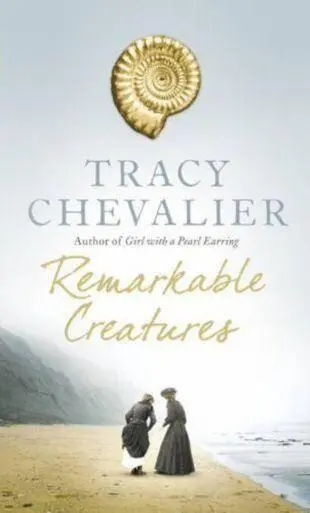
- Название:Remarkable Creatures
- Автор:
- Жанр:
- Год:неизвестен
- ISBN:нет данных
- Рейтинг книги:4 / 5. Голосов: 1
-
Избранное:Добавить в избранное
- Отзывы:
-
Ваша оценка:
Remarkable Creatures: краткое содержание, описание и аннотация
Предлагаем к чтению аннотацию, описание, краткое содержание или предисловие (зависит от того, что написал сам автор книги «Remarkable Creatures»). Если вы не нашли необходимую информацию о книге — напишите в комментариях, мы постараемся отыскать её.
Remarkable Creatures — читать онлайн ознакомительный отрывок
Ниже представлен текст книги, разбитый по страницам. Система сохранения места последней прочитанной страницы, позволяет с удобством читать онлайн бесплатно книгу «Remarkable Creatures», без необходимости каждый раз заново искать на чём Вы остановились. Поставьте закладку, и сможете в любой момент перейти на страницу, на которой закончили чтение.
Интервал:
Закладка:
I glared at her, and did not apologise. Fanny hurried away, glancing back now and then as if she feared I might follow her and swear some more. Though horrified, she was doubtless also keen to tell family and friends what the queer Miss Philpot had said.
Although I dreaded having to tell Mary about her creature, I have never been one to put off bad news-the wait only makes it worse. I went that afternoon to Cockmoile Square. Molly Anning directed me to Pinhay Bay, to the west of Monmouth Beach, where Mary had been commissioned by a visitor to extract a giant ammonite. “They want it for a garden feature,” Molly Anning added with a chuckle. “Daft.”
I flinched. In the Morley Cottage garden there was a giant ammonite with a one-foot diameter that Mary had helped me to dig out; I had given it to Louise for Christmas. Molly Anning probably didn’t know that, as she had never come up Silver Street to see us. “Why climb a hill if there’s no need to?” she often said.
Molly Anning would be glad for the money from that ammonite, however. Since selling the monster to Lord Henley, Mary had been hunting without success for another complete specimen. She had only found tantalising pieces-jawbones, fused vertebrae, a fan of small paddle bones-which brought in a little money, but far less than if she had discovered them all together.
I found her near the Snakes’ Graveyard-I now called it the Ammonite Graveyard-which had attracted me to Lyme years before. She had managed to cut out the ammonite from a ledge, and was wrapping it in a sack to drag back along the beach-hard work for a girl, even one used to it.
Mary greeted me with joy, for she often said she missed me when I was making my London visit. She told me about all that she had found while I was away, and what they had managed to sell, and who else had been out hunting. “And how was London, Miss Elizabeth?” she asked finally. “Did you buy any new gowns? I see you’ve a new bonnet.”
“Yes, I have. How observant you are, Mary. Now, I have to tell you about something I saw in London.” I took a deep breath and told her about going to Bullock’s and discovering her creature, describing in frank terms the state of it, down to its waistcoat and monocle. “Lord Henley should not have sold it to someone who would treat it so irresponsibly, no matter how many people got to see it,” I finished. “I hope you won’t be approaching him with any future finds.” I did not tell her I had just been to see Lord Henley and been laughed at.
Mary listened, her brown eyes widening only when I mentioned that the creature’s tail had been straightened. Apart from that her reaction was not what I had expected. I thought she would be angry that Lord Henley had profited from her find, but for the moment she was more interested in the attention being given to it.
“Was lots of people looking at it?” she asked.
“A fair number.” I didn’t add that other exhibits were more popular.
“Lots and lots? More even than the number of people living in Lyme?”
“Far more. It has been on show for several months, so I expect thousands have seen it.”
“All them people seeing my croc.” Mary smiled, her eyes bright as she looked out to sea, as if spying a queue of spectators on the horizon, waiting to see what she would find next.
5. We will become fossils, trapped upon beach forever
Finding that crocodile changed everything. Sometimes I try to imagine my life without those big, bold beasts hidden in the cliffs and ledges. If all I ever found were ammos and bellies and lilies and gryphies, my life would have turned out as piddling as those curies, with no lightning jolts to turn me inside out and give me joy and pain at the same time.
It weren’t just the money from selling the croc that changed things. It was knowing there was something to hunt for, and that I was better at finding it than most-this was what were different. I could look ahead now and see-not random rocks thrown together, but a pattern forming of what my life could be.
When Lord Henley paid us twenty-three pounds for the whole crocodile, I wanted lots of things. I wanted to buy so many sacks of potatoes they’d reach the ceiling if you stacked them. I wanted to buy lengths of wool and have new dresses made for Mam and me. I wanted to eat a whole dough cake every day, and burn so much coal the coalman would have to come every week to refill the coal bin. That was what I wanted. I thought my family wanted those things too.
One day Miss Elizabeth come to see Mam after the deal had been done with Lord Henley, and sat with her and Joe at the kitchen table. She didn’t talk of wool or coal or dough cakes, but of jobs. “I think it will benefit the family most if Joseph is apprenticed,” she said. “Now you have the money to pay the apprentice fee, you should do so. Whatever he chooses will be a steadier income than selling fossils.”
“But Joe and me are looking for more crocs,” I interrupted. “We can make money enough off them. There’s plenty of rich folk like Lord Henley who’ll want crocs of their own now he’s got one. Think of all them London gentlemen, ready with good money for our finds!” By the end I was shouting, for I had to defend my great plan, which was for Joe and me to get rich finding crocs.
“Quiet, girl,” Mam said. “Let Miss Philpot talk sense.”
“Mary,” Miss Elizabeth begun, “you don’t know if there are more creatures-”
“Yes, I do, ma’am. Think of all them bits we found before-the verteberries and teeth and pieces of rib and jaw that we didn’t know what they were. Now we know! We got the whole body now and can see where those parts come from, how the body’s meant to be. I’ve made a drawing of it so we can match what goes where. I’m sure there’s crocs everywhere in them cliffs and ledges!”
“Why didn’t you find any other whole specimens until now, then, if there are as many as you say?”
I glared at Miss Elizabeth. She had always been good to me, giving me work cleaning curies, bringing us extra bits of food and candles and old clothes, encouraging me to go to Sunday school to learn to read and write, sharing her finds with me and showing interest in what I found too. We couldn’t have got the croc out of the cliff without her paying the Day brothers to do it, and she handled Lord Henley, her and Mam.
Why, then, was she being so contrary with me, just when my hunting had got exciting? I knew the monsters were there, whatever Elizabeth Philpot said. “We didn’t know what we was looking for till now,” I repeated. “How big it was, what it looked like. Now we know, Joe and I can find ’em easy, can’t we, Joe?”
Joe didn’t answer straightaway. He fiddled with a bit of string, twirling it between his fingers.
“Joe?”
“I don’t want to look for crocodiles,” he said in a low voice. “I want to be an upholsterer. Mr Reader has offered to take me on.”
I was so surprised I couldn’t say a word.
“Upholstering?” Miss Philpot was quick to get in. “That is a useful trade, but why choose it over others?”
“I can do it indoors rather than out.”
I found my voice. “But, Joe, don’t you want to find crocs with me? Weren’t it a thrill to dig it out?”
“It was cold.”
“Don’t be stupid! Cold don’t matter!”
“It do to me.”
“How can you care about cold when these creatures are out there just waiting for us to find ’em? It’s like treasure scattered all over the beach. We could get rich off them crocs! And you say it’s too cold?”
Joe turned to Mam. “I do want to work for Mr Reader, Mam. What do you think?”
Mam and Miss Elizabeth had kept quiet while Joe and I argued. I expect they didn’t need to butt in, as Joe had clearly made up his mind the way they wanted. I didn’t wait to hear what they said, but jumped up and ran downstairs to the workshop. I’d rather work on the croc than listen to them, with their plan to take Joe off the beach. I had work to do.
Читать дальшеИнтервал:
Закладка:
Похожие книги на «Remarkable Creatures»
Представляем Вашему вниманию похожие книги на «Remarkable Creatures» списком для выбора. Мы отобрали схожую по названию и смыслу литературу в надежде предоставить читателям больше вариантов отыскать новые, интересные, ещё непрочитанные произведения.

Обсуждение, отзывы о книге «Remarkable Creatures» и просто собственные мнения читателей. Оставьте ваши комментарии, напишите, что Вы думаете о произведении, его смысле или главных героях. Укажите что конкретно понравилось, а что нет, и почему Вы так считаете.