Ghita Schwarz - Displaced Persons
Здесь есть возможность читать онлайн «Ghita Schwarz - Displaced Persons» весь текст электронной книги совершенно бесплатно (целиком полную версию без сокращений). В некоторых случаях можно слушать аудио, скачать через торрент в формате fb2 и присутствует краткое содержание. Жанр: Современная проза, на английском языке. Описание произведения, (предисловие) а так же отзывы посетителей доступны на портале библиотеки ЛибКат.
- Название:Displaced Persons
- Автор:
- Жанр:
- Год:неизвестен
- ISBN:нет данных
- Рейтинг книги:5 / 5. Голосов: 1
-
Избранное:Добавить в избранное
- Отзывы:
-
Ваша оценка:
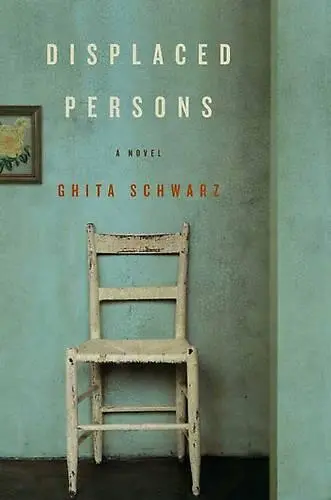
Displaced Persons: краткое содержание, описание и аннотация
Предлагаем к чтению аннотацию, описание, краткое содержание или предисловие (зависит от того, что написал сам автор книги «Displaced Persons»). Если вы не нашли необходимую информацию о книге — напишите в комментариях, мы постараемся отыскать её.
In May 1945, Pavel Mandl, a Polish Jew recently liberated from a concentration camp, lands near a displaced persons camp in the British occupation zone of newly defeated Germany. Alone, possessing nothing but a map, a few tins of food, a toothbrush, and his identity papers, he must scrape together a new life in a chaotic community of refugees, civilians, and soldiers.
Gifted with a talent for black-market trading, Pavel soon procures clothing, false documents, and a modest house, where he installs himself and a pair of fellow refugees – Fela, a young widow who fled Poland for Russia at the outset of the war, and Chaim, a resourceful teenage boy whose smuggling skills have brought him to the Western zones. The trio soon form a makeshift family, searching for surviving relatives, railing against their circumscribed existence, and dreaming of visas to America.
Fifteen years later, haunted by decisions they made as "DPs," Pavel and Fela are married and living in Queens with their young son and daughter, and Chaim has recently emigrated from Israel with his wife, Sima. Pavel opens a small tailoring shop with his scheming brother-in-law while Fela struggles to establish peace in a loosely traditional household; Chaim and Sima adapt cheerfully to American life and its promise of freedom from a brutal past. Their lives are no longer dominated by the need to endure, fight, hide, or escape. Instead, they grapple with past trauma in everyday moments: taking the children to the municipal pool, shopping for liquor, arguing with landlords.
For decades, Pavel, Fela, and Chaim battle over memory and identity on the sly, within private groups of survivors. But as the Iron Curtain falls in the 1990s, American society starts to embrace the tragedy as a cultural commodity, and survivor politics go public. Clever and stubborn, tyrannical and generous, Pavel, Fela, and Chaim articulate the self-conscious strivings of an immigrant community determined to write its own history, on its own terms.
In Displaced Persons, Ghita Schwarz reveals the interior despairs and joys of immigrants shaped by war – ordinary men and women who have lived through cataclysmic times – and illuminates changing cultural understandings of trauma and remembrance.
Displaced Persons — читать онлайн бесплатно полную книгу (весь текст) целиком
Ниже представлен текст книги, разбитый по страницам. Система сохранения места последней прочитанной страницы, позволяет с удобством читать онлайн бесплатно книгу «Displaced Persons», без необходимости каждый раз заново искать на чём Вы остановились. Поставьте закладку, и сможете в любой момент перейти на страницу, на которой закончили чтение.
Интервал:
Закладка:
It was maybe two hours from the arrival of the first guests that the room filled with a ringing. Tsipora had stood up and strolled to the little nook where the telephone stood. It was the orphan girl. Was she all right? Was she sick? Was she injured? What? From the dining table Fela had seen Tsipora’s wide face, plump even then, taking in the story over the telephone. Tsipora’s lips were set together, covering her teeth, and her eyes narrowed downward in concentration. After what must have been a pause in the confession on the other end, Tsipora heaved her shoulders in a shrug and sighed. Then she closed her eyes and opened them again.
Well, my dear, she said into the mouthpiece, switching from Polish to Yiddish, her voice in a lullaby. Did you enjoy yourself?
Tsipora returned to the head of the table, settled herself at her chair, and said to the audience, You will never believe it.
Yidl was shaking his head.
You’ll never believe it. She went to a film. This afternoon. The Life of Liszt. She cried, she said, it was so terribly sad. And when it was over, she stayed for the next showing. She couldn’t get up. And when the second one was over, she stayed for the third. She walked all the way home before she remembered us.
What did she say? asked an outraged guest. What did she say?
I told you already, Tsipora said calmly. She went to the movies. It was a very tragic film.
But I don’t understand! The guest couldn’t calm down; the memory of the hunger he had felt made him angry. What did she say?
She said, said Tsipora, that the movie was beautiful. And I think it must have been. Yidl, you know, perhaps we should see it. I told her she makes good recommendations.
Fela remembered this as a lovely gesture, the gesture of a woman elegant inside as well as out. Fela’s own daughter had once done something very embarrassing, years later, after Yidl had died and Tsipora had lost all the luxuries to his debts. They had been at the small apartment to which she had been forced to move. It was a Sunday visit, just Fela and Helen, and Helen had been touching everything there was to touch: ashtrays, doilies, embroidered pillows. These were things that were still valuable in their own way, although not, of course, to be compared with the crystals and textiles of the old apartment. It was all right to touch. Helen was careful, anyway. Fela’s son-she wouldn’t have let him near anything, even a book. But it was Helen who had gone toward the books. Fela and Tsipora had gone on talking, in Polish and Yiddish, back and forth without thinking, laughing a little. Fela had been totally absorbed, who knew in what. Important at the time. But Tsipora had seen, out of the corner of her eye, what Helen was doing at the bookshelves. She was touching a miniature set of Shakespeare’s plays, tiny, like for a doll, but readable still. Helen had dared, even, to remove one of them from its little white case to squint through the pages. During a pause in the women’s conversation, Tsipora had turned around and said to Helen, “Helinka, what are you reading?”
“Nothing,” Helen had said. She was at the beginning of high school, shy and explosive. She placed the little book back in the case.
“Nothing?” said Tsipora.
“We’re reading Romeo and Juliet for school.”
Fela had stood. It’s time to go, perhaps, Tsipora?
Tsipora had hoisted herself up from her armchair and gone to the shelf, patted Helen on the head. Helen bent away from under her hand and went to the closet to get the coats. Tsipora fingered the gilt lettering on the little Shakespeare set herself, gently but unsentimentally. I don’t even know who gave these to me, she said, in Yiddish, to Fela.
No, Tsipora, Fela had answered. She was just playing.
But Helen was back already, and Tsipora had the white case in her palm. “Helen,” she said. “Why don’t you take them? I really don’t have room.”
“No, Helen,” said Fela, harshly. Helen had dropped her arms to her side and stood still, awaiting the decision.
But Tsipora was not used to being refused. People did what she said, here in America. That was what she was like! You complimented her on a brooch she was wearing, she moved to take it off her dress to give it to you! And to refuse was to imply her weakness; that could not be done, particularly in her widowhood. It made one afraid to speak, to say anything, for fear of provoking that tyrannical generosity. Still. A lady to the last. Tsipora had pushed the set into Helen’s coat pocket, and Helen had displayed it in front of her English paperback mysteries until she went to college. Now Fela had them herself.
TSIPORA’S LAST YEARS HAD been very difficult. The death of Yidl and the loss of position had meant an exiling from the main activities of her group, the gathering and the speaking. Slowly Gershom, others with money, rabbis and writers, had taken over her legacy. But now! Who had not remembered Tsipora in her impoverished years following Yidl’s death, now could not be quiet about her great exploits. Who had not defended her, even recently, in the dispute with Gershom-and it was certain that he would not appear, people were gossiping about it already-now called her a heroine, a word Fela personally hated. A heroine was not a person, but a character from stories. A heroine to do what? Help build a war memorial in Manhattan? That was a job for an architect and for construction workers, not for heroines. Not for heroes either, no matter what Gershom thought of himself. This was the big project that Yidl had not lived to see?
Times had changed quite a bit. No one had cared then, no one had cared even twenty years after, but now, all of a sudden, what had happened in Europe was very fashionable to talk about. There were movies, there were books. Everyone wanted to be associated with it. Even Tsipora’s children, weeping through their eulogies, could not stop talking about the history, the history. This rabbi, that rabbi, everyone built his own importance out of a pile of dead bodies. Who talked about Tsipora? Not a one. One of the younger rabbis, tanned and plump, spoke of reading stories in the Jewish weeklies of Tsipora’s husband, organizing the refugees into a government within the displaced persons camp. Yes, it had been a very big accomplishment. Yidl, for all his flaws-leaving his family in such terrible straits at his death!-knew how to draw people around him to believe.
But what was this rabbi saying, his voice rising in excitement, then falling on its own weight? He had been a little boy in that period. “But even as a child in Brooklyn, I was interested in such things.” Well, so what? He was a rabbi! They were supposed to be interested in such things! The rustle of Fela’s scarf made Pavel look at her. She had been shaking her head.
The rabbi who read newspapers as a boy was replaced by a little man who spoke like an American. But it seemed that he was born in Poland, so he said; he had come to the Bronx in the 1930s, with his parents, no less. Still, he pointed out, he had left his whole family, his cousins, his aunts, his uncles, his grandparents, his great-aunts, his great-uncles, not to mention neighbors and friends who probably were related to him too, from way back when people lost track, everyone, everyone, in Poland. Everyone dead; it had been a small town just across the German border, one of the ones, like Fela’s, where almost everyone had been killed. And, in absentia, this little man was saying, he was a victim too. Fela felt her scarf rustling again. So what, so what? They would have the opportunity to hear about all this at his own funeral. Why should they waste time over it at Tsipora’s?
It was making her hot, her anger. And because it was September, there was no air-conditioning in the chapel. It was practically a heat wave outside, and all these elderly people here. Vladka Budnik, perhaps eighty years old, how could she take it, if even Fela, some five years younger, was suffering? A fan, at least, the staff could have provided. No one thought about these things. And who was she to complain? But she needed a rest, a breath, a sip of water, something. Her hands began to shake. She stood.
Читать дальшеИнтервал:
Закладка:
Похожие книги на «Displaced Persons»
Представляем Вашему вниманию похожие книги на «Displaced Persons» списком для выбора. Мы отобрали схожую по названию и смыслу литературу в надежде предоставить читателям больше вариантов отыскать новые, интересные, ещё непрочитанные произведения.







Обсуждение, отзывы о книге «Displaced Persons» и просто собственные мнения читателей. Оставьте ваши комментарии, напишите, что Вы думаете о произведении, его смысле или главных героях. Укажите что конкретно понравилось, а что нет, и почему Вы так считаете.