Ghita Schwarz - Displaced Persons
Здесь есть возможность читать онлайн «Ghita Schwarz - Displaced Persons» весь текст электронной книги совершенно бесплатно (целиком полную версию без сокращений). В некоторых случаях можно слушать аудио, скачать через торрент в формате fb2 и присутствует краткое содержание. Жанр: Современная проза, на английском языке. Описание произведения, (предисловие) а так же отзывы посетителей доступны на портале библиотеки ЛибКат.
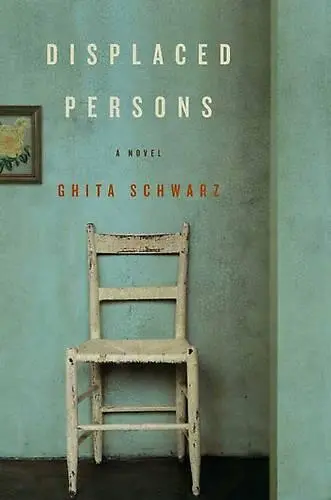
- Название:Displaced Persons
- Автор:
- Жанр:
- Год:неизвестен
- ISBN:нет данных
- Рейтинг книги:5 / 5. Голосов: 1
-
Избранное:Добавить в избранное
- Отзывы:
-
Ваша оценка:
Displaced Persons: краткое содержание, описание и аннотация
Предлагаем к чтению аннотацию, описание, краткое содержание или предисловие (зависит от того, что написал сам автор книги «Displaced Persons»). Если вы не нашли необходимую информацию о книге — напишите в комментариях, мы постараемся отыскать её.
In May 1945, Pavel Mandl, a Polish Jew recently liberated from a concentration camp, lands near a displaced persons camp in the British occupation zone of newly defeated Germany. Alone, possessing nothing but a map, a few tins of food, a toothbrush, and his identity papers, he must scrape together a new life in a chaotic community of refugees, civilians, and soldiers.
Gifted with a talent for black-market trading, Pavel soon procures clothing, false documents, and a modest house, where he installs himself and a pair of fellow refugees – Fela, a young widow who fled Poland for Russia at the outset of the war, and Chaim, a resourceful teenage boy whose smuggling skills have brought him to the Western zones. The trio soon form a makeshift family, searching for surviving relatives, railing against their circumscribed existence, and dreaming of visas to America.
Fifteen years later, haunted by decisions they made as "DPs," Pavel and Fela are married and living in Queens with their young son and daughter, and Chaim has recently emigrated from Israel with his wife, Sima. Pavel opens a small tailoring shop with his scheming brother-in-law while Fela struggles to establish peace in a loosely traditional household; Chaim and Sima adapt cheerfully to American life and its promise of freedom from a brutal past. Their lives are no longer dominated by the need to endure, fight, hide, or escape. Instead, they grapple with past trauma in everyday moments: taking the children to the municipal pool, shopping for liquor, arguing with landlords.
For decades, Pavel, Fela, and Chaim battle over memory and identity on the sly, within private groups of survivors. But as the Iron Curtain falls in the 1990s, American society starts to embrace the tragedy as a cultural commodity, and survivor politics go public. Clever and stubborn, tyrannical and generous, Pavel, Fela, and Chaim articulate the self-conscious strivings of an immigrant community determined to write its own history, on its own terms.
In Displaced Persons, Ghita Schwarz reveals the interior despairs and joys of immigrants shaped by war – ordinary men and women who have lived through cataclysmic times – and illuminates changing cultural understandings of trauma and remembrance.
Displaced Persons — читать онлайн бесплатно полную книгу (весь текст) целиком
Ниже представлен текст книги, разбитый по страницам. Система сохранения места последней прочитанной страницы, позволяет с удобством читать онлайн бесплатно книгу «Displaced Persons», без необходимости каждый раз заново искать на чём Вы остановились. Поставьте закладку, и сможете в любой момент перейти на страницу, на которой закончили чтение.
Интервал:
Закладка:
Tsipora had deteriorated. Yidl had passed away when his natural force was still unabated. But Tsipora, a strong woman for at least two decades after his sudden departure, had not made it whole to her death. It had been a relief for her friends, it tempered the sadness, that the suffering of her last days was over. Even at the last she had struggled to attend the card game, sitting in the backseat of the car of the Budniks or the Krakowskis, traveling through Queens and inner Long Island and even, twice, to the Upper West Side of Manhattan, where Chaim and Sima had unfolded their pretty mahogany card tables and fed them all with smoked fish from the local shops. The women played separately from the men, and Sima, toward the end, was the only one who would take Tsipora as a partner. Much younger than the rest, Sima, and so less angry about the money. When Vladka Budnik lost! It was a scandal, the way Vladka screamed. Her husband was afraid of her, afraid of losing among the men, which he did often. But Tsipora, that was the tragic thing. Couldn’t remember what happened from one hand to the next, and started in on a terrible speech in the middle of everything. This was one of Fela’s oldest friends in all the world, a friend to whom she and the others owed plenty. But in the last few years, women moved to the side of the room, bent toward the dried fruit when they weren’t hungry, began talking loudly of something important, anything, to avoid being Tsipora’s partner. And really, did Fela have the right to judge? She herself liked to win.
Fishl let Fela and Pavel off in front of the memorial chapel and went to park the car in the garage himself, waving Pavel off. They would save Fishl a place. A crowd was gathering outside already, though they were maybe twenty minutes ahead of schedule. Sima and Chaim stood on the line to sign the book of the mourners. Pavel became nervous when he saw a line, but someone would let him cut in front. Fela watched him pull himself over to Sima and Chaim, eager to chat.
Pavele, Pavele. Fela! Where are you? Come here. Sima gave Pavel a hug and a kiss, then rubbed Fela’s shoulder. Mazel tov, mazel tov. Fela told us last week! When is Helen due?
Fela blocked the sound out. She turned this way and that, looking for the family. There was a separate room the funeral home had, a room where one spoke to the family in private. A guard watched the room, so mere acquaintances, strangers, couldn’t push their way through. Should she try to go in? She decided against it. From behind the guard she thought she could see Tsipora’s son and daughter, even the grandchildren, tall and grim, the girls in short black suits.
The people on the line to sign the book filed into the chapel. Someone had told them to. Fela and Pavel took seats in the third row. The first row, of course they couldn’t; but any farther back, it almost would have disrespected the friendship. Sima and Chaim sat just behind them. Very appropriate. Fela looked around. She didn’t see Gershom. She shouldn’t be surprised, but still. A young woman, perhaps forty, in a bright yellow dress-like a traffic light!-trotted past. Fela squinted. Her glasses were not for public use, even at a funeral, where one needed to look only dignified, not beautiful. Yes, the Kalmans’ daughter. A professor of some kind, still unmarried. Even she was here. Fela nudged at her husband with an elbow, then shook her head in the direction of the yellow dress. Pavel nodded. Fela faced toward the front again. Tsipora had a big following. It was nice that people’s children came. Still, to dress so flashy. Little kings and little queens, they had all raised their children to be. To do what they wanted. Little kings and little queens. The Kalmans were not the worst in spoiling, either. Even her own children, and no doubt their children after them, if Larry ever remarried-but Fela stopped the thought in its tracks. Wasn’t this what everyone wanted, children so carefree?
It was one of Tsipora’s qualities, a quality that Fela envied, that she truly did not begrudge anyone a bit of cheer and joy. They had been wealthy, splashy, for some years after the war. An enormous apartment on the Upper East Side of Manhattan, with artworks and sculpture, expensive furniture. Parties not to be believed. The food enough for a banquet, and two dozen or more people, some refugees, some Americans, everyone mixed together, important and not important, rich people and people with nothing. Beautiful, and very giving, both Tsipora and Yidl had been. Against everything, they believed in their own happiness. That was what made the parties strange, the terrible effort they and everyone, all the guests, even the ones who knew better, exerted to make it joyful. It was strange, two people, each of whom had lost a child during the war, before they knew each other, making a new world, a golden calf, even, out of money made-well, who knew where.
Fela and Pavel had been at a party maybe two years after their arrival in the United States; Tsipora and Yidl had already been here some seven years. A Passover seder, but one that bore no resemblance to the noisy but orderly routines that Fela had been used to in her childhood home of nine brothers and sisters and many more cousins, nephews, nieces. The flowers in the apartment! Huge arrangements, that was what Fela had noticed first. Arrangements like sculptures themselves. Tsipora and Yidl’s possessions had not yet attained the heights that they would in the decade to come, before Yidl died and everything, all the money owed here and borrowed there, had come crashing into Tsipora’s well-kept home. Not the heights, but nonetheless impressive.
In that time they all were still very careful about the rituals; they couldn’t begin eating until the opening blessings and ceremonies were done. Time was passing, because a guest was late. Tsipora had invited an orphan to the seder. A woman who had grown up in the DP camp, gone to the schools Tsipora and Yidl had helped build, and moved to Israel on a children’s convoy Tsipora and Yidl had helped organize. Then she had come here, on a scholarship, to study opera. Opera! She knew two names in all of New York, and those names were Tsipora and Yehuda Sheinbaum. Tsipora had taken her under her wing.
But the girl had not arrived. How long would they have to wait? The guests were hungry. Fela had managed; she knew how to keep her hunger to herself; she prided herself on her ability to stand it. Pavel, too, he was very controlled. It made them a good pair. But some of the others! One wondered how they could have made it through all the deprivation, the way they peered anxiously at the parsley and shank bone on the seder plate, the way they sniffed in the air for the boiled chicken.
Tsipora had begun to worry. Where could this girl be? She told the story of their meeting not once but twice, how the girl had made a call from the public telephone of her music school, then met Tsipora for a coffee near Carnegie Hall. The girl had never been to Tsipora and Yidl’s home; she was in for a jolt. But a half hour passed, an hour, and more, and still she wasn’t here. Yidl opened a bottle of wine. They could start on that, just with the first blessings, he told his wife. Don’t worry, he had said. She’s fine. There’s an explanation. But he had looked concerned too. She lived in a dangerous neighborhood-perhaps-
It couldn’t be stopped. Tsipora had given in and started serving soup and fish. Perhaps with a little in their stomachs, the guests could wait on the main course; they’d do the Passover readings in between. Pavel clucked but kept silent. He liked things in their rightful order. And the fish was difficult, for all the guests, really, because to eat it in a home, one longed for one’s mother’s recipe. This was good, of course it was. But one liked what one had in one’s home, if one still could remember it.
Читать дальшеИнтервал:
Закладка:
Похожие книги на «Displaced Persons»
Представляем Вашему вниманию похожие книги на «Displaced Persons» списком для выбора. Мы отобрали схожую по названию и смыслу литературу в надежде предоставить читателям больше вариантов отыскать новые, интересные, ещё непрочитанные произведения.








Обсуждение, отзывы о книге «Displaced Persons» и просто собственные мнения читателей. Оставьте ваши комментарии, напишите, что Вы думаете о произведении, его смысле или главных героях. Укажите что конкретно понравилось, а что нет, и почему Вы так считаете.