Colleen McCullough - 4. Caesar's Women
Здесь есть возможность читать онлайн «Colleen McCullough - 4. Caesar's Women» весь текст электронной книги совершенно бесплатно (целиком полную версию без сокращений). В некоторых случаях можно слушать аудио, скачать через торрент в формате fb2 и присутствует краткое содержание. Жанр: Современная проза. Описание произведения, (предисловие) а так же отзывы посетителей доступны на портале библиотеки ЛибКат.
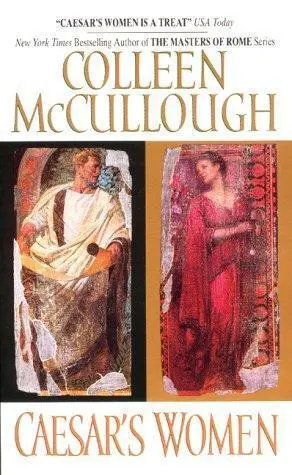
- Название:4. Caesar's Women
- Автор:
- Жанр:
- Год:неизвестен
- ISBN:нет данных
- Рейтинг книги:3 / 5. Голосов: 1
-
Избранное:Добавить в избранное
- Отзывы:
-
Ваша оценка:
4. Caesar's Women: краткое содержание, описание и аннотация
Предлагаем к чтению аннотацию, описание, краткое содержание или предисловие (зависит от того, что написал сам автор книги «4. Caesar's Women»). Если вы не нашли необходимую информацию о книге — напишите в комментариях, мы постараемся отыскать её.
4. Caesar's Women — читать онлайн бесплатно полную книгу (весь текст) целиком
Ниже представлен текст книги, разбитый по страницам. Система сохранения места последней прочитанной страницы, позволяет с удобством читать онлайн бесплатно книгу «4. Caesar's Women», без необходимости каждый раз заново искать на чём Вы остановились. Поставьте закладку, и сможете в любой момент перейти на страницу, на которой закончили чтение.
Интервал:
Закладка:
That the next development should emerge from the presence in Rome of a deputation of Allobroges, Gallic tribesmen from far up the Rhodanus in Further Gaul, no one could have predicted. Led by one of their tribal elders known in Latin as Brogus, they had arrived to protest to the Senate against their treatment by a series of governors like Gaius Calpurnius Piso, and by certain moneylenders masquerading as bankers. Unaware of the lex Gabinia which now confined the hearing of such deputations to the month of February, they had not succeeded in getting a dispensation to speed up their petition. So it was either back to Further Gaul, or remain in Rome for two more months spending a fortune on inn charges and bribes to needy senators. They had therefore decided to go home, return at the beginning of February. Nor was the mood a happy one among them, from the meanest Gallic slave all the way up to Brogus. As he said to his best friend among the Romans, the freedman banker Publius Umbrenus, "It seems a lost cause, Umbrenus, but we will return if I can persuade the tribes to be patient. There are those among us who talk of war." "Well, Brogus, there is a long Allobrogan tradition of war on Rome," said Umbrenus, a brilliant idea beginning to blossom in his head. "Look at how you made Pompeius Magnus hop when he went to Spain to fight Sertorius." "War with Rome is futile, I believe," said Brogus gloomily. "The legions are like the millstone, they grind on relentlessly. Kill them in a battle and tell yourself you've defeated them, and there they are the next season to do it all over again." "What about," said Umbrenus softly, "if you had Rome's backing in a war?" Brogus gasped. "I don't understand!" "Rome isn't a cohesive whole, Brogus, it's split into many factions. Right at this moment as you know, there is a powerful faction led by some very clever men which has chosen to dispute the rule of the Senate and People of Rome as they exist." "Catilina?" "Catilina. What if I could secure a guarantee from Catilina that after he is Dictator in Rome, the Allobroges are awarded full possession of all the Rhodanus Valley north of, say, Valentia?" Brogus looked thoughtful. "A tempting offer, Umbrenus." "A genuine offer, I do assure you." Brogus sighed, smiled. The only trouble is, Publius, that we have no way of knowing how high you stand in the estimation of a man like the great aristocrat Catilina." Under different circumstances Umbrenus might have taken exception to this assessment of his clout, but not now, not while that brilliant idea continued to grow. So he said, "Yes, I see what you mean, Brogus. Of course I see what you mean! Would it allay your fears if I were to arrange that you meet a praetor who is a patrician Cornelius, whose face you know well?'' "That would allay my fears," said Brogus. "Sempronia Tuditani's house would be ideal it's close and her husband is away. But I don't have time to guide you there, so it had better be behind the temple of Salus on the Alta Semita two hours from now," said Umbrenus, and ran from the room. How he managed to get the thing together in those two hours Publius Umbrenus couldn't recollect later, but get it together he did. It necessitated seeing the praetor Publius Cornelius Lentulus Sura, the senators Lucius Cassius and Gaius Cethegus, and the knights Publius Gabinius Capito and Marcus Caeparius. As the second hour ended, Umbrenus arrived in the alley behind the temple of Salus a desolate spot with Lentulus Sura and Gabinius Capito. Lentulus Sura stayed only long enough to give Brogus a lordly greeting; he was clearly uneasy and very anxious to get away. It was therefore left to Umbrenus and Gabinius Capito to deal with Brogus, Capito acting as spokesman for the conspirators. The five Allobroges listened attentively, but when Capito finally finished the Gauls hedged, looking timid and wary. "Well, I don't know ..." said Brogus. What would it take to convince you we mean what we say?" asked Umbrenus. "I'm not sure," Brogus said, looking confused. "Let us think on it tonight, Umbrenus. Could we meet here at dawn tomorrow?" And so it was agreed. Back went the Allobroges to the inn on the Forum's edge, a curious coincidence, for just uphill from it on the Sacra Via was the triumphal arch erected by Quintus Fabius Maximus Allobrogicus, who had (temporarily) conquered this selfsame tribe of Gauls many decades ago, and taken their name to add to his own. Brogus and his fellow Allobroges therefore gazed at a structure which reminded them that they were in the clientele of Allobrogicus's descendants. Their present patron was Quintus Fabius Sanga, the great grandson. "It sounds attractive indeed," said Brogus to his companions as he stared at the arch. "However, it could also mean disaster. If any of the hotbloods learn about this proposal, they won't stop to think, they'll go to war at once. Whereas my bones say no." As the deputation contained no hotbloods, the Allobroges decided to see their patron, Quintus Fabius Sanga. A wise decision, as things turned out. Fabius Sanga went straight to Cicero. "We have them at last, Quintus Fabius!" cried Cicero. "In what way?" asked Sanga, who was not bright enough to seek higher office, and in consequence needed to have everything explained. "Go back to the Allobroges and tell them that they must ask for letters from Lentulus Sura I was right, I was right! and from three other high ranking conspirators as well. They must insist they be taken to see Catilina himself in Etruria a logical request, considering what they're being asked to do. It also means a trip out of Rome, and the presence of a guide from among the conspirators." "What's the importance of the guide?" asked Sanga, blinking. "Only that having one of the conspirators with them will make it more prudent for the party to leave Rome by stealth and in the middle of the night," said Cicero patiently. "Is it necessary that they leave by night?" "Very necessary, Quintus Fabius, believe me! I'll post men at either end of the Mulvian Bridge, easier to do at night. When the Allobroges and their conspirator guide are on the bridge, my men will pounce. We'll have hard evidence at last the letters." "You don't intend to harm the Allobroges?" asked Sanga, quite alarmed at anyone's pouncing on anyone. "Of course not! They'll be party to the plan, and make sure you instruct them not to offer any resistance. You might also tell Brogus to insist he keep the letters himself, and surround himself with his own tribesmen in case any conspirator who goes along tries to destroy my hard evidence." Cicero looked sternly at Fabius Sanga. "Is it all clear, Quintus Fabius? Can you remember all that without getting muddled?" "Lead me through it again," said Sanga. Sighing, Cicero did so. And by the end of the following day Cicero heard from Sanga that Brogus and his Allobroges had taken custody of three letters, one from Lentulus Sura, one from Gaius Cethegus, and one from Lucius Statilius. When asked to write, Lucius Cassius had refused and appeared uneasy. Did Cicero think three letters would be enough? Yes, yes! Cicero sped back by his fleetest servant. And so in the second quarter of the night a little cavalcade started out of Rome on the Via Lata, which turned into the great north road, the Via Flaminia, after it crossed the Campus Martius on its way to the Mulvian Bridge. With Brogus and the Allobroges traveled their guide, Titus Volturcius of Croton, as well as one Lucius Tarquinius and the knight Marcus Caeparius. All went well until the party reached the Mulvian Bridge about four hours before dawn, and hastened onto its stone paving. As the last horse trotted onto the bridge proper, the praetor Flaccus at the south end flashed his lamp to the praetor Pomptinus at the north end; both praetors, each backed by a century of good volunteer city militia, moved swiftly to block the bridge. Marcus Caeparius drew his sword and tried to fight, Volturcius gave in, and Tarquinius, a strong swimmer, leaped off the bridge into the darkness of the Tiber. The Allobroges stood obediently in a huddle, the reins of their horses held as firmly as the letters Brogus carried in a pouch at his waist.
Читать дальшеИнтервал:
Закладка:
Похожие книги на «4. Caesar's Women»
Представляем Вашему вниманию похожие книги на «4. Caesar's Women» списком для выбора. Мы отобрали схожую по названию и смыслу литературу в надежде предоставить читателям больше вариантов отыскать новые, интересные, ещё непрочитанные произведения.







Обсуждение, отзывы о книге «4. Caesar's Women» и просто собственные мнения читателей. Оставьте ваши комментарии, напишите, что Вы думаете о произведении, его смысле или главных героях. Укажите что конкретно понравилось, а что нет, и почему Вы так считаете.