Colleen McCullough - 4. Caesar's Women
Здесь есть возможность читать онлайн «Colleen McCullough - 4. Caesar's Women» весь текст электронной книги совершенно бесплатно (целиком полную версию без сокращений). В некоторых случаях можно слушать аудио, скачать через торрент в формате fb2 и присутствует краткое содержание. Жанр: Современная проза. Описание произведения, (предисловие) а так же отзывы посетителей доступны на портале библиотеки ЛибКат.
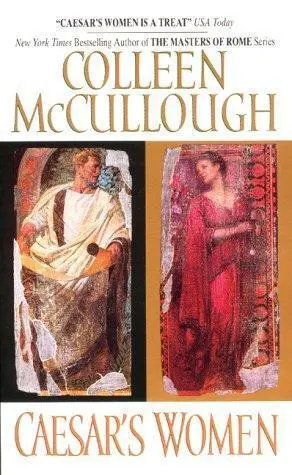
- Название:4. Caesar's Women
- Автор:
- Жанр:
- Год:неизвестен
- ISBN:нет данных
- Рейтинг книги:3 / 5. Голосов: 1
-
Избранное:Добавить в избранное
- Отзывы:
-
Ваша оценка:
4. Caesar's Women: краткое содержание, описание и аннотация
Предлагаем к чтению аннотацию, описание, краткое содержание или предисловие (зависит от того, что написал сам автор книги «4. Caesar's Women»). Если вы не нашли необходимую информацию о книге — напишите в комментариях, мы постараемся отыскать её.
4. Caesar's Women — читать онлайн бесплатно полную книгу (весь текст) целиком
Ниже представлен текст книги, разбитый по страницам. Система сохранения места последней прочитанной страницы, позволяет с удобством читать онлайн бесплатно книгу «4. Caesar's Women», без необходимости каждый раз заново искать на чём Вы остановились. Поставьте закладку, и сможете в любой момент перейти на страницу, на которой закончили чтение.
Интервал:
Закладка:
"Rot them, I say!" said Crassus to Caesar, quite violently for such a placid man. At least half of those fellatores sat there hoping Tarquinius would make his charges stick! Lucky for me that it was my doorstep Quintus Curius chose for his batch of letters! Otherwise, today I would have been in serious trouble." "My defense was more tenuous," said Caesar, "but happily so were the accusations. Stupid! Catulus and Piso only got the idea to accuse me when Tarquinius accused you. Had they thought of it last night, they could have forged some letters. Or else they should have said nothing until they managed to forge letters. One of the few things which always cheer me up, Marcus, is how thick one's enemies are! I find it a great consolation that I will never meet an adversary as clever as I am myself." Though he was used to Caesar's making statements like that, Crassus nonetheless found himself staring at the younger man with fascination. Did he never doubt himself? If he did, Crassus had never seen a sign of it. Just as well he was a cool man, Caesar. Otherwise Rome might find herself wishing for a thousand Catilinas. "I'm not attending tomorrow," said Crassus then. "I wish you would! It promises to be interesting." "I don't care if it's more riveting than two perfectly matched gladiators! Cicero can have his glory. Pater patriae! Tchah!" he snorted. "Oh, Cato was being sarcastic, Marcus!" "I know that, Caesar! What annoys me is that Cicero took him literally." Poor man. It must be awful always to have to stand on the outside looking in." "Are you feeling all right, Caesar? Pity? You?" "Oh, I have a streak of pity occasionally. That Cicero rouses it is no mystery. He's such a vulnerable target."
Despite his having to organize the militia and think of how to extract himself from the dilemma of time, Cicero had also given thought to turning the temple of Concord into a more acceptable venue for the Senate to occupy. Thus when the senators turned up at dawn on the following day, the fifth one of December, they found that carpenters had toiled to some effect. There were three tiers on either side, taller but narrower, and a dais at the end for the curule magistrates, with a bench in front of it for the tribunes of the plebs. "You won't be able to sit on your stools, the tiers are too narrow, but you can use the tiers themselves as seats," said the senior consul. He pointed to the top of the side and end walls. "I've also installed plenty of ventilators." Perhaps three hundred men had come, a few less than on the earlier days; after a short interval of settling like hens in a roost, the Senate indicated it was ready for the day's business. "Conscript Fathers," said Cicero solemnly, "I have convened this body yet again to discuss something we dare not put off, nor turn away from. Namely, what to do with our five prisoners. "In many ways the situation resembles the one which existed thirty seven years ago, after Saturninus and his rebel confederates surrendered their occupation of the Capitol. No one knew what to do with them! No one was willing to take custody of such desperate fellows when the city of Rome was known to harbor many sympathizers the house of a man agreeing to take custody might burn to the ground, he himself die, his prisoner be freed. So in the end the traitor Saturninus and his fourteen senior henchmen were locked up in our beloved Senate House, the Curia Hostilia. No windows, solid bronze doors. Impregnable. Then a group of slaves led by one Scaeva mounted the roof, tore off the tiles and used them to kill the men inside. A deplorable deed but a great relief too! Once Saturninus was dead, Rome calmed down and the trouble went away. I admit the presence of Catilina in Etruria is an additional complication, but first and foremost we need to calm the city of Rome!" Cicero paused, knowing perfectly well that some of the men who listened were among the band Sulla had urged up onto the Curia Hostilia roof, and that no slaves had been among them. The owner of the slave Scaeva had been there, Quintus Croton? and after the tumult had died down enough to be deemed well and truly over, Croton had freed Scaeva with lavish public praise for his deed and thereby shifted the blame. A story Sulla never denied, most especially after he became Dictator. Slaves were so handy! "Conscript Fathers," said Cicero sternly, "we are sitting on a volcano! Five men lie under arrest in various houses, five men who in front of you and inside this House broke down and freely confessed to all their crimes. Confessed to high treason! Yes, they convicted themselves out of their own mouths after seeing proof so concrete its mere existence damned them! And as they confessed they also damned other men, men now under warrants for capture whenever and wherever they might be found. Consider then what will happen when they are found. We will have anything up to twenty men in custody in ordinary Roman houses until they have undergone the full and atrociously slow trial process. "Yesterday we saw one of the evils arising from this awful situation. A group of men banded together and managed to recruit more men so that our self confessed traitors might be freed from custody, the consuls murdered, and them installed as consuls instead! In other words, the revolution is going to go on while ever self confessed traitors remain inside Rome and the army of Catilina remains inside Italia. By quick action, I averted yesterday's attempt. But I will remain consul for less than another month. Yes, Conscript Fathers, the annual upheaval is almost upon us, and we are not in fit condition to deal with a change in magistrates. "My chief ambition is to depart from office, with the city's end of this catastrophe properly tidied up, thereby spelling to Catilina the very clear message that he has no allies inside Rome with power enough to help him. And there is a way...." The senior consul stopped for that to sink in, wishing that his old enemy and friend Hortensius was in the House. Hortensius would see the beauty of the argument, whereas most of the others would see only the expedience. As for Caesar, well... Cicero wasn't even sure he cared to receive Caesar's approbation, as lawyer or man. Crassus hadn't bothered to come, and he was the last of the men Cicero cared to impress with his legal reasoning. "Until Catilina and Manlius are defeated or surrender, Rome continues to exist under the martial law of a Senatus Consultum Ultimum. Just as Rome still lay under a Senatus Consultum Ultimum when Saturninus and his minions perished in the Curia Hostilia. It meant that no one could be held accountable for taking matters to their inevitable end and executing those rebels. The Senatus Consultum Ultimum extended indemnity to all who participated in the throwing of the tiles, slaves though they were, for a slave's master is accountable at law for his slave's actions, therefore all the men who owned those slaves could have faced prosecution for murder. Except for the Senatus Consultum Ultimum. The blanket decree which in a state of emergency the Senate of Rome is authorized to issue in order to preserve the well being of the State, no matter what it takes to preserve that well being. "Consider our self confessed traitors here in Rome, plus the other traitors we are looking for because they fled before they could be apprehended. All guilty out of the mouths of the five men we have in custody, not to mention the testimony you have heard from Quintus Curius, Titus Volturcius, Lucius Tarquinius and Brogus of the Allobroges. Under the conditions of an existing Senatus Consultum Ultimum, these self confessed traitors do not have to be tried. Because at present we are in the midst of a dire emergency, this august body of men, the Senate of Rome, has been empowered to do whatever is necessary to preserve the well being of Rome. To keep these men in custody pending a trial process and then have to air them in the public Forum during that trial is tantamount to stirring up a fresh rebellion! Especially if Catilina and Manlius, formally declared public enemies, are still at liberty in Italia with an army. That army could even descend on our city in an attempt to free the traitors during their trials!" Did he have them? Yes, decided Cicero. Until he looked at Caesar, who was sitting very straight on the bottom step, mouth thin, two spots of scarlet burning in his pale cheeks. He would meet opposition from Caesar, a very great speaker. Urban praetor elect, which meant he would speak early unless the order changed. He had to ram his point home before Caesar spoke! But how? Cicero's eyes wandered along the back tier behind Caesar until they lighted upon little old Gaius Rabirius, in the Senate for forty years without ever once standing for a magistracy, which meant he was still a pedarius. The quintessential backbencher. Not that Rabirius was the sum of all manly virtues! Thanks to many shady deals and immoralities, Rabirius was little loved by most of Rome. He was also one of that band of noblemen who had sneaked onto the Curia Hostilia roof, torn off the tiles, shelled Saturninus.... "If this body were to decide the fate of the five men in our custody and of those men who fled, its members would be as free from legal blame as as why, trying to arraign dear Gaius Rabirius on charges that he murdered Saturninus! Manifestly ridiculous, Conscript Fathers. The Senatus Consultum Ultimum covers all, and allows all too. I am going to advocate that in full debate this House should reach a decision today on the fate of our five self confessed prisoners, guilty out of their own mouths. To hold them for trial would, in my opinion, be to imperil Rome. Let us debate here today and decide what to do with them under the existing blanket protection of the Senatus Consultum Ultimum! Under that decree we can order them executed. Or we can order them into a permanent exile, confiscate their property, forbid them fire and water within Italia for the rest of their lives." He drew a breath, wondering about Cato, also sure to oppose it. Yes, Cato sat rigid and glaring. But as a tribune of the plebs elect, he was very far down the speaking hierarchy indeed. "Conscript Fathers, it is not my business to make a decision on this matter. I have done my duty in outlining the legalities of the situation to you, and in informing you what you can do under a Senatus Consultum Ultimum. Personally I am in favor of a decision here today, not a trial process. But I refuse to indicate exactly what this body should do with the guilty men. That is better from some other man than I." A pause, a challenging look at Caesar, another at Cato. I direct that the order of speaking be not in elected magistracy, but in age and wisdom and experience. Therefore I will ask the senior consul elect to speak first, then the junior consul elect, after which I will ask an opinion from every consular present here today. Fourteen all told, by my count. After which the praetors elect will speak, beginning with the urban praetor elect, Gaius Julius Caesar. Following the praetors elect, the praetors will speak, then aediles elect and aediles, plebeian ahead of curule. After which it will be the turn of the tribunes of the plebs elect, and finally the current tribunes of the plebs. I pend a decision on ex praetors, as I have already enumerated sixty speakers, though three current praetors are in the field against Catilina and Manlius. Therefore I make it fifty seven speakers without calling on ex praetors." "Fifty eight, Marcus Tullius." How could he have overlooked Metellus Celer, urban praetor? "Ought you not to be in Picenum with an army?" "If you recollect, Marcus Tullius, you yourself deputed me to Picenum on the condition that I returned to Rome every eleventh day, and for twelve days around the tribunician changeover." "So I did. Fifty eight speakers, then. That means no one has the time at his disposal to make a reputation as a dazzling orator, is that understood? This debate must finish today! I want to see a division before the sun sets. Therefore I give you fair warning, Conscript Fathers, that I will cut you short if you start to orate." Cicero looked at Silanus, senior consul elect. "Decimus Junius, begin the debate." Mindful of your caution about time, Marcus Tullius, I will be brief," said Silanus, sounding a little helpless; the man who spoke first was supposed to set the tenor and carry all succeeding speakers his way. Cicero could do it, always. But Silanus wasn't sure he could, especially because he had no idea which way the House would go on this issue. Cicero had made it as plain as he dared that he was advocating the death penalty but what did everybody else want? So in the end Silanus compromised by advocating "the extreme penalty," which everybody assumed was death. He managed not to mention a trial process in any way whatsoever, which everybody took to mean that there should be no trial process. Then came Murena's turn; he too favored "the extreme penalty." Cicero of course didn't speak, and Gaius Antonius Hybrida was in the field. Thus the next in line was the Leader of the House, Mamercus Princeps Senatus, senior among the consulars. Uncomfortably he elected "the extreme penalty." Then the consulars who had been censors Gellius Poplicola, Catulus, Vatia Isauricus, a worried Lucius Cotta "the extreme penalty." After which came consulars who had not been censors, in order of seniority Curio, the two Luculli, Piso, Glabrio, Volcatius Tullus, Torquatus, Marcius Figulus. "The extreme penalty." Very properly, Lucius Caesar abstained. So far so good. Now it was Caesar's turn, and since few knew his views as well as Cicero did, what he had to say came as a surprise to many. Including, it was plain to see, Cato, who had not looked for such a disconcerting, unwelcome ally. "The Senate and People of Rome, who together constitute the Republic of Rome, do not make any allowances for the punishment of full citizens without trial," said Caesar in that high, clear, carrying voice. "Fifteen people have just advocated the death penalty, yet not one has mentioned the trial process. It is clear that the members of this body have decided to abrogate the Republic in order to go much further back in Rome's history for a verdict on the fate of some twenty one citizens of the Republic, including a man who has been consul once and praetor twice, and who actually is still a legally elected praetor at this moment. Therefore I will not waste this House's time in praising the Republic or the trial and appeal processes every citizen of the Republic is entitled to undergo before his peers can enforce a sentence of any kind. Instead, since my ancestors the Julii were Fathers during the reign of King Tullus Hostilius, I will confine my remarks to the situation as it was during the reign of the kings." The House was sitting up straighter now. Caesar went on. "Confession or no, a sentence of death is not the Roman way. It was not the Roman way under the kings, though the kings put many men to death even as we do today by murder during public violence. King Tullus Hostilius, warlike though he was, hesitated to approve a formal sentence of death. It looked bad, he could see that so clearly that it was he who advised Horatius to appeal when the duumviri damned him for the murder of his sister, Horatia. The hundred Fathers ancestors of our Republican Senate were not inclined to be merciful, but they took the royal hint, thereby establishing a precedent that the Senate of Rome has no business doing Romans to death. When Romans are done to death by men in government who does not remember Marius and Sulla? it means that good government has perished, that the State is degenerate. Conscript Fathers, I have little time, so I will just say this: let us not go back to the time of the kings if that means execution! Execution is no fitting punishment. Execution is death, and death is merely an eternal sleep. Any man must suffer more if he is sentenced to a living exile than if he dies! Every day he must think of his reduction to non citizen, poverty, contempt, obscurity. His public statues come tumbling down; his imago cannot be worn in any family funeral procession, nor displayed anywhere. He is an outcast, disgraced and ignoble. His sons and grandsons must always hang their heads in shame, his wife and daughters weep. And all of this he knows, for he is still alive, he is still a man, with all a man's feelings and weaknesses. And all a man's strengths, now of little use to him save as torment. Living death is infinitely worse than real death. I do not fear death, so long as it be sudden. What I fear is some political situation which could result in permanent exile, the loss of my dignitas. And if I am nothing else, I am a Roman to the tiniest bone, the most minute scrap of tissue. Venus made me, and Venus made Rome." Silanus was looking confused, Cicero angry, everyone else very thoughtful, even Cato. "I appreciate what the learned senior consul has had to say about what he insists on calling the Senatus Consultum Ultimum that under its shelter all normal laws and procedures are suspended. I understand that the learned senior consul's chief concern is the present welfare of Rome, and that he considers the continued residence of these self confessed traitors within our city walls to be a peril. He wants the business concluded as quickly as is possible. Well, so do I! But not with a death sentence, if we must go back to the time of the kings. I do not worry about our learned senior consul, or any of the fourteen brilliant men sitting here who have already been consul. I do not worry about next year's consuls, or this year's praetors, or next year's praetors, or all the men sitting here who have already been praetor and may still hope to be consul." Caesar paused, looked extremely grave. What worries me is some consul of the future, ten or twenty years down the road of time. What kind of precedent will he see in what we do here today? Indeed, what kind of precedent is our learned senior consul taking when he cites Saturninus? On the day when we all really know who illegally executed Roman citizens without a trial, those self appointed executioners desecrated an inaugurated temple, for that is what the Curia Hostilia is! Rome herself was profaned. My, my, what an example! But it is not our learned senior consul worries me! It is some less scrupulous and less learned consul of the future. "Let us keep a cool head and look at this business with our eyes open and our thinking apparatus detached. There are other punishments than death. Other punishments than exile in a luxurious place like Athens or Massilia. How about Corfinium or Sulmo or some other formidably fortified Italian hill town? That's where we've put our captured kings and princes for centuries. So why not Roman enemies of the State too? Confiscate their property to pay such a town extremely well for the trouble, and simultaneously make sure they cannot escape. Make them suffer, yes! But do not kill them!" When Caesar sat down no one spoke, even Cicero. Then the senior consul elect, Silanus, got to his feet, looking sheepish. "Gaius Julius, I think you mistake what I meant by saying 'the extreme penalty,' and I think everyone else made the same mistake. I did not mean death! Death is un Roman. No, I meant much what you mean, actually. Life imprisonment in a house in an impregnable Italian hill town, paid for by property confiscation." And so it went, everyone now advocating a stringent confinement paid for by confiscation of property. When the praetors were finished, Cicero held up his hand. "There are just too many ex praetors present here to allow everyone to speak, and I did not count ex praetors in that total of fifty eight men. Those who wish to contribute nothing new to the debate, please hold up your hands in response to the two questions I will put to you now: those in favor of a death sentence?" None, as it turned out. Cicero flushed. Those in favor of strict custody in an Italian town and complete confiscation of property?'' All save one, as it turned out. "Tiberius Claudius Nero, what do you have to say?" "Only that the absence of the word 'trial' from all these speeches today disturbs me greatly. Every Roman man, self confessed traitor or not, is entitled to a trial, and these men must be tried. But I do not think they should be tried before Catilina is either defeated or surrenders. Let the chief perpetrator stand trial first of all." "Catilina," said Cicero gently, "is no longer a Roman citizen! Catilina is not entitled to trial under any law of the Republic." "He should be tried too," said Claudius Nero stubbornly, and sat down. Metellus Nepos, president of the new College of Tribunes of the Plebs to go into office in five days' time, spoke first. He was tired, he was ravenous; eight hours had gone by, which really wasn't bad considering the importance of the subject and the number of men who had already spoken. But what he dreaded was Cato, who would follow him when was Cato not long winded, prolix, awkward and utterly boring? So he rattled off his speech supporting Caesar, and sat down with a glare for Cato. It never occurred to Metellus Nepos that the only reason Cato stood in the House today a tribune of the plebs elect was due entirely to him, Metellus Nepos. When Nepos had returned from the East after a delightful campaign as one of Pompey the Great's senior legates, he traveled in some style. Naturally. He was one of the most important Caecilii Metelli, he was extremely rich and had managed to enrich himself even more since going east, and he was Pompey's brother in law into the bargain. So he had journeyed up the Via Appia at his leisure, well before the elections and well before the summer's heat. Men in a hurry rode or drove, but Nepos had had enough of hurrying; his choice of locomotion was a huge litter borne by no less than twelve men. In this fabulous equipage he lolled on a down mattress covered in Tyrian purple, and had a servant crouched in one corner to minister to him with food and drink, a chamber pot, reading materials. As he never stuck his head between the litter's curtains, he never noticed the humble pedestrians his cavalcade frequently encountered, so of course he never noticed a group of six extremely humble pedestrians headed in the opposite direction. Three of the six were slaves. The other three were Munatius Rufus, Athenodorus Cordylion, and Marcus Porcius Cato, on their way to Cato's estate in Lucania for a summer of studying and freedom from children. For a long time Cato simply stood on the side of the road watching the parade amble by, counting the number of people, counting the number of vehicles. Slaves, dancing girls, concubines, guards, loot, cook wagons, libraries on wheels and wine cellars on wheels. Ho, soldier, who travels like Sampsiceramus the potentate?" Cato cried to a guard when the parade had nearly passed. "Quintus Caecilius Metellus Nepos, brother in law of Magnus!" called the soldier. "He's in a terrific hurry," said Cato sarcastically. But the soldier took the remark seriously. "Yes, he is, pilgrim! He's running for the tribunate of the plebs in Rome!" Cato walked on a little way south, but before the sun was halfway down the western sky, he turned around. "What's the matter?" asked Munatius Rufus. "I must return to Rome and stand for the tribunate of the plebs," said Cato through clenched teeth. "There must be someone in that buffoon's College to make life difficult for him and for his all powerful master, Pompeius Magnus!" Nor had Cato done badly in the elections; he had come in second to Metellus Nepos. Which meant that when Metellus Nepos sat down, Cato got up. "Death is the only penalty!" he shouted. The room froze, every eye turned upon Cato in wonder. He was such a stickler for the mos maiorum that it had occurred to no one to doubt that his speech would follow along the line either of Caesar's or Tiberius Claudius Nero's. "Death is the only penalty, I say! What is all this rubbish about law and the Republic? When has the Republic sheltered the likes of self confessed traitors under her skirts? No law is ever made for self confessed traitors. Laws are made for lesser beings. Laws are made for men who may transgress them, but do so with no harm intended to their country, the place which bred them and made them what they are. "Look at Decimus Junius Silanus, weak and vacillating fool! When he thinks Marcus Tullius wants a death sentence, he suggests 'the extreme penalty'! Then when Caesar speaks, he changes his mind what he meant was what Caesar said! How could he ever offend his beloved Caesar? And what of this Caesar, this overbred and effeminate fop who boasts he is descended from Gods and then proceeds to defaecate all over mere men? Caesar, Conscript Fathers, is the real prime mover in this business! Catilina? Lentulus Sura? Marcus Crassus? No, no, no! Caesar! It's Caesar's plot! Wasn't it Caesar who tried to have his uncle Lucius Cotta and his colleague Lucius Torquatus assassinated on their first day in office as consuls three years ago? Yes, Caesar preferred Publius Sulla and Autronius to his own blood uncle! Caesar, Caesar, always and ever Caesar! Look at him, senators! Better than all the rest of us put together! Descended from Gods, born to rule, eager to manipulate events, happy to push other men into the furnace while he skulks in the shade! Caesar! I spit on you, Caesar! I spit!" And he actually tried to do so. Most of the senators sat with their jaws sagging, so amazing was this hate filled diatribe. Everyone knew Cato and Caesar disliked each other; most knew Caesar had cuckolded Cato. But this blistering torrent of farfetched abuse? This implication of treason? What on earth had gotten into Cato? "We have five guilty men in our custody who have confessed to their crimes and to the crimes of sixteen other men not in our custody. Where is the need for a trial? A trial is a waste of time and good State money! And, Conscript Fathers, wherever there is a trial, is also the possibility of bribery. Other juries in other cases quite as serious as this have acquitted in the face of manifest guilt! Other juries have reached out greedy hands to take vast fortunes from the likes of Marcus Crassus, Caesar's friend and financial backer! Is Catilina to rule Rome? No! Caesar is to rule, with Catilina as his master of the horse and Crassus free to do as he likes in the Treasury!" "I hope you have proof of all this," said Caesar mildly; he was well aware that calm drove Cato to distraction. "I will get proof, never fear!" Cato shouted. "Where there is wrongdoing, one can always find proof! Look at the proof which found five men traitors! They saw it, they heard it, and they all confessed. Now that is proof! And I will find proof of Caesar's implication in this conspiracy and in the one of three years ago! No trial for the guilty five, I say! No trial for any of them! Nor ought they escape from death! Caesar argues for clemency on philosophical grounds. Death, he says, is merely an eternal sleep. But do we know that for certain? No, we do not! No one has ever come back from death to tell us what happens after we die! Death is cheaper. And death is final. Let the five die today!" Caesar spoke again, still mildly. Unless the treason be perduellio, Cato, death is not a legal penalty. And if you do not intend to try these men, how can you decide whether they committed perduellio or maiestas? You seem to argue perduellio, but are you?'' "This is not the time or the place for legal quibbling, even if you had no other reason behind your drive for clemency, Caesar!" blared Cato. "They must die, and they must die today!" On he went, oblivious to the passage of time. Cato was in stride, the harangue would continue until he saw to his satisfaction that his sheer grinding monotony had worn everyone down. The House flinched; Cicero almost wept. Cato was going to rant on until the sun set, and the vote would not be taken today. It wanted an hour before sunset was due when a servant sidled into the chamber and unobtrusively handed Caesar a folded note. Cato pounced. "Ah! The traitor is revealed!" he roared. He sits receiving treasonous notes under our very eyes that is the extent of his arrogance, his contempt for this House! I say you are a traitor, Caesar! I say that note contains proof!" While Cato thundered, Caesar read. When he looked up his face bore a most peculiar expression mild anguish? Or amusement! "Read it out, Caesar, read it out!" screamed Cato. But Caesar shook his head. He folded the note, got up from his seat, crossed the floor to where Cato sat on the middle tier of the other side, and handed him the note with a smile. I think you might prefer to keep its contents to yourself," he said. Cato was not a good reader. The endless squiggles unseparated save into columns (and sometimes a word would be continued onto the line below, an additional confusion) took a long time to decipher. And while he mumbled and puzzled, the senators sat in some gratitude for this relative silence, dreading Cato's resumption (and dreading that indeed the note would be construed as treasonous). A shriek erupted from Cato's throat; everybody jumped. Then he screwed the piece of paper up and threw it at Caesar. "Keep it, you disgusting philanderer!" But Caesar didn't get the note. When it fell well short of where he sat, Philippus snatched it up and immediately opened it. A better reader than Cato, he was guffawing within moments; as soon as he finished he handed it on down the line of praetors elect in the direction of Silanus and the curule dais. Cato realized he had lost his audience, busy laughing, reading, or dying of curiosity. "It is typical of this body that something so contemptible and petty should prove more fascinating than the fate of traitors!" he cried. "Senior consul, I demand that the House instruct you under the terms of the existing Senatus Consultum Ultimum to execute the five men in our custody at once, and to pass a death sentence on four more men Lucius Cassius Longinus, Quintus Annius Chilo, Publius Umbrenus and Publius Furius to become effective the moment any or all of them are captured." Of course Cicero was as eager to read Caesar's note as any other man present, but he saw his chance, and took it. "Thank you, Marcus Porcius Cato. I will see a division on your motion that the five men in our custody be executed at once, and that the four other men so named be executed immediately after they are apprehended. All those favoring a death sentence, pass to my right. Those not in favor, pass to my left." The senior consul elect, Decimus Junius Silanus, husband of Servilia, got the note just before Cicero put his motion. It said:
Читать дальшеИнтервал:
Закладка:
Похожие книги на «4. Caesar's Women»
Представляем Вашему вниманию похожие книги на «4. Caesar's Women» списком для выбора. Мы отобрали схожую по названию и смыслу литературу в надежде предоставить читателям больше вариантов отыскать новые, интересные, ещё непрочитанные произведения.









Обсуждение, отзывы о книге «4. Caesar's Women» и просто собственные мнения читателей. Оставьте ваши комментарии, напишите, что Вы думаете о произведении, его смысле или главных героях. Укажите что конкретно понравилось, а что нет, и почему Вы так считаете.