Colleen McCullough - 4. Caesar's Women
Здесь есть возможность читать онлайн «Colleen McCullough - 4. Caesar's Women» весь текст электронной книги совершенно бесплатно (целиком полную версию без сокращений). В некоторых случаях можно слушать аудио, скачать через торрент в формате fb2 и присутствует краткое содержание. Жанр: Современная проза. Описание произведения, (предисловие) а так же отзывы посетителей доступны на портале библиотеки ЛибКат.
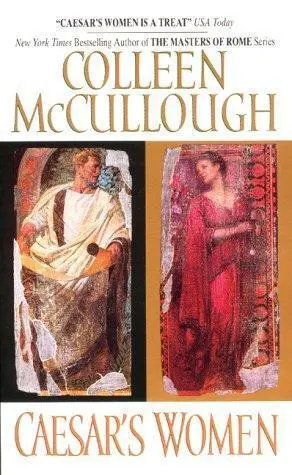
- Название:4. Caesar's Women
- Автор:
- Жанр:
- Год:неизвестен
- ISBN:нет данных
- Рейтинг книги:3 / 5. Голосов: 1
-
Избранное:Добавить в избранное
- Отзывы:
-
Ваша оценка:
4. Caesar's Women: краткое содержание, описание и аннотация
Предлагаем к чтению аннотацию, описание, краткое содержание или предисловие (зависит от того, что написал сам автор книги «4. Caesar's Women»). Если вы не нашли необходимую информацию о книге — напишите в комментариях, мы постараемся отыскать её.
4. Caesar's Women — читать онлайн бесплатно полную книгу (весь текст) целиком
Ниже представлен текст книги, разбитый по страницам. Система сохранения места последней прочитанной страницы, позволяет с удобством читать онлайн бесплатно книгу «4. Caesar's Women», без необходимости каждый раз заново искать на чём Вы остановились. Поставьте закладку, и сможете в любой момент перейти на страницу, на которой закончили чтение.
Интервал:
Закладка:
He could hear Julia Antonia before he knocked on the door of Lentulus Sura's very nice house, and squared his shoulders. Why did it have to be the Bona Dea tonight? Julia Antonia's entire circle of friends would be at Cicero's house, and Bona Dea was not the sort of deity one ignored in favor of a distressed friend. All three of Antonius Creticus's boys were ministering to their mother with a degree of patience and kindness Caesar found surprising which didn't stop her leaping to her feet and throwing herself on Caesar's chest. "Oh, cousin!" she howled. "What am I to do? Where will I go? They'll confiscate all Sura's property! I won't even have a roof over my head!" "Leave the man alone, Mama," said Mark Antony, her eldest, pulling her clutching fingers away and escorting her back to her chair. Now sit there and keep your misery to yourself, it's not going to help us out of this predicament." Perhaps because she had already worn herself into exhaustion, Julia Antonia obeyed; her youngest, Lucius, a rather fat and clumsy fellow, sat on the chair next to her, took her hands in his and began to make soothing noises. "It's his turn," said Antony briefly, and drew his cousin outside into the peristyle, where the middle son, Gaius, joined them. "It's a pity the Cornelii Lentuli comprise the majority of Cornelians in the Senate these days," said Caesar. "And none of them will be a bit happy to claim a traitor in the bosom of the family," said Mark Antony grimly. "Is he a traitor?" "Beyond any shadow of doubt, Antonius." "You're sure?" "I just said so! What's the matter? Worried that it will come out you're involved too?" asked Caesar, suddenly anxious. Antony flushed darkly, but said nothing; it was Gaius who answered, stamping his foot. "We're not involved! Why is it that everyone including you! always believes the worst of us?" "It's called earning a reputation," said Caesar patiently. "All three of you have shocking reputations gambling, wine, whores." He looked at Mark Antony ironically. "Even the occasional boyfriend." "It isn't true about me and Curio," said Antony uncomfortably. "We only pretend to be lovers to annoy Curio's father." "But it's all a part of earning a reputation, Antonius, as you and your brothers are about to find out. Every hound in the Senate is going to be sniffing around your arses, so I suggest that if you are involved, even remotely, you tell me so now." All three of Creticus's sons had long ago concluded that this particular Caesar had the most disconcerting eyes of anyone they knew piercing, cold, omniscient. It meant they didn't like him because those eyes put them on the defensive, made them feel less than they secretly believed they were. And he never bothered to condemn them for what they deemed minor failings; he came around only when things were really bad, as now. Thus his appearances were reminiscent of a harbinger of doom, tended to strip them of the ability to fight back, defend themselves. So Mark Antony answered sulkily, "We're not even remotely involved. Clodius said Catilina was a loser." And whatever Clodius says is right, eh?'' "Usually." "I agree," said Caesar unexpectedly. "He's shrewd." "What will happen?" asked Gaius Antonius abruptly. "Your stepfather will be tried for treason and convicted," Caesar said. "He's confessed, had to. Cicero's praetors caught the Allobroges with two incriminating letters of his, and they're not forgeries, I can assure you." "Mama is right, then. She'll lose everything." "I shall try to see that she doesn't, and there will be a good number of men who will agree with me. It's time Rome stopped punishing a man's family for his crimes. When I'm consul I shall try to put a law on the tablets to that effect.'' He began to move back toward the atrium. "There's nothing I can do for your mother personally, Antonius. She needs female company. As soon as my mother comes home from the Bona Dea, Ill send her over.'' In the atrium he gazed around. "A pity Sura didn't collect art, you might have had a few things to salt away before the State arrives to collect. Though I meant what I said, I will do my best to ensure that the little Sura has is not confiscated. I suppose that's why he joined the conspiracy, to increase his fortune." "Oh, undoubtedly," said Antony, ushering Caesar to the door. "He was forever moaning about how badly expulsion from the Senate had ruined him and that he'd done nothing to warrant it. He's always maintained that the censor Lentulus Clodianus had it in for him. Some family squabble going back to when Clodianus was adopted into the Lentuli." "Do you like him?" asked Caesar, stepping across the threshold. "Oh, yes! Sura is a splendid fellow, the best of men!" And that was interesting, he thought, making his way back to the Forum and the Domus Publica. Not every stepfather would have managed to make himself liked by that trio of young men! They were such typical Antonii. Heedless, passionate, impulsive, prone to indulge their lusts of whatever kind. No political heads on any of those broad shoulders! Massive brutes, all three of them, and ugly in a way that women seemed to find enormously attractive. What on earth would they do to the Senate when they were old enough to stand for quaestor? Provided, that is, that they had the money to stand. Creticus had suicided in disgrace, though no one had moved to indict him posthumously for crimes against the State; he had lacked sense and judgement, not loyalty to Rome. However, his estate was eroded when Julia Antonia married Lentulus Sura, a man without children of his own but without a large fortune either. Lucius Caesar had a son and a daughter; the Antonii could hope for nothing there. Which meant that it would be up to him, Caesar, to try to improve the Antonian fortune. How he was going to do this he had no idea, but he would do it. Money always appeared when it was desperately needed.
The fugitive Lucius Tarquinius who had jumped off the Mulvian Bridge into the Tiber was apprehended on the road to Faesulae and brought to Cicero before the Senate met in Concord the day after the Bona Dea. His house being closed to him, Cicero had spent the night with Nigidius Figulus, who had most thoughtfully asked Atticus and Quintus Cicero to dinner. They had spent a pleasant evening made more pleasant when Terentia sent a message to say that after the fire on the altar to Bona Dea had gone out, a huge flare of flame suddenly roared up, which the Vestals had taken to mean that Cicero had saved his country. What a delightful thought that was! Father of his country. Savior of his country. He, the lodger from Arpinum. He was not, however, entirely at ease. Despite his reassuring speech to the People from the rostra, this morning's clients who had managed to track him down to the house of Nigidius Figulus were edgy, anxious, even afraid. How many ordinary people inside Rome were in favor of a new order and a general cancellation of debt? Many, it seemed; Catilina might well have been able to take the city from within on the night of the Saturnalia. All those hopes in all those financially distressed breasts were permanently dashed as of yesterday, and those who had harbored those hopes were today aware that there would be no respite. Rome seemed peaceful; yet Cicero's clients insisted there were violent undercurrents. So did Atticus. And here am I, thought Cicero, conscious of a tiny panic, responsible for arresting five men! Men with clout and clients, especially Lentulus Sura. But Statilius was from Apulia, and Gabinius Capito from southern Picenum two places with a history of revolt or devotion to an Italian rather than a Roman cause. As for Gaius Cethegus his father had been known as the King of the Backbenchers! Enormous wealth and clout there. And he, Cicero, the senior consul, was solely responsible for their arrest and detention. For producing the hard evidence which had caused all five to break down and confess. Therefore he would be responsible for their condemnation at trial, and that was going to be a long, drawn out process during which violent undercurrents might boil to the surface. None of this year's praetors would want the duty of being president of a specially convened Treason Court treason trials had been so thin on the ground of late that no praetor had been assigned to it in two years. Therefore his prisoners would continue to live under custody in Rome until well into the New Year, which also meant new tribunes of the plebs like Metellus Nepos yammering that Cicero had exceeded his authority, and other tribunes of the plebs like Cato hovering to pounce on any legal slip. If only, thought Cicero, conducting his prisoner Tarquinius to the temple of Concord, those wretched men didn't have to stand trial! They were guilty; everyone knew that from their own mouths. They would be condemned; they could not be acquitted by the most lenient or corrupt jury. And eventually they would be executed? But the courts couldn't execute! The best the courts could do was pronounce permanent exile and confiscate all property. Nor could a trial in the Popular Assembly produce a death sentence. To get that would necessitate trial in the Centuries under perduellio, and who was to say what verdict that might bring in, with phrases like "a general cancellation of debt" still passing from mouth to mouth? Sometimes, thought the Champion of the Courts as he plodded along, trials were a wretched nuisance. Lucius Tarquinius had little new to offer when questioning began in the temple of Concord. Cicero retained the privilege of asking the questions himself, and took Tarquinius through the steps leading up to apprehension at the Mulvian Bridge. After which the senior consul threw questions open to the House, feeling that it might be prudent to allow someone else a little glory. What he didn't expect was the answer Tarquinius gave to the first such question, put to him by Marcus Porcius Cato. "Why were you with the Allobroges in the first place?" Cato asked in his loud, harsh voice. "Eh?" from Tarquinius, a cheeky fellow with scant respect for his senatorial betters. "The Allobroges had a guide in the person of Titus Volturcius. Marcus Caeparius said he was present to report the result of the meeting between the Allobroges and Lucius Sergius Catilina back to the conspirators in Rome. So why were you there, Tarquinius?" "Oh, I really didn't have much to do with the Allobroges, Cato!" said Tarquinius cheerfully. "I just traveled with the party because it was safer and more amusing than going north on my own. No, I had different business with Catilina." "Did you now? And what business was that?" asked Cato. "I was carrying a message from Marcus Crassus to Catilina." The crowded little temple fell absolutely silent. "Say that again, Tarquinius." "I was carrying a message from Marcus Crassus to Catilina." A buzz of voices arose, growing in volume until Cicero had to have his chief lictor pound the fasces on the floor. "Silence!" he roared. "You were carrying a message from Marcus Crassus to Catilina," Cato repeated. "Then where is it, Tarquinius?" "Oh, it wasn't written down!" chirped Tarquinius, seeming happy. "I had it inside my head." "Do you still have it inside your head?" asked Cato, gazing now at Crassus, who sat on his stool looking stunned. "Yes. Want to hear it?" "Thank you." Tarquinius went up on his toes and jigged. 'Marcus Crassus says to be of good cheer, Lucius Catilina. Rome is not fully united against you, there are more and more important people coming over,' " chanted Tarquinius. "He's as cunning as a sewer rat!" growled Crassus. "Accuse me, and that automatically means that in order to clear myself, I will have to spend a great deal of my fortune getting men like him acquitted!" "Hear, hear!" cried Caesar. "Well, Tarquinius, I won't do it!" said Crassus. Pick on someone more vulnerable. Marcus Cicero knows well enough that I was the first person in this whole body of men to come to him with specific evidence. And accompanied by two unimpeachable witnesses, Marcus Marcellus and Quintus Metellus Scipio." "That is absolutely so," said Cicero. "It is so," said Marcellus. "It is so," said Metellus Scipio. "Then, Cato, do you wish to take this matter any further?'' asked Crassus, who detested Cato. "No, Marcus Crassus, I do not. It is clearly a fabrication." "Does the House agree?" Crassus demanded. A show of hands revealed that the House agreed. Which means,'' said Catulus, that our dear Marcus Crassus is a big enough fish to spit out the hook without even tearing his mouth. But I have the same accusation to level at a much smaller fish! I accuse Gaius Julius Caesar of being party to the conspiracy of Catilina!" "And I join with Quintus Lutatius Catulus in leveling that accusation!" roared Gaius Calpurnius Piso. Evidence?'' asked Caesar, not even bothering to get up. "Evidence will be forthcoming," said Catulus smugly. What does it consist of? Letters? Verbal messages? Sheer imagination?" "Letters!" said Gaius Piso. "Then where are these letters?" asked Caesar, unruffled. To whom are they addressed, if I am supposed to have written them? Or are you having trouble forging my handwriting, Catulus?''. "It's correspondence between you and Catilina!" cried Catulus. "I think I did write to him once," said Caesar pensively. "It would have been when he was propraetor in Africa Province. But I definitely haven't written to him since." "You have, you have!" said Piso, grinning. "We've got you, Caesar, wriggle how you like! We've got you!" "Actually," said Caesar, "you haven't, Piso. Ask Marcus Cicero what help I gave his case against Catilina." "Don't bother, Piso," said Quintus Arrius. "I am happy to tell what Marcus Cicero can confirm. Caesar asked me to go to Etruria and talk to the Sullan veterans around Faesulae. He knew no one else of sufficient standing had their trust, which is why he asked me. I was happy to oblige him, though I kicked my own arse for not thinking of it for myself. I didn't think. It takes a man like Caesar to see events clearly. If Caesar was a part of the conspiracy, he would never have acted." "Quintus Arrius speaks the truth," said Cicero. "So sit down and shut up, the pair of you!" Caesar snapped. "If a better man beat you in the election for Pontifex Maximus, Catulus, then accept it! And, Piso, it must have cost you a large fortune to bribe your way out of conviction in my court! But why paint yourselves in shabby colors out of simple spite? This House knows you, this House knows what you're capable of!" There might have been more to say on that subject, save that a messenger came sprinting to inform Cicero that a band of freedmen belonging to Cethegus and Lentulus Sura were recruiting through the city with some success, and that when they had sufficient men they intended to attack the houses of Lucius Caesar and Cornificius, rescue Lentulus Sura and Cethegus, set them up as consuls, then rescue the other prisoners and take over the city. "This kind of thing," said Cicero, "is going to go on until the trials are over! Months of it, Conscript Fathers, months of it! Start thinking how we can reduce the time, I beg you!" He dissolved the meeting and had his praetors call up the city militia; detachments were sent to all the houses of the custodians, every important public place was garrisoned, and a group of knights of the Eighteen, including Atticus, went to the Capitol to defend Jupiter Optimus Maximus. "Oh, Terentia, I don't want my year as consul to end in uncertainty and possible failure, not after such a triumph!" cried Cicero to his wife when he got home. Because while ever those men are inside Rome and Catilina in Etruria with an army, the whole thing still hangs in the balance," she said. "Exactly, my dear." "And you will end like Lucullus do all the hard work, then see Silanus and Murena take the credit because they'll be the consuls when it's finally concluded." Actually that hadn't occurred to him, but as his wife said it so succinctly, he shuddered. Yes, that was how it would turn out, all right! Cheated by time and tradition. "Well," he said, squaring his shoulders, "if you will excuse my absence from the dining room, I think I must retire to my study and lock myself in until I can come up with an answer." "You know the answer already, husband. However, I understand. What you need to do is screw up your courage. While you attempt that, keep it in your mind that the Bona Dea is on your side."
Читать дальшеИнтервал:
Закладка:
Похожие книги на «4. Caesar's Women»
Представляем Вашему вниманию похожие книги на «4. Caesar's Women» списком для выбора. Мы отобрали схожую по названию и смыслу литературу в надежде предоставить читателям больше вариантов отыскать новые, интересные, ещё непрочитанные произведения.










Обсуждение, отзывы о книге «4. Caesar's Women» и просто собственные мнения читателей. Оставьте ваши комментарии, напишите, что Вы думаете о произведении, его смысле или главных героях. Укажите что конкретно понравилось, а что нет, и почему Вы так считаете.