Colleen McCullough - 4. Caesar's Women
Здесь есть возможность читать онлайн «Colleen McCullough - 4. Caesar's Women» весь текст электронной книги совершенно бесплатно (целиком полную версию без сокращений). В некоторых случаях можно слушать аудио, скачать через торрент в формате fb2 и присутствует краткое содержание. Жанр: Современная проза. Описание произведения, (предисловие) а так же отзывы посетителей доступны на портале библиотеки ЛибКат.
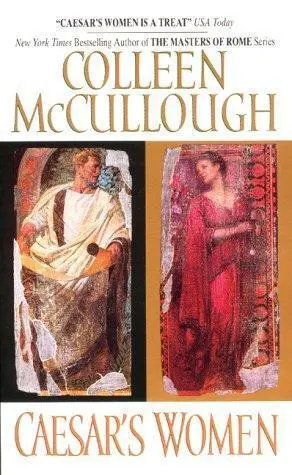
- Название:4. Caesar's Women
- Автор:
- Жанр:
- Год:неизвестен
- ISBN:нет данных
- Рейтинг книги:3 / 5. Голосов: 1
-
Избранное:Добавить в избранное
- Отзывы:
-
Ваша оценка:
4. Caesar's Women: краткое содержание, описание и аннотация
Предлагаем к чтению аннотацию, описание, краткое содержание или предисловие (зависит от того, что написал сам автор книги «4. Caesar's Women»). Если вы не нашли необходимую информацию о книге — напишите в комментариях, мы постараемся отыскать её.
4. Caesar's Women — читать онлайн бесплатно полную книгу (весь текст) целиком
Ниже представлен текст книги, разбитый по страницам. Система сохранения места последней прочитанной страницы, позволяет с удобством читать онлайн бесплатно книгу «4. Caesar's Women», без необходимости каждый раз заново искать на чём Вы остановились. Поставьте закладку, и сможете в любой момент перейти на страницу, на которой закончили чтение.
Интервал:
Закладка:
But Rome didn't know within a day. When the fourth day before the Kalends of November rolled round, nothing whatsoever happened. The consuls and praetors who according to the letters were to be killed went about their business unmolested, and no word of rebellion came from Etruria. Cicero existed in a frenzy of doubt and expectation, his mood not helped by Catilina's constant derision, nor by the sudden coolness he felt emanating from Catulus and Crassus. What had happened? Why did no word come? The Kalends of November arrived; still no word. Not that Cicero had been entirely idle during those awful days when he had to wait upon events. He hedged the city in with detachments of troops from Capua, posted a cohort at Ocriculum, another at Tibur, one at Ostia, one at Praeneste, and two at Veii; more than that he could not do because more troops ready enough to fight were just not available, even at Capua. Then after noon on the Kalends everything happened at once. A frantic message for help came from Praeneste, which proclaimed itself under attack. And a frantic message finally arrived from Faesulae, also under attack. The uprising had indeed begun five days earlier, exactly as the letters had indicated. As the sun was setting further messages told of restless slaves in Capua and Apulia. Cicero summoned the Senate for dawn on the morrow. Astonishing how convenient the process of triumphing could be! For fifty years the presence of a triumphator's army on the Campus Martius during a time of crisis for Rome had managed to extricate the city from peril. This present crisis was no different. Quintus Marcius Rex and Metellus Little Goat Creticus were both on the Campus Martius awaiting their triumphs. Of course neither man had more than a legion with him, but those legions were veteran. With the full agreement of the Senate, Cicero sent orders to the Campus Martius that Metellus Little Goat was to proceed south to Apulia and relieve Praeneste on the way, and that Marcius Rex was to proceed north to Faesulae. Cicero had eight praetors at his disposal, though within his mind he had excluded Lentulus Sura; he instructed Quintus Pompeius Rufus to go to Capua and commence recruiting troops from among the many veterans settled on land in Campania. Now, who else? Gaius Pomptinus was a Military Man and a good friend besides, which meant he was best retained in Rome for serious duty. Cosconius was the son of a brilliant general, but not adequate in the field at all. Roscius Otho was a great friend of Cicero's, but more effective as a favor currier than a general or a recruiter. Though Sulpicius was not a patrician, he seemed nonetheless to sympathize a little with Catilina, and the patrician Valerius Flaccus was another Cicero could not quite bring himself to trust. Which left only the praetor urbanus, Metellus Celer. Pompey's man and utterly loyal. "Quintus Caecilius Metellus Celer, I order you to go to Picenum and commence recruiting soldiers there," said Cicero. Celer rose, frowning. Naturally I am glad to do so, Marcus Tullius, but there is a problem. As urban praetor I cannot be out of Rome for more than ten days at a time." "Under a Senatus Consultum Ultimum, you can do anything the State instructs you to do without breaking law or tradition." "I wish I agreed with your interpretation," Caesar interrupted, "but I do not, Marcus Tullius. The ultimate decree extends only to the crisis, it does not dislocate normal magisterial functions." "I need Celer to deal with the crisis!" snapped Cicero. "You have five other praetors as yet unused," said Caesar. I am the senior consul, I will send the praetor best suited!" "Even if you act illegally?" "I am not acting illegally! The Senatus Consultum Ultimum overrides all other considerations, including 'normal magisterial functions,' as you call Celer's duties!" Face reddening, Cicero had begun to shout. Would you question the right of a formally appointed dictator to send Celer out of the city for more than ten days at a time?" "No, I would not," said Caesar, very cool. "Therefore, Marcus Tullius, why not do this thing the proper way? Rescind the toy you're playing with and ask this body to appoint a dictator and a master of the horse to go to war against Gaius Manlius." "What a brilliant idea!" drawled Catilina, sitting in his customary place and surrounded by all the men who supported him. "The last time Rome had a dictator, she ended up with his ruling her like a king!" cried Cicero. "The Senatus Consultum Ultimum was devised to deal with civil crises in a way which does not throw one man into absolute control!" "What, are you not in control, Cicero?" asked Catilina. "I am the senior consul!" "And making all the decisions, just as if you were dictator," gibed Catilina. "I am the instrument of the Senatus Consultum Ultimum!" "You're the instrument of magisterial chaos," said Caesar. "In not much more than a month, the new tribunes of the plebs take office, and the few days before and after that event require that the urban praetor be present in Rome." "There's no law on the tablets to that effect!" But there is a law to say that the urban praetor cannot be absent from Rome for more than ten days at a time." "All right, all right!" Cicero yelled. "Have it your own way! Quintus Caecilius Metellus Celer, I order you to Picenum, but require that you return to Rome every eleventh day! You will also return to Rome six days before the new tribunes of the plebs enter office, and remain in Rome until six days after they enter office!" At which moment a scribe handed the irate senior consul a note. Cicero read it, then laughed. "Well, Lucius Sergius!" he said to Catilina, "another little difficulty seems to be forming for you! Lucius Aemilius Paullus intends to prosecute you under the lex Plautia de vi, so he has just announced from the rostra." Cicero cleared his throat ostentatiously. "I am sure you know who Lucius Aemilius Paullus is! A fellow patrician, and a fellow revolutionary at that! Back in Rome after some years in exile and well behind his little brother Lepidus in terms of public life, but apparently desirous of showing that he no longer harbors a rebellious bone in his noble body. You would have it that only us jumped up New Men are against you, but you cannot call an Aemilius jumped up, now can you?" "Oh, oh, oh!" drawled Catilina, one brow raised. He put out his right hand and made it flutter and tremble. "See how I quake, Marcus Tullius! I am to be prosecuted on a charge of inciting public violence! Yet when have I done that?" He remained seated, but gazed around the tiers looking terribly wounded. "Perhaps I ought to offer myself into some nobleman's custody, eh, Marcus Tullius? Would that please you?" He stared at Mamercus. "Ho there, Mamercus Aemilius Lepidus Princeps Senatus, will you take me into your house as your prisoner?" Head of the Aemilii Lepidi and therefore closely related to the returned exile Paullus, Mamercus simply shook his head, grinning. "I don't want you, Lucius Sergius," he said. "Then how about you, senior consul?" Catilina asked Cicero. "What, admit my potential murderer to my house? No, thank you!" said Cicero. What about you, praetor urbanus? "Can't be done," said Metellus Celer. "I'm off to Picenum in the morning." Then how about a plebeian Claudius? Will you volunteer, Marcus Claudius Marcellus? You were quick enough to follow your master Crassus's lead a few days ago!" "I refuse," said Marcellus. "I have a better idea, Lucius Sergius," said Cicero. "Why not take yourself out of Rome and openly join your insurrection?'' "I will not take myself out of Rome, and it is not my insurrection," said Catilina. "In which case, I declare this meeting closed," said Cicero. "Rome is protected to the best of our abilities. All we can do now is wait and see what happens next. Sooner or later, Catilina, you will betray yourself." "Though I do wish," he said to Terentia later, "that my pleasure loving colleague Hybrida would return to Rome! Here it is an officially declared state of emergency, and where is Gaius Antonius Hybrida? Still lolling on his private beach at Cumae!" "Can't you command him to return under the Senatus Consultum Ultimum?'' asked Terentia. "I suppose so." "Then do it, Cicero! You may need him." "He's pleading gout." "The gout is in his head" was Terentia's verdict.
Читать дальшеИнтервал:
Закладка:
Похожие книги на «4. Caesar's Women»
Представляем Вашему вниманию похожие книги на «4. Caesar's Women» списком для выбора. Мы отобрали схожую по названию и смыслу литературу в надежде предоставить читателям больше вариантов отыскать новые, интересные, ещё непрочитанные произведения.










Обсуждение, отзывы о книге «4. Caesar's Women» и просто собственные мнения читателей. Оставьте ваши комментарии, напишите, что Вы думаете о произведении, его смысле или главных героях. Укажите что конкретно понравилось, а что нет, и почему Вы так считаете.