Colleen McCullough - 4. Caesar's Women
Здесь есть возможность читать онлайн «Colleen McCullough - 4. Caesar's Women» весь текст электронной книги совершенно бесплатно (целиком полную версию без сокращений). В некоторых случаях можно слушать аудио, скачать через торрент в формате fb2 и присутствует краткое содержание. Жанр: Современная проза. Описание произведения, (предисловие) а так же отзывы посетителей доступны на портале библиотеки ЛибКат.
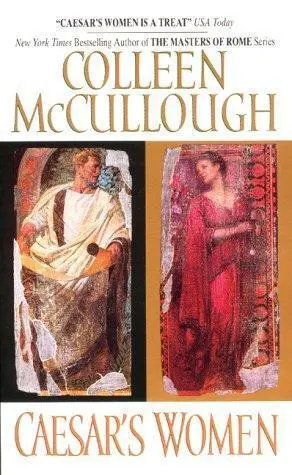
- Название:4. Caesar's Women
- Автор:
- Жанр:
- Год:неизвестен
- ISBN:нет данных
- Рейтинг книги:3 / 5. Голосов: 1
-
Избранное:Добавить в избранное
- Отзывы:
-
Ваша оценка:
4. Caesar's Women: краткое содержание, описание и аннотация
Предлагаем к чтению аннотацию, описание, краткое содержание или предисловие (зависит от того, что написал сам автор книги «4. Caesar's Women»). Если вы не нашли необходимую информацию о книге — напишите в комментариях, мы постараемся отыскать её.
4. Caesar's Women — читать онлайн бесплатно полную книгу (весь текст) целиком
Ниже представлен текст книги, разбитый по страницам. Система сохранения места последней прочитанной страницы, позволяет с удобством читать онлайн бесплатно книгу «4. Caesar's Women», без необходимости каждый раз заново искать на чём Вы остановились. Поставьте закладку, и сможете в любой момент перейти на страницу, на которой закончили чтение.
Интервал:
Закладка:
Thus it was that Quintus Cicero escorted the various ladies of both households to the seaside with their offspring in Sextilis, while Marcus Cicero himself remained in Rome to monitor events; the Curius mnage did not have the money for vacations at Cumae or Misenum, so Fulvia Nobilioris had to suffer the summer heat. A burden for Cicero too, but one he suspected would be well worth it. The Kalends of September came and went with no more than a perfunctory meeting of the Senate, traditionally bound to sit on this day. After which most of the senators went back to the seaside, as the calendar was so far ahead of the season that the hottest weather was yet to come. Caesar stayed in town; so did Nigidius Figulus and Varro, for an identical reason: the new Pontifex Maximus had announced the finding of what he called the Stone Annals and the Commentaries of the Kings. After convoking the College of Priests on the last day of Sextilis to inform them first and give them an opportunity to examine both the tablets and the manuscript, he then used the meeting of the Senate on the Kalends of September to display his discovery. Most people just yawned (even some of the priests), but Cicero, Varro and Nigidius Figulus were among those who thought it thrilling, and spent much of the first half of September poring over these antique documents. Still mildly besotted with the spaciousness and luxury of his new house, Caesar gave a dinner party on the Ides of that month for Nigidius Figulus, Varro, Cicero and two of the men with whom he had messed as a junior military tribune before the walls of Mitylene, Philippus Junior and Gaius Octavius. Philippus was two years older than Caesar and would be a praetor next year too, but Octavius's age lay between them, which meant his first chance to become praetor would not fall until the year after; this of course because patrician Caesar could occupy curule office two years earlier than any plebeian. Old Philippus, malign and amoral, famous chiefly for the number of times he had switched allegiances from one faction to another, was still alive and still occasionally attended meetings of the Senate, but his days as a force in that body were long past. Nor would his son ever replace him, thought Caesar, either for vice or power. "Young" Philippus was too much the Epicurean, too addicted to the exquisitely regulated pleasures of the dining couch and the gentler arts, happy to do his duty in the Senate and ascend the cursus honorum because it was his right, but never in a way likely to breed enmity in any political faction. He could get on with Cato as easily as he got on with Caesar, though he much preferred Caesar's company to Cato's. He had been married to a Gellia, and upon her death had chosen not to wed again, preferring not to inflict a stepmother upon his son and daughter. Between Caesar and Gaius Octavius lay an extra incentive for friendship: after the death of Octavius's first wife (an Ancharia from the wealthy praetorian family) he had sued for the hand of Caesar's niece, Alia, daughter of Caesar's younger sister. Her father, Marcus Atius Balbus, had asked Caesar's opinion about the alliance because Gaius Octavius was not of a noble family, merely a hugely wealthy one, from Velitrae in the Latin homelands. Remembering Octavius's loyalty at Mitylene and aware that he loved the beautiful and delightful Alia madly, Caesar advocated the match. There was a stepdaughter, luckily a nice little girl with no malice in her, but no son of that first marriage to spoil the inheritance of any son Alia might have to Octavius. So the deed was done and Alia installed in one of Rome's loveliest houses, albeit peculiarly situated on the wrong side of the Palatium at the end of a lane called the Ox Heads. And in October of the year before last Atia had borne her first child alas, a girl. Naturally the conversation revolved around the Stone Annals and the Commentaries of the Kings, though in deference to Octavius and Philippus, Caesar made considerable efforts to deflect his three more scholarly guests from this marvel. "Of course you are acknowledged the great authority on ancient law," said Cicero, prepared to concede superiority in an area he thought of little moment in modern Rome. "I thank you," said Caesar gravely. "A pity there's not more information about the day to day activities of the King's court," said Varro, freshly returned from a long period in the East as Pompey's resident natural scientist and part time biographer. Yes, but between the two documents we now have an absolutely clear picture of the trial procedure for perduellio, and that in itself is fascinating," said Nigidius Figulus, "considering maiestas." "Maiestas was Saturninus's invention," said Caesar. He only invented maiestas because no one could get a conviction for treason in the old form," said Cicero quickly. "A pity Saturninus didn't know of the existence of your finds then, Caesar," said Varro dreamily. "Two judges and no jury makes a big difference to a trial outcome!" "Rubbish!" cried Cicero, sitting up straight. "Neither the Senate nor Comitia would permit a criminal trial without a jury!" "What I find most interesting," said Nigidius Figulus, "is that there are only some four men alive today who could qualify as judges. You, Caesar. Your cousin Lucius Caesar. Fabius Sanga. And Catilina, oddly enough! All the other patrician families were not around when Horatius was tried for the murder of his sister." Philippus and Octavius were looking a little lost as well as rather bored, so Caesar made another effort to change the subject. "When's the big day?" he asked Octavius. "About a market interval to go." And will it be a boy or a girl?'' We think a boy this time. A third girl between two wives would be a cruel disappointment," said Gaius Octavius with a sigh. "I remember that before Tullia was born I was sure she was a boy," said Cicero, grinning. "Terentia was sure too. As it was, we had to wait fourteen years for my son." That long between tries, was it, Cicero?'' asked Philippus. To which Cicero vouchsafed no answer beyond a blush; like most ambitious social climbing New Men, he was habitually prudish unless a witticism too stunning to resist sprang to mind. The entrenched aristocrats could afford a salty tongue; Cicero could not. The woman whose husband caretakes the Old Meeting Houses says it will be a boy," said Octavius. "She tied Atia's wedding ring to a thread and held it over Atia's belly. It rotated rapidly to the right a sure sign, she says." "Well, let's hope she's right," from Caesar. "My older sister threw boys, but girls do run in the family." "I wonder," asked Varro, "how many men were actually tried for perduellio back in the days of Tullus Hostilius?" Caesar stifled a sigh; to invite three scholars and only two Epicureans to a dinner clearly did not work. Luckily the wine was superlative and so were the Domus Publica cooks.
The news from Etruria came not many days after that dinner with the Pontifex Maximus, and was conveyed by Fulvia Nobilioris. "Catilina has sent Gaius Manlius to Faesulae to recruit an army," she said to Cicero, perched on the edge of a couch and mopping a forehead dewed with sweat, "and Publius Furius is in Apulia doing the same." "Proof?" asked Cicero sharply, his own brow suddenly moist. "I have none, Marcus Tullius." "Did Quintus Curius tell you?" "No. I overheard him talking to Lucius Cassius last night after dinner. They thought I had gone to bed. Since the elections they've all been very quiet, even Quintus Curius. It was a blow to Catilina, and I think he's taken some time to recover. Last night was the first time I've heard a whisper of anything." "Do you know when Manlius and Furius began their operations?'' "No." "So you have no idea how far advanced recruitment might be? Would it, for instance, be possible for me to get confirmation if I sent someone to Faesulae?'' "I don't know, Marcus Tullius. I wish I did!" "What of Quintus Curius? Is he keen on outright revolution?" "I'm not sure." "Then try to find out, Fulvia," Cicero said, careful to keep the exasperation out of his voice and manner. If we can persuade him to testify before the Senate, its members would have no choice but to believe me." "Rest assured, husband, Fulvia will do her best," said Terentia, and ushered the visitor out. Positive that all insurgent forces would be willing to recruit slaves, Cicero sent a very sharp and presentable fellow north to Faesulae with instructions to volunteer. Aware that many in the House deemed him gullible and overeager for a crisis to distinguish his consulship, Cicero borrowed this slave from Atticus; the fellow could therefore testify that he was not under obligation to Cicero personally. But, alas, when he returned he had little to offer. Something was definitely going on, and not only in Faesulae. The trouble was that slaves, he had been told when he started to fish for information, did not belong in Etruria, a place of free men owning sufficient free men to serve the interests of Etruria. Just what that answer meant was difficult to say, as of course Etruria was as liberally dowered with slaves as any other place inside or outside Italy. The whole world depended on slaves! "If it is indeed an uprising, Marcus Tullius," Atticuss servant concluded, "then it is an uprising limited to free men." "What next?" asked Terentia over dinner. "I honestly don't know, my dear. The thing is, do I convene the Senate and try again, or do I wait until I can gather several free man agents together and produce some hard evidence?" "I have a feeling that hard evidence is going to be very difficult to find, husband. No one in northern Etruria trusts any outsider, free or servile. They're clannish and secretive." "Well," said Cicero, sighing, "I shall summon the House into session the day after tomorrow. If it serves no other purpose, it will at least tell Catilina that my eye is still upon him." It served no other purpose, exactly as Cicero had foreseen. Those senators not still at the seaside were skeptical at best and downright insulting at worst. Especially Catilina, who was present and vocal but remarkably cool for a man whose hopes for the consulship had been permanently dashed. This time he made no attempt to rant at Cicero or at adversity; he simply sat on his stool and answered patiently, calmly. A good tactic which impressed the skeptics and allowed the partisans to gloat. Little wonder then that what might otherwise have been a rowdy and heated debate gradually dwindled to an inertia leavened only by the sudden eruption of Gaius Octavius through the doors, whooping and dancing. "I have a son! I have a son!" Thankful for an excuse to close the meeting, Cicero dismissed his clerks and joined the crowd around Octavius. "Is the horoscope auspicious?" asked Caesar. "Mind you, they are never not." "More miraculous than auspicious, Caesar. If I am to believe what the astrologer fellow says, my son Gaius Octavius Junior will end in ruling the world." The proud father chuckled. "But I fell for it! Gave the astrologer a bonus as well as a fee." "My natal horoscope just had lots to say about mysterious illnesses of the chest, if I am to believe my mother," said Caesar. "She never will show it to me." "And mine said I would never make money," said Crassus. "Fortune telling keeps the women happy," said Philippus. Who intends to come with me to register the birth with Juno Lucina?" Octavius asked, still beaming. "Who else than Uncle Caesar Pontifex Maximus?" Caesar threw an arm about Octavius's shoulders. "And after that, I demand to be shown my new nephew."
Читать дальшеИнтервал:
Закладка:
Похожие книги на «4. Caesar's Women»
Представляем Вашему вниманию похожие книги на «4. Caesar's Women» списком для выбора. Мы отобрали схожую по названию и смыслу литературу в надежде предоставить читателям больше вариантов отыскать новые, интересные, ещё непрочитанные произведения.










Обсуждение, отзывы о книге «4. Caesar's Women» и просто собственные мнения читателей. Оставьте ваши комментарии, напишите, что Вы думаете о произведении, его смысле или главных героях. Укажите что конкретно понравилось, а что нет, и почему Вы так считаете.