Colleen McCullough - 4. Caesar's Women
Здесь есть возможность читать онлайн «Colleen McCullough - 4. Caesar's Women» весь текст электронной книги совершенно бесплатно (целиком полную версию без сокращений). В некоторых случаях можно слушать аудио, скачать через торрент в формате fb2 и присутствует краткое содержание. Жанр: Современная проза. Описание произведения, (предисловие) а так же отзывы посетителей доступны на портале библиотеки ЛибКат.
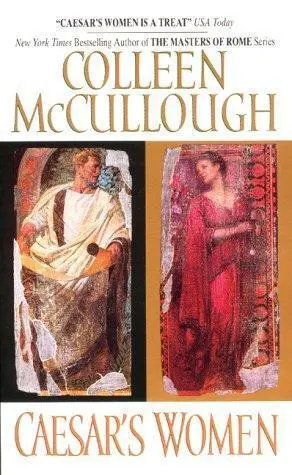
- Название:4. Caesar's Women
- Автор:
- Жанр:
- Год:неизвестен
- ISBN:нет данных
- Рейтинг книги:3 / 5. Голосов: 1
-
Избранное:Добавить в избранное
- Отзывы:
-
Ваша оценка:
4. Caesar's Women: краткое содержание, описание и аннотация
Предлагаем к чтению аннотацию, описание, краткое содержание или предисловие (зависит от того, что написал сам автор книги «4. Caesar's Women»). Если вы не нашли необходимую информацию о книге — напишите в комментариях, мы постараемся отыскать её.
4. Caesar's Women — читать онлайн бесплатно полную книгу (весь текст) целиком
Ниже представлен текст книги, разбитый по страницам. Система сохранения места последней прочитанной страницы, позволяет с удобством читать онлайн бесплатно книгу «4. Caesar's Women», без необходимости каждый раз заново искать на чём Вы остановились. Поставьте закладку, и сможете в любой момент перейти на страницу, на которой закончили чтение.
Интервал:
Закладка:
Eighteen days of October had ground away without significant information from either Etruria or Apulia, nor a word from Fulvia Nobilioris. An occasional letter from the agents both Cicero and Atticus had dispatched held out little hope of hard evidence, though every one of these missives vowed something was definitely going on. The chief trouble seemed to lie in the fact that there was no real nucleus, just stirs and shudders in this village, then in that village, on some Sullan centurion's foundering farm or in some Sullan veteran's low tavern. Yet the moment a strange face showed itself, everyone walked about whistling innocently. Inside the walls of Faesulae, Arretium, Volaterrae, Aesernia, Larinum and all the other urban settlements of Etruria and Apulia, nothing was visible save economic depression and grinding poverty. There were houses and farms for sale to cover hopeless debts everywhere, but of their erstwhile owners, not a sign. And Cicero was tired, tired, tired. He knew it was busily happening under his nose, yet he couldn't prove it and he was now beginning to believe he never would until the day of revolt arrived. Terentia too was in despair, a state which surprisingly seemed to make her easier to live with; though his fleshly urges were never strong, these days Cicero found himself wanting to retire early and seek a solace in her body which he found as mystifying as it was incongruous. Both of them were sunk into a deep sleep when Tiro came to wake them shortly after the middle hour of night on that eighteenth day of October. "Domine, domine!" the beloved slave whispered from the door, his charmingly elfin face above the lamp turned into a visage from the underworld. "Domine, you have visitors!" "What's the hour?" Cicero managed, swinging his legs off the bed on one side as Terentia stirred and opened her eyes. "Very late, domine." Visitors, did you say?'' "Yes, domine." Terentia was struggling to sit up on her side of the bed, but made no move to dress; well she knew that whatever was afoot would not include her, a woman! Nor could she go back to sleep. She would just have to contain herself until Cicero could return to inform her what the trouble was. Who, Tiro?'' asked Cicero, pushing his head into a tunic. "Marcus Licinius Crassus and two other noblemen, domine." "Ye gods!" No time for ablutions or footwear; Cicero hurried out to the atrium of the house he now felt was too small and too humdrum for one who would from the end of this year call himself a consular. Sure enough, there was Crassus accompanied by Marcus Claudius Marcellus and Metellus Scipio, of all people! The steward was busy kindling lamps, Tiro had produced writing paper, pens and wax tablets just in case, and noises from outside indicated that wine and refreshments would appear shortly. "What's amiss?" asked Cicero, dispensing with ceremony. "You were right, my friend," said Crassus, and held out both hands. His right contained an open sheet of paper; his left held several letters still folded and sealed. He passed the open sheet across. "Read that and you'll know what's amiss." It was very short, but authored by someone well schooled, and it was addressed to Crassus.
I am a patriot who has by mischance become embroiled in an insurrection. That I send these letters to you rather than to Marcus Cicero arises out of your standing in Rome. No one has believed Marcus Cicero. I hope everyone will believe you. The letters are copies; I could not make off with the originals. Nor dare I tell you any names. What I can tell you is that fire and revolution are coming to Rome. Get out of Rome, Marcus Crassus, and take all who do not wish to be killed with you.
Though he couldn't compete with Caesar when it came to swift and silent reading, Cicero wasn't that far behind; in a shorter time than it had taken Crassus to read the note, Cicero looked up. "Jupiter, Marcus Crassus! How did you come by this?" Crassus sat down in a chair heavily, Metellus Scipio and Marcellus going together to a couch. When a servant offered him wine, Crassus waved it aside. "We were having a late dinner at my place," he said, "and I'm afraid I got carried away. Marcus Marcellus and Quintus Scipio had a scheme in mind to increase their family fortunes, but they didn't want to break senatorial precedents, so they came to me for advice." "True," said Marcellus warily; he didn't trust Cicero not to blab about unsenatorial business ventures. But the last thing on Cicero's mind was the thin line between proper senatorial practices and illegal ones, so he said, "Yes, yes!" impatiently, and to Crassus, "Go on!" "Someone hammered on the door about an hour ago, but when my steward went to answer it there was no one outside. At first he didn't notice the letters, which had been put on the step. It was the noise made by the pile falling over drew his attention to them. The one I've opened was addressed to me personally, as you can see for yourself, though I opened it more out of curiosity than from any presentiment of alarm who would choose such an odd way to deliver mail, and at such an hour?'' Crassus looked grim. "When I'd read it and shown it to Marcus and Quintus here, we decided the best thing to do was bring everything to you at once. You're the one who's been making all the fuss." Cicero took the five unopened packets and sat down with an elbow on the peacock grained citrus wood table he had paid half a million sesterces for, heedless of its depreciation should he scratch it. One by one he held the letters up to the light, examining the cheap wax closures. "A wolf seal in ordinary red wax," he said, sighing. "You can buy them in any shop." His fingers slipped beneath the edge of the paper of the last in the pile, he tugged sharply and broke the little round wax emblem in half while Crassus and the other two watched eagerly. "I'll read it out," he said then, opening the single sheet of paper. "This one isn't signed, but I see it's addressed to Gaius Manlius." He began to pore over the squiggles.
"You will start the revolution five days before the Kalends of November by forming up your troops and invading Faesulae. The town will come over to you in mass, so you have assured us. We believe you. Whatever else you do, make straight for the arsenal. At dawn of this same day your four colleagues will also move: Publius Furius against Volaterrae, Minucius against Arretium, Publicius against Saturnia, Aulus Fulvius against Clusium. By sunset we expect that all these towns will be in your hands, and our army much bigger. Not to mention better equipped from the arsenals. "On the fourth day before the Kalends, those of us in Rome will strike. An army is not necessary. Stealth will serve us better. We will kill both the consuls and all eight praetors. What happens to the consuls elect and the praetors elect depends on their good sense, but certain powers in the business sphere will have to die: Marcus Crassus, Servilius Caepio Brutus, Titus Atticus. Their fortunes will fund our enterprise with money to spare. "We would have preferred to wait longer, build up our strength and our forces, but we cannot afford to wait until Pompeius Magnus is close enough to move against us before we are ready for him. His turn will come, but first things are first. May the Gods be with you."
Cicero put the letter down to gaze at Crassus in horror. "Jupiter, Marcus Crassus!" he cried, hands trembling. "It is upon us in nine days!" The two younger men looked ashen in the flickering light, eyes passing from Cicero to Crassus and back again, minds obviously unable to assimilate anything beyond the word "kill." "Open the others," said Crassus. But these proved to be much the same as the first, addressed to each of the other four men mentioned by name in Gaius Manlius's. "He's clever," said Cicero, shaking his head. "Nothing put down in the first person singular for me to level at Catilina, no word of who in Rome is involved. All I really have are the names of his military henchmen in Etruria, and as they're already committed to revolution, they can't matter. Clever!" Metellus Scipio licked his lips and found his voice. "Who wrote the letter to Marcus Crassus, Cicero?" he asked. "I would think Quintus Curius." "Curius? That Curius who was thrown out of the Senate?" "The same." "Then can we get him to testify?" Marcellus asked. It was Crassus who shook his head. "No, we daren't. All they'd have to do was kill him and we'd be right back where we are at the moment except that we'd lack an informer at all." "We could put him in protective custody even before he testified," said Metellus Scipio. "And shut his mouth?" asked Cicero. "Protective custody at any stage is likely to shut his mouth. The most important thing is to push Catilina into declaring himself." Whereupon Marcellus said, frowning, "What if the ringleader isn't Catilina?" "That's a point," said Metellus Scipio. What do I have to do to get it through all your thick skulls that the only man it can be is Catilina?" yelled Cicero, striking the precious surface of his table so hard that the gold and ivory pedestal beneath it shivered. "It's Catilina! It's Catilina!" "Proof, Marcus," said Crassus. "You need proof." "One way or another I will get proof," said Cicero, "but in the meantime we have a revolution in Etruria to put down. I will summon the Senate into session tomorrow at the fourth hour." "Good," said Crassus, lumbering to his feet. "Then I'm for home and bed." "What about you?" asked Cicero on the way to the door. "Do you believe Catilina is responsible, Marcus Crassus?" "Very probably, but not certainly" was the answer. "And isn't that typical?" asked Terentia some moments later, sitting up straight. "He wouldn't commit himself to an alliance with Jupiter Optimus Maximus!" "Nor will many in the Senate, I predict," sighed Cicero. "However, my dear, I think it's time you sought Fulvia out. We've heard nothing from her in many days." He lay down. "Blow out the lamp, I must try to sleep."
Читать дальшеИнтервал:
Закладка:
Похожие книги на «4. Caesar's Women»
Представляем Вашему вниманию похожие книги на «4. Caesar's Women» списком для выбора. Мы отобрали схожую по названию и смыслу литературу в надежде предоставить читателям больше вариантов отыскать новые, интересные, ещё непрочитанные произведения.









Обсуждение, отзывы о книге «4. Caesar's Women» и просто собственные мнения читателей. Оставьте ваши комментарии, напишите, что Вы думаете о произведении, его смысле или главных героях. Укажите что конкретно понравилось, а что нет, и почему Вы так считаете.