Hermann Hesse - The Glass Bead Game
Здесь есть возможность читать онлайн «Hermann Hesse - The Glass Bead Game» весь текст электронной книги совершенно бесплатно (целиком полную версию без сокращений). В некоторых случаях можно слушать аудио, скачать через торрент в формате fb2 и присутствует краткое содержание. Год выпуска: 1969, Жанр: Современная проза, Социально-психологическая фантастика, на английском языке. Описание произведения, (предисловие) а так же отзывы посетителей доступны на портале библиотеки ЛибКат.
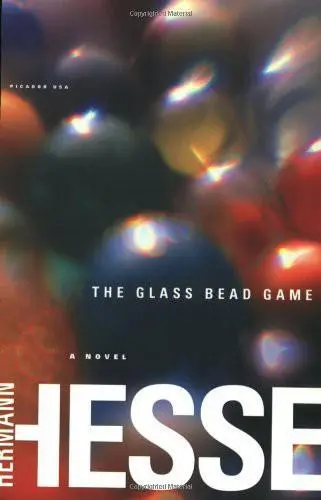
- Название:The Glass Bead Game
- Автор:
- Жанр:
- Год:1969
- ISBN:нет данных
- Рейтинг книги:4 / 5. Голосов: 2
-
Избранное:Добавить в избранное
- Отзывы:
-
Ваша оценка:
The Glass Bead Game: краткое содержание, описание и аннотация
Предлагаем к чтению аннотацию, описание, краткое содержание или предисловие (зависит от того, что написал сам автор книги «The Glass Bead Game»). Если вы не нашли необходимую информацию о книге — напишите в комментариях, мы постараемся отыскать её.
Something like chess but far more intricate, the game of Magister Ludi known as the Glass Bead Game is thought in its purest form, a synthesis through which philosophy, art, music and scientific law are appreciated simultaneously. The scholar-players are isolated within Castalia, an autonomous elite institution devoted wholly to the mind and the imagination…
The Glass Bead Game — читать онлайн бесплатно полную книгу (весь текст) целиком
Ниже представлен текст книги, разбитый по страницам. Система сохранения места последней прочитанной страницы, позволяет с удобством читать онлайн бесплатно книгу «The Glass Bead Game», без необходимости каждый раз заново искать на чём Вы остановились. Поставьте закладку, и сможете в любой момент перейти на страницу, на которой закончили чтение.
Интервал:
Закладка:
Joseph Knecht had been kept in close contact with the elite by his friend Tegularius. As an old player, moreover, he was fully sensitive to all these currents and moods. But he did not allow them to affect him. From the fourth or fifth day on he actually forbade Fritz to bother him with news about the Magister’s illness. He felt, and quite well understood, the tragic cloud that hung over the festival; he thought of the Master with sorrow and deep concern, and of the Shadow Bertram — condemned as it were to sharing the Magister’s death — with growing disquiet and compassion. But he sternly resisted being influenced by any authentic or mythical account, practiced the strictest concentration, surrendered gladly to the exercises and the course of the beautifully structured game, and in spite of all the discords and dark clouds his experience of the festival was one of grave exaltation.
At the end of the festival Bertram was spared the additional burden of having to receive congratulants and the Board in his capacity of vice-Magister. The traditional celebration for students of the Glass Bead Game was also cancelled. Immediately after the final musical performance of the festival, the Board announced the Magister’s death, and the prescribed days of mourning began in the Vicus Lusorum. Joseph Knecht, still residing in the guest house, participated in the rites. The funeral of this fine man, whose memory is still held in high esteem, was celebrated with Castalia’s customary simplicity. His Shadow, Bertram, who had summoned up his last reserves of strength in order to play his part to the end during the festival, understood his situation. He asked for a leave and went on a walking trip in the mountains.
There was mourning throughout the Game village, and indeed everywhere in Waldzell. Possibly no one had enjoyed intimate, strikingly friendly relations with the deceased Magister; but the superiority and flawlessness of his aristocratic nature, together with his intelligence and his finely developed feeling for form, had made of him a regent and representative such as Castalia with its fundamentally democratic temper did not often produce. The Castalians had been proud of him. If he had seemed to hold himself aloof from the realms of passion, love, and friendship, that made him all the more the object for youth’s craving to venerate. This dignity and sovereign gracefulness — which incidentally had earned him the half-affectionate nickname “His Excellency” — had in the course of years, despite strong opposition, won him a special position in the Supreme Council of the Order and in the sessions and work of the Board of Educators.
Naturally, the question of his successor was hotly discussed, and nowhere so intensely as among the elite of the Glass Bead Game players. After the departure of the Shadow, whose overthrow these players had sought and achieved, the functions of the Magister’s office were temporarily distributed by vote of the elite itself among three temporary deputies — only the internal functions in the Vicus Lusorum, of course, not the official work in the Board of Educators. In keeping with tradition, the Board would not permit the Magistracy to remain vacant more than three weeks. In cases in which a dying or departing Magister left a clear, uncontested successor, the office was in fact filled immediately, after only a single plenary session of the Board. This time the process would probably take rather longer.
During the period of mourning, Joseph Knecht occasionally talked with his friend about the festival game and its singularly troubled course.
“This deputy, Bertram,” Knecht said, “not only played his part tolerably well right up to the end — that is, tried to fill the role of a real Magister — but in my opinion did far more than that. He sacrificed himself to this Ludus sollemnis as his last and most solemn official act. You all were harsh — no, the word is cruel — to him. You could have saved the festival and saved Bertram, and you did not do so. I don’t care to express an opinion about that conduct; I suppose you had your reasons. But now that poor Bertram has been eliminated and you have had your way, you should be generous. When he comes back you must meet him halfway and show that you have understood his sacrifice.”
Tegularius shook his head. “We did understand it,” he said, “and have accepted it. You were fortunate in being able to participate in the Game as a guest; as such you probably did not follow the course of events so very closely. No, Joseph, we will not have any opportunity to act on whatever feelings for Bertram we may have. He knows that his sacrifice was necessary and will not attempt to undo it.”
Only now did Knecht fully understand him. He fell into a troubled silence. Now he realized that he had not experienced these festival days as a real Waldzeller and a comrade of the others, but in truth much more like a guest; and only now did he grasp the nature of Bertram’s sacrifice. Hitherto Bertram had seemed to him an ambitious man who had been undone by a task beyond his powers and who henceforth must renounce further ambitious goals and try to forget that he had once been a Master’s Shadow and the leader of an annual Game. Only now, hearing his friend’s last words, had he understood — with shock — that Bertram had been fully condemned by his judges and would not return. They had allowed him to conduct the festival Game to its conclusion, and had co-operated just enough so that it would go off without a public scandal; but they had done so only to spare Waldzell, not Bertram.
The fact was that the position of Shadow demanded more than the Magister’s full confidence — Bertram had not lacked that. It depended to an equal degree on the confidence of the elite, and the unfortunate man had been unable to retain it. If he blundered, the hierarchy did not stand behind him to protect him, as it did behind his Master and model. And without the backing of such authority, he was at the mercy of his former comrades, the tutors. If they did not respect him, they became his judges. If they were unyielding, the Shadow was finished. Sure enough, Bertram did not return from his outing in the mountains, and after a while the story went round that he had fallen to his death from a cliff. The matter was discussed no further.
Meanwhile, day after day high officials and directors of the Order and of the Board of Educators appeared in the Game village. Members of the elite and of the civil service were summoned for questioning. Now and then some of the matters discussed leaked out, but only within the elite itself. Joseph Knecht, too, was summoned and queried, once by two directors of the Order, once by the philological Magister, then by Monsieur Dubois, and again by two Magisters. Tegularius, who was also called in for several such consultations, was pleasantly excited and joked about this conclave atmosphere, as he called it. Joseph had already noticed during the festival how little of his former intimacy with the elite had remained, and during the period of the conclave he was made more painfully aware of it. It was not only that he lived in the guest house like a visitor, and that the superiors seemed to deal with him as an equal. The members of the elite themselves, the tutors as a body, no longer received him in a comradely fashion. They displayed a mocking politeness toward him, or at best a temporizing coolness. They had already begun to drift away from him when he received his appointment to Mariafels, and that was only right and natural. Once a man had taken the step from freedom to service, from the life of student or tutor to member of the hierarchy, he was no longer a comrade, but on the way to becoming a superior or boss. He no longer belonged to the elite, and he had to realize that for the time being they would assume a critical attitude toward him. That happened to everyone in his position. The difference was that he felt the aloofness and coolness with particular intensity at this time, partly because the elite, orphaned as it now was and about to receive a new Magister, defensively closed its ranks; partly because it had just so harshly demonstrated its ruthlessness in the case of the Shadow, Bertram.
Читать дальшеИнтервал:
Закладка:
Похожие книги на «The Glass Bead Game»
Представляем Вашему вниманию похожие книги на «The Glass Bead Game» списком для выбора. Мы отобрали схожую по названию и смыслу литературу в надежде предоставить читателям больше вариантов отыскать новые, интересные, ещё непрочитанные произведения.








Обсуждение, отзывы о книге «The Glass Bead Game» и просто собственные мнения читателей. Оставьте ваши комментарии, напишите, что Вы думаете о произведении, его смысле или главных героях. Укажите что конкретно понравилось, а что нет, и почему Вы так считаете.