Hermann Hesse - The Glass Bead Game
Здесь есть возможность читать онлайн «Hermann Hesse - The Glass Bead Game» весь текст электронной книги совершенно бесплатно (целиком полную версию без сокращений). В некоторых случаях можно слушать аудио, скачать через торрент в формате fb2 и присутствует краткое содержание. Год выпуска: 1969, Жанр: Современная проза, Социально-психологическая фантастика, на английском языке. Описание произведения, (предисловие) а так же отзывы посетителей доступны на портале библиотеки ЛибКат.
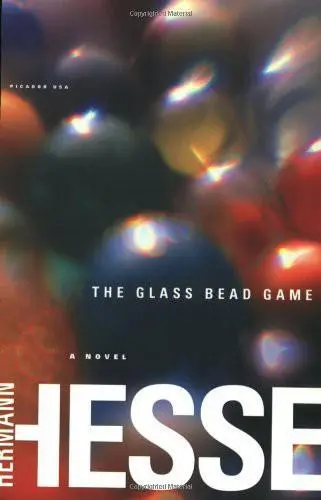
- Название:The Glass Bead Game
- Автор:
- Жанр:
- Год:1969
- ISBN:нет данных
- Рейтинг книги:4 / 5. Голосов: 2
-
Избранное:Добавить в избранное
- Отзывы:
-
Ваша оценка:
The Glass Bead Game: краткое содержание, описание и аннотация
Предлагаем к чтению аннотацию, описание, краткое содержание или предисловие (зависит от того, что написал сам автор книги «The Glass Bead Game»). Если вы не нашли необходимую информацию о книге — напишите в комментариях, мы постараемся отыскать её.
Something like chess but far more intricate, the game of Magister Ludi known as the Glass Bead Game is thought in its purest form, a synthesis through which philosophy, art, music and scientific law are appreciated simultaneously. The scholar-players are isolated within Castalia, an autonomous elite institution devoted wholly to the mind and the imagination…
The Glass Bead Game — читать онлайн бесплатно полную книгу (весь текст) целиком
Ниже представлен текст книги, разбитый по страницам. Система сохранения места последней прочитанной страницы, позволяет с удобством читать онлайн бесплатно книгу «The Glass Bead Game», без необходимости каждый раз заново искать на чём Вы остановились. Поставьте закладку, и сможете в любой момент перейти на страницу, на которой закончили чтение.
Интервал:
Закладка:
Joseph would only too gladly have asked this prudent, experienced, inscrutably courteous man, whose hands had just solemnly decked him with the robes of office, for a few private lessons, if only the Speaker had lived in Waldzell instead of Hirsland, half a day’s journey away. How gladly, too, Joseph would have fled to Monteport for a while to be instructed in these matters by the former Music Master. But such recourses were out of the question; it was not for a Magister to harbor any such private desires, as if he were still a student. Instead, he had to start off by attending to those very functions which he fancied would give him little trouble, and to concentrate his whole mind on them.
During Bertram’s festival Game he had observed a Magister forsaken by his own community, the elite, fighting and as it were suffocating in airless space. He had sensed something then, and his presentiment had been confirmed by the old Music Master’s words on the day of his investiture. Now he faced it every minute of his official day, and every moment he could spare for reflection on his situation: that he must above all concern himself with the elite and the tutorship, with the highest stages of the Glass Bead Game studies, with the seminar practice sessions, and with personal intercourse with the tutors. He could leave the Archives to the archivists, the beginners’ courses to the present set of teachers, the mail to his secretaries, and would not be neglecting any serious matters. But he did not dare leave the elite to themselves for a moment. He had to keep after them, impose himself on them, and make himself indispensable to them. He had to convince them of the merit of his abilities and the purity of his will; he had to conquer them, court them, win them, match wits with every candidate among them who showed a disposition to challenge him — and there was no lack of such candidates.
In this struggle he was aided by a number of factors which he had earlier considered drawbacks, in particular his long absence from Waldzell and the elite, who therefore looked upon him as something of a homo novus. Even his friendship with Tegularius proved useful. For Tegularius, that brilliant, sickly outsider, obviously did not have to be considered a rival for office, and seemed so little career-minded himself that any preference shown him by the new Magister would not be seen as an affront to other candidates. Nevertheless it was something of a task for Knecht to probe and penetrate this highest, most vital, restive, and sensitive stratum in the world of the Glass Bead Game, and master it as a rider masters a thoroughbred horse. For in every Castalian institute, not only that of the Glass Bead Game, the elite group of candidates, also called tutors — men who have completed their formal education but are still engaged in free studies and have not yet been appointed to serve on the Board of Educators or the Order — constitute the most precious stock in Castalian society, the true reserve and promise for the future. Everywhere, not only in the Game Village, this dashing select band of the younger generation tends to resist and criticize new teachers and superiors, accords a new head the bare minimum of politeness and subordination, and must be convinced, overpowered, and won over on a purely personal basis. The superior must devote his whole being to courting them before they will acknowledge him and submit to his leadership.
Knecht took up his task without timidity, but he was nevertheless astonished at its difficulties; and while he solved them and gradually won the arduous, consuming battle, those other duties which he had been inclined to worry about receded of their own accord and seemed to demand less of his attention. He confessed to a colleague that he had participated in the first plenary session of the Board — to which he traveled by the fastest express and returned in the same way — almost in a dream and afterward had no time to give another thought to it, so completely did his current task claim all his energies. In fact, even during the conference itself, although the subject interested him and although he had looked forward to it with some uneasiness, since this was his first appearance as a member of the Board, he several times caught himself thinking not of his colleagues here and the deliberations in progress, but of Waldzell. He saw himself rather in that blue room in the Archives where he was currently giving a seminar in dialectics every third day, with only five participants. Every hour of that bred far greater tension and demanded a greater output of energy than all the rest of his official duties, which were also not easy and which he could not evade or postpone. For as the former Music Master had informed him, the Board provided him with a timekeeper and coach who supervised the course of his day hour by hour, advising him about his schedule and guarding him against too much concentration on any one thing, as well as against total overstrain. Knecht was grateful to him, and even more grateful to Alexander, the man deputized by the directorate of the Order, who enjoyed a great reputation as master of the art of meditation. Alexander saw to it that Joseph, even though he was working to the utmost limit of his strength, practiced the “little” or “brief” meditation exercise three times daily, and that he abided strictly by the prescribed course and number of minutes for each such exercise.
Before his evening meditation he and his aides, the coach and the meditation master, were supposed to review each official day, noting what had been well done or ill done, feeling his own pulse, as meditation teachers call this practice, that is, recognizing and measuring one’s own momentary situation, state of health, the distribution of one’s energies, one’s hopes and cares — in a word, seeing oneself and one’s daily work objectively and carrying nothing unresolved on into the night and the next day.
While the tutors observed the prodigious labors of their Magister with an interest partly sympathetic, partly aggressive, missing no opportunity to set him new tests of strength, patience, and quick-wittedness, trying one moment to inspire, the next to block his work, an uncomfortable void had come into being around Tegularius. He understood, of course, that Knecht could not spare any attention, any time, any thought or sympathy for him right now. But he could not harden himself sufficiently, could not resign himself to being so neglected. It was all the more painful to him because he not only seemed to have lost his friend from one day to the next, but also found himself the object of some suspicion on the part of his associates, and was scarcely spoken to. That was hardly surprising. For although Tegularius could not seriously stand in the way of the ambitious climbers, he was known as one of the new Magister’s partisans and favorites.
Knecht could easily have grasped all this. To be sure, the responsibilities of the moment involved his laying aside all private, personal affairs for a while, including this friendship. But, as he later admitted to his friend, he did not actually do this wittingly and willingly, but quite simply because he had forgotten Fritz. He had so thoroughly converted himself into an instrument that such personal matters as friendship vanished into the realm of the impossible. If on occasion, as for example in that seminar he held for the five foremost Glass Bead Game players, Fritz’s face and figure appeared before him, he did not see Tegularius as a friend or personality, but as a member of the elite, a student, candidate, and tutor, a part of his work, a soldier in the regiment whom he had to train so that he could march on to victory with it. A shudder had gone through Fritz when the Magister for the first time addressed him in that way. From Knecht’s look, it was clear that this remoteness and objectivity were not pretense, but uncannily genuine, and that the man before him who treated him with this matter-of-fact courtesy, accompanied by intense intellectual alertness, was no longer his friend Joseph, was entirely a teacher and examiner, entirely Master of the Glass Bead Game, enveloped and isolated by the gravity and austerity of his office as if by a shining glaze which had been poured over him in the heat of the fire, and had cooled and hardened.
Читать дальшеИнтервал:
Закладка:
Похожие книги на «The Glass Bead Game»
Представляем Вашему вниманию похожие книги на «The Glass Bead Game» списком для выбора. Мы отобрали схожую по названию и смыслу литературу в надежде предоставить читателям больше вариантов отыскать новые, интересные, ещё непрочитанные произведения.








Обсуждение, отзывы о книге «The Glass Bead Game» и просто собственные мнения читателей. Оставьте ваши комментарии, напишите, что Вы думаете о произведении, его смысле или главных героях. Укажите что конкретно понравилось, а что нет, и почему Вы так считаете.