Hermann Hesse - The Glass Bead Game
Здесь есть возможность читать онлайн «Hermann Hesse - The Glass Bead Game» весь текст электронной книги совершенно бесплатно (целиком полную версию без сокращений). В некоторых случаях можно слушать аудио, скачать через торрент в формате fb2 и присутствует краткое содержание. Год выпуска: 1969, Жанр: Современная проза, Социально-психологическая фантастика, на английском языке. Описание произведения, (предисловие) а так же отзывы посетителей доступны на портале библиотеки ЛибКат.
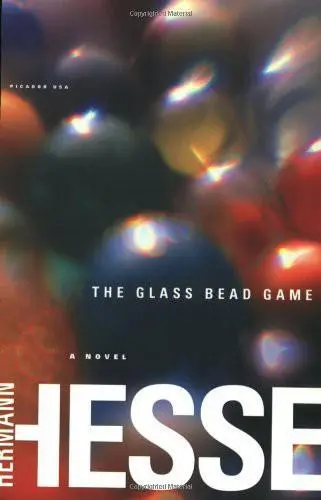
- Название:The Glass Bead Game
- Автор:
- Жанр:
- Год:1969
- ISBN:нет данных
- Рейтинг книги:4 / 5. Голосов: 2
-
Избранное:Добавить в избранное
- Отзывы:
-
Ваша оценка:
The Glass Bead Game: краткое содержание, описание и аннотация
Предлагаем к чтению аннотацию, описание, краткое содержание или предисловие (зависит от того, что написал сам автор книги «The Glass Bead Game»). Если вы не нашли необходимую информацию о книге — напишите в комментариях, мы постараемся отыскать её.
Something like chess but far more intricate, the game of Magister Ludi known as the Glass Bead Game is thought in its purest form, a synthesis through which philosophy, art, music and scientific law are appreciated simultaneously. The scholar-players are isolated within Castalia, an autonomous elite institution devoted wholly to the mind and the imagination…
The Glass Bead Game — читать онлайн бесплатно полную книгу (весь текст) целиком
Ниже представлен текст книги, разбитый по страницам. Система сохранения места последней прочитанной страницы, позволяет с удобством читать онлайн бесплатно книгу «The Glass Bead Game», без необходимости каждый раз заново искать на чём Вы остановились. Поставьте закладку, и сможете в любой момент перейти на страницу, на которой закончили чтение.
Интервал:
Закладка:
In the course of this work he had made a characteristic discovery — if we may be permitted to anticipate our story. At the beginning of his magistracy he dealt exclusively with the elite, with the most advanced students and the tutors. Many of the latter were his own age, and every one was already a thoroughly trained player. But gradually, once he was sure of the elite, he slowly and cautiously, from year to year, began withdrawing from it an ever-larger portion of his time and energy, until at the end he sometimes could leave it almost entirely to his close associates and assistants. This process took years, and each succeeding year Knecht, in the lectures, courses, and exercises he conducted, reached further and further back to ever-younger students. In the end he went so far that he several times personally conducted beginners’ courses for youngsters — something rarely done by a Magister Ludi. He found, moreover, that the younger and more ignorant his pupils were, the more pleasure he took in teaching. Sometimes in the course of these years it actually made him uneasy, and cost him tangible effort, to return from these groups of boys to the advanced students, let alone to the elite. Occasionally, in fact, he felt the desire to reach even further back and to attempt to deal with even younger pupils, those who had never yet had courses of any kind and knew nothing of the Glass Bead Game. He found himself sometimes wishing to spend a while in Eschholz or one of the other preparatory schools instructing small boys in Latin, singing, or algebra, where the atmosphere was far less intellectual than it was even in the most elementary course in the Glass Bead Game, but where he would be dealing with still more receptive, plastic, educable pupils, where teaching and educating were more, and more deeply, a unity. In the last two years of his magistracy he twice referred to himself in letters as “Schoolmaster,” reminding his correspondent that the expression Magister Ludi — which for generations had meant only “Master of the Game” in Castalia — had originally been simply the name for the schoolmaster.
There could, of course, be no question of his realizing such schoolmasterly wishes. They were arrant dreams, as a man may dream of a midsummer sky on a gray, cold winter day. For Knecht there were no longer a multitude of paths open. His duties were determined by his office; but since the manner in which he wished to fulfill these duties was left largely to his own discretion, he had in the course of the years, no doubt quite unconsciously at first, gradually concerned himself more and more with educating, and with the earliest age-groups within his reach. The older he became, the more youth attracted him. At least so we can observe from our vantage point. At the time a critic would have had difficulty finding any trace of vagary in his conduct of his office. Moreover, the position itself compelled him again and again to turn his attention back to the elite. Even during periods in which he left the seminars and Archives almost entirely to his assistants and his Shadow, long-term projects such as the annual Game competitions or the preparations for the grand public Game of the year kept him in vital and daily contact with the elite. To his friend Fritz he once jokingly remarked: “There have been sovereigns who suffered all their lives from an unrequited love for their subjects. Their hearts drew them to the peasants, the shepherds, the artisans, the schoolmasters, and schoolchildren; but they seldom had a chance to see anything of these, for they were always surrounded by their ministers and soldiers who stood like a wall between them and the people. A Magister’s fate is the same. He would like to reach people and sees only colleagues; he would like to reach the schoolboys and children and sees only advanced students and members of the elite.”
But we have run far ahead of our story, and now return to the period of Knecht’s first years in office. After gaining the desired relationship with the elite, he had next to turn his attention to the bureaucracy of the Archives and show it that he intended to be a friendly but alert master. Then came the problem of studying the structure and procedures of the chancery, and learning how to run it. A constant flow of correspondence, and repeated meetings or circular letters of the Boards, summoned him to duties and tasks which were not altogether easy for a newcomer to grasp and classify properly. Quite often questions arose in which the various Faculties of the Province were mutually interested and inclined toward jealousy — questions of jurisdiction, for instance. Slowly, but with growing admiration, he became aware of the powerful secret functions of the Order, the living soul of the Castalian state, and the watchful guardian of its constitution.
Thus strenuous and overcrowded months had passed during which there had been no room in Joseph Knecht’s thoughts for Tegularius. However, and this was done half instinctively, he did assign bis friend a variety of jobs to protect him from excessive leisure. Fritz had lost his friend, who had overnight become his highest-ranking superior and whom he had to address formally as “Reverend sir.” But he took the orders the Magister issued to him as a sign of solicitude and personal concern. Moody loner though he was, Fritz found himself excited partly by his friend’s elevation and the excitable mood of the entire elite, partly by the tasks assigned to him, which were activating him in a way compatible with his personality. In any case, he bore the totally changed situation better than he himself would have thought since that moment in which Knecht had responded to the news that he was destined to be the Glass Bead Game Master by sending him away. He was, moreover, both intelligent and sympathetic enough to see something of the enormous strain his friend was undergoing at this time, and to sense the nature of that great trial of strength. He saw how Joseph was annealed by the fire, and insofar as sentimental emotions were involved, he probably felt them more keenly than the man who was undergoing the ordeal. Tegularius took the greatest pains with the assignments he received from the Magister, and if he ever seriously regretted his own weakness and his unfitness for office and responsibility, he did so then, when he intensely wished to stand by the man he so warmly admired and give him what help he could as an assistant, an official, a “Shadow.”
The beech forests above Waldzell were already browning when Knecht one day took a little book with him into the Magister’s garden adjoining his residence, that pretty little garden which the late Master Thomas had so prized and often tended himself with Horatian fondness. Knecht, like all the students, had once imagined it as an awesome and sanctified spot, a Tusculum and magical island of the Muses where the Master came for recuperation and meditation. Since he himself had become Magister and the garden his, he had scarcely entered it and hardly ever enjoyed it at leisure. Even now he was coming only for fifteen minutes after dinner, and he allowed himself merely a brief carefree stroll among the high bushes and shrubs beneath which his predecessor had planted a good many evergreens from southern climes. Then, since it was already cool in the shade, he carried a light cane chair to a sunlit spot, sat down, and opened the book he had brought with him. It was the Pocket Calendar for the Magister Ludi, written seventy or eighty years before by Ludwig Wassermaler, the Glass Bead Game Master of the day. Ever since, each of his successors had made in it a few corrections, deletions, or additions, as changing times indicated. The calendar was intended as a vade mecum for still inexperienced Masters in their first years in office, and led the Magister through his entire working and official year, from week to week, reminding him of his duties sometimes in mere cue phrases, sometimes with detailed descriptions and personal recommendations. Knecht found the page for the current week and read it through attentively. He came upon nothing surprising or especially urgent, but at the end of the section stood the following lines:
Читать дальшеИнтервал:
Закладка:
Похожие книги на «The Glass Bead Game»
Представляем Вашему вниманию похожие книги на «The Glass Bead Game» списком для выбора. Мы отобрали схожую по названию и смыслу литературу в надежде предоставить читателям больше вариантов отыскать новые, интересные, ещё непрочитанные произведения.







Обсуждение, отзывы о книге «The Glass Bead Game» и просто собственные мнения читателей. Оставьте ваши комментарии, напишите, что Вы думаете о произведении, его смысле или главных героях. Укажите что конкретно понравилось, а что нет, и почему Вы так считаете.