Hermann Hesse - The Glass Bead Game
Здесь есть возможность читать онлайн «Hermann Hesse - The Glass Bead Game» весь текст электронной книги совершенно бесплатно (целиком полную версию без сокращений). В некоторых случаях можно слушать аудио, скачать через торрент в формате fb2 и присутствует краткое содержание. Год выпуска: 1969, Жанр: Современная проза, Социально-психологическая фантастика, на английском языке. Описание произведения, (предисловие) а так же отзывы посетителей доступны на портале библиотеки ЛибКат.
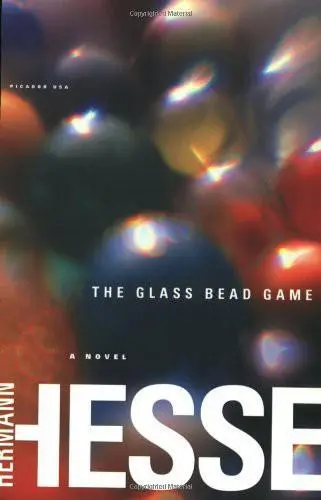
- Название:The Glass Bead Game
- Автор:
- Жанр:
- Год:1969
- ISBN:нет данных
- Рейтинг книги:4 / 5. Голосов: 2
-
Избранное:Добавить в избранное
- Отзывы:
-
Ваша оценка:
The Glass Bead Game: краткое содержание, описание и аннотация
Предлагаем к чтению аннотацию, описание, краткое содержание или предисловие (зависит от того, что написал сам автор книги «The Glass Bead Game»). Если вы не нашли необходимую информацию о книге — напишите в комментариях, мы постараемся отыскать её.
Something like chess but far more intricate, the game of Magister Ludi known as the Glass Bead Game is thought in its purest form, a synthesis through which philosophy, art, music and scientific law are appreciated simultaneously. The scholar-players are isolated within Castalia, an autonomous elite institution devoted wholly to the mind and the imagination…
The Glass Bead Game — читать онлайн бесплатно полную книгу (весь текст) целиком
Ниже представлен текст книги, разбитый по страницам. Система сохранения места последней прочитанной страницы, позволяет с удобством читать онлайн бесплатно книгу «The Glass Bead Game», без необходимости каждый раз заново искать на чём Вы остановились. Поставьте закладку, и сможете в любой момент перейти на страницу, на которой закончили чтение.
Интервал:
Закладка:
About this time Ferromonte sent Knecht a copy of the first part of his subsequently famous work entitled The Reception and Absorption of Slavic Folk Music by German Art Music from Joseph Haydn on. In Knecht’s letter of acknowledgment we find, among other things: “You have drawn a cogent conclusion from your studies, which I was privileged to share for a while. The two chapters dealing with Schubert, and especially with the quartets, are among the soundest examples of modern musicology that I have read. Think of me sometimes; I am very far from any such harvest as you have reaped. Although I have reason to be content with my life here — for my mission in Mariafels appears to be meeting with some success — I do occasionally feel that being so far from the Province and the Waldzell circle to which I belong is distinctly oppressive. I am learning a tremendous amount here, but adding neither to my certainties nor my professional skills, only to my problems. I must grant, though, a widening of horizon. However, I now feel much easier about the insecurity, strangeness, despondency, distraitness, self-doubt, and other ills that frequently assailed me during my first two years here. Tegularius was here recently — for only three days, but much as he had looked forward to seeing me and curious though he was about Mariafels, by the second day he could scarcely bear it any longer, so depressed and out of place did he feel. Since a monastery is after all a rather sheltered, peaceful world, and favorable enough to things of the spirit, in no way hike a jail, a barracks, or a factory, I conclude from my experience that people from our dear Province are a good deal more pampered and oversensitive than we realize.”
At about the date of this letter to Carlo, Knecht persuaded Father Jacobus to address a brief letter to the directorate of the Castalian Order acquiescing in the proposed diplomatic step. To this Jacobus added the request that they would permit “the Glass Bead Game player Joseph Knecht, who is universally popular here” and who was kindly giving him a private course de rebus castaliensibus, to remain for a while longer. The Castalian authorities were, of course, glad to oblige. Joseph, who had been thinking that he was still very far from any such “harvest,” received a commendation, signed by the directorate and by Monsieur Dubois, congratulating him on the success of his mission. But what struck him as most important about this honorific document and what gave him the greatest pleasure (he reported it in well-nigh triumphant tones in a note to Fritz) was a short sentence to the effect that the Order had been informed by the Magister Ludi of his desire to return to the Vicus Lusorum, and was disposed to grant this request after completion of his present assignment. Joseph also read this passage aloud to Father Jacobus and now confessed how greatly he had feared possible permanent banishment from Castalia and being sent to Rome. Laughing, Father Jacobus commented: “Yes, my friend, there is something about Orders; one prefers living in their bosom rather than out on the periphery, let alone in exile. You’ve touched the soiled fringes of politics here, but now go right ahead and forget it, for you are not a politician. But do not break your troth with history, even though it may remain forever a secondary subject and a hobby for you. For you had the makings of a historian. And now let us profit by our time together, as long as I have you.”
Joseph Knecht seems to have made little use of his privilege to pay more frequent visits to Waldzell. However, he listened on the radio to one seminar and to a good many lectures and games. So also, from afar, sitting in his excellent guest room in the monastery, he took part in that “solemnity” in the festival hall of the Vicus Lusorum at which the results of the prize competition were announced. He had handed in a rather impersonal and not at all revolutionary, but solid and elegant piece of work whose value he knew, and he was prepared for an honorable mention or a third or second prize. To his surprise he now heard that he had been awarded first prize, and even before surprise had given way to delight, the spokesman for the Magister Ludi’s office continued reading in his beautiful low voice and named Tegularius as winner of the second prize. It was certainly a moving and rapturous experience that the two of them should emerge from this competition hand in hand, as the crowned winners. He sprang to his feet without listening to the rest, and ran down the stairs and through the echoing corridors out into the open air.
In a letter to the former Music Master, written at this time, we may read: “I am very happy, revered Master, as you can imagine. First the success of my mission and its commendation by the directorate of the Order, together with the prospect — so important to me — of soon returning home to friends and to the Glass Bead Game, instead of being kept in the diplomatic service; and now this first prize for a Game whose formal aspects I did take pains with, but which for good reasons by no means drained me of everything I had to contribute. And on top of that the joy of sharing this success with my friend — it really was too much all at once. I am happy, yes, but I could not well say that I am merry. Because of the dearth of the preceding period — at any rate what seemed to me a dearth — my real feeling is that these fulfillments are coming rather too suddenly and too abundantly. There is a measure of unease mingled with my gratitude, as if the vessel is so filled to the brim that only another drop is needed to tilt it. But, please, consider that I have not said this; in this situation every word is already too much.”
As we shall see, the vessel filled to the brim was destined to have more than just one additional drop added to it. But at the moment Joseph Knecht devoted himself to his happiness, and the concomitant unease, with great intensity, as if he had a premonition of the impending great change. For Father Jacobus, too, these few months were a happy, an exuberant time. He was sorry that he would soon be losing this disciple and associate; and in their hours of work together, still more in their free-ranging conversations, he tried to bequeath to him as much as he could of the understanding he had acquired during a long life of hard work and hard thinking, understanding of the heights and depths in the lives of men and nations. He also had some things to say about the consequences of Knecht’s mission, assessing its meaning, and the value of amity and political concord between Rome and Castalia. He recommended that Joseph study the epoch which had seen the founding of the Castalian Order as well as the gradual recovery of Rome after a humiliating time of tribulation. He also recommended two books on the Reformation and schism of the sixteenth century, but strongly urged him to make a principle of studying the primary sources. He advised Joseph to confine himself to graspable segments of a field in preference to reading ponderous tomes on world history. Finally, Father Jacobus made no bones about his profound mistrust of all philosophies of history.
SIX
MAGISTER LUDI
KNECHT HAD DECIDED to postpone his final return to Waldzell until the spring, the time of the great public Glass Bead Game, the Ludus anniversarius or sollemnis. The era when annual Games lasted for weeks and were attended by dignitaries and representatives from all over the world — what we may call the great age in the memorable history of these Games — already belonged forever to the past. But these spring sessions, with the one solemn Game that usually lasted for ten days to two weeks, still remained the great festive event of the year for all of Castalia. It was a festival not without its high religious and moral importance, for it brought together the advocates of all the sometimes disparate tendencies of the Province in an act of symbolic harmony. It established a truce between the egotistic ambitions of the several disciplines, and recalled to mind the unity which embraced their variety. For believers it possessed the sacramental force of true consecration; for unbelievers it was at least a substitute for religion; and for both it was a bath in the pure springs of beauty. The Passions of Johann Sebastian Bach had once upon a time — not so much in the time they were written as in the century following their rediscovery — been in similar fashion a genuine consecratory act for some of the performers and audience, a form of worship and religious substitute for others, and for all together a solemn manifestation of art and of the Creator spiritus.
Читать дальшеИнтервал:
Закладка:
Похожие книги на «The Glass Bead Game»
Представляем Вашему вниманию похожие книги на «The Glass Bead Game» списком для выбора. Мы отобрали схожую по названию и смыслу литературу в надежде предоставить читателям больше вариантов отыскать новые, интересные, ещё непрочитанные произведения.




Обсуждение, отзывы о книге «The Glass Bead Game» и просто собственные мнения читателей. Оставьте ваши комментарии, напишите, что Вы думаете о произведении, его смысле или главных героях. Укажите что конкретно понравилось, а что нет, и почему Вы так считаете.