Selma Dabbagh - Out of It
Здесь есть возможность читать онлайн «Selma Dabbagh - Out of It» весь текст электронной книги совершенно бесплатно (целиком полную версию без сокращений). В некоторых случаях можно слушать аудио, скачать через торрент в формате fb2 и присутствует краткое содержание. Город: London, Год выпуска: 2011, ISBN: 2011, Издательство: Bloomsbury Publishing, Жанр: Современная проза, на английском языке. Описание произведения, (предисловие) а так же отзывы посетителей доступны на портале библиотеки ЛибКат.
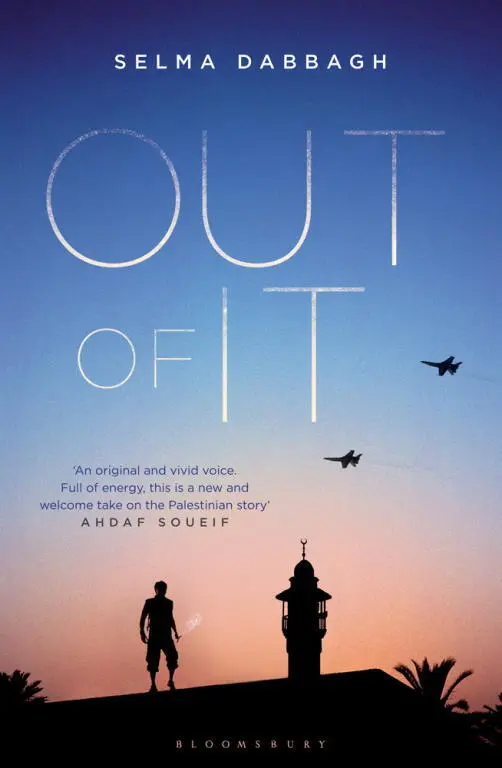
- Название:Out of It
- Автор:
- Издательство:Bloomsbury Publishing
- Жанр:
- Год:2011
- Город:London
- ISBN:978-1-4088-2430-6
- Рейтинг книги:5 / 5. Голосов: 1
-
Избранное:Добавить в избранное
- Отзывы:
-
Ваша оценка:
Out of It: краткое содержание, описание и аннотация
Предлагаем к чтению аннотацию, описание, краткое содержание или предисловие (зависит от того, что написал сам автор книги «Out of It»). Если вы не нашли необходимую информацию о книге — напишите в комментариях, мы постараемся отыскать её.
Meanwhile Sabri, the oldest brother of this disparate Palestinian family works on a history of Palestine from his wheelchair as their mother pickles vegetables and feuds with their neighbours.
Written with extraordinary humanity and humour, and moving between Gaza London and the Gulf, Out of It is a tale that redefines Palestine and its people. It follows the lives of Rashid and Iman as they try to forge paths for themselves in the midst of occupation, religious fundamentalism and the divisions between Palestinian factions. It tells of family secrets, unlikely love stories and unburied tragedies as it captures the frustrations and energies of the modern Arab world.
Out of It — читать онлайн бесплатно полную книгу (весь текст) целиком
Ниже представлен текст книги, разбитый по страницам. Система сохранения места последней прочитанной страницы, позволяет с удобством читать онлайн бесплатно книгу «Out of It», без необходимости каждый раз заново искать на чём Вы остановились. Поставьте закладку, и сможете в любой момент перейти на страницу, на которой закончили чтение.
Интервал:
Закладка:
‘Who knows? They don’t indulge us with reasons any more.’ Khalil folded up his map. It was made out of four printed sheets of A4 taped together and he smoothed it flat along its joins. He turned back to Iman. ‘Why did the family want you there? You didn’t need to see the bodies. I don’t get it. Why did they ask you to go?’
‘I did need to see them like that. It’s important. It will help me… I need to know what to do. It will help me decide.’
Iman was looking up now, past Khalil at their neighbour. Khalil looked as though he had so much more that he wanted to say. He cleared some ash off the table with the side of his hand.
‘What is it?’ Khalil asked Rashid, who was looking agitated.
‘Nothing. Well, actually, this doesn’t seem like the right time but you should both know that I got it. I got an email this morning.’
‘Got what?’ Khalil asked.
‘The scholarship.’ Rashid’s hands opened up, what else? ‘For London.’
‘Well done,’ Khalil said. ‘Congratulations. Mubrook .’
‘ Mubrook ,’ Iman said, looking up at Rashid. ‘Is that the proposal you were working on with Sabri?’
‘That’s what Mama said.’
‘What does that mean?’ Iman asked.
‘It doesn’t matter. Forget it. It just means I’m out of here. A couple more weeks then I’m gone for a year, at least a year. Hopefully longer if I can get to stay there for a while.’ He would ignore them. It was just the wrong time. He could still fly. He was still going. It would still work out.
‘Stay there? No chance,’ Iman said. ‘They’ll kick you straight out of there once you finish your studies. You would need a visa to stay, which no one would give someone like you or me. The only way you could stay would be to find an English wife.’ She cleared out her nose by blowing it hard, so hard that her jaw moved as she did so. No one spoke for some time.
‘I expect you’ll be more interested in this then.’ Rashid spread out Lisa’s message flat in front of Khalil. Khalil would not have had the chance to get to the Centre yet, but at the thought of it Rashid jerked as though someone had just kicked the seat of his chair. Rashid forced Khalil to look up by covering his hand over the message that Khalil was trying to read. ‘Is the Centre OK?’
‘I really don’t know. I presume it is, because I spoke to Jamal last night and he told me that their army had not entered the camp, that they were all on the outside, but I haven’t spoken to him since around midnight. His phone is disconnected again. I am going up there after this. I just needed to go south first before it all got closed up.’
Iman looked at Khalil. ‘It’s got more doors than a CIA safe house, your Centre. I’m sure it will be fine.’
‘Yes, it’s got to be,’ Rashid agreed.
Khalil lifted Rashid’s hand up and read Lisa’s message carefully. ‘Ouch. “Small fry” ?’ And then he read it again. ‘I think we can get what she wants. We’ll need to mention Raed, of course. I think he had a fairly senior position with the Party, didn’t he? That’s worth mentioning.’
‘Do we have casualty figures for last night?’ Rashid asked.
‘We can get them. I sent some fieldworkers out.’ Khalil’s hands were moving again; his voice had lifted. He looked up at Rashid and paused. ‘What’s this?’ He brushed a bit of sand away from the edge of Rashid’s scalp.
‘Who? Which fieldworkers?’ Rashid was finding it difficult to stay focussed. Their neighbour, Seif El Din, seemed interested in everything that they were saying. The fighters were making no bones about staring at their table. The conversation was not going as Rashid had expected at all. Iman was in and out of it and the man on the table next to them, this supposedly religious man, could not stop checking Iman out. Neither could the fighter in green.
‘Jamal would have tried to collect those figures without even being asked,’ Khalil said.
‘Of course, Jamal,’ Rashid said. Iman and Khalil’s admiration of Jamal bugged Rashid. What does Jamal think? Iman would always ask following a political development and Khalil would always know, because the camp viewpoint that Jamal represented was the one that would always give them the authenticity that they needed.
Iman was smoking. She seemed to be completely unaware that she was in public. Saying something about it would make her worse. He should take her home.
‘I expect Jamal’s doing eyewitness statements around the hospital. I left one of the newer volunteers over at the camps in the south. It’s a nightmare down there. They demolished this house – well, a row of houses – but in this one house a gas canister in the kitchen had blown up. I went inside to get a bike for this kid who was standing outside screaming for it. My bike! My bike! on and on. Anyway, the smell?’ Khalil closed his eyes and shook his head, ‘Smoke, sulphur, sewage, rot, the lot. I can’t even describe it.’ He shuddered.
‘You don’t have to. It’s still on you,’ Rashid said.
‘There were these chickens running everywhere and once I got inside the family started shouting for blankets and fridges and I don’t know what, and I started telling them that I was not a removal man for God’s sake. It was pathetic. We are pathetic. They brought a donkey with a bucket of water to put out the fire. A donkey .’
‘Maybe a fire engine wouldn’t have made it in there,’ Rashid suggested.
‘Still, come on, a donkey?’ Khalil seemed beaten down and then rose up again. ‘But from our point of view, it’s good.’
‘It is?’
‘For the talk. It backs our argument about the applicability of human rights law in areas under siege. We can use it to evidence the complete sealing-off of an area. It backs up what we are trying to say about the breaches of the Conventions.’
‘Ha!’ said their bearded neighbour, and with it finally acknowledged that he had been listening to everything that they had said. ‘You think that will make a difference?’ Khalil’s eyes widened, the applicability of international human rights and humanitarian law to areas under siege was Khalil’s passion. ‘I have been listening to you two,’ Seif El Din said, ‘and it’s all well and good this work, but all you are doing is just playing their game. You create some interesting little jobs for some friendly Europeans and you ease their consciences a bit, but if you want change, if you really want change, this is not the way.’
Iman and Khalil were now completely alert. The whole café was. Rashid could tell that Khalil liked the ‘interesting little job creation’ angle; Rashid had heard him say similar things himself.
‘We don’t have enough of the world supporting us. Nor do we have the time,’ their neighbour continued.
Although the man’s words were addressed to Khalil, Seif El Din appeared to speak only to Iman, who had stubbed out her cigarette and now sat up as though she was about to take notes.
‘You,’ their neighbour said, deliberately poking a finger towards Khalil, ‘are taking the legal route which is, of course, virtuous. But what are we waiting for? The conversion of the Jews? The Conventions? It does you as much good to consider the laws of Hammurabi. These Conventions will turn to dust without our situation improving. Little girls and brave men will continue to die before your international laws are enforced. We’re not trying to discipline children from some private school here. And then you say “international”, but is that right? Was your grandfather’s village leader consulted, or any representative of his? No, my friend, these are the justifying laws of conflict and empire. They are the Occupier’s laws; they create them and they benefit from them, as and when it suits them.’
Читать дальшеИнтервал:
Закладка:
Похожие книги на «Out of It»
Представляем Вашему вниманию похожие книги на «Out of It» списком для выбора. Мы отобрали схожую по названию и смыслу литературу в надежде предоставить читателям больше вариантов отыскать новые, интересные, ещё непрочитанные произведения.










Обсуждение, отзывы о книге «Out of It» и просто собственные мнения читателей. Оставьте ваши комментарии, напишите, что Вы думаете о произведении, его смысле или главных героях. Укажите что конкретно понравилось, а что нет, и почему Вы так считаете.