Selma Dabbagh - Out of It
Здесь есть возможность читать онлайн «Selma Dabbagh - Out of It» весь текст электронной книги совершенно бесплатно (целиком полную версию без сокращений). В некоторых случаях можно слушать аудио, скачать через торрент в формате fb2 и присутствует краткое содержание. Город: London, Год выпуска: 2011, ISBN: 2011, Издательство: Bloomsbury Publishing, Жанр: Современная проза, на английском языке. Описание произведения, (предисловие) а так же отзывы посетителей доступны на портале библиотеки ЛибКат.
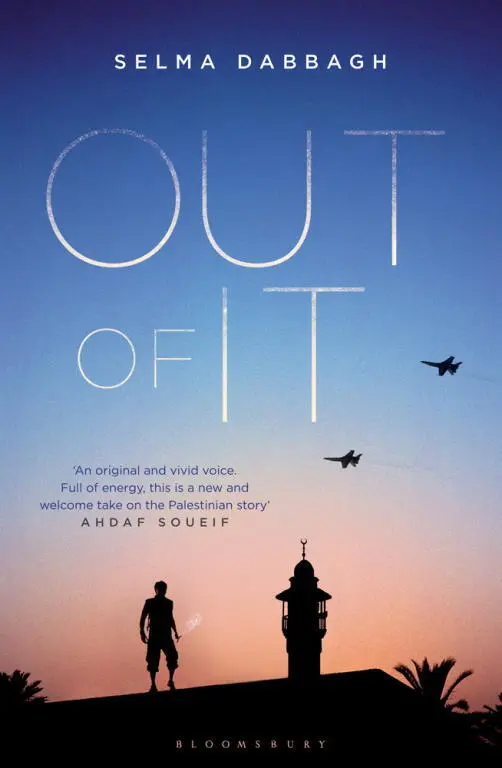
- Название:Out of It
- Автор:
- Издательство:Bloomsbury Publishing
- Жанр:
- Год:2011
- Город:London
- ISBN:978-1-4088-2430-6
- Рейтинг книги:5 / 5. Голосов: 1
-
Избранное:Добавить в избранное
- Отзывы:
-
Ваша оценка:
Out of It: краткое содержание, описание и аннотация
Предлагаем к чтению аннотацию, описание, краткое содержание или предисловие (зависит от того, что написал сам автор книги «Out of It»). Если вы не нашли необходимую информацию о книге — напишите в комментариях, мы постараемся отыскать её.
Meanwhile Sabri, the oldest brother of this disparate Palestinian family works on a history of Palestine from his wheelchair as their mother pickles vegetables and feuds with their neighbours.
Written with extraordinary humanity and humour, and moving between Gaza London and the Gulf, Out of It is a tale that redefines Palestine and its people. It follows the lives of Rashid and Iman as they try to forge paths for themselves in the midst of occupation, religious fundamentalism and the divisions between Palestinian factions. It tells of family secrets, unlikely love stories and unburied tragedies as it captures the frustrations and energies of the modern Arab world.
Out of It — читать онлайн бесплатно полную книгу (весь текст) целиком
Ниже представлен текст книги, разбитый по страницам. Система сохранения места последней прочитанной страницы, позволяет с удобством читать онлайн бесплатно книгу «Out of It», без необходимости каждый раз заново искать на чём Вы остановились. Поставьте закладку, и сможете в любой момент перейти на страницу, на которой закончили чтение.
Интервал:
Закладка:
‘They’re never satisfied,’ said another. ‘Never.’
Parts of the crowd seemed to be reconsidering their direction, watching the drone move ahead of them; they were heading back in the direction they had come from and by doing so they made space for Iman to move forwards and catch sight of Seif El Din ahead of her. His head held up against the other heads that were bare and bent.
They worked fast that group. Manar had said they would contact her and it was just hours later that the man was there, addressing her, persuading her. The contact had come. She had said she was ready. Well, she was. Maybe that morning, after the meeting, she had not been, but that was a long time ago, before Taghreed, before Raed. She needed to contact him, tell him that she was ready. That was all.
Khalil had to rethink. They could do it his way but it was not for her, not any more. She needed to act. She had been there. They had not seen Taghreed and Raed all burnt like that, all charred and twisted. It changed things. Deaths of children changed everything. Resistance movements started with dead children. And there she was, for it did not matter who it was that she followed really, all this hair-splitting about what party you backed, which leader and what position that had been taken on the agreements of 1973, ’78, ’94. Who cared? To hell with it. The thing was to act and that was what she was doing. Peoples Fronts, Popular Wings, United Leaderships – the hell with them, too. It was all about action ; there were no alternatives.
She was not about to stay at home making pickles like her mother. For all her talk, what had her mother actually done? Marry her father? And her father, for all his former days of glory, where had he ended up but out of it? Fobbing them off with a money transfer every couple of months, away from this place, from family, from politics. Living in the Gulf. The Gulf? And Rashid just prostrated himself before anything Western. Sabri tried, but fussing over his book was not going to solve anything. It was not as though the world did not know what they had done. Rashid’s assumption that gathering evidence of these violations mattered was flawed.
It went back to what Seif El Din said. They were relying on conscience, on a sense of guilt, but these people did not have one towards them. Violence was justified if the other side viewed you as less than human (Mandela, right? Or was it Brecht?). And that was how it was. They would not expect it of her. No one would expect it of her, Iman, to act in this way. She spent her time reading poetry in her room. Maybe they would say that it was being unmarried at her age that drove her to it? They would need to find some kind of justification for a non-religious girl like her doing such a thing.
The solid mass of human traffic pushed out into the square and fanned out around its sides. Seif El Din was just ahead of her. His step was far younger than his age. Now out of the alleyway, Iman became aware that there was someone following her, someone trying to match her pace through the crowd. Maybe it was one of Seif El Din’s men. She could not look. She needed to keep moving. He was in front of the statue of a phoenix that the Leaders had built, now scrawled with graffiti. Return to the Egg! Embrace the Ashes! demanded the red spray paint.
She was about to catch up with him (there was someone behind her; he was almost running now), and then he would just have to look and he would know that she was ready (why was somebody following her?). She just needed to establish contact. They would talk elsewhere. The drones had now gone but a helicopter was coming in close, the palms were bending down low, low, deferential, bent like reeds, to clear a path for this machine cutting through the sky. Water was being sprayed out of the dirty fountain in the square. It was like those Vietnam films with a cloud of dust blowing back at the sky, rushing into her face, and the helicopter was low, low so that, with its open sides, she could almost make out through the window a real face, a human one next to the profile with feathers painted on the side, Apache . Are we to be killed off in reservations by helicopters named after others killed off in reservations? The marketplace was emptying fast, back into the alleys and side roads, but Seif El Din moved ahead, not looking up, weaving between parked cars.
And then it came. So instant and heavy that the ground seemed to bounce up beneath her and the air was alive with light and dust, screams filled her eyes, her mouth, her ears. They killed him! Mustafa Seif El Din! Abu Mohammed! They killed him! Hands on her arms, around her waist, pulled her back, had pulled her back, before the strike, and the heat was so angry that she was red in the face from it, and there was a burnt hair smell like that morning with the cigarette, and something sweet-smelling and fleshy. But the noise had stopped, the whirring engine noise that had been coming and going since she was in the café. It had gone and she was left with something trivial, almost domestic, a ringing sound in her ears as though somewhere, far off, a fridge door had been left open.
Chapter 11
‘Damn it,’ Khalil swore at the packed beach that had absorbed his key. ‘We’ll never find it. We’ll have to go back to my place and get the spare.’ He scraped the lumps of wet sand off his shoes on to the kerbstone. ‘And I think my mother’s there.’
They were taking the beach route to get to the Centre and it seemed as though the whole coastline was on the move. The overriding current was heading north but there were streams of people that were going against it, pushed to the limits, on one side paddling through the edges of waves with children on their shoulders and plastic bags in their hands. Arms were being pulled from their sockets and baby fingers were slipping over eyes from foreheads, blocking visions of makeshift paths. The centre of the beach bore the heavy traffic of carts and donkeys while bicycles were carried and dragged across the sand.
Iman had been in a state in the café. Rashid couldn’t remember when he had last seen her like that. He had wanted to follow her, had meant to take her home, but by the time the bill had been sorted out there was no sign of her and she didn’t seem to want him around. He resolved to spend more time with her before he left. Maybe this evening he could get her to come and sit on the roof with him for a while. Khalil could talk to her and there was always Sabri. Iman went to Sabri for guidance and Sabri went to their mother, and his mother never needed guidance from anyone. She had probably come out of the womb that way.
The smell of the sea, the expanse of water, the salt of the air, the seagulls shouldering each other in the sky, the sense of being part of a purposeful mass lifted Rashid. He had run into two friends that he had not seen for years and they had laughed about what a lucky, lucky bastard Rashid was for getting the scholarship.
‘It’s sort of romantic,’ Rashid had said when they first joined up with the rest of the human traffic.
‘There is nothing romantic about being bombed and starved back into the Middle Ages,’ Khalil had replied, unwilling to risk looking up from his feet for a minute.
It did not take long for Rashid to stop seeing the charm of the beach. He grazed himself on an upturned fishing boat; his trouser legs had become plastered to his calves; his cuts stung with salt and splinters; his shoes were heavy with water, his toes gritty with sand. Khalil had stumbled when his toe caught in a half-buried plastic bag, but it was not until they got to the pavement that he realised that the key for the Centre must have dropped out with the fall.
‘You won’t find it in there,’ Rashid said looking back at the lumbering crowd of people walking down the beach. ‘Impossible.’
Читать дальшеИнтервал:
Закладка:
Похожие книги на «Out of It»
Представляем Вашему вниманию похожие книги на «Out of It» списком для выбора. Мы отобрали схожую по названию и смыслу литературу в надежде предоставить читателям больше вариантов отыскать новые, интересные, ещё непрочитанные произведения.










Обсуждение, отзывы о книге «Out of It» и просто собственные мнения читателей. Оставьте ваши комментарии, напишите, что Вы думаете о произведении, его смысле или главных героях. Укажите что конкретно понравилось, а что нет, и почему Вы так считаете.