Selma Dabbagh - Out of It
Здесь есть возможность читать онлайн «Selma Dabbagh - Out of It» весь текст электронной книги совершенно бесплатно (целиком полную версию без сокращений). В некоторых случаях можно слушать аудио, скачать через торрент в формате fb2 и присутствует краткое содержание. Город: London, Год выпуска: 2011, ISBN: 2011, Издательство: Bloomsbury Publishing, Жанр: Современная проза, на английском языке. Описание произведения, (предисловие) а так же отзывы посетителей доступны на портале библиотеки ЛибКат.
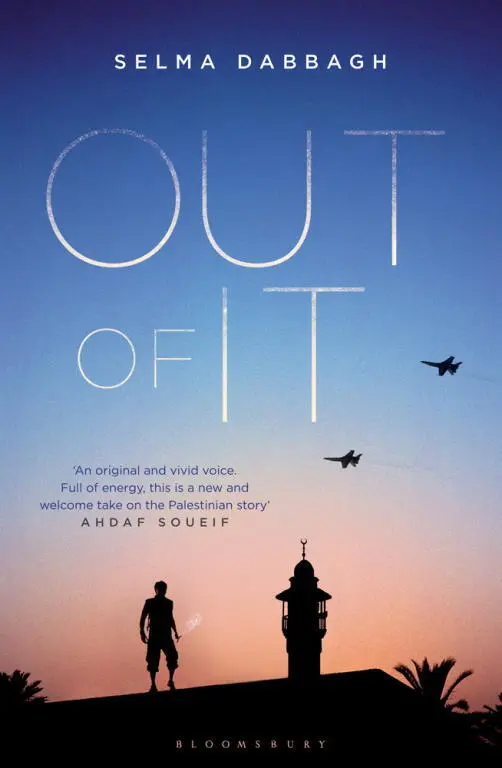
- Название:Out of It
- Автор:
- Издательство:Bloomsbury Publishing
- Жанр:
- Год:2011
- Город:London
- ISBN:978-1-4088-2430-6
- Рейтинг книги:5 / 5. Голосов: 1
-
Избранное:Добавить в избранное
- Отзывы:
-
Ваша оценка:
Out of It: краткое содержание, описание и аннотация
Предлагаем к чтению аннотацию, описание, краткое содержание или предисловие (зависит от того, что написал сам автор книги «Out of It»). Если вы не нашли необходимую информацию о книге — напишите в комментариях, мы постараемся отыскать её.
Meanwhile Sabri, the oldest brother of this disparate Palestinian family works on a history of Palestine from his wheelchair as their mother pickles vegetables and feuds with their neighbours.
Written with extraordinary humanity and humour, and moving between Gaza London and the Gulf, Out of It is a tale that redefines Palestine and its people. It follows the lives of Rashid and Iman as they try to forge paths for themselves in the midst of occupation, religious fundamentalism and the divisions between Palestinian factions. It tells of family secrets, unlikely love stories and unburied tragedies as it captures the frustrations and energies of the modern Arab world.
Out of It — читать онлайн бесплатно полную книгу (весь текст) целиком
Ниже представлен текст книги, разбитый по страницам. Система сохранения места последней прочитанной страницы, позволяет с удобством читать онлайн бесплатно книгу «Out of It», без необходимости каждый раз заново искать на чём Вы остановились. Поставьте закладку, и сможете в любой момент перейти на страницу, на которой закончили чтение.
Интервал:
Закладка:
The man stared hard at a transfixed Iman.
‘It is essential,’ Khalil started after swallowing, moving his head slightly to emphasise each word, ‘that we believe in the Western governments’ ability to change. It is crucial that we communicate our situation. It is imperative that we document the Occupier’s abuses. It is…’ but Seif El Din seemed to know these arguments already.
‘If you want them to change, let me ask you this: what would alter your behaviour if you were benefiting from a situation? Feeling guilty about something? The loss of money? Or the prospect of someone you love getting hurt or killed? I would say only the last two, and those are the only things we can use to get this situation to change, to get them to stop.’
He stared at the group, bowed his head to Iman and left. He seemed to leave a vacuum in the room behind him.
Outside, the carrot boy had made a sale.
‘I’m going,’ Iman said, pulling the napkin off her head. Rashid had not thought that it would be possible, but she looked even worse now than she had when she first came in.
‘Where? Where are you going?’ Rashid asked.
‘I have to do something. I need to do something.’
Iman pushed herself out of the door as the carrot boy pushed his way in. The boy went up to the counter and ordered as much food as the fighters had had all together.
‘Where are your shoes?’ the café owner asked.
‘Are you bourgeois or something?’ the boy replied. ‘Food comes before shoes.’
The fighters liked this and repeated it. They rallied to the boy’s support until the owner capitulated. Once his mouth had been thoroughly stuffed at least a couple of times, the boy turned to the audience that had been held spellbound by his eating and spoke, his mouth still full of bread.
‘They’re using that gas again.’
‘What gas?’ asked the fighter with the Stalin moustache.
‘That gas, the one without a name or an antidote but with a nice sweet minty smell, the gas that makes you do this.’ The boy started kicking his legs and throwing his forearms about in convulsions. His head lolled to one side, the bread fell from his mouth. He replaced it and went back to eating.
‘Where?’ Khalil was ready to burst now. ‘How do you know? When? Where? How much?’
‘Last night, on the edges of the Shore Camp. They say some canisters were also dropped by the Sultan’s Well. And I know these things. I get around.’
He had hummus smeared around his mouth now. Rashid’s fly had adopted the boy and buzzed twice around his bread before the boy reached out and squashed it between the fingertips and the palm of his left hand. He continued to eat with his right hand.
‘Gas. Do you believe that?’ Khalil asked.
Rashid shrugged. ‘They’ve done it before.’
‘That’s all we need. That and some zealot making me feel like a neurotic housewife who only focusses on the things she can control: she can’t stop her husband screwing around so she puts her energies into keeping the lid tight on the toothpaste tube. It’s that kind of behaviour. So what kinds of bullets were used? How many metres of barbed wire? What kind of gas? What the hell? Is he right? Is there no goddamn point in any of this anymore? Maybe the donkey with half a bucket of water is of greater use.’ Khalil could feel the weight of his fall on Rashid and checked himself, straightening up. ‘We should go and check on the Centre.’
‘Sure. Sure. But it sounds like we’ll need to take the beach route if all the roads are closed.’
‘Not closed,’ said the boy relishing his expertise, ‘dug up. Dug the whole lot up. Bulldozers all over the place. Back to the beach.’ He started singing a song to the sea, spitting grainy particles of green zaatar across the room.
The owner presented Rashid with the bill that included the cost of their neighbour’s tea. ‘No way. He was not with us!’ Rashid protested.
‘But he’s a religious man.’
‘That doesn’t mean I have to pay for his tea now, does it?’ Rashid tried to argue. He didn’t mind paying, but he didn’t want to be seen to be paying, people might think all types of things, ‘Look, I’ll pay for him but I’ll pay for the boy too, OK? No special favours or anything, all right?’
‘ Bon abeteeh ,’ the boy said, one of his feet propped up on the seat in front of him as he munched at his bread.
Rashid was watching the boy, wondering how anyone of his size could eat so much so fast, when he noticed Abu Omar for the third time that morning walking quite fast outside the window. Surprisingly fast for such a lazy-arsed man. Rashid was following his neighbour’s movements when the fighters all stood up at the same time and blocked out his view. It was only when they crammed their way out of the door that Rashid realised that their green-jacketed leader had gone before them.
Hope. Rashid recognised it as soon as the men had gone. That was what he had felt. Hope. That was the feeling that the leader had evoked in him when he first saw him. Rashid felt ashamed for having experienced it; so often it felt like the thing that could devastate them all.
Chapter 10
In the café it had been as though a jeep had her in its headlights at the end of an alleyway. She had realised who the Seif El Din man was and what it meant that he was there. It was when he had started staring that the noise in her ears had begun. The approach had come, as Manar had said it would.
It was too much in there, Seif El Din and that fighter in the same place at the same time. Twice in one day she had seen that fighter in green. He had to be after something. When Khalil had cleared his throat to respond to the man’s arguments, she had almost wanted to touch his leg under the table and tell him not to, not to say anything, but she could not move. The fighter in the green jacket had seemed too interested in decoding her actions for her to make a move like that.
The noise in her head did not stop when she left the café. It followed her; it was not constant but as though a vacuum was pulling all sound away only for it to return with an intense rush. Maybe it was just too crowded in there: the stares, the sound of the chairs scraping, the echo, the muttering of the fighters, the fear in Khalil’s voice, his leg juddering on the ball of his foot under the table, scratching sand into the flooring as it moved around, the smoke, Rashid’s eyes with the irises strung up by crazed red veins. And then there was her heart and the clenching, clenching, clenching of it. She had thought she was panicking deliberately which was why it was racing so fast and she had tried to calm it and it had not, it would not, and so it had started panicking her more because she could not believe that it could continue to go that fast without breaking. Her lungs had gone, too. It was like gum inhaled backwards into her throat so that there was nothing to breathe with any more.
Being outside made no difference this time. The noise in her ears had not been left behind in the café. It didn’t help that the air was stale and that the crowd was thick, human, and full of close smells of bad nights and sick children. She could not feel the air above her because those around her were breathing it in faster than she could get at it. It was hard to keep sight of Seif El Din, her contact. She plunged into the crowd; angles of elbows were between her and where she wanted to be, wheelbarrows pushing up against her shins, carts bruising her legs. The roads were down, blocked and dug up. You could tell. The alleys were packed.
‘What do they want with us now?’ some woman was screaming up at the sky where others were pointing at a surveillance drone. ‘Didn’t they get their fill last night?’
Читать дальшеИнтервал:
Закладка:
Похожие книги на «Out of It»
Представляем Вашему вниманию похожие книги на «Out of It» списком для выбора. Мы отобрали схожую по названию и смыслу литературу в надежде предоставить читателям больше вариантов отыскать новые, интересные, ещё непрочитанные произведения.










Обсуждение, отзывы о книге «Out of It» и просто собственные мнения читателей. Оставьте ваши комментарии, напишите, что Вы думаете о произведении, его смысле или главных героях. Укажите что конкретно понравилось, а что нет, и почему Вы так считаете.