Maggie Helwig - Girls Fall Down
Здесь есть возможность читать онлайн «Maggie Helwig - Girls Fall Down» весь текст электронной книги совершенно бесплатно (целиком полную версию без сокращений). В некоторых случаях можно слушать аудио, скачать через торрент в формате fb2 и присутствует краткое содержание. Город: Toronto, Год выпуска: 2008, ISBN: 2008, Издательство: Coach House Books, Жанр: Современная проза, Триллер, на английском языке. Описание произведения, (предисловие) а так же отзывы посетителей доступны на портале библиотеки ЛибКат.
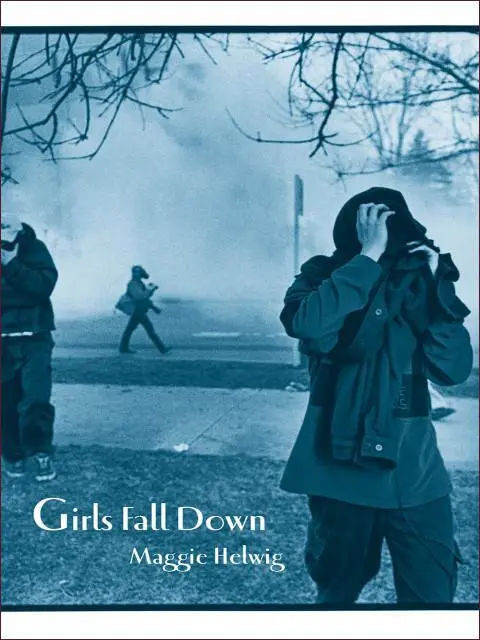
- Название:Girls Fall Down
- Автор:
- Издательство:Coach House Books
- Жанр:
- Год:2008
- Город:Toronto
- ISBN:978-1-55245-196-0
- Рейтинг книги:3 / 5. Голосов: 1
-
Избранное:Добавить в избранное
- Отзывы:
-
Ваша оценка:
Girls Fall Down: краткое содержание, описание и аннотация
Предлагаем к чтению аннотацию, описание, краткое содержание или предисловие (зависит от того, что написал сам автор книги «Girls Fall Down»). Если вы не нашли необходимую информацию о книге — напишите в комментариях, мы постараемся отыскать её.
Alex was witness to this first episode. He’s a photographer: of injuries and deaths, for his job at the hospital, and of life, in his evening explorations of every nook and cranny of the city. Alex is a diabetic, now facing the very real possibility of losing his sight, and he’s determined to create a permanent vision of his city through his camera lens. As he rushes to take advantage of his dying sight, he encounters an old girlfriend – the one who shattered his heart in the eighties, while she was fighting for abortion rights and social justice and he was battling his body’s chemical demons. But now Susie-Paul is fighting her own crisis: her schizophrenic brother has been missing for months, and the streets of Toronto are more hostile than ever.
Maggie Helwig, author of the critically lauded
, has fashioned a novel not of bold actions but of small gestures, showing how easy and gentle is the slide into paranoia, and how enormous and terrifying is the slide into love. This is a remarkable novel: romantically and politically charged, utterly convincing in its portrait of our individual and societal instability, and steadfast in its faith in redemption.
Girls Fall Down — читать онлайн бесплатно полную книгу (весь текст) целиком
Ниже представлен текст книги, разбитый по страницам. Система сохранения места последней прочитанной страницы, позволяет с удобством читать онлайн бесплатно книгу «Girls Fall Down», без необходимости каждый раз заново искать на чём Вы остановились. Поставьте закладку, и сможете в любой момент перейти на страницу, на которой закончили чтение.
Интервал:
Закладка:
‘I’m sorry.’
‘Look, look at this.’ She reached into a shoebox on the small table. ‘I wrote him up this list.’ She found a piece of lined paper and held it out, under the lamp. Alex looked at the large shaky letters, spelling out CRACKERS RITZ. ON SHELF WITH COOKIES. Underneath, she had done a rough drawing of a Ritz Cracker and coloured it orange. ‘I just thought if the power goes off I could put the tuna on them,’ she said, her voice beginning to shake.
‘I really don’t think the power’s going to go off.’
‘But it did one time before. If there was ice on the lines.’
‘I’m pretty sure that was different.’
‘Or if the terrorists, you know. In these days, you can never be sure. If I had a flashlight it would be better, but he isn’t kind to me.’
‘I’m very sorry. Could you maybe just look at a picture and tell me if you recognize someone?’
‘Of course, of course.’ She reached out and clutched Alex’s hand, and he started in alarm. ‘My husband died three years ago this day,’ she said. ‘We were married for forty years. We were so happy.’ He saw tears forming in the corners of her eyes; with her free hand she took a tissue from her pocket and wiped at them. ‘He fell down with a heart attack and died instantly. My son wanted to say something at the funeral, but, you know, I wasn’t sure. But you know I talked to the Metropolitan, you know, the police, and they said after a couple of years it’s okay to let him into the house again, and it was ten years by now, and the police said after a couple of years I could let him be in the house, you know, not to stay here but to come in. But I didn’t know about a speech at the church.’
‘I’m sorry,’ repeated Alex helplessly.
‘I have such problems in this life,’ she said, gripping the little ball of tissue. ‘He is not a good son.’
‘Please,’ said Alex. ‘Could you just take a quick look at a photo? Please?’
‘You can help me,’ said the woman, her face lighting up. ‘Maybe, I think you can help me.’ She ducked her head down, opening a drawer in the little table; her black hair parted knife-sharp in the middle, fragile and dry. ‘If you wrote a letter to the city hall,’ she said, bringing out another piece of pencil and a paper and pushing them towards Alex. He tried to move them back towards her, but she picked up his hand and wrapped it around the pencil. ‘About the problem of the power.’
‘I don’t know… ’
‘I can see you have an education, of course. My son, he never took advantage of an education. But you are a good boy to an old lady, aren’t you?’
He angled the paper under the desk lamp and wrote Dear Councillor , then couldn’t remember where the ward boundary lay or who her city councillor would be, so he left the salutation as it was. Mrs. Nakamura is afraid the power will go o ff. He put down the pencil.
‘You tell them what I need,’ she said; and this opened up such an expanse of possible longings that language was helpless. Dear Councillor, he thought. Mrs. Nakamura needs your love. Mrs. Nakamura needs her life redeemed. Mrs. Nakamura and I are waiting for rescue.
She wants a flashlight and some Ritz Crackers , he wrote.
‘Draw for them.’
The pencil was not very sharp, but he outlined a rough sketch of a flashlight, and then added a box of crackers beside it, concentrating on the detailing, adding a little cross-hatched shadow, so he wouldn’t have to look up and meet her eyes.
Your assistance would be greatly appreciated . He added the date and address at the top of the page, and signed it Alexander Nicholl Deveney, the full name he never used.
The woman picked up the piece of paper and studied it, folded it carefully twice and put it in her pocket.
‘You are kind,’ she said. ‘I’ll take it to them tomorrow. It’s better than the mail. In these days.’
‘Yes. I’m sure it is.’ He reached for the snapshot and put it on the table between them. ‘Do you know this man?’
‘Oh yes,’ she said. She opened the shoebox again and took out a sheet of graph paper, then took a small pair of black-rimmed glasses from her pocket and put them on.
‘Yes. He is here on the chart.’ She stared at the graph paper, then put her finger on one line and turned it to Alex. He saw numbers, Japanese characters, and English words here and there that he recognized. SAD MAN, said the words she was pointing to. PROBLEM IN SINK.
‘He lived in #5 upstairs. But he left a long time ago.’
‘Do you know where he went?’
‘No, I’m sorry. He was a man who had a lot of difficulties. Was he your friend?’
‘Not exactly.’
‘My son is also a man with difficulties, but I don’t understand them. I don’t understand why he behaves that way. And he goes to that church up at Finch. Your friend, is he getting treatment for his problems? Are they taking good care of him?’
‘I don’t know where he is.’
‘Oh. That’s very bad. You will have to hope and pray.’ She took his hand again. ‘I will say a prayer for you.’
‘That’s okay. I don’t really… ’
‘I will say a prayer for your friend as well.’
‘Yes. Well. Thank you. I think I should go.’
‘Did you hear anything about the weather report? They were saying a storm tonight. I just worry about the ice on the lines.’
‘I’m sure it will be all right. Honestly.’
‘The Metropolitan said I could let him into the house again after a few years.’
Alex stood up. ‘I do have to go. I’m terribly sorry.’ He took a step backwards towards the door. ‘I’m sure the power won’t go off.’
‘Thank you,’ said the woman, her eyes filling again with tears. ‘It’s very kind of you to come to talk to me. It’s truly very kind. I’ll pray for you and your friend tonight.’
‘Yes,’ said Alex, and backed out the doorway, turning to move quickly down the corridor, and up the stairs in two long steps. The door opened from the inside, and he pushed the piece of wood back into place, not sure if he should do this or not but thinking somehow that it was better to leave everything as he had found it. The cold air was sharp against his skin, and he pulled on his cap and stood on Bathurst Street, taking deep breaths.
It would be a pathetic report to take back to Susie, but she hadn’t expected much from him anyway.
He turned onto College and walked back towards his apartment. A streetcar drove past, a small child pressing her face against the window in a comic grimace; the door of a café opened briefly, and he heard laughter, and the sound of an espresso machine. When he got to his block, he saw the man who was being held hostage by terrorists sitting in a doorway, and reached into his pocket for change.
‘Excuse me, sir,’ said the man, who had his arms wrapped around his legs, against the cold. ‘Would you happen to have… ’
‘Sure,’ said Alex, and gave him a handful of coins.
‘Thank you very much, sir. I wouldn’t ask, but… ’
‘It’s okay. I know.’ ‘It’s a bad situation, sir. They’re upset that I have the knowledge. They don’t want me to have the knowledge, about the people falling out of the air.’
Alex sighed and leaned against the bricks. For a minute he saw the whole city as one great cry for attention, and he thought that maybe people died on the street not from cold or heat or hunger but only because no one got enough attention. ‘Okay,’ he said. ‘Why were the people falling?’
‘Well,’ said the man, his eyes growing brighter. ‘That’s the part that we need to think about in an analytical way. Because sometimes things fall down, sir, and the force of your will can’t keep them standing. Because you remember how it was, sir. When the buildings were coming down.’
Читать дальшеИнтервал:
Закладка:
Похожие книги на «Girls Fall Down»
Представляем Вашему вниманию похожие книги на «Girls Fall Down» списком для выбора. Мы отобрали схожую по названию и смыслу литературу в надежде предоставить читателям больше вариантов отыскать новые, интересные, ещё непрочитанные произведения.







Обсуждение, отзывы о книге «Girls Fall Down» и просто собственные мнения читателей. Оставьте ваши комментарии, напишите, что Вы думаете о произведении, его смысле или главных героях. Укажите что конкретно понравилось, а что нет, и почему Вы так считаете.