Arthur Hailey - Strong Medicine
Здесь есть возможность читать онлайн «Arthur Hailey - Strong Medicine» весь текст электронной книги совершенно бесплатно (целиком полную версию без сокращений). В некоторых случаях можно слушать аудио, скачать через торрент в формате fb2 и присутствует краткое содержание. Жанр: Современная проза, на английском языке. Описание произведения, (предисловие) а так же отзывы посетителей доступны на портале библиотеки ЛибКат.
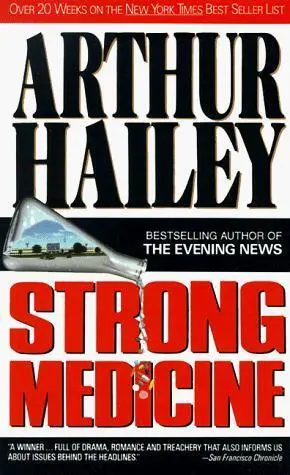
- Название:Strong Medicine
- Автор:
- Жанр:
- Год:неизвестен
- ISBN:нет данных
- Рейтинг книги:5 / 5. Голосов: 1
-
Избранное:Добавить в избранное
- Отзывы:
-
Ваша оценка:
Strong Medicine: краткое содержание, описание и аннотация
Предлагаем к чтению аннотацию, описание, краткое содержание или предисловие (зависит от того, что написал сам автор книги «Strong Medicine»). Если вы не нашли необходимую информацию о книге — напишите в комментариях, мы постараемся отыскать её.
Strong Medicine — читать онлайн бесплатно полную книгу (весь текст) целиком
Ниже представлен текст книги, разбитый по страницам. Система сохранения места последней прочитанной страницы, позволяет с удобством читать онлайн бесплатно книгу «Strong Medicine», без необходимости каждый раз заново искать на чём Вы остановились. Поставьте закладку, и сможете в любой момент перейти на страницу, на которой закончили чтение.
Интервал:
Закладка:
It wasn't true, of course. For plenty of men such opportunities never arose, while others stayed monogamous from choice. Nonetheless, statements like the one she remembered held a core of truth. Celia knew from gossip, and sometimes public indiscretions, that there was plenty of sleeping around in the medical circles where she and Andrew moved, and in the pharmaceutical business too. Which led to a further question: Did occasional sexual side excursions matter in a solid marriage? She didn't think so-providing they were neither intensely serious nor became lasting affairs. In fact, Celia believed, many marriages broke up needlessly because spouses were prudish or jealous, or both, about what was often no more than some harmless sexual fun. Finally, about Andrew, she thought that whatever he had or hadn't done outside their marriage, he would always be considerate and discreet. Celia intended to be equally discreet, which was why she accepted the fait accompli of no more clandestine meetings between herself and Martin. End of personal lucubration. Now about Harlow. What, Celia asked herself, should her recommendation be, the recommendation she would make to Sam tomorrow? Obviously there was only one line for her to take: Close the institute. Admit that opening it had been a mistake. Cut losses quickly. Accept that Martin's mental aging project had been a disappointing failure. Or was it the only course? Or even the best one? Even now, despite all that she had seen and heard at Harlow, Celia was unsure. One thing in particular kept coming back to her: It was something Martin had said in his distress last night, moments before they left the Churchgate Hotel dining room. Since this morning, beginning while she was being driven by limousine to London Airport, Celia had repeatedly played Martin's words over in her mind as if they were recorded on tape.”"at we've looked for will be found... it will happen, must happen... but somewhere else.” When the words were spoken, she had taken little heed of them. But somehow, now, their significance seemed greater. Could Martin still be right and everyone else wrong? And where was "somewhere else"? Another country? Another pharmaceutical firm? Was it possible that if Felding-Roth abandoned Martin's mental aging research, some other company-a competitor-might pick it up and see it through to a successful conclusion, "successful" implying production of an important, profitable new drug? There was also the question of research, on the same subject, being done in other countries. Two years ago Martin had mentioned scientists working on projects in Germany, France, New Zealand. Celia knew from her inquiries that research in those other countries was continuing-though apparently with no more success than at Harlow. But supposing, after Harlow was discontinued, one of those other scientists had a sudden breakthrough, a breathtaking discovery which might have happened at Harlow had they carried on. If it turned out that way, how would Felding-Roth feel? And how would Celia feel-and appear to others in the company-if she recommended closing Harlow now? Therefore, for an array of reasons, there was a temptation for her to do nothing--"nothing," in this case, meaning: recommend carrying on at Harlow in the hope that something might develop. Yet, Celia reasoned, didn't that kind of decision-or, rather, in- decision-represent merely the safest way to go? Yes! It was a take- no-action-now, but wait-and-see philosophy which she had heard both Sam Hawthorne and Vincent Lord describe caustically as prevailing at FDA in Washington. All of which brought her full circle to Sam's pre-departure instruction: "If you need to be tough and ruthless... do it! " Celia sighed. It was no good wishing she did not have this difficult choice to make. The fact was, she did. Equally to the point: tough decisions were part of top-management responsibility, which she had once coveted, and now had. But when the Concorde landed at New York, she was still not positive about which way her advocacy should go.
As it turned out, Celia's meeting with Sam Hawthorne was delayed by a day because of Sam's own heavy schedule of appointments. By then, her conclusion about Harlow was strong and unequivocal. "Well," Sam said, wasting no time with preliminaries after she was seated facing him in the presidential office suite, "do you have a recommendation for me?" The direct question, and Celia's own instincts, made it clear that Sam was in no mood for details or a background briefing. "Yes," she said crisply.”Weighing everything, I believe it would be a shortsighted, serious mistake to close the Harlow institute. Also, we should carry on with Martin's mental aging research, certainly for another year, and possibly for longer.”
Sam nodded and said matter-of-factly, "All right.”
The lack of any strong reaction, and an absence of questions, made it clear that Celia's recommendation was accepted in toto. She also had a feeling that Sam was relieved, as if the answer she had given was what he had hoped for. "I've written a report.”
She put a four-page memo on his desk. Sam tossed it in a tray.”I'll read it sometime. If only to help me handle questions from the board.”
"Will the board give you a hard time?" "Probably.”
Sam gave a tired half smile and Celia sensed his current strain from pressures he was working under. He added, "Don't worry, though; I'll make it stick. Did you inform Martin we'll be carrying on?" She shook her head.”He thinks we're going to close.” "In that case," Sam said, "one of the pleasant things I shall do today is write to tell him otherwise. Thanks, Celia.”
His curt nod made it clear the interview was ended.
One week later a large bouquet of roses appeared in Celia's office. When she inquired about them, her secretary said, "There was no card, Mrs. Jordan, and when I asked the florists, they said all they had were telegraphed instructions to deliver the roses to you. Would you like me to try again to find out who sent them?" "Don't bother," Celia said.”I think I know.”
To Celia's relief, her travels diminished during the remainder of 1975. While she worked hard, it was mostly at Morristown, which meant that she could spend more time with Andrew, and also visit Lisa and Bruce at their schools. Lisa, in her final year at Emma Willard, had been elected senior class president and as well as maintaining a high grade average was involved in a wide range of school activities. One, of her own devising, was an intern program under which senior class members worked a half day each week in offices of the state government at Albany. The program got started after Lisa, demonstrating a belief that if you wanted something you went to the top to ask, wrote a letter to the governor of New York. An aide showed it to the governor, who was amused and-to the surprise of everyone at the school except Lisa-answered personally and positively. When word filtered back to Andrew, he observed to Celia, "No doubt about it; that girl is your daughter.”
Organization, it seemed, came to Lisa as naturally as breathing. Recently she had applied for admission to several universities, though her ambitions centered on Stanford. Bruce, now in his sophomore year at the Hill, had become more than ever a history buff, an interest which occupied him so exclusively that sometimes he barely managed a passing grade in other subjects. As Bruce's house master explained to Celia and Andrew during one of their visits to the school, "It isn't that Bruce is a poor scholar; he could be an excellent all-around one. It's simply that sometimes we have to pry him loose from the history books and insist that he study other things. What I think you have on your hands, Dr. and Mrs. Jordan, is a future historian. I expect to see your son's name on published works before many years have passed.”
While cautioning herself not to become smug, Celia reflected with relief that it was possible to be a working mother and still have successful, well-balanced children. An important part of it, of course, was that Winnie and Hank March had run the family house, as they continued to do, with cheerful efficiency. During a celebration of Winnie's fifteenth year of employment, which coincided with her thirty-fourth birthday, it was Andrew who remembered Winnie's long-abandoned plan to move on to Australia. He remarked, "What the Aussies lost, the Jordans gained.”
Читать дальшеИнтервал:
Закладка:
Похожие книги на «Strong Medicine»
Представляем Вашему вниманию похожие книги на «Strong Medicine» списком для выбора. Мы отобрали схожую по названию и смыслу литературу в надежде предоставить читателям больше вариантов отыскать новые, интересные, ещё непрочитанные произведения.







Обсуждение, отзывы о книге «Strong Medicine» и просто собственные мнения читателей. Оставьте ваши комментарии, напишите, что Вы думаете о произведении, его смысле или главных героях. Укажите что конкретно понравилось, а что нет, и почему Вы так считаете.